Fort Warren: A Coastal Defense Fort on Georges Island
Site at a Glance
- Country
- United States
- Primary era
- Modern
- Eras represented
- Modern
- Civilizations
- Unclassified
- Site type
- Military
- Remains
- Fort
On this page16 sections
History
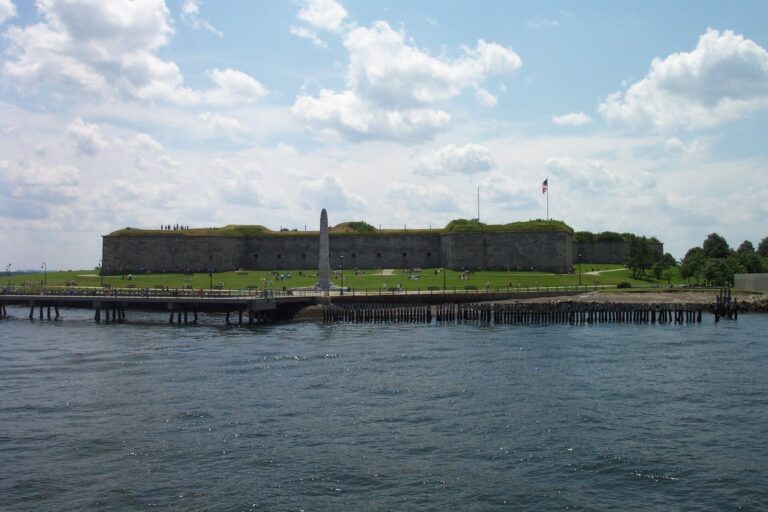
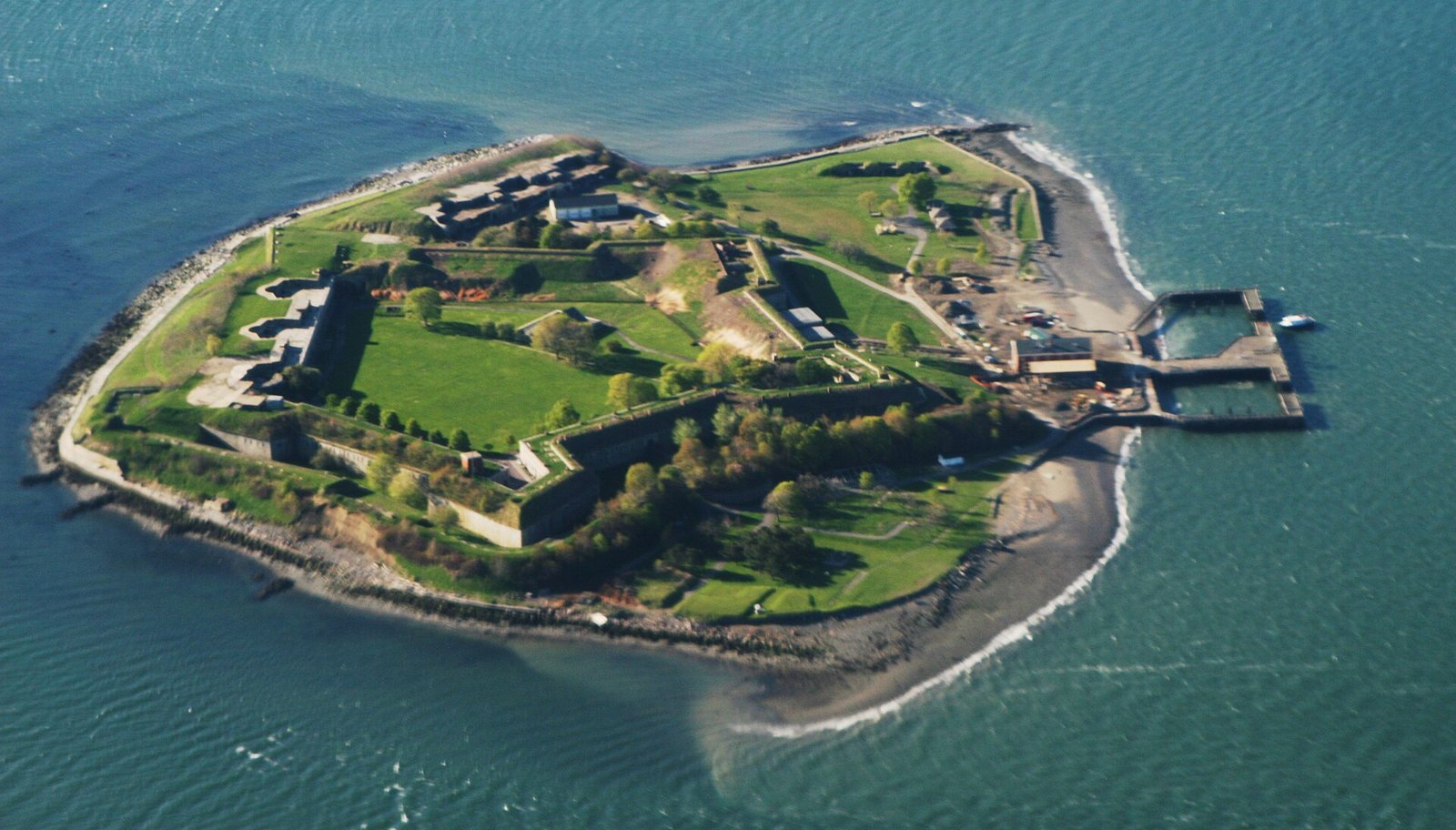
Fort Warren is a coastal-defense fort on Georges Island at the entrance to Boston Harbor in the United States. The federal government began building it in 1833 as part of the Third System, a U.S. program of coastal fort construction developed after the War of 1812. Work continued through 1861, and the fort was largely complete by 1858. It ranked fifth in size among the program’s 42 forts and was first garrisoned in March 1861.
Early defenses and construction
After the British army left Boston in March 1776, a British fleet remained nearby. An earthwork fortification was built on Georges Island in 1778, and the War of 1812 later strengthened the perceived need to defend the coast. Boston purchased the island in 1825 and transferred it to the federal government.
The present fort took its name in 1833 from an earlier Fort Warren, built in 1808 and later renamed Fort Winthrop. It was named for Dr. Joseph Warren, an American physician and Revolutionary-era political leader who sent Paul Revere on his ride and died at the Battle of Bunker Hill. Colonel Sylvanus Thayer, a U.S. Army engineer who later led the United States Military Academy at West Point, was responsible for most of the construction work.
The Civil War
From 1861, Fort Warren served as a harbor-defense position, a training camp, and a prison. It held captured Confederate Army and Navy personnel, elected Maryland civil officials, and Northern political prisoners. More than 1,000 Confederate prisoners were confined there, and 13 died. The fort’s prisoner mortality rate was lower than that of any other Union or Confederate prisoner-of-war camp during the war. Colonel Justin Dimick commanded the post from 1861 to 1864 and was known for treating prisoners humanely.
Among those held at the fort were Confederate diplomats James M. Mason and John Slidell, seized from a British ship by a Union naval officer during the Trent affair, a diplomatic crisis in 1861. Other prisoners included Confederate officers Richard S. Ewell, Isaac R. Trimble, John Gregg, Adam Rankin Johnson, Simon Bolivar Buckner Sr., and Lloyd Tilghman, as well as Confederate Vice President Alexander H. Stephens and Postmaster General John Henninger Reagan.
When Lieutenant Justin E. Dimick, the commander’s son, left to serve with the Second U.S. Artillery, Confederate officers wrote asking that he be treated well if captured. He was mortally wounded at Chancellorsville in May 1863. On August 19 of the same year, six prisoners tried to escape. Two were caught on the island and two while sailing toward Canada. Prison authorities believed the remaining pair had drowned while swimming toward shore; they were not found.
The Union marching song “John Brown’s Body” was written at the fort to an older Methodist camp-song tune and performed at a flag-raising on May 12, 1861. Men of the 12th Massachusetts Infantry carried it to the Army of the Potomac, the Union’s principal field army in the eastern theater. Julia Ward Howe later heard the song in Washington and wrote new words, first published as a poem. Her words were subsequently joined to the melody as “The Battle Hymn of the Republic.”
Modernization and decommissioning
Fort Warren continued to defend Boston Harbor through the end of World War II and was also used during the Spanish-American War and World War I. Additional gun batteries were added in the 1870s. From 1892 to 1903, the fort was rebuilt under the Endicott program, a later modernization of coastal defenses that emphasized powerful rifled guns and concrete batteries. The fort also stored and managed harbor mines during the Spanish-American War and both world wars.
During World War I, Fort Warren served as headquarters for the Coast Defenses of Boston, the U.S. Army command responsible for protecting the harbor. Four 10-inch guns from Battery Bartlett were removed in 1917–18 for possible use as railway artillery, though none appears to have seen action in that role. Four other 10-inch guns took their place in 1919. In 1920, several types of guns were withdrawn from coast-defense service without replacement.
In World War II, the fort controlled Boston Harbor’s southern minefield as a precaution against possible German submarine attacks. The 241st Coast Artillery Regiment (Harbor Defense), a Massachusetts National Guard unit federalized in September 1940, was stationed there. The fort’s remaining guns were scrapped between 1942 and 1944 as newer 16-inch batteries were built elsewhere. Fort Warren was permanently decommissioned in 1947.
State ownership and commemoration
Massachusetts acquired the fort from the federal government in 1958. It was listed on the National Register of Historic Places and designated a National Historic Landmark in 1970 for its Civil War role and its importance as an example of prewar coastal engineering. Georges Island became part of the Boston Harbor Islands national park area in 1996. The Massachusetts Department of Conservation and Recreation now maintains the fort, which is part of the Boston Harbor Islands National Recreation Area.
In 1963, the Boston chapter of the United Daughters of the Confederacy, an organization that commemorates Confederate history, installed a headstone on the island for the 13 Confederate soldiers who died in captivity there. After Governor Charlie Baker called for its removal in June 2017, the state covered and removed the headstone that October and placed it in the Massachusetts State Archives.
Remains
Fort Warren occupies 28-acre Georges Island. Its slightly irregular pentagonal plan follows the island’s terrain and includes five bastions, projecting sections of the fortification. The seaward sides facing the Atlantic had the strongest defenses and the most guns, as well as soldiers’ quarters. Stone and granite form the main structure, with especially fine granite masonry in its walls.
Enclosure and entrances
Walls and island defenses
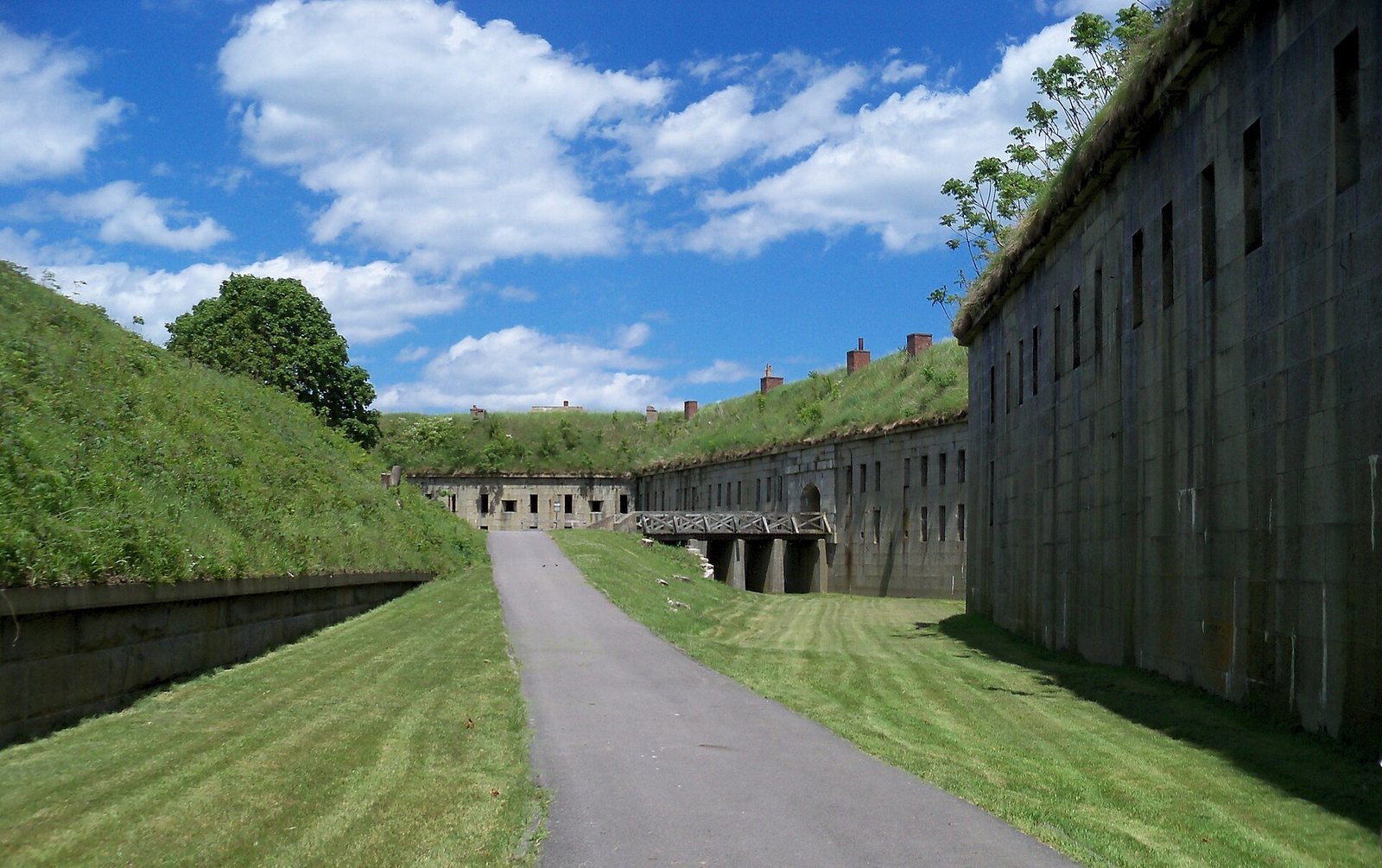
The fort’s walls are about 2.5 metres thick. Sand was piled over and around them to lessen damage from bombardment, and the granite used in construction came from Quincy and Cape Ann. A seawall built around the island between 1825 and 1832 was intended to limit erosion.
Moat and north entrance
A dry moat surrounds the fort and could be covered by fire from within. A bridge crosses it to the fortified entrance, or sally port. A crescent-shaped outer battery protects the north entrance, an arrangement described as rare among U.S. forts.
Gun positions and batteries
Early gun positions
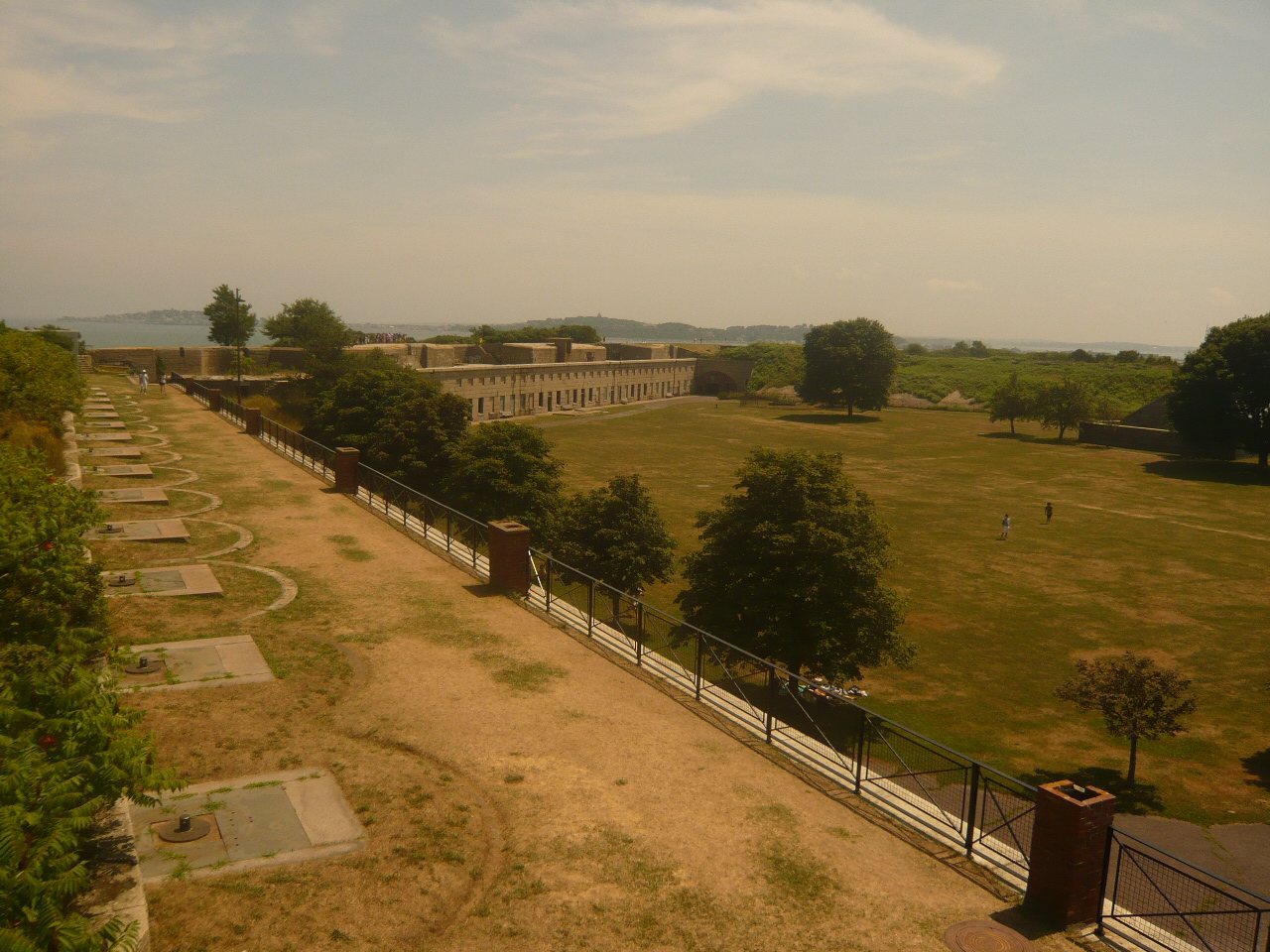
Gun positions occupied several levels, including rooftops and enclosed casemates. The original design allowed for more than 200 guns; at its peak the fort held 310 fixed guns and 24 mobile ones. During the Civil War, its armament included 15-inch and 10-inch Rodman guns, large artillery pieces with smoothbore barrels. A 15-inch Rodman could fire a projectile weighing about 185 kilograms roughly five kilometres.
1870s additions
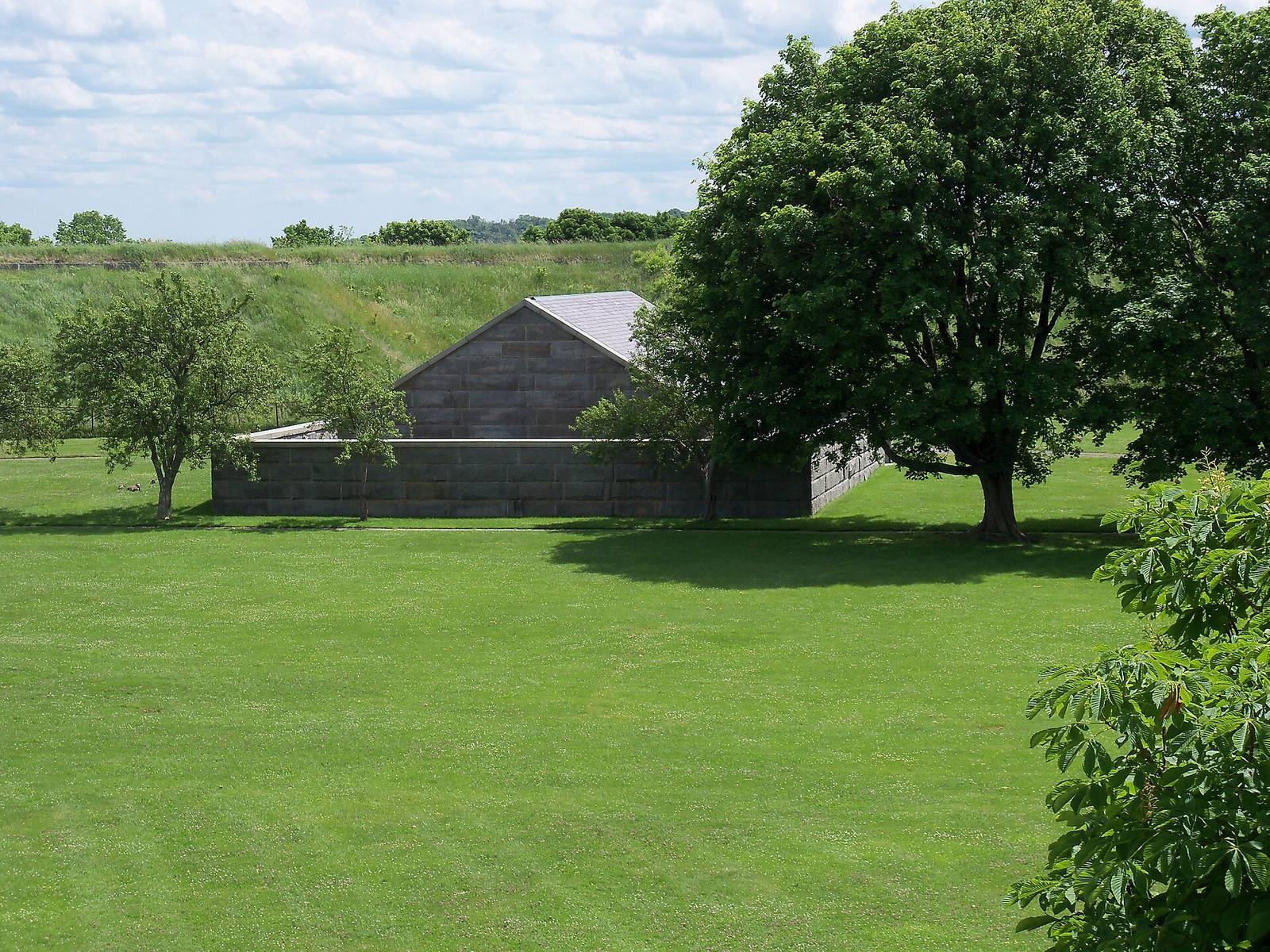
Improvements in the 1870s added guns mounted high enough to fire over the protective walls, along with a separate six-gun battery. The southeast bastion was roofed to create an enclosed gun position for a 15-inch Rodman. Its heavy enclosing brick arches remain a notable feature, and the arrangement was described as rare and possibly unique.
Endicott-era batteries
Five batteries were added during the Endicott-era rebuilding, with new concrete gun positions placed along the fort, between Bastions A and B, and outside the walls. Their weapons included two 12-inch and five 10-inch guns for defense against battleships, plus two 4-inch and three 3-inch guns for smaller vessels and nearby minefields. Battery Stevenson’s 12-inch guns could fire shells weighing nearly 500 kilograms about 15 kilometres. Their carriages lowered the guns behind a concrete wall for reloading and raised them to fire. Battery Bartlett, just beyond the fort, had comparable guns of smaller calibre, including four 10-inch guns. One of its emplacements was later demolished to make an access road.
Battery Adams was built of poor-quality concrete. Deterioration led to its disarmament and abandonment in 1914. Battery Plunkett’s 4-inch Driggs-Schroeder guns and Battery Lowell’s 3-inch Driggs-Seabury guns were withdrawn in 1920 and not replaced. The 4-inch guns remained at the fort as display pieces through at least 1941.
Buildings and collections
Fort buildings and mine storehouse
The fort includes barracks and a bakery, along with casemates and magazines beneath its walls. A former mine storehouse made of red brick stands opposite the ferry dock and now houses a museum.
Artillery and museum displays
Objects at the fort include two Civil War 3-inch rifled guns converted to breechloaders, 10-inch Rodman guns, projectiles from the Endicott-era batteries, and two World War II 40 mm Bofors guns. The museum includes a demonstration model of a disappearing gun, a weapon lowered behind a protective wall for reloading and raised to fire, as well as a Nike-Ajax missile.