Elizabeth Castle: A Coastal Fortress in Jersey
Site at a Glance
- Country
- Jersey
- Primary era
- Early Modern
- Eras represented
- Early Modern, Modern
- Civilizations
- British, English, German
- Site type
- Military
- Remains
- Castle
On this page12 sections
History
From religious center to fortress
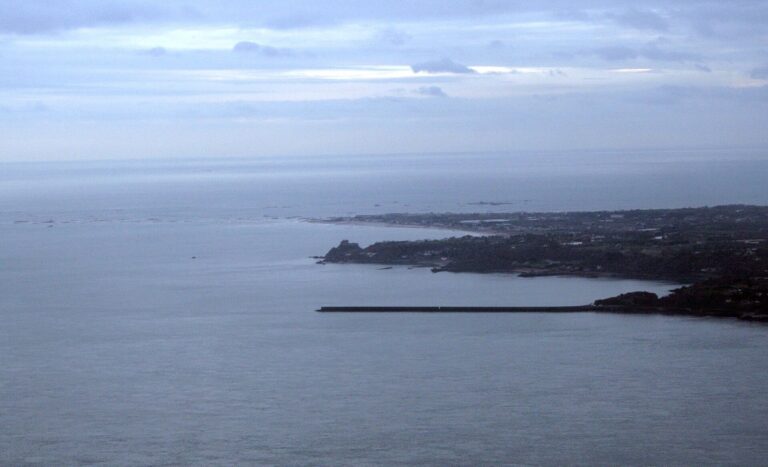
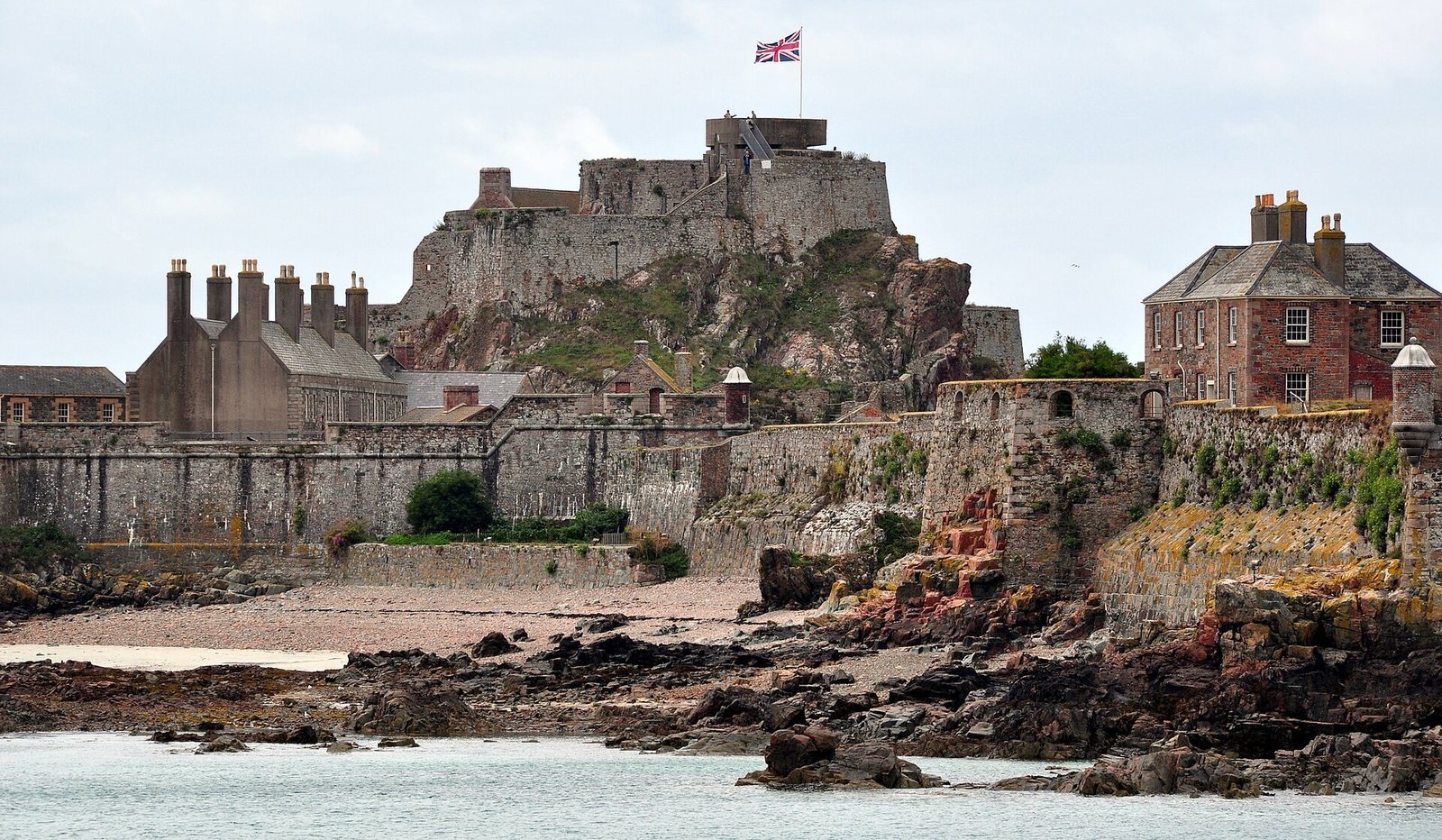
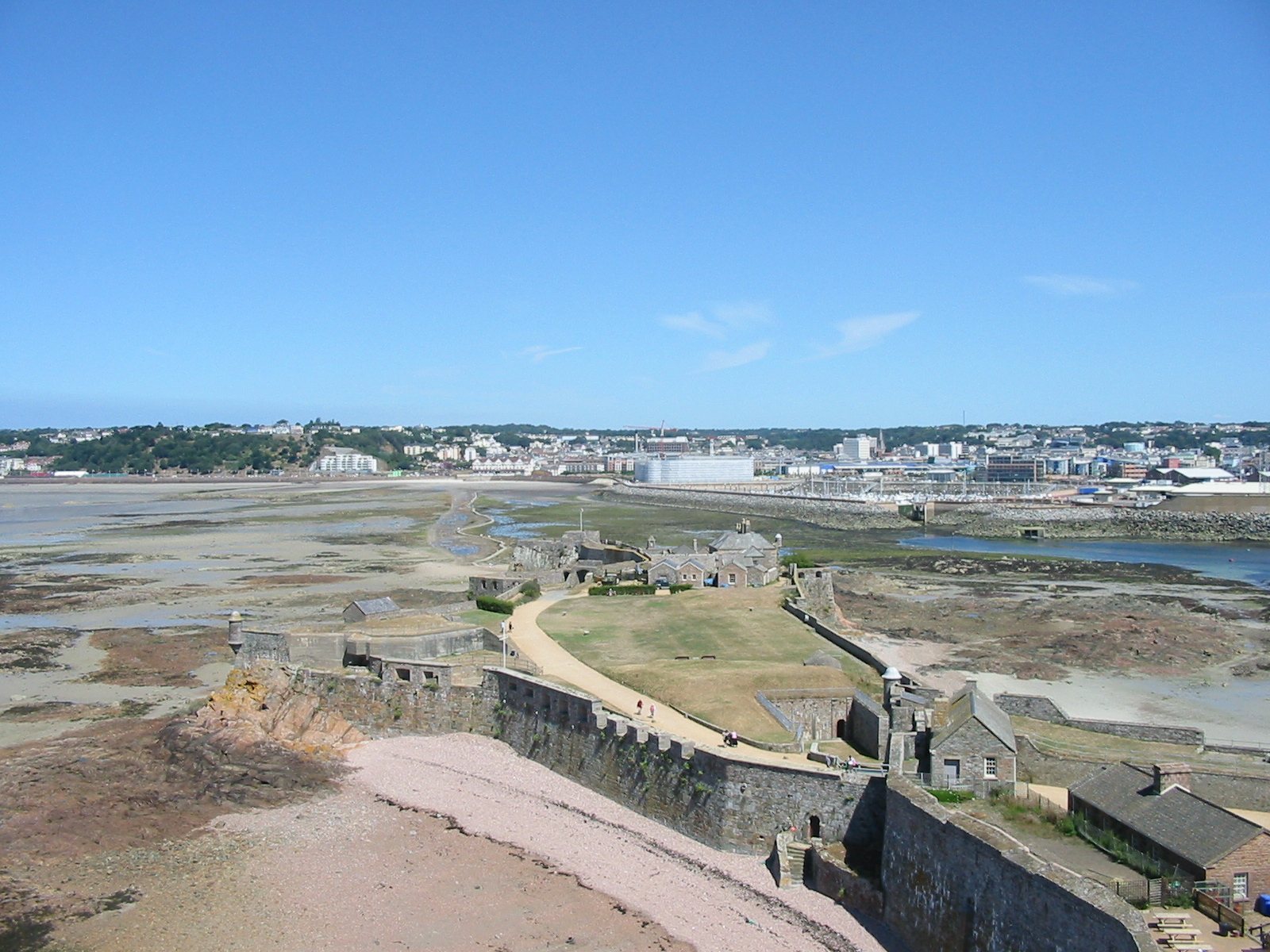
Elizabeth Castle is a fortress on L’Islet, a rocky tidal island in Saint Aubin’s Bay, Jersey. Its earliest construction began in 1594 to help defend Saint Helier and its harbor, which were vulnerable to ships carrying guns. Cannon had also made the older stronghold of Mont Orgueil inadequate for the island’s defense.
Before the castle was built, L’Islet was a religious center associated with Saint Helier, a Christian hermit traditionally linked with Jersey, from about 550 to about 1550. A monastery nearer the shore became the Abbey of Saint Helier and later a priory, while a hermitage stood on a separate islet farther out. Religious life there ended with Jersey’s Reformation, the sixteenth-century movement that spread Protestantism. The Crown took the monastic buildings, and surviving structures were put to military use.
Elizabeth I, queen of England from 1558 to 1603, is said to have sent the Flemish military engineer Paul Ivy to design and build the castle. Sir Walter Raleigh, Jersey’s governor from 1600 to 1603, is credited with giving it the name Elizabeth Castle in her honor. It was also associated with the earlier name Fort Isabella Bellissima, meaning “most beautiful,” though the identity of the Isabella commemorated is uncertain. Jersey’s governors are also said to have transferred their official residence from Mont Orgueil to the castle.
Civil war and siege
The Lower Ward was built between 1626 and 1636 on the site of the ruined abbey church. In 1646, the castle received Charles, then Prince of Wales. Three years later, he returned as Charles II and stayed in the Governor’s House. Jersey’s governor, Sir George Carteret, had proclaimed him king, although England had abolished the monarchy earlier that year amid the English Civil War, a conflict between supporters of the monarchy and Parliament.
In 1651, forces supporting Parliament landed in Jersey and besieged the castle for seven weeks. The abbey church, then used to store ammunition and provisions, was destroyed by bombardment. Carteret surrendered on 15 December, and Jersey remained under Parliamentarian control for nine years, until the monarchy was restored in 1660.
French threats and changing defenses
During the Seven Years’ War, an international conflict of the mid-eighteenth century, French prisoners were held on Jersey. On 6 January 1781, French troops led by Baron Philippe de Rullecourt landed on the island and advanced on Saint Helier. The castle’s garrison was isolated. Governor Moise Corbet was deceived into surrendering to the French, but Captain Mulcaster and the castle garrison refused to give up.
British troops commanded by Major Francis Peirson defeated the French at the Battle of Jersey, the 1781 invasion and British defense of the island. Peirson and de Rullecourt both died in the fighting. The episode exposed the difficulty of defending Saint Helier from a castle separated from the mainland by water. It prompted the construction of Fort Regent on the mainland, which became the principal British garrison. A nineteenth-century proposal to connect Elizabeth Castle to the mainland as part of a harbor project was abandoned.
Garrison, occupation, and public use
The British garrison withdrew in 1923, and the castle passed to the States of Jersey, the island’s legislature and government, which opened it as a museum. Jersey Heritage now administers the site. Its museums interpret the Royal Jersey Militia, Jersey’s local military force, and the history of artillery and fortifications.
During the Second World War, German occupying forces added guns and defensive works to the castle. It also served as a prison camp for Russian slave laborers who had tried to escape from other camps on the island. After Jersey’s Liberation, the castle was repaired and later reopened. An annual municipal and ecumenical pilgrimage, involving more than one Christian denomination, visits the Hermitage on the Sunday closest to Saint Helier’s Day, 16 July, and includes an open-air service at the castle.
Remains
Built of granite, Elizabeth Castle is described as intact and is arranged in three main wards, or enclosed sections: the Upper Ward, the Lower Ward, and the Outer Ward. The Upper Ward, also called the Mount, occupies the highest ground and is the oldest part. The Lower Ward lies on a separate islet, connected to the main island by walls built in 1668. The low ground enclosed there resembles a broad ditch.
Upper and Lower Wards
The Upper Ward contains the Queen Elizabeth Gate. The Lower Ward was used as a parade ground and is enclosed by barracks and officers’ quarters. Wells and cisterns, which are tanks for storing water, are also found within it.
Outer Ward and entrance
King William’s Gate stands between the Outer and Lower Wards. It was built in 1668 or shortly afterward.
Military structures and equipment
Windmill and hospital
A windmill was built in 1651 about halfway between Fort Charles and the Lower Ward. A two-storey barracks hospital was constructed in the early nineteenth century.
Artillery and wartime defenses
The castle’s recorded artillery totals reflect changing military needs. It had more than 15 guns during the 1651 siege, 84 guns in 1783, including guns rated at up to 24 pounds, and 62 guns in 1804, among them five made for 68-pound shot. During the German occupation, guns, bunkers, and battlements were added; a bunker from that period remains visible.
Breakwater and Hermitage Rock
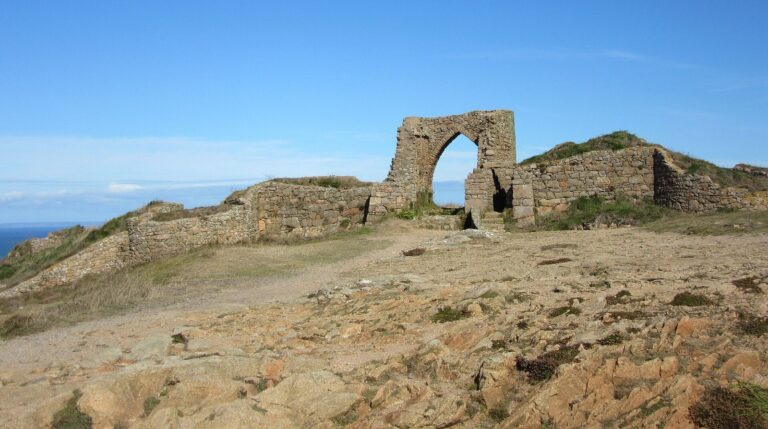
A surviving breakwater connects L’Islet to Hermitage Rock, where the Hermitage of Saint Helier stands.