Atskuri Fortress: A Medieval Georgian Defensive Stronghold
Site at a Glance
- Country
- Georgia
- Primary era
- Medieval
- Eras represented
- Medieval, Early Modern
- Civilizations
- Georgian, Ottoman
- Site type
- Military
- Remains
- Castle
On this page9 sections
History
Foundation and medieval role
Atskuri Fortress is a Georgian feudal stronghold near Atskuri village in Georgia, built in the 10th century. First mentioned in a chronicle in the mid-11th century, it guarded the southern approach to Borjomi Gorge and the entrance to the Kura River gorge. Its position allowed it to control the river valley and a major route linking the area with southern Georgia. Losing the fortress could have left the south exposed to invasion, and it served a defensive purpose for centuries.
In 1260, Mongol forces led by Arghun Aqa, a commander and administrator of the Mongol Empire, besieged the fortress during King David VII of Georgia’s rebellion against Mongol rule. The Mongol Empire was a major Eurasian power in the 13th century. A powerful earthquake struck the region and the fortress in the late 13th century.
Ottoman rule and later campaigns
Ottoman forces captured Atskuri in the second half of the 16th century and stationed troops there. The fortress, part of territory held by an empire centered in Anatolia, suffered serious damage during that century and was rebuilt in the 17th and 18th centuries. It appears to have endured repeated sieges, damage, rebuilding, and repair.
In 1770, a combined Russian-Georgian army besieged the Ottoman-held fortress but did not capture it. The assault was part of efforts to recover southern Georgian territory. The army also moved against Akhaltsikhe, a major Ottoman stronghold.
Abandonment and restoration
The fortress was abandoned in the 1820s. Ottoman rule in the area ended late in that decade, and Georgian and Russian forces recovered Atskuri in 1829. That was also the year of the Treaty of Adrianople, a peace agreement between the Russian and Ottoman empires at the end of the Russo-Turkish War of 1828-29.
Georgia designated the fortress a cultural monument of national importance on 7 November 2006. A collapse occurred there on 19 August 2009. Reinforcement work was under way in 2013, when the site remained at risk of further collapse. A major restoration campaign began in 2015 in response to long-term neglect and natural deterioration, with archaeological excavations carried out alongside the work. The first two phases were completed in 2016-17, followed by a third phase in 2018.
Remains
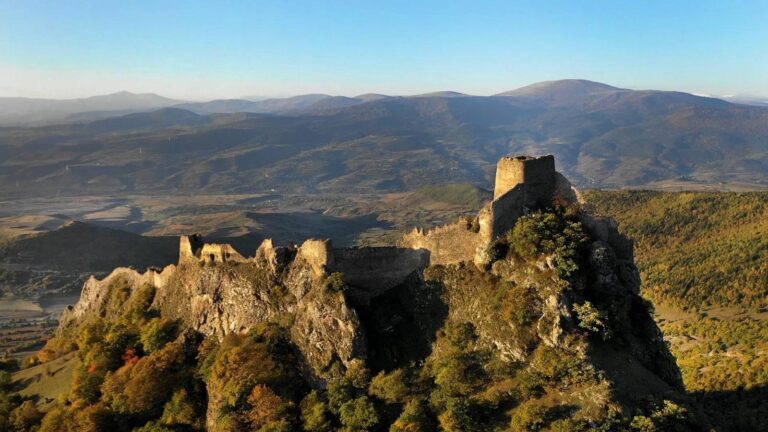
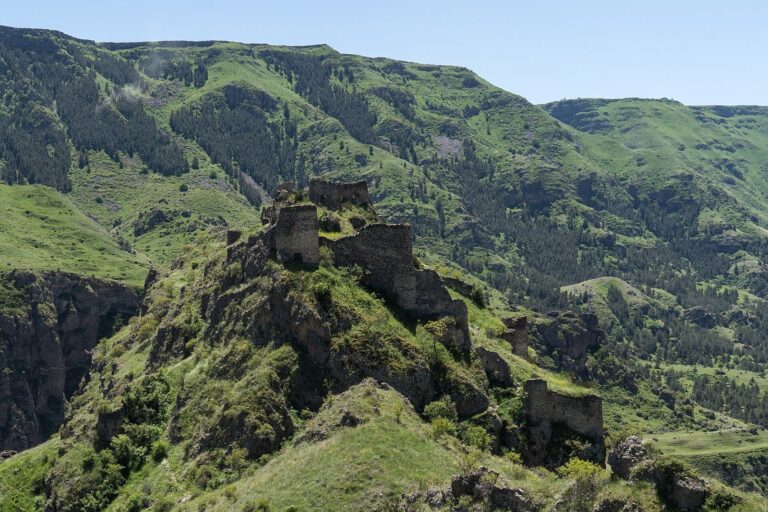
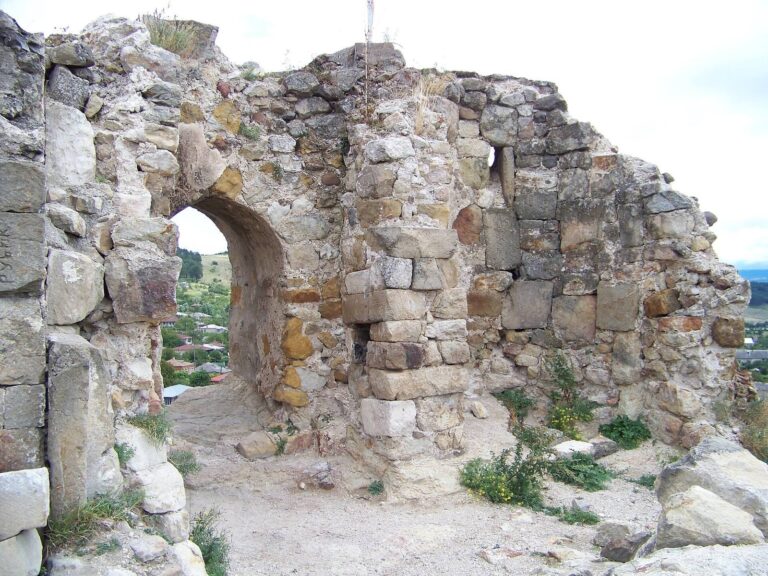
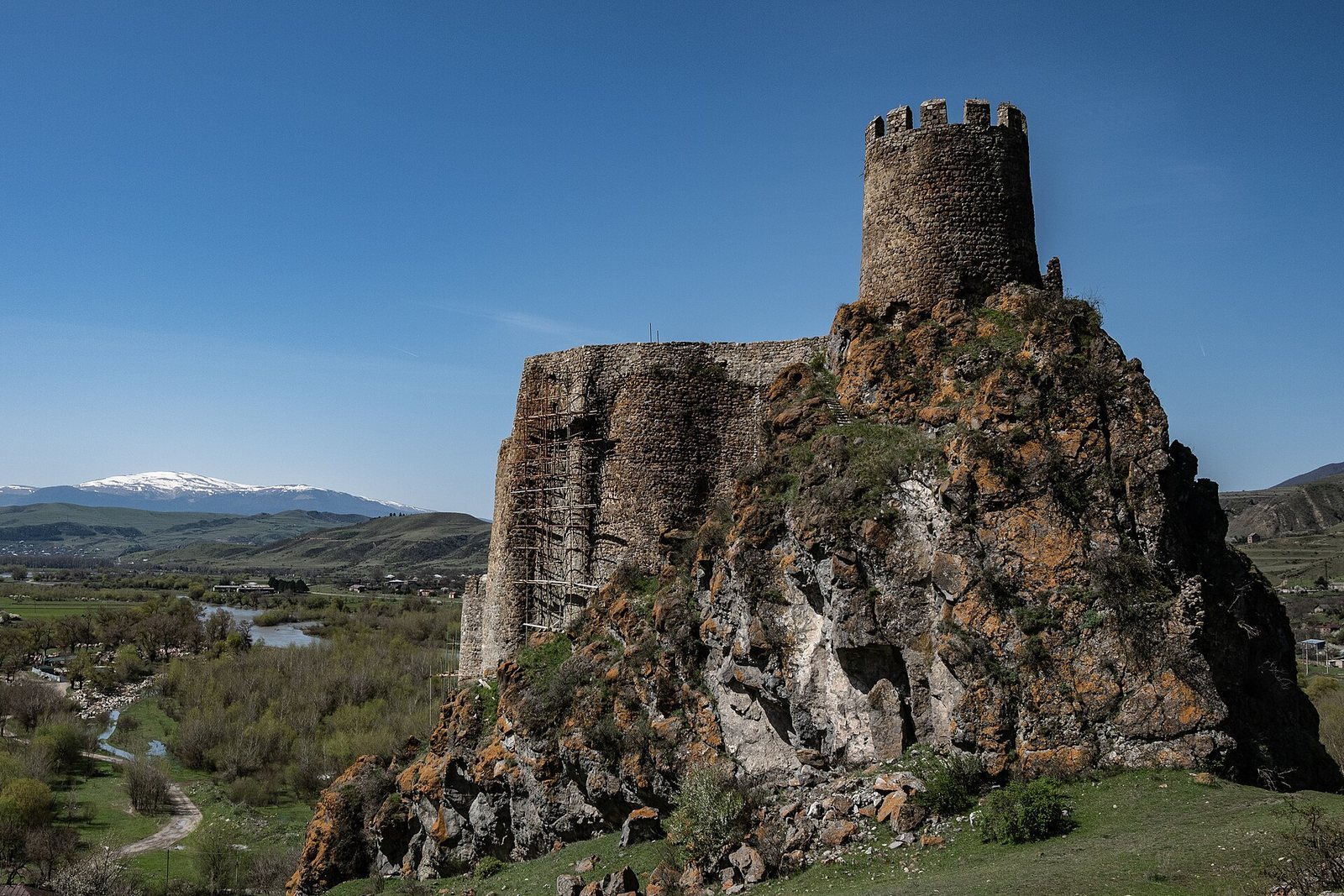
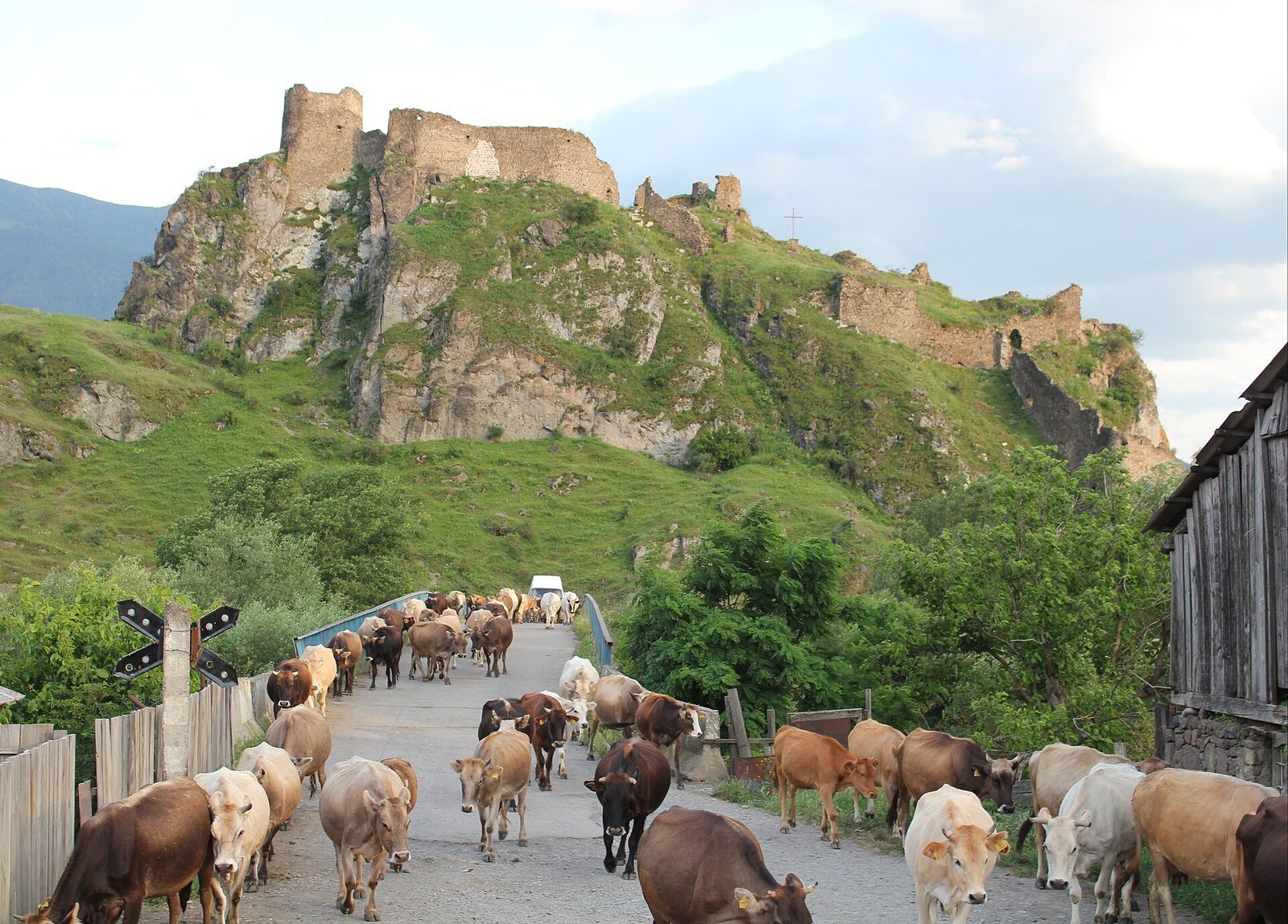
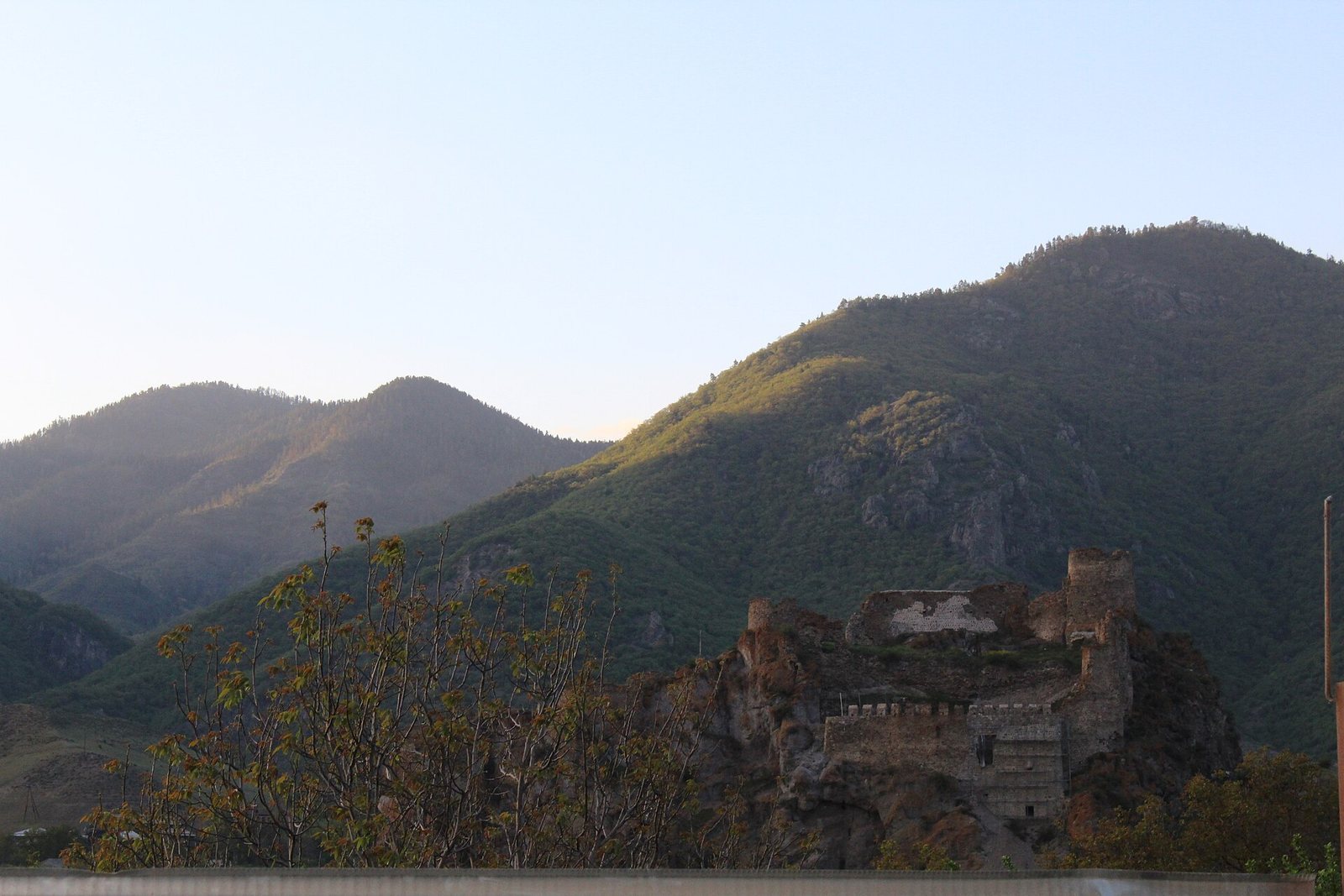
Atskuri is an extensive, multi-part fortress arranged across a rocky ridge. Its walls follow the contours of the rock, and its citadel, a fortified stronghold within the larger fortress, occupies the highest point. The complex survives in ruins, with construction layers from different periods.
Setting and defensive layout
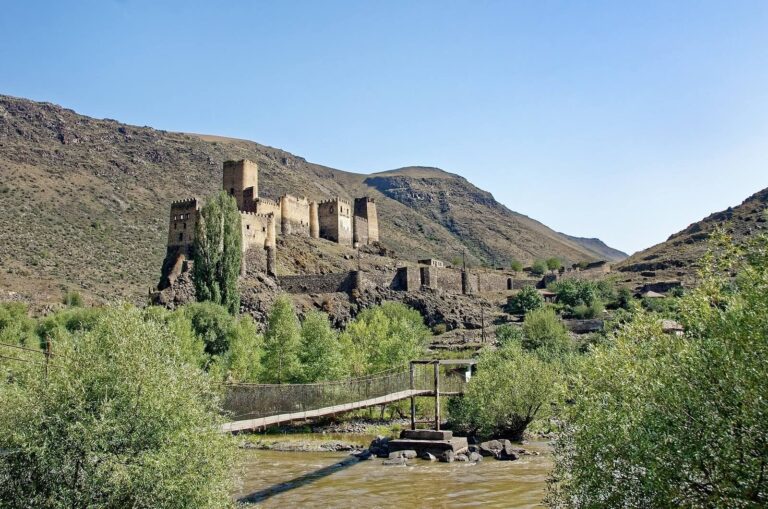
The fortress stands on the right bank of the Mtkvari, also known as the Kura, near Atskuri village in the Samtskhe-Javakheti region, about 30 kilometres from Borjomi. It occupies a high, difficult-to-reach rocky ridge. Entry to its inner structures was through a narrow tunnel cut into the rock, and passing through the tunnel did not make the interior easy to capture. At the western end, remains of another tunnel descend toward the river; this passage connected the fortress to the river as a water-supply route.
Church remains and archaeological finds
Church remains
Ruins of a church stand within the fortress grounds, with fragments of frescoes surviving. Excavations undertaken during restoration also uncovered church remains.
Finds around the fortress
Excavations in the surrounding area uncovered graves dating to the second millennium BCE, as well as Phoenician beads, bronze weapons and other artifacts, bracelets, silver and gold rings, and pottery.