Featherstone Castle: A Gothic Country House and Medieval Manor
Site at a Glance
- Country
- United Kingdom
- Primary era
- Early Modern
- Eras represented
- Medieval, Early Modern
- Civilizations
- English
- Site type
- Domestic
- Remains
- Castle
On this page9 sections
History
Roman setting and medieval development
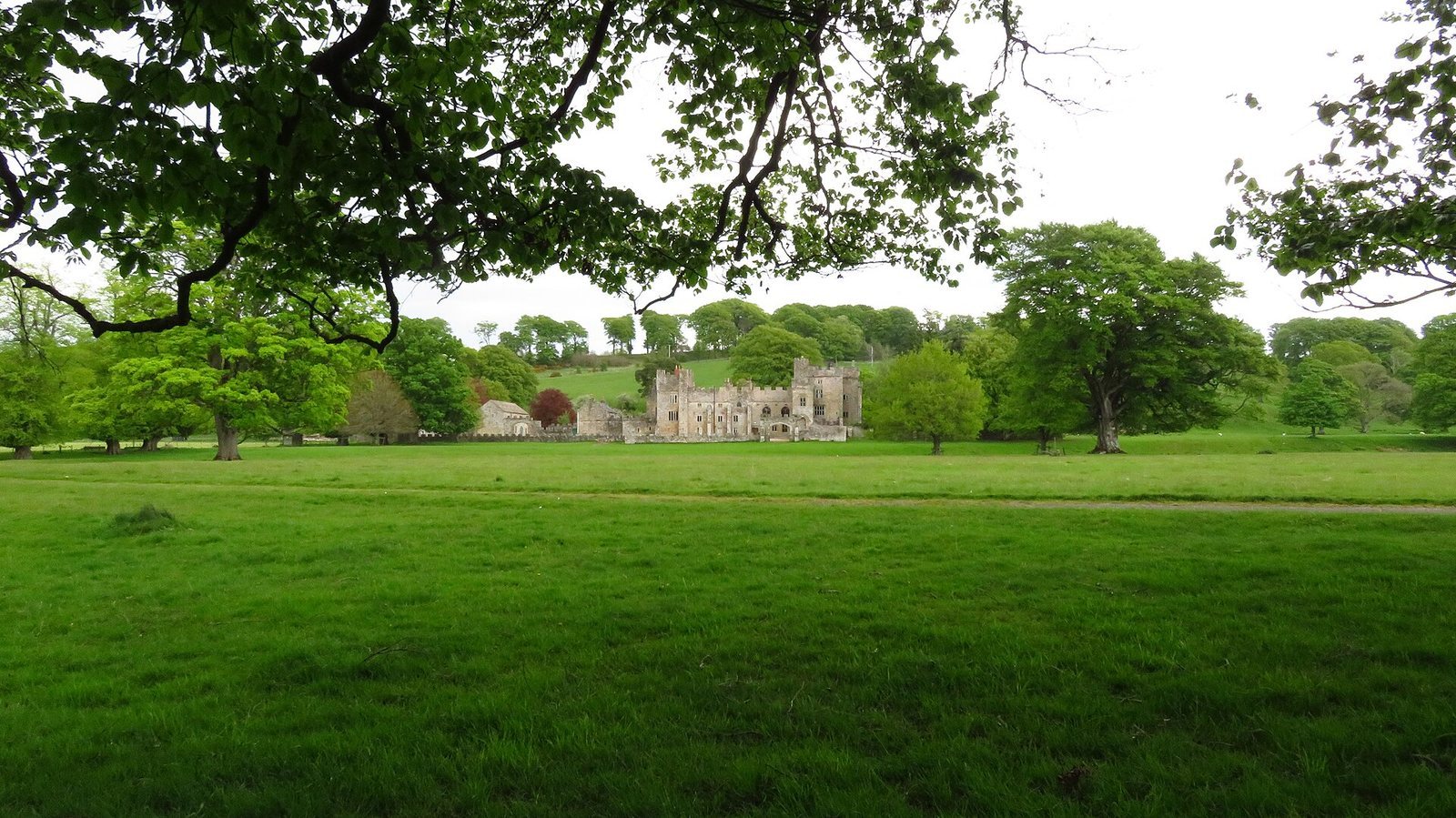
Featherstone Castle is a Gothic-style country house beside the River South Tyne near Haltwhistle in the United Kingdom. Its development may have begun in the 13th century as a hall house, and the building later played an important part in battles between English and Scottish forces.
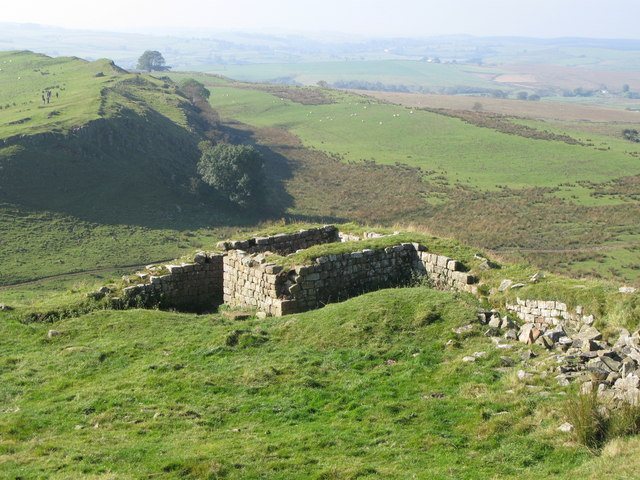
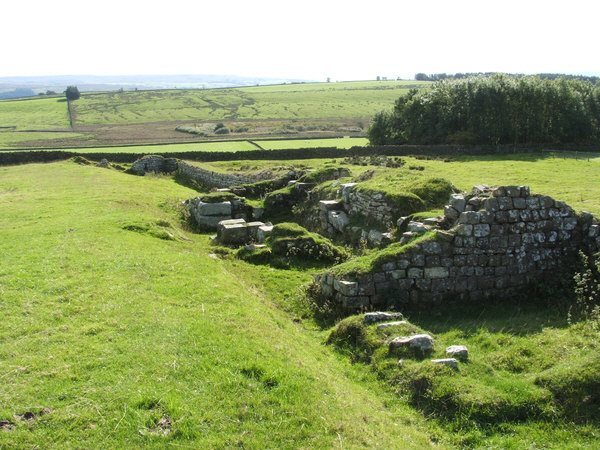
The earliest recorded history of the surrounding area is associated with Roman occupation. Hadrian’s Wall, a Roman frontier barrier in northern Britain, was built in AD 122 about 5 km north of the castle. In the 11th century, the manor belonged to the Featherstonehaugh family. Thomas de Featherstonehaugh added a tower in 1330. A survey in 1541 described the tower as being in good repair and occupied by Thomas Featherstonehaugh.
Ownership and rebuilding
Sir William Howard, father of the 1st Earl of Carlisle, acquired the property in the 17th century and substantially enlarged and remodelled it. Matthew Featherstonehaugh bought the house back from the Earl of Carlisle in 1711. A survey four years later described it as an old, well-built structure.
The family stayed in occupation until Sir Matthew Fetherstonhaugh sold the property to James Wallace around 1789. Wallace’s son Thomas made further alterations between 1812 and 1830. Lord Wallace later left the estate to his nephew, Colonel James Hope, son of the Earl of Hopetoun. James adopted the surname Hope-Wallace.
Camp, school, and later use
After 1945, Camp 18 held 7,000 German officers as prisoners of war. It closed on 15 May 1948. The officers who remained were taken by bus to Haltwhistle, then by train to other prisoner-clearing camps in Britain before returning to Germany. The camp’s contents were sold in 1950.
The property was sold that year and became Hillbrow School, a boys’ preparatory school named for the house near Rugby where it had first been established. Before moving to Featherstone Castle, the school had occupied Overslade House, which was damaged by a landmine in 1940. Hillbrow moved to Ridley Hall in Northumberland in 1961, after which Featherstone Castle became a residential conference and activity centre for young people and students. The castle was designated a Grade I listed building in 1952, the highest category in England for buildings of exceptional architectural or historic interest.
Remains
Castle, camp, and burial remains
Castle
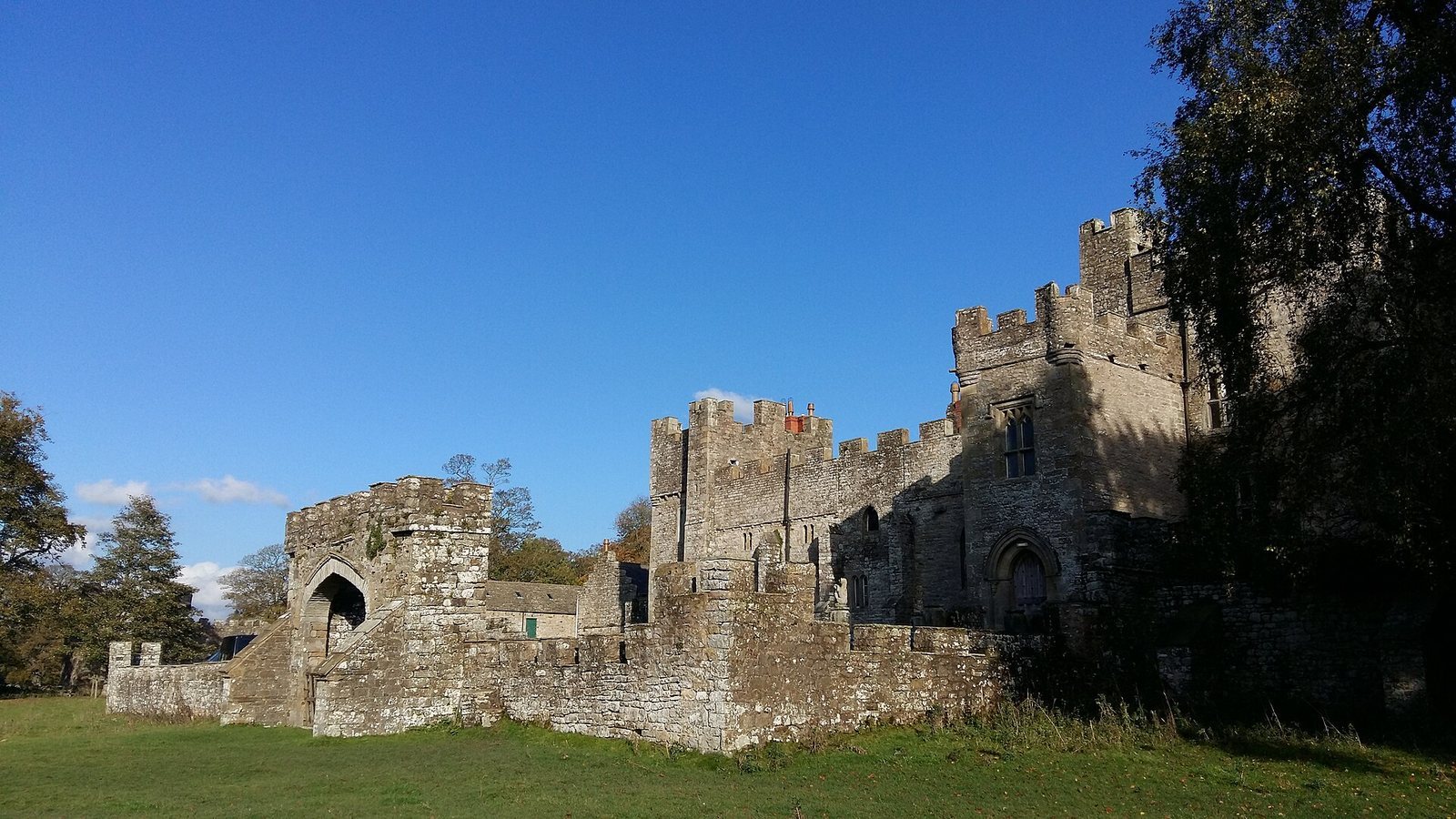
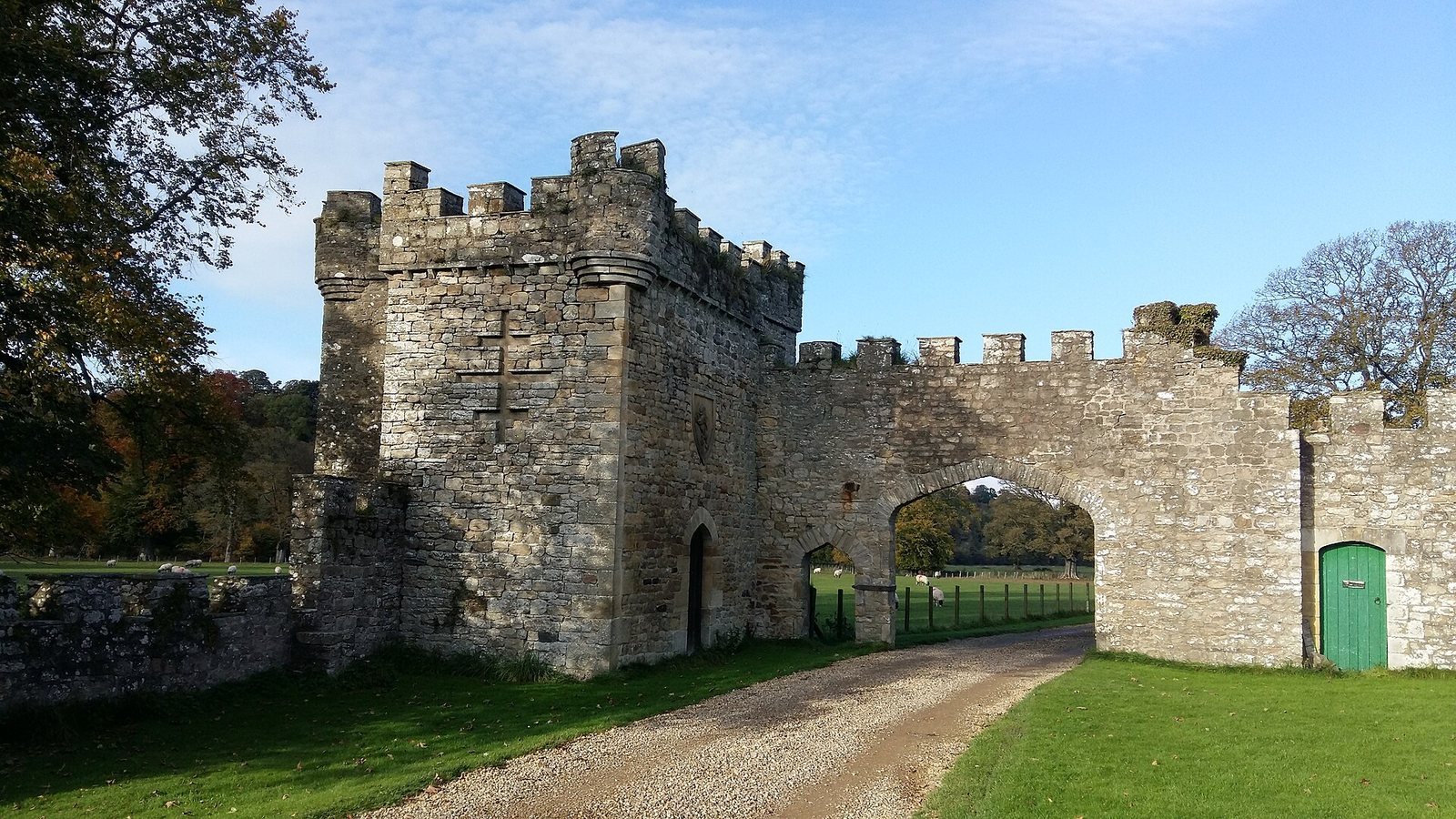
The castle is a large Gothic-style country house with a rectangular, castellated plan arranged around a central courtyard and a tower at each corner. An earlier phase included a square, three-storey fortified tower house.
Camp 18
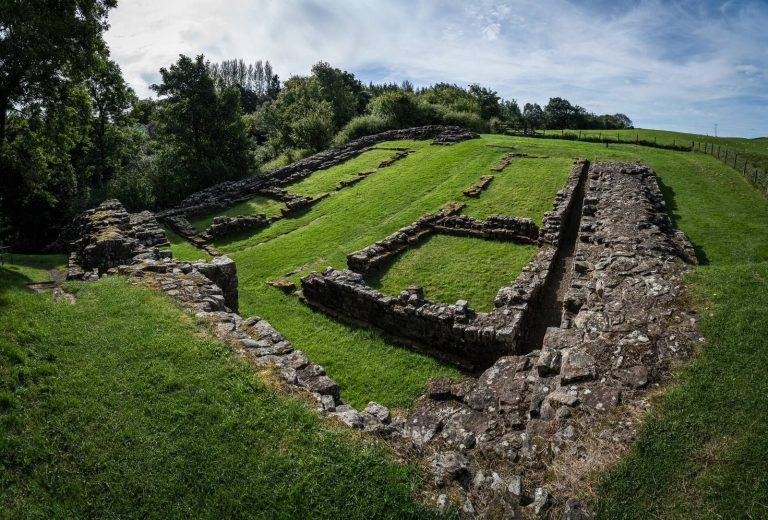
Camp 18 extended for about a mile across Featherstone Park beside the South Tyne. Some remains are still visible on the castle grounds. A memorial plaque was erected at the former camp entrance in 1982.
Coffins at Wydon Eals
In 1825, farmers working land at Wydon Eals near the castle found an oak coffin containing human remains, together with four other wooden coffins. The remains turned to dust when exposed to the air. The coffins are attributed to the early medieval period, the centuries after Roman rule through the 11th century.