Sollentuna Church: A Medieval Parish Church in Sweden
Site at a Glance
- Country
- Sweden
- Primary era
- Medieval
- Eras represented
- Medieval, Early Modern, Modern
- Civilizations
- Swedish
- Site type
- Religious
- Remains
- Church
On this page11 sections
History
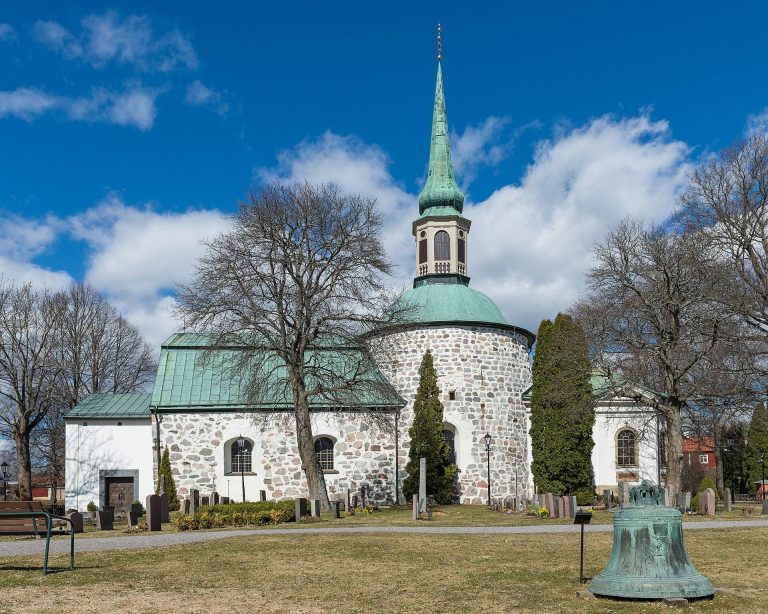
Sollentuna Church is the parish church of Sollentuna Parish in Sollentuna, Sweden, within the Diocese of Stockholm and the Lutheran Church of Sweden. Built in the late twelfth century, it has been expanded and altered repeatedly over more than eight centuries. Its position beside Lake Norrviken, a significant Viking Age waterway, may indicate that it originally served a defensive purpose.
Medieval foundation and expansion
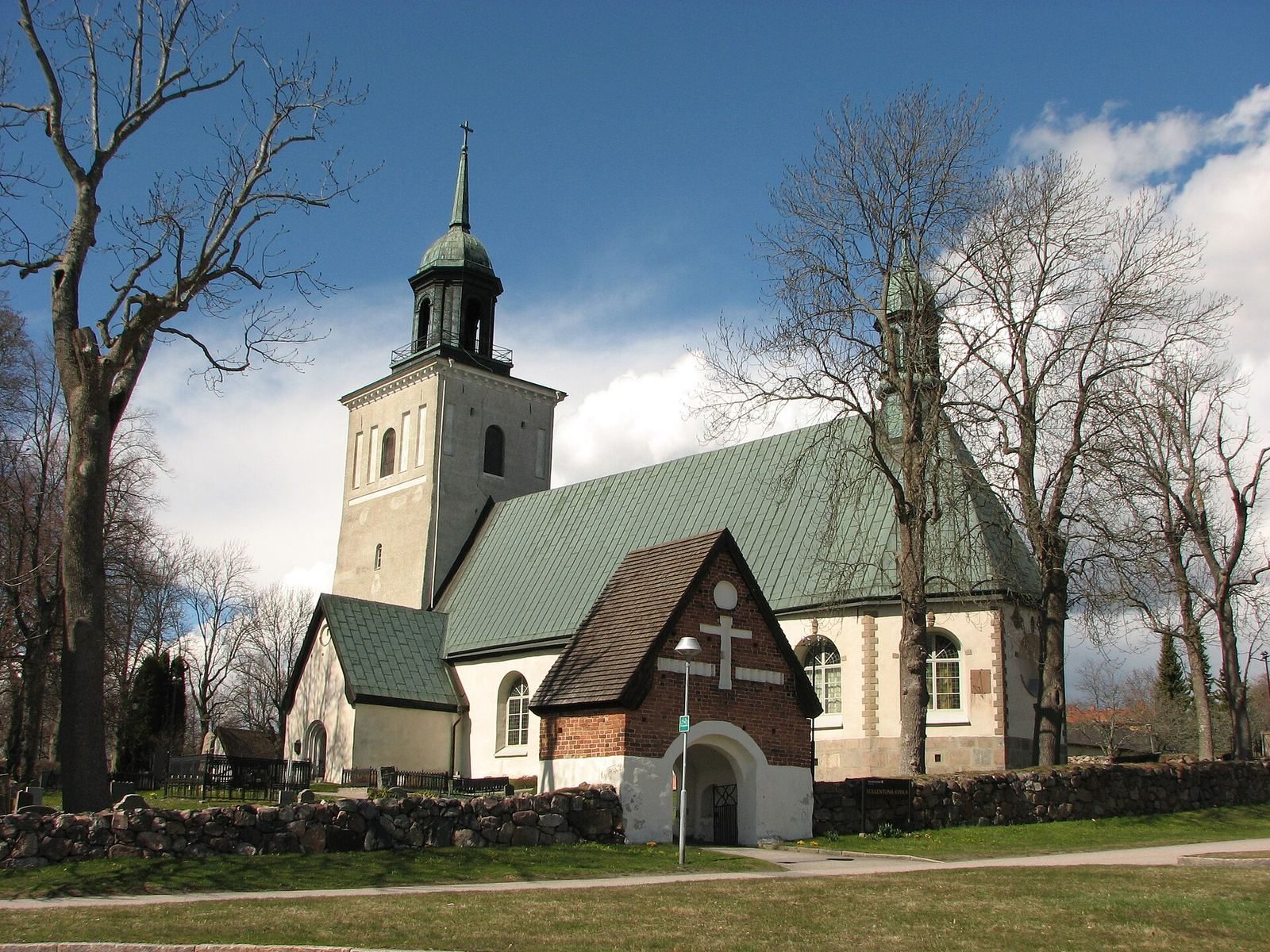
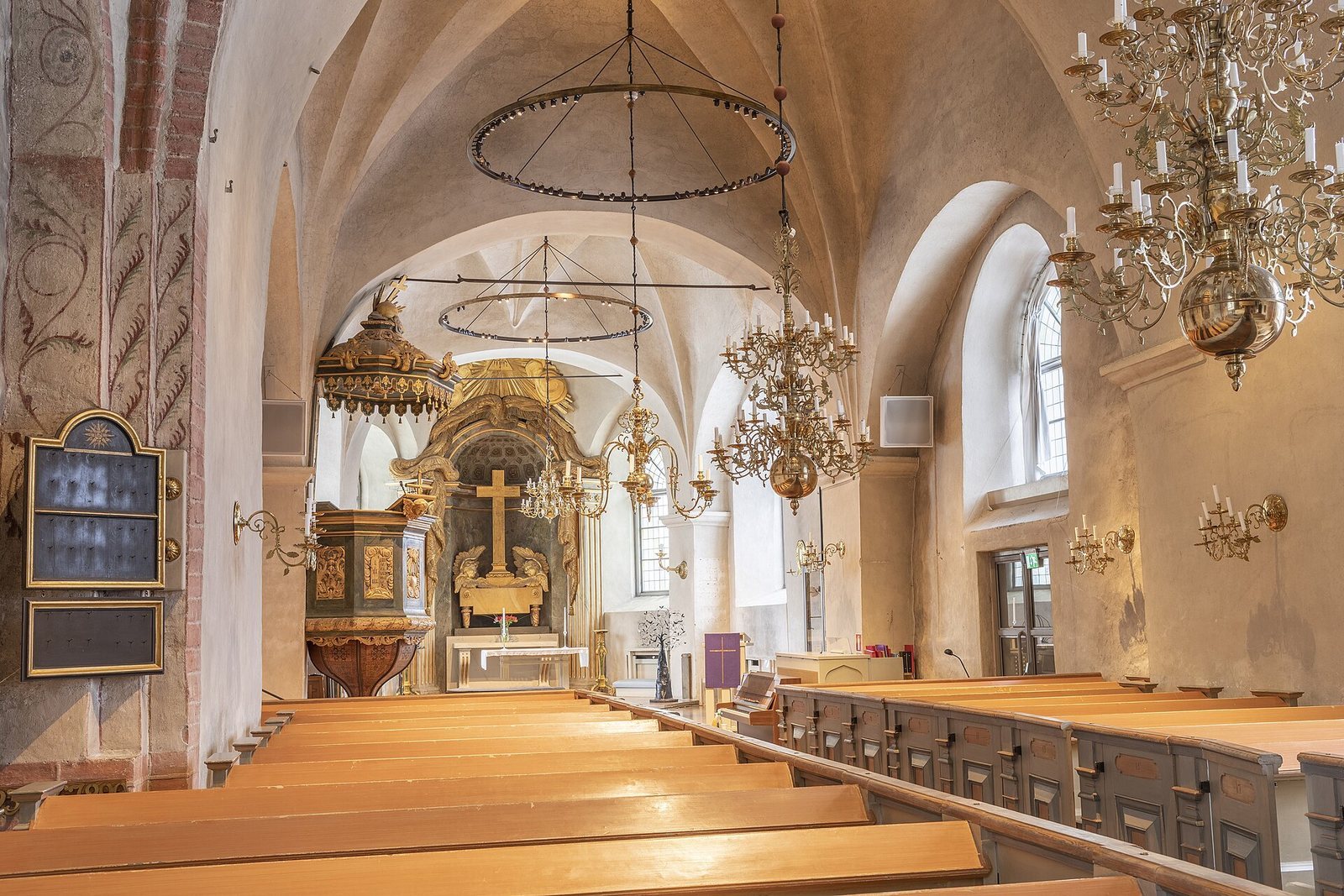
At the end of the thirteenth century, the chancel was widened and lengthened, and a sacristy was added. Brick cross-vaults, ceilings formed by intersecting vaulted sections, were probably built in the first half of the fourteenth century. In the fifteenth century, the tower was raised and a porch was added on the south side.
Sixteenth- and seventeenth-century use
In 1560, the remains of King Gustav Vasa and his two queens rested at the church overnight while being transported to Uppsala. Vasa, king of Sweden from 1523 until his death in 1560, was watched over by at least 30 priests and three bishops.
During the first half of the seventeenth century, a polygonal high chancel was built as a burial chapel for the Berndes family of Sollentunaholm. It was a late-Renaissance addition, belonging to the later phase of a European cultural and artistic movement. In 1644, Joh. Bernds, a member of Sweden’s central governing council, and Ing. Kurk donated an eight-register organ.
Eighteenth-century changes and later work
By 1773, the donated organ had been replaced by an instrument built by Jacob Westervik of Stockholm. In 1780, the windows acquired their present appearance and the façade was plastered; the tower crown was erected in 1841.
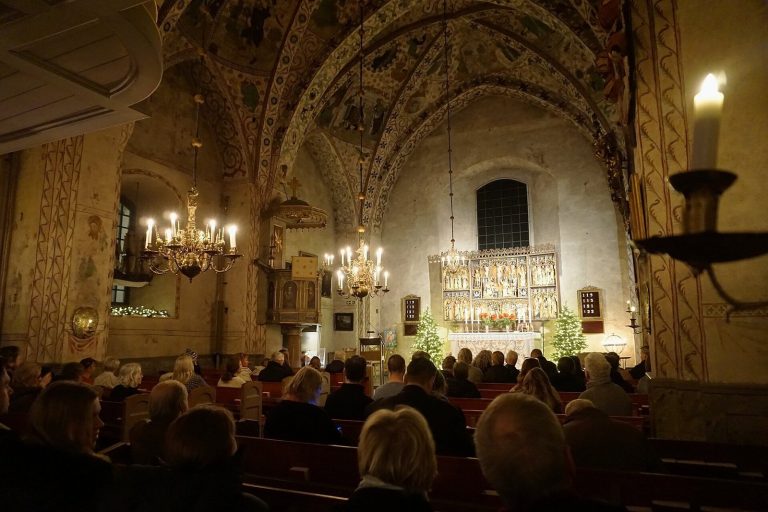
Wall paintings dating to the second half of the fifteenth century were uncovered in 1902. The restoration altered them severely, and corrective work followed in 1938–1939. The pulpit’s original colors were also revealed in 1938.
The church’s organs were replaced several times. Åkerman & Lund of Sundbyberg built a 12-register organ with two keyboards and a pedalboard in 1902. J. A. Johnsson of Duvebo made a 16-register instrument with two keyboards and a pedalboard in 1939, followed by a 22-register organ with two keyboards and a pedalboard from Frederiksborg Orgelbyggeri of Hillerød, Denmark, in 1970.
Remains
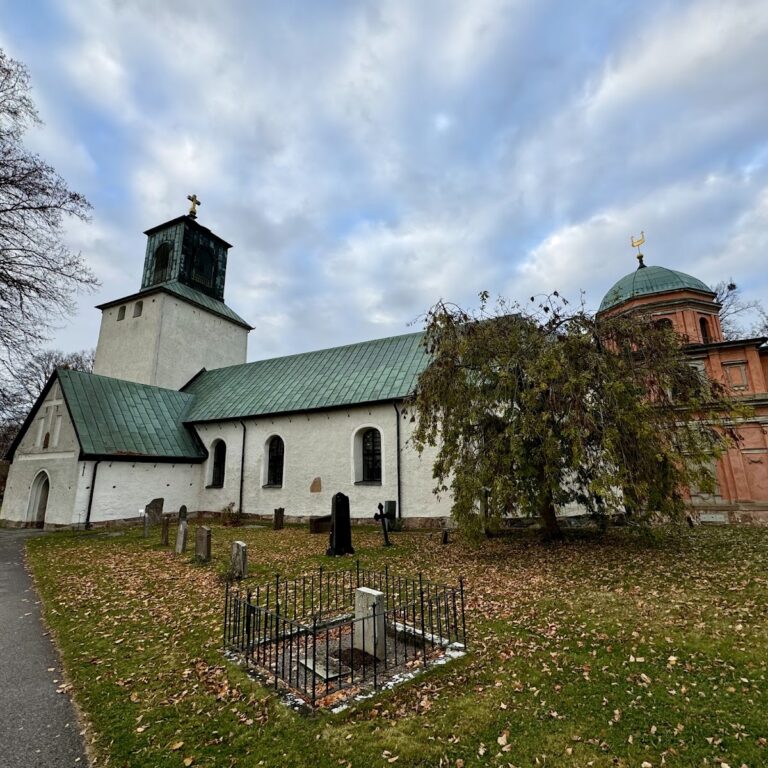
The church stands in Sollentuna’s Norrviken district, between Lake Norrviken and the Rotebro interchange. Its structural core is grey stone, and its plan brings together a western tower, a nave (the main body of the church), and a chancel (the altar area).
Building layout
The late-twelfth-century core consists of the present tower and the two westernmost bays of the nave. The original chancel was narrower than the nave, and the main entrance was on the west. The tower was once lower and divided into several storeys, with rooms used for shelter in troubled times and for storage. The sacristy, a room for clergy and church furnishings, lies north of the chancel. The high chancel is polygonal and sits beneath a roof shared with the rest of the church, with a small roof turret above it. An eastward extension associated with a south-side portal led to the altar area being moved. That portal is now unused, and an old portal is also identified at the church.
Paintings and furnishings
Wall paintings
Only fragments of the late-fifteenth-century wall paintings remain in the nave, while a larger portion survives in the porch. The paintings belong to the school represented by Albertus Pictor, a leading Swedish church painter of the late Middle Ages. The porch includes scenes titled “The Prayer of the Devout and the Worldly” and “The Wheel of Fortune of Life.” A painting of the Grim Reaper forms part of a sequence showing human life from birth.
Altarpieces
The altarpiece was probably designed by Erik Palmstedt, an eighteenth-century Swedish architect, in 1781. A medieval altarpiece signed by Jordan Målare, a Swedish painter active in the fifteenth century, is displayed on the north wall. Dated 1475, it shows the Descent from the Cross at the center, with Saint Eric, commonly identified with the Swedish king Eric IX, and Saint Lawrence, an early Christian martyr, beside it. Six prophets appear below. The wings depict apostles and saints, while paintings on their outer faces include a Calvary group.
Baptismal font and pulpit
The baptismal font, made from Gotland limestone around 1300, has a shell-shaped bowl and belongs to a medieval “paradise” category of fonts classified by design. The pulpit’s base comes from an older pulpit and probably dates to 1627; its body, stairs, and sounding board, a canopy above the speaker, were made in the mid-eighteenth century.
Organ and runic inscription
The present organ was built in 2021 by Metzler Orgelbau AG of Switzerland. A separate mechanical choir organ was made in 1981 by Richard Jacoby Orgelverkstad of Stockholm. The 1970 organ used a façade from the 1773 instrument. On the side of the church is a fragmentary runic inscription listed as number 95 in Upplands runinskrifter (“Runic Inscriptions of Uppland”).