Övraby Church: A Romanesque Church in Sweden
Site at a Glance
- Rating
- 5
- Popularity
- Very Low
- Country
- Sweden
- Primary era
- Medieval
- Eras represented
- Medieval, Modern
- Civilizations
- Danish, Swedish
- Site type
- Religious
- Remains
- Church
On this page9 sections
History
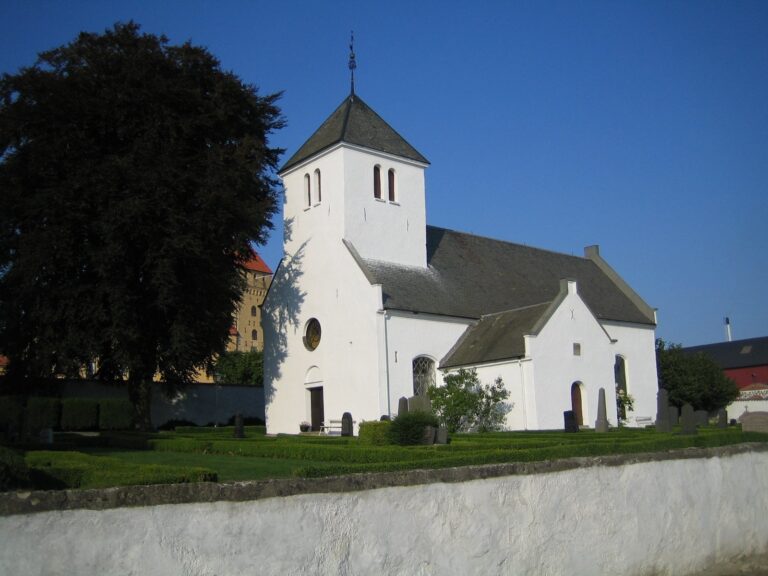
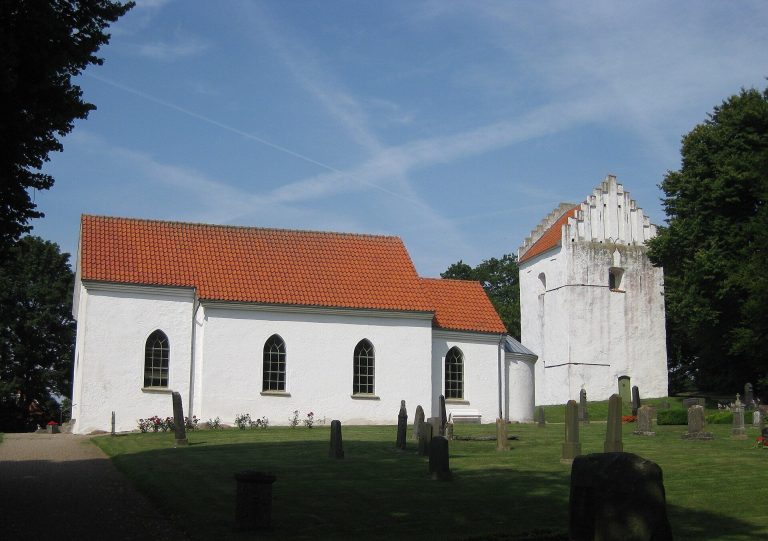
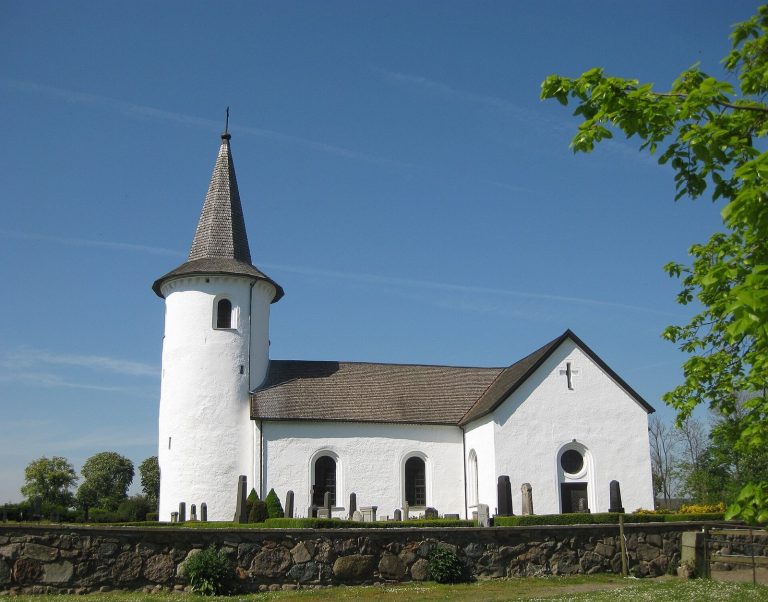
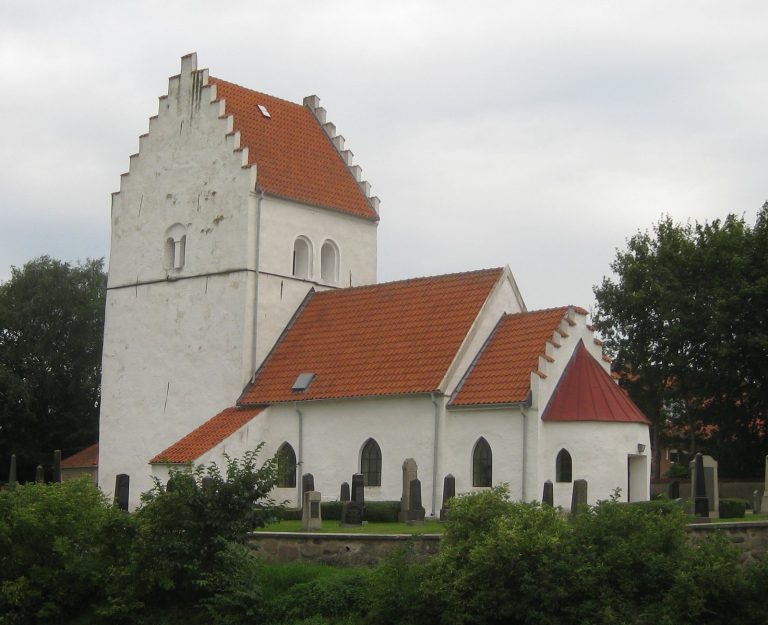
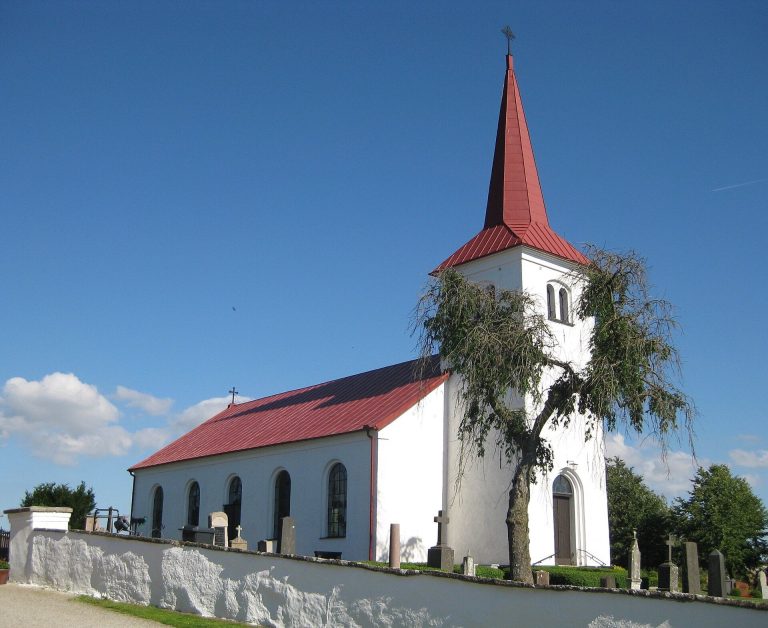
Övraby Church is a Romanesque church in Övraby, Sweden, founded in the 12th century and built in the late 12th century. It is a Lutheran church in Smedstorp parish, a local church community and administrative unit, within the Diocese of Lund, a regional church administration of the Church of Sweden.
Medieval development
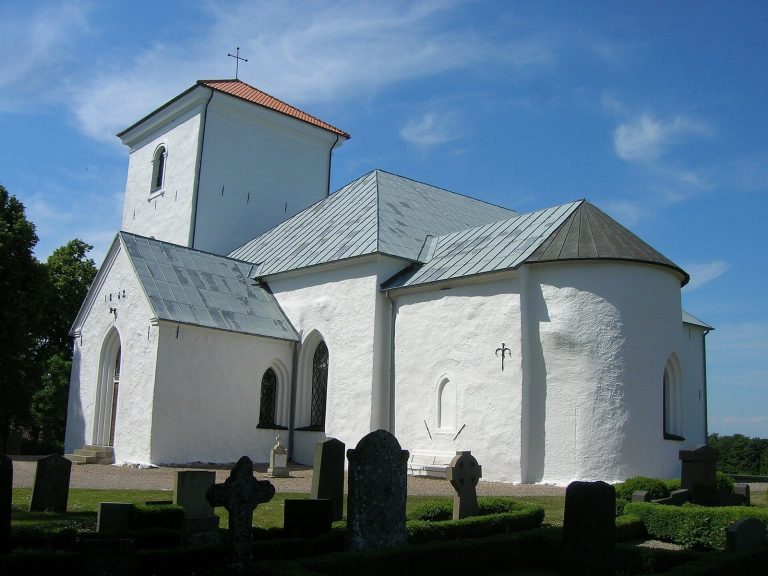
The church was enlarged during the Middle Ages with a tower at its western end and a porch on the north side. In the 15th century, the original ceiling was replaced by vaults, or arched ceilings.
Renovation and repairs
By the end of the 19th century, the building was too small for its congregation. In 1903, the congregation considered replacing it with a larger church, but chose architect Theodor Wåhlin’s proposal for a major renovation. Work followed in 1908–1909, and murals hidden beneath whitewash were uncovered. Further repairs took place in 1967, 1993, and 1995.
Remains
Church fabric and furnishings
Plan and medieval fabric
The church retains a Romanesque plan, with a nave, the main body of the church, a choir around the altar, and an apse, a recess at the eastern end. Its medieval additions include the western tower and northern porch. The 15th-century vaults replaced the earlier ceiling. A door at the front of the apse was bricked up, leaving a leaded-glass window, and the northern porch doors were also blocked. Three small windows were installed in place of the porch entrance and two larger windows. The present entrance was made through the tower.
Apse murals
The apse paintings show Christ in Majesty, a Christian image of Christ in glory and authority, seated on a rainbow with one hand raised in blessing and a copper bracelet on his wrist. Angels and symbols of the Four Evangelists, the biblical writers Matthew, Mark, Luke, and John, surround him, with saints arranged below. Believed to date from the mid-12th century, the murals reflect contemporary continental European art and are among the best-preserved Romanesque murals in Scania. They may be the oldest church wall paintings in Sweden. Sculpted stucco, a plaster-based decorative material, and copper details enrich the painted work.
Interior fittings
Wåhlin’s renovation brought new pews, work on the choir ceiling, and wall decorations. The earlier altarpiece was moved above the sacristy entrance, and the sacristy was relocated to the north, in front of the altar. The pulpit dates to the late 17th century, while the medieval baptismal font was altered in the Art Nouveau style, a design movement prominent around the turn of the 20th century.
Organ and bells
An organ transferred from a church in Malmö was installed in the 1960s. The tower holds a bell dating to the mid-18th century. A second bell, brought from a church at Nedrabö in 1881, was altered in 1908.