Mas de Méjanes: A Historic Agricultural Estate in France
Site at a Glance
- Country
- France
- Primary era
- Medieval
- Eras represented
- Medieval, Early Modern, Modern
- Civilizations
- County of Provence, French, Holy Roman Empire
- Site type
- Domestic
- Remains
- Manor House
On this page11 sections
History
Mas de Méjanes is an estate on the northwestern shore of the Vaccarès lagoon in France, near Albaron and roughly halfway between Arles and Saintes-Maries-de-la-Mer. Its history reaches back to the tenth century, and it may have begun as an outlying monastic post that protected peasants working fields far from their abbey.
Medieval origins and changing lords
The Red Book of the Archdiocese of Arles places the estate’s existence in the tenth century, while records of the Chapter of Arles provide a clearer account from 1048. In 1116, Raimond des Baux acquired the land and fortified it. In 1165, people at Méjanes witnessed a papal schism on the shores of the Vaccarès, as Pope Alexander III and the antipope Paschal III contested the papacy. The Holy Roman Emperor Frederick I Barbarossa supported Paschal.
In 1225, Hugues IV des Baux sold the Vaccarès lagoon to the city of Arles but kept Méjanes. During the Crusades, Hugues des Baux pledged rights over several Camargue villages, including Méjanes, to the house of Arles in return for a substantial loan. After his death, his son sold the estate to the Templars, a Christian religious military order that became its lord in 1240. In the fourteenth century, after proceedings against the Templars, their Provençal commanderies, or estates belonging to the order, were consolidated. Sainte-Luce of Arles received Méjanes, which then passed to the Hospitallers, another religious military order also known as the Order of Saint John of Jerusalem.
Noble ownership and agricultural change
Catalan incursions threatened the Camargue and Arles between 1453 and 1471. In 1483, Nicolas d’Aiguières acquired a quarter of Méjanes. His family gradually gained the entire estate and became its sole lords, as well as lords of Albaron. During the sixteenth century, as the land became less productive, landowners built river embankments to reduce flood risk and support irrigation. Rice, sugar cane and madder were introduced as crops in the Camargue during this period. A locust invasion devastated the region in 1613. The lack of potable water and heavy mosquito infestations led to the abandonment of Méjanes; only its bulls and horses survived.
In the seventeenth century, the estate passed to the Piquet family through the marriage of Pierrette d’Aiguières to Jean-Baptiste de Piquet (1689–1747). His son Guillaume served as consul of Arles during the plague of 1720–1721. Louis XV raised Méjanes to a marquisate in recognition of Guillaume’s conduct. Guillaume’s son, Jean-Baptiste Marie de Piquet, the second Marquis of Méjanes (1729–1786), was a prominent book collector. His collections formed the basis of Aix-en-Provence’s municipal library, the Bibliothèque Méjanes. After his death, the estate passed to his nephew, Jean-Baptiste de Meyran, Marquis de Lagoy.
The Marquis de Lagoy sold Méjanes in 1826 to Count Isidore de Villandry de Montmaur. During the eighteenth and nineteenth centuries, changing transport links benefited the Rhône delta. Steam navigation began on the river, and the railway from Avignon to Marseille via Arles opened in 1848. Wheat, wine and sheep remained important agricultural resources. In the twentieth century, they declined in importance relative to rice cultivation and the breeding of bulls and horses.
The Ricard era
On 29 December 1939, the Saint-Louis Sugar Refineries sold Méjanes to Rose Pauline Joséphine Cournand and her son Paul Ricard. In 1940, the Vichy government, the French regime governing the unoccupied zone during the Second World War, prohibited the sale of alcoholic drinks stronger than 16 degrees. Ricard stopped producing pastis at Sainte-Marthe and turned to farming and milk production in the Camargue. To protect former employees from compulsory labor service, which required people in occupied France to work for Germany, he moved the business and its employees to Méjanes. He bought dairy cattle, and milk output reached as much as 2,500 litres a day. Employees took on work as masons, livestock breeders and agricultural laborers. The estate also produced cereals, vegetables, fruit and rice.
Ricard later made Méjanes a center for Camargue bullfighting and Provençal traditions. He left the estate to his daughter Michèle, who continued its management with her two children and the Guillot family, involved since the 1970s. In 2020, the Ricard company ended its financial support, leaving management to Michèle Ricard and the Guillot family. The estate was registered as a French historic monument in 1941, and its arena is also included in the protected-monument inventory of Saintes-Maries-de-la-Mer.
Remains
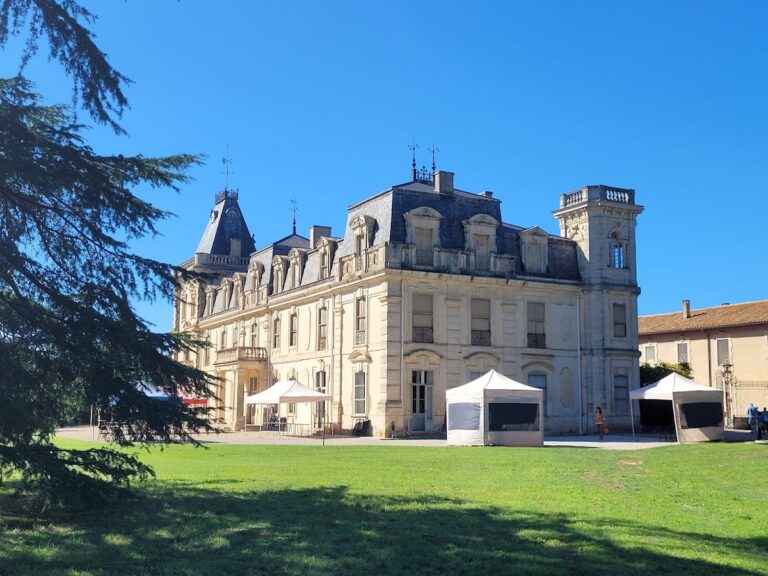
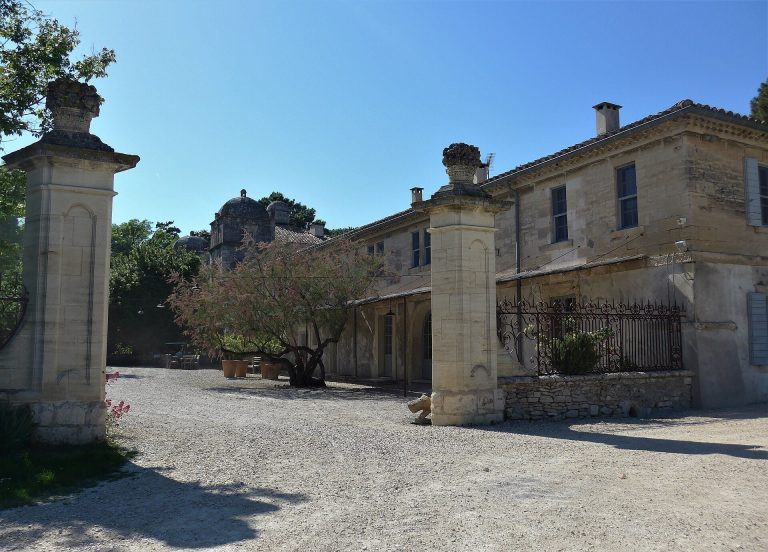
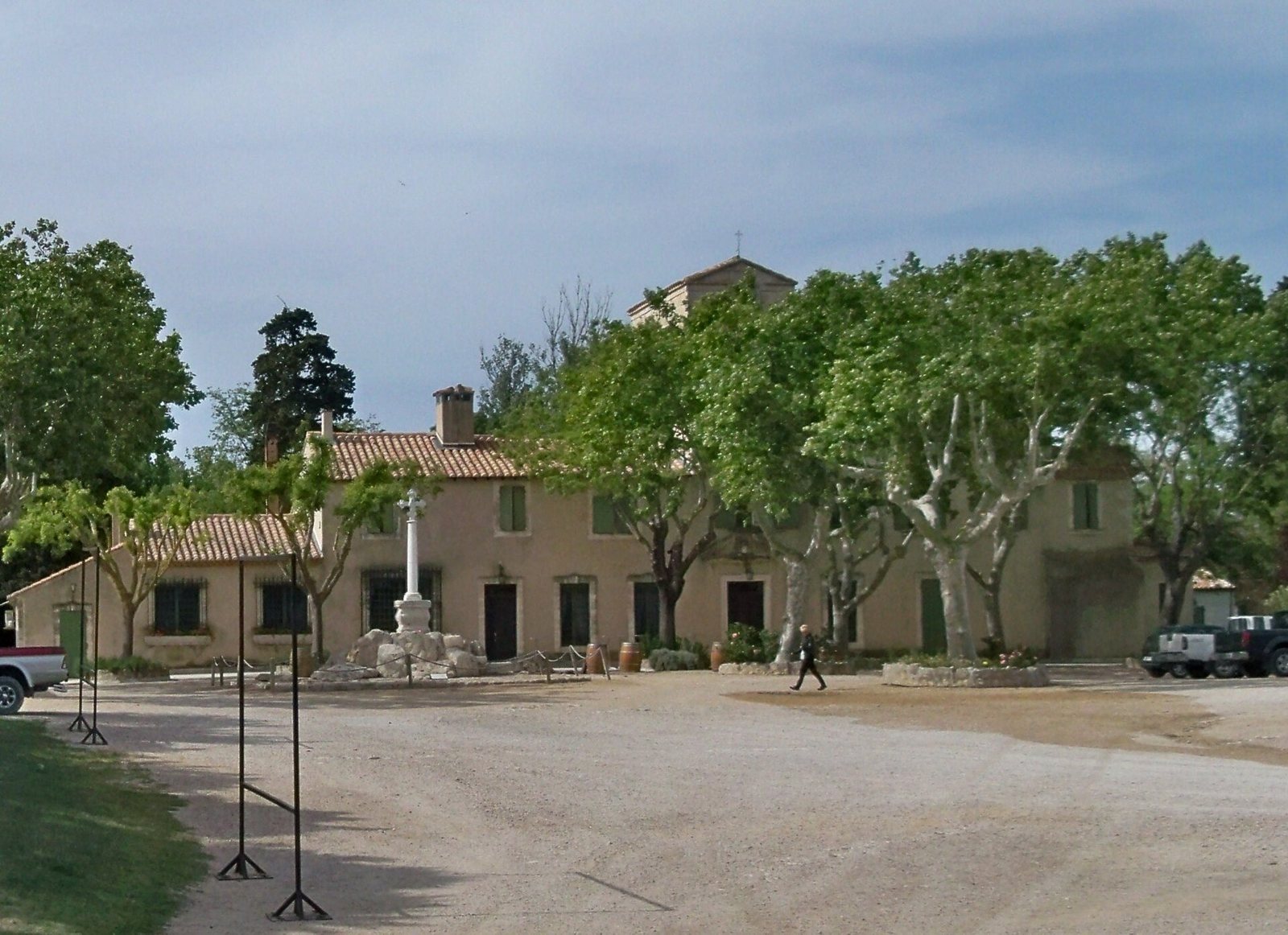
The estate lies beside the Vaccarès lagoon and includes an owner’s residence, a defensive tower, a cross, an arena and extensive farmland. The recorded buildings belong to different periods, from the medieval residence to the twentieth-century arena.
Historic buildings
Residence
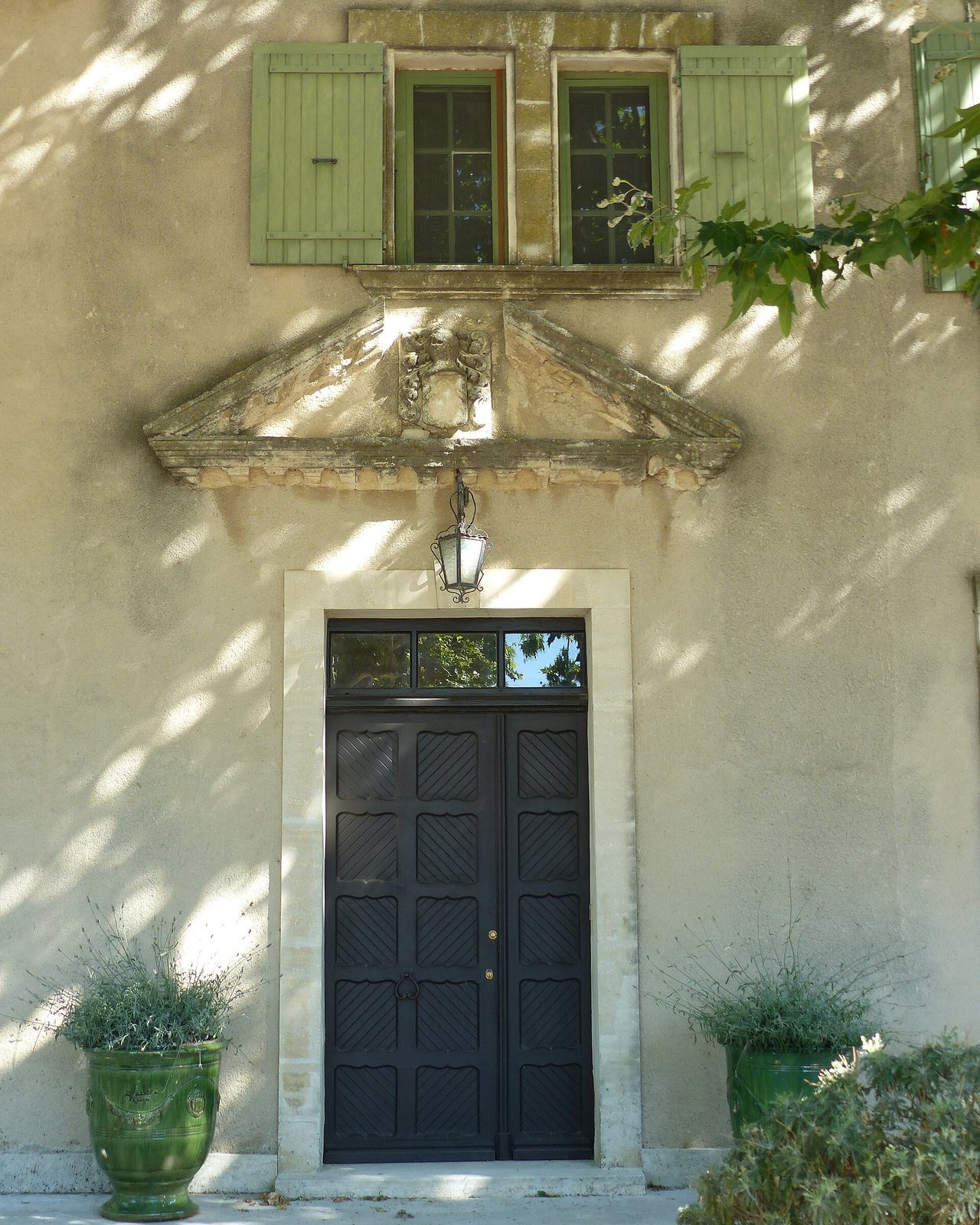
The oldest part of the owner’s residence dates to the thirteenth century. The estate’s history also includes fortification under Raimond des Baux in 1116, although the date of the surviving residence portion is distinct from that event.
Tower and cross
A tower at Méjanes served a defensive purpose and carried a beacon linking Arles with Saintes-Maries. In 1606, Honoré d’Aiguières erected a cross opposite the old tower.
Agricultural land and arena
Farmland
Extensive farmland forms part of the estate. Its agricultural uses have included rice cultivation and the breeding of bulls and horses.
Arena
Paul Ricard’s arena was inaugurated on 3 July 1955. It hosts Camargue events, including the Réjon d’Or, which features leading rejoneadors, bullfighters who perform on horseback.