Vijaydurg Fort: A Maratha Naval Stronghold in Maharashtra
Site at a Glance
- Rating
- 4.6
- Popularity
- Medium
- Country
- India
- Primary era
- Early Modern
- Eras represented
- Medieval, Early Modern, Modern
- Civilizations
- British, Maratha
- Site type
- Military
- Remains
- Fort
On this page15 sections
History
Vijaydurg Fort is a coastal stronghold at Vijaydurg in Maharashtra, India, whose first fortification, attributed to Raja Bhoja II of the Shilahara dynasty, dates to 1193–1205. The Shilaharas ruled parts of western India, and Vijaydurg is regarded as the oldest fort on the Sindhudurg coast.
Shilahara and Maratha rule
In 1653, Shivaji Maharaj captured the fort from Muhammad Adil Shah, ruler of the Bijapur Sultanate, a Deccan sultanate. Previously known as Gheria, it was renamed Vijaydurg. The name combined vijay, meaning victory, and durg, meaning fort; Vijay was also the name of the Hindu solar year at the time. Shivaji restructured the fort and made it a base for Maratha warships.
After Shivaji’s death in 1680, his son Sambhaji succeeded him. Mughal emperor Aurangzeb captured Sambhaji and had him tortured to death on 21 March 1689. Raigad fell to the Mughals later that year, and Sambhaji’s wife, infant son Shahu, and others were taken prisoner. Shivaji’s younger son Rajaram then assumed control of the Maratha Empire.
Angre naval command
During Rajaram’s reign, naval commander Kanhoji Angre made Vijaydurg the capital of his coastal territory in 1698. After Rajaram died in 1700, his widow Tarabai governed the empire in the name of their infant son, Shivaji II, and led successful campaigns against the Mughals from 1700 to 1707. She gave Kanhoji the title Sarkhel, meaning admiral, and his authority at one point extended from Bombay, now Mumbai, to Vengurla.
When Aurangzeb died in 1707, Shahu was released from Mughal captivity and challenged Tarabai and Shivaji II’s claim to the throne. Shahu ultimately became Chhatrapati, the title of a sovereign ruler. In 1713, Tarabai withdrew to govern a smaller territory around Kolhapur in her son’s name; she was later overthrown by Rajas Bai and imprisoned until her death.
That same year, Shahu sent his Peshwa, or chief minister, Balaji Vishwanath, to negotiate with Kanhoji. Kanhoji shifted his allegiance from Tarabai to Shahu, who confirmed his command of the Maratha fleet and granted him 26 forts and fortified places, along with their dependent villages. Kanhoji died on 4 July 1729. After brief periods of control by his sons, Manaji and Tulaji, rivalry divided the Angre family’s territory. Manaji held Kolaba, while Tulaji was based at Vijaydurg. Shahu appointed Tulaji as admiral despite opposition from Peshwa Nanasaheb.
Tulaji seized ships belonging to the British East India Company and held their crews for ransom. He also captured Anjanvel from the Siddis of Murud-Janjira, a ruling and military community associated with the island stronghold of Janjira. Tulaji refused to recognize the Peshwa as his superior, arguing that both served the Chhatrapati as equals. He also refused to pay contributions and raided Peshwa territory. Shahu’s death in 1749 allowed Nanasaheb to pursue action against him. The Peshwa secured British support from Bombay through an agreement under which he would provide land forces and the Company would provide naval forces. If the fort were captured, the agreement stipulated that it would pass to the Peshwa.
British campaigns and later history
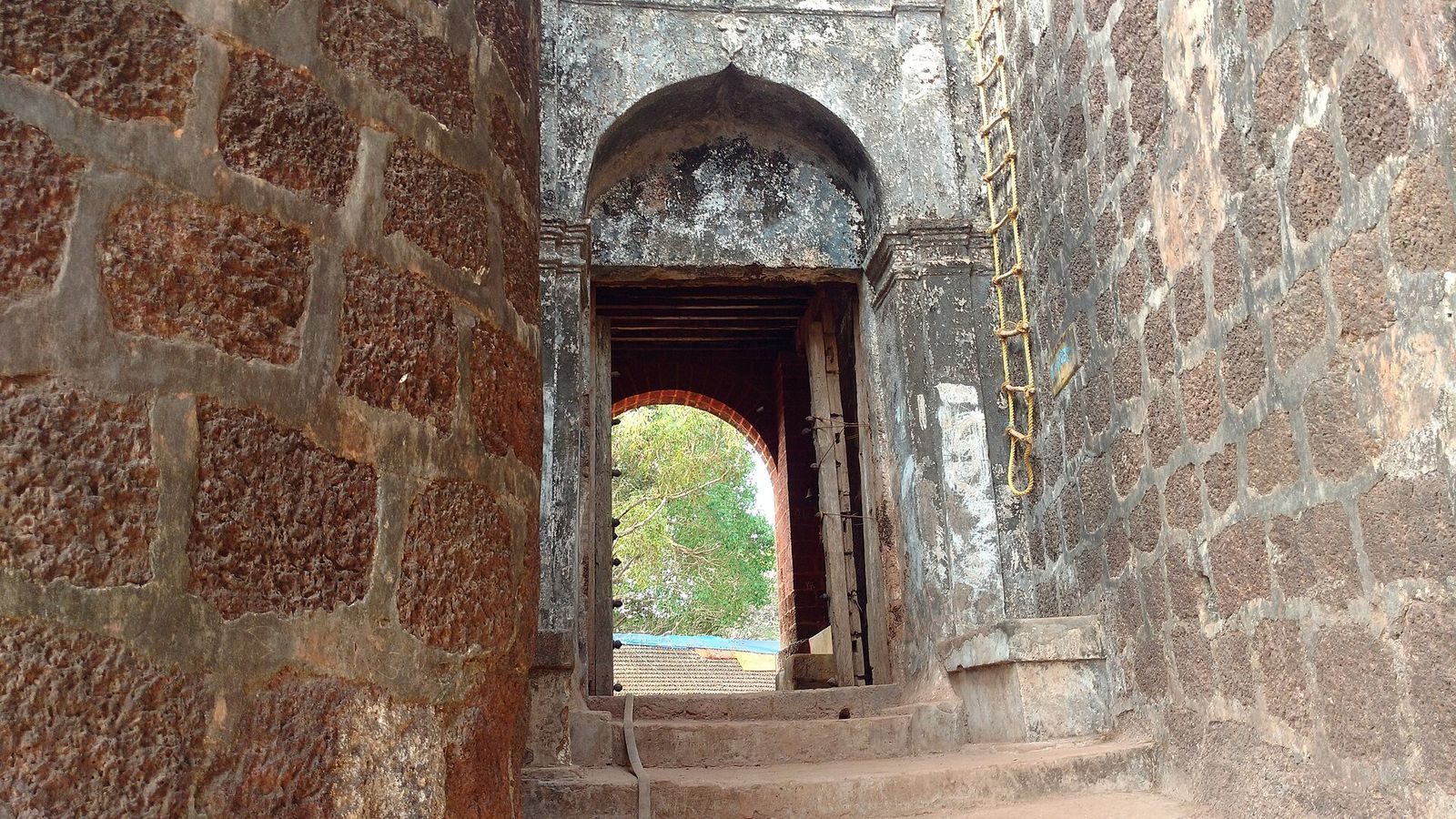
In 1755, Commodore James attacked Suvarnadurg while Peshwa forces seized Angre territory and coastal forts, isolating Vijaydurg. James’s bombardment from the west, including 800 shells fired from about 100 metres, failed to bring down the fort walls. He then moved into the channel between the fort and shore, breached its eastern front and main gate, and caused extensive damage. Garrison members attempting to escape through a sea tunnel were discovered and killed. The garrison surrendered when relief seemed unlikely, and James returned to Bombay for the monsoon. After other Angre forts fell, Vijaydurg remained Tulaji’s last stronghold.
In February 1756, a British force under Admiral Watson gathered near the fort, accompanied by Colonel Clive and 500 marines. Tulaji’s forces comprised 2,000 fighters, 250 guns, and 200 ships. The allied force included 20 British ships and 1,000 Maratha troops under the Peshwa, in addition to the British marines. Maratha ships were packed closely together near the creek mouth. The Company ship Restoration, which the Marathas had captured, caught fire; the flames spread through the Angre fleet and destroyed it. British bombardment damaged the fort and blew up its ammunition store.
Tulaji left the fort to negotiate at the Peshwa’s camp, where he was arrested and sent as a prisoner to an inland fort. After the garrison failed to answer a demand to surrender, Clive landed marines on 11 February 1756 and captured Vijaydurg. The captured stores included 250 cannons, provisions, ammunition, 100,000 rupees, and 30,000 valuable items. Angre forces lost more than 500 fighters, while the British suffered no casualties.
The fort was not immediately handed to the Peshwa as agreed. It was transferred after the East India Company received the town and fort of Bankot in exchange. Angre control ended in 1756, and Vijaydurg passed fully into British hands in 1818. The Archaeological Survey of India, India’s national body for archaeological research and monument protection, has carried out repair and restoration work there as part of wider work on Maratha forts in Maharashtra.
A local tradition places British astronomer Joseph Norman Lockyer at Vijaydurg during the solar eclipse of 18 August 1868 and connects his observation with helium’s discovery. The chronology points elsewhere: French astronomer Jules Janssen observed a bright yellow line associated with helium at Guntur during that eclipse, while Lockyer observed a yellow line in the solar spectrum at West Hampstead on 20 October. Lockyer’s report does not mention an earlier visit to the fort. He later established an observation post at Vijaydurg for the eclipse of 22 January 1898.
In 2021, a nomination covering Vijaydurg was added to UNESCO’s Tentative List. In 2025, the fort was inscribed under cultural criteria iv and vi as part of Maratha Military Landscapes of India, a serial World Heritage property whose component sites are recognized together. Vijaydurg is also a protected monument. Its area is 8.95 hectares, with a buffer zone of 2,935.02 hectares.
Remains
Fort and shoreline defenses
Fortification and setting
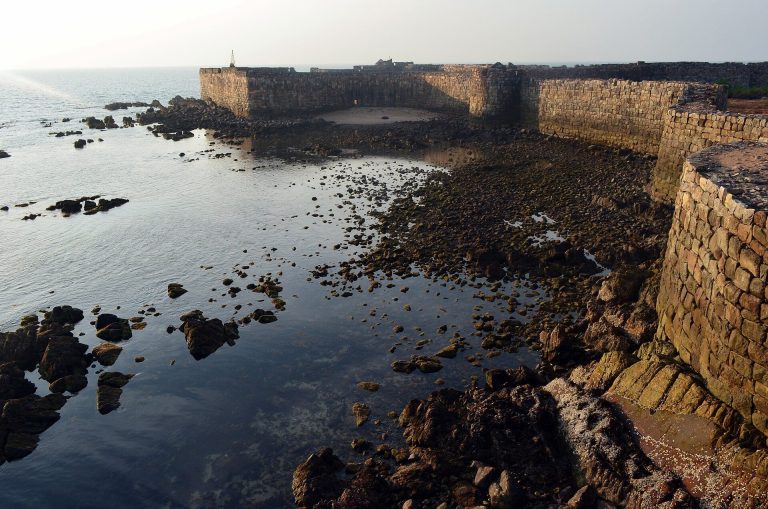
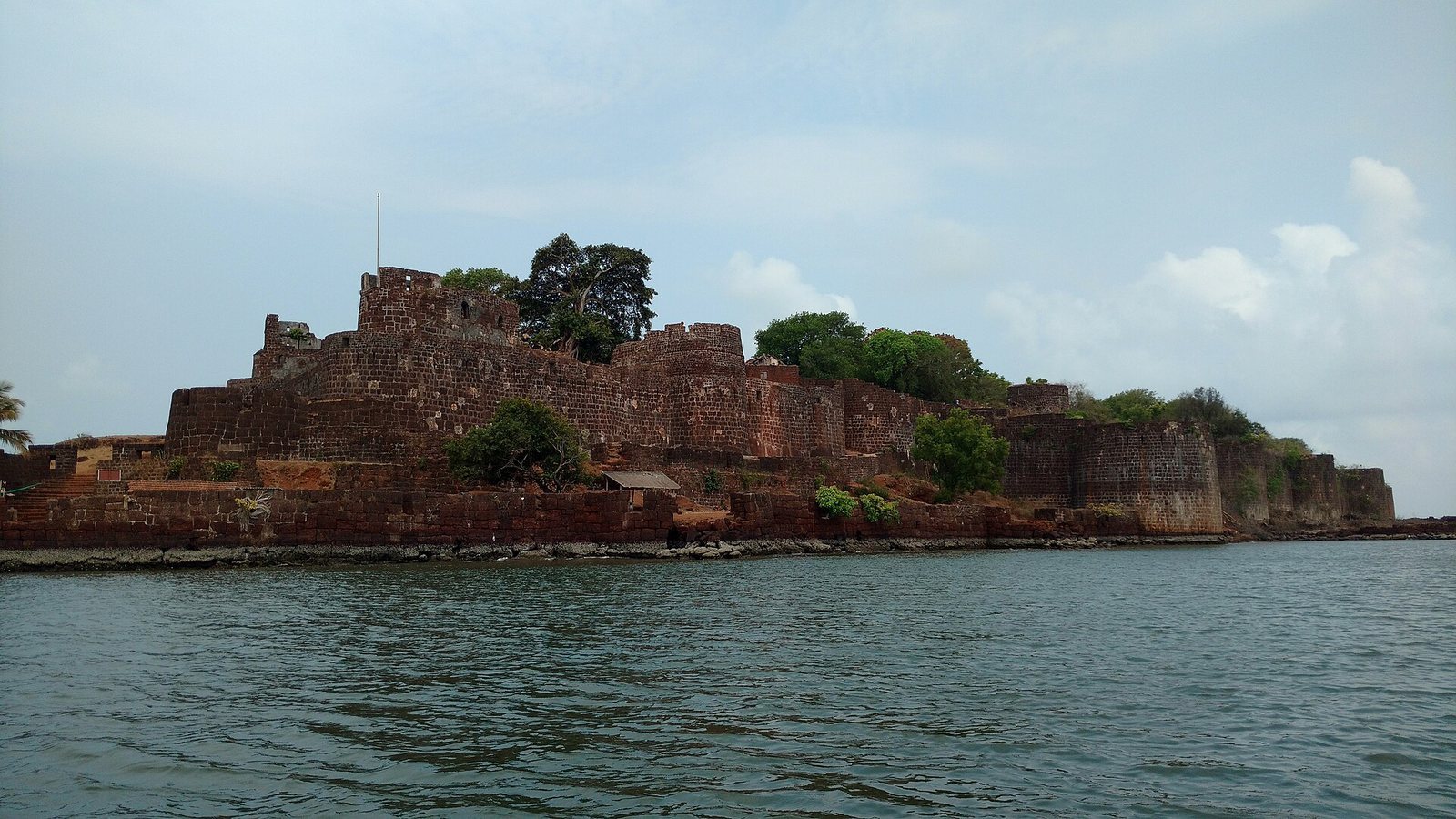
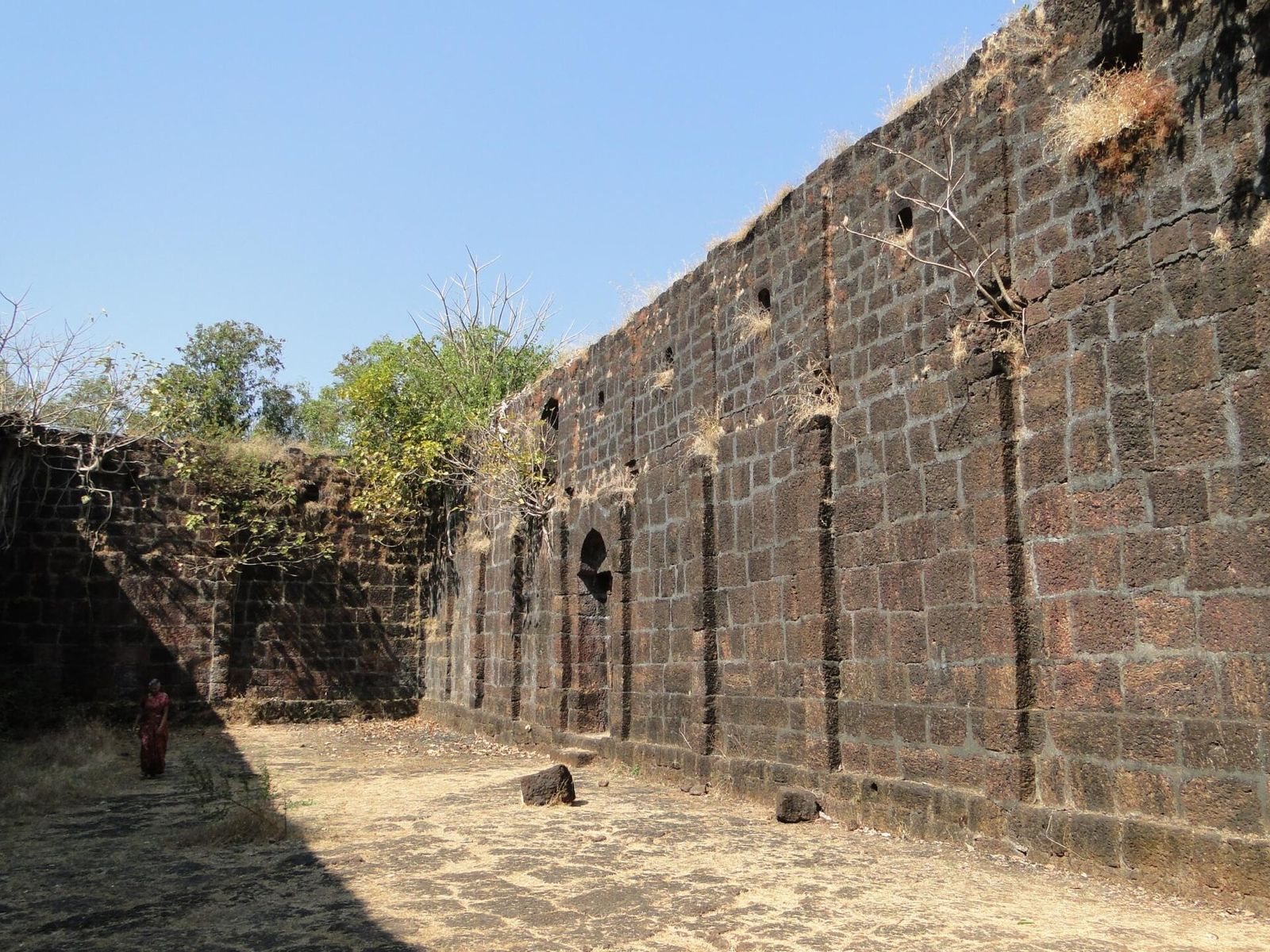
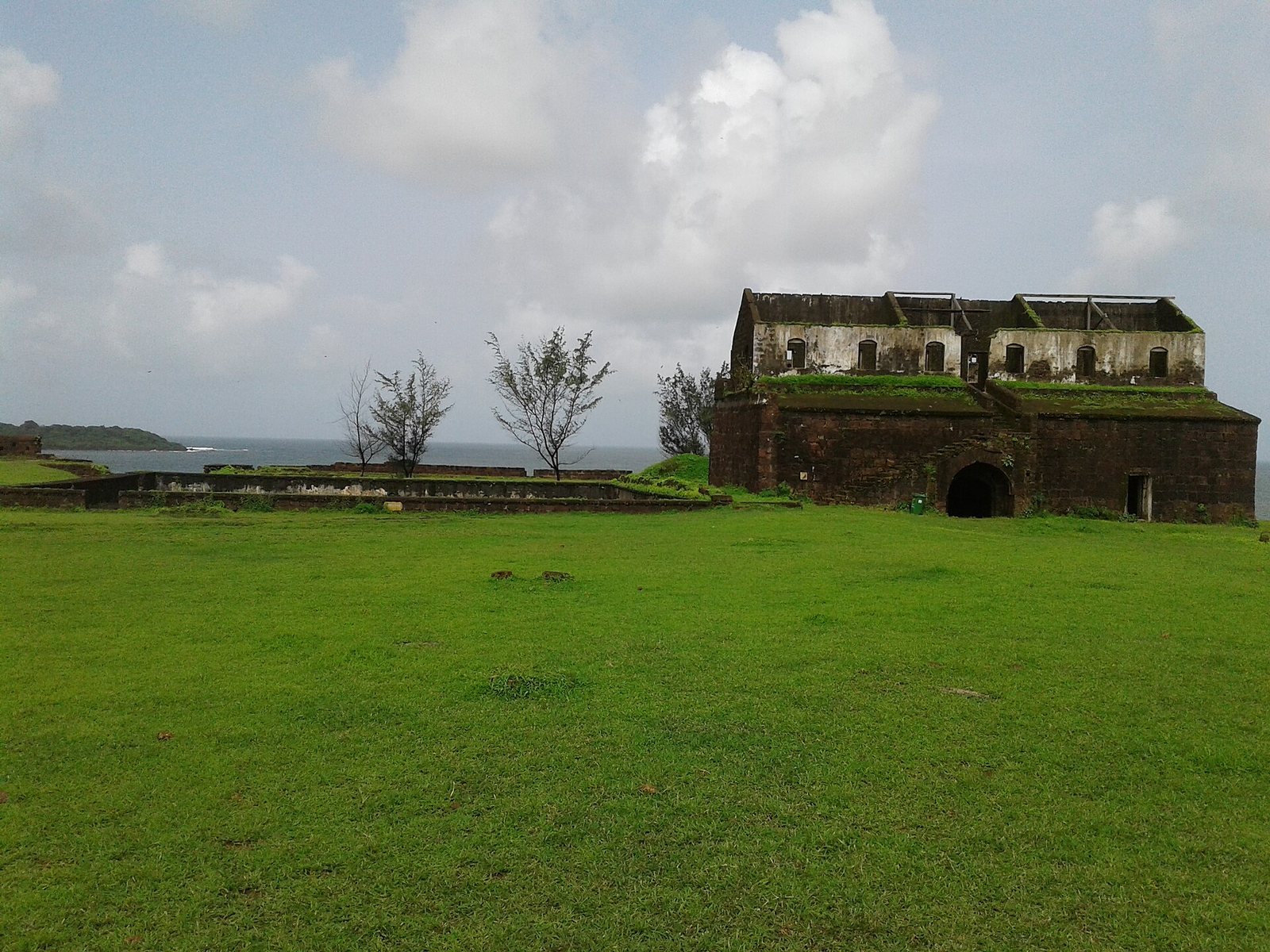
The fort occupies the tip of the Vijaydurg peninsula, beside the 40-kilometre Waghotan Creek, also called Kharepatan Creek. It was formerly surrounded by the sea on all four sides. After its eastern trench was reclaimed and crossed by a road, the Arabian Sea bordered three sides; a narrow road now links the fort to land. The fort was built of stone and mortar. Its area grew from about 20,000 square metres to about 69,000 square metres. Shivaji’s eastward extension included three walls, each 36 metres high, and 20 projecting defensive positions called bastions. The creek’s shallow water excluded large vessels, while Maratha warships anchored there could remain unseen from the sea. The natural port beside the fort is still used by local fishermen, and the fort became known as the “Eastern Gibraltar” because it was considered nearly impregnable.
Underwater wall
Oceanographic evidence supports the presence of a laterite wall offshore at a depth of 8–10 metres. Laterite is an iron-rich reddish rock. The wall is estimated to be 122 metres long, 3 metres high, and 7 metres wide. Attacking ships may have sunk after striking it. Portuguese told the Siddis of Janjira that two Portuguese ships had been lost while approaching the fort.
Naval dockyard
The remains of a rock-cut naval dockyard lie 1.5 kilometres up the Waghotan Creek from the fort. Maratha warships, including vessels with capacities of 400–500 tons, were built and repaired there. The dockyard is 109 metres long, 70 metres wide, and faces north. Smaller vessels were berthed near its inner port. Its southern and eastern sides were cut from natural rock, while the other sides used dry-stone masonry, construction without mortar. Grapnel anchors, whose projecting hooks grip the seabed, and triangular stone anchors have been found in and around the dockyard.
Interior and associated features
Ruined buildings
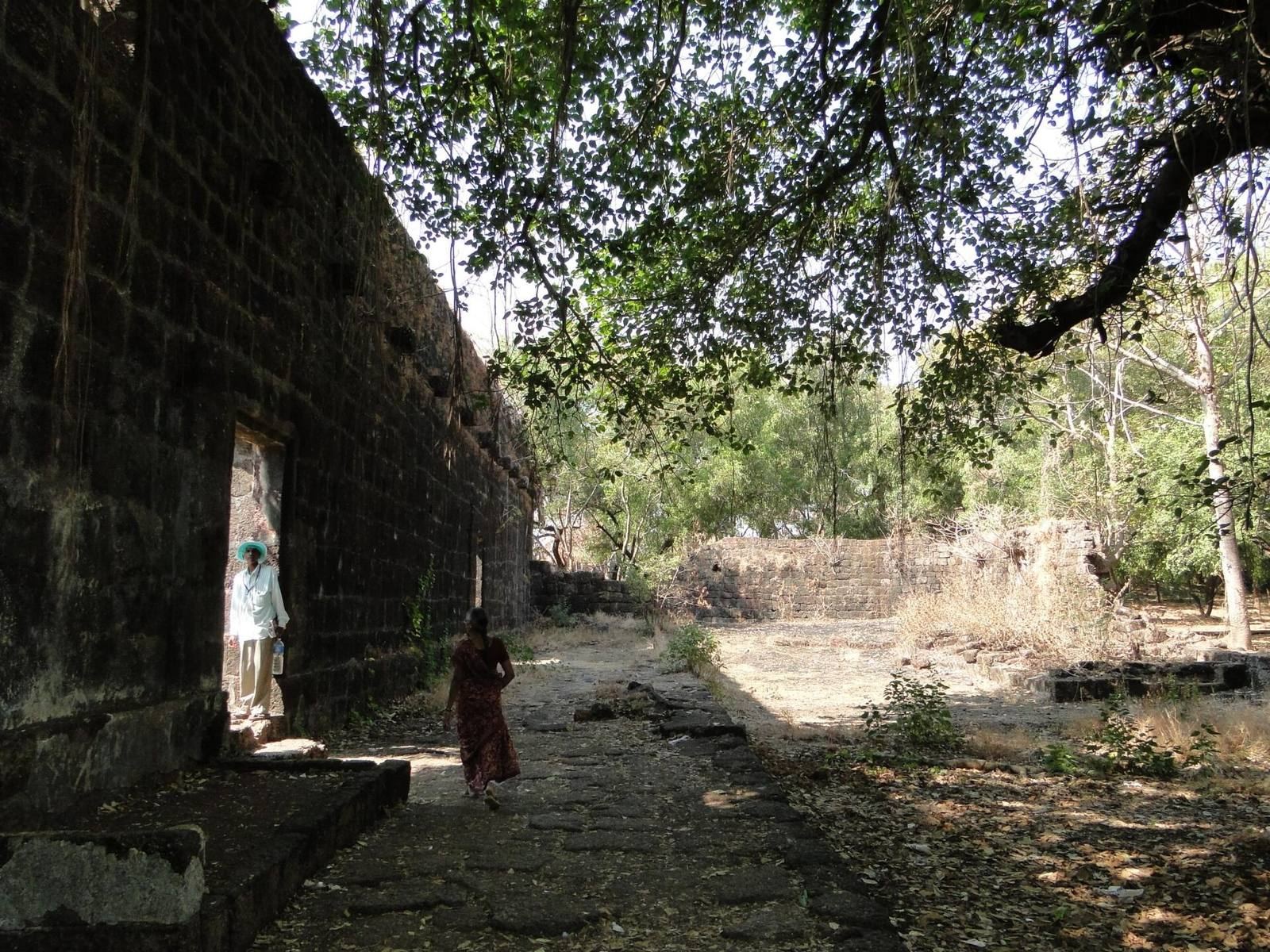
Several ruined structures within the fort display features of Maratha architecture. The food stores and courtyard are among them.
Meeting hall
A Khalbatkhana, or hall for important meetings, is among the fort’s structures. Vijaydurg, Rajgad, and Raigad were the three forts that had such a hall.
Decoy wall
A wall on the hill opposite the fort was built as a decoy. Attackers firing at it would use up ammunition before Maratha forces attacked from behind.
Possible underwater passage
A possible underwater tunnel, about 200 metres long, may have linked the fort to the palatial Dhulap house in the village. If it exists, it is partly blocked and well ventilated, with a roof shaped to guard against landslides.
Observation platform
A platform was built at the fort for Lockyer’s observation post.