Altit Fort: The Former Residence of Hunza’s Hereditary Rulers
Site at a Glance
- Country
- Pakistan
- Primary era
- Medieval
- Eras represented
- Medieval, Early Modern
- Civilizations
- Unclassified
- Site type
- Military
- Remains
- Castle
On this page7 sections
History
Altit Fort is an 11th-century fort in Pakistan, built as the residence of Hunza’s hereditary rulers, known as Mirs, a title used by rulers in parts of Central and South Asia. It remained their home until they moved to nearby Baltit Fort about three centuries later.
The Rulers’ Residence
After the Mirs left, Altit Fort remained under local management. A later building episode is associated with the 16th century, when a local prince married a princess from Baltistan. She brought skilled Balti craftsmen who built at both Altit and Baltit forts.
Names and Ancestry Traditions
The name Altit means ‘this side down’ in Burushaski, the language associated with the Burusho people of Hunza. Burushaski has no demonstrated genealogical relationship to another known language. Local tradition gives the settlement’s earliest name as Hunukushal, meaning ‘village of Huns’, followed by Broshal, meaning ‘village of Burushaski speakers’. The Huns are traditionally linked to China’s Huang-Ho Valley.
Local accounts offer different explanations of ancestry. Some people associated with the fort trace their descent to the White Huns, a Central Asian people often identified with the Hephthalites, who are said in one tradition to have arrived in AD 47. Burusho residents also claim descent from Greek soldiers in the army of Alexander the Great, the Macedonian king whose campaigns reached parts of western and central Asia. Elders connect the White Huns with Alexander’s soldiers as well, and say their return from China began settlement at Altit. In this tradition, the White Huns are ancestors of the Khanu Kuts.
Tribal Histories
Altit’s population is associated with four major tribes, each divided into gutti, or subgroups, whose origins may differ from those of the larger tribe. Khanu Kuts elders trace the ancestors of their subgroups to places including Tajikistan, Zabak, Diamer, Thakar Khan, Hopper, and Nagar. Most Khanu Kuts households live in Burum Khan, an old settlement cluster. The tribe also retains the Saath Guy privilege, the right to begin village activities, work, events, and festivals.
Hussain Kuts also claim to have been Altit’s first settlers, and explain their name as deriving from ‘Hun’. Their ancestors are said to have migrated from Tibet or Ladakh; another local tradition links their arrival to an attack on Altit by Kisar. The tribe is remembered as powerful and dominant in the village for centuries. According to tradition, after it caused difficulties for the Raja of Gilgit, a South Asian title for a ruler or prince, he ordered its members killed with the help of other tribes.
Hukalo Kuts elders trace their ancestor to a royal family in Baltistan, with later arrivals from Shigar and Nagar joining the tribe. Its subgroups include the Moankuts, among them Mamu Kuts, Moukuts, and Habib Kutz, as well as Sort Kuts, Nazar Kutz, Mushkil Kuts, Baghorik, Jinu Kuts, Bathu Kuts, Bulush Kuts, Toq Kuts, Attakuz, and Galyu Kutz.
Shoshoroting elders trace their ancestors to Rome. Their oral tradition recounts a migration from Rome to Bakhtar in eastern Iran, where the group ruled for about three or four years. After fighting central-government forces, they left by way of Afghanistan and the Hindu Kush, eventually reaching Altit after many years. Different Shoshoroting subgroups trace their origins to different places.
Religious Change
Shamanism, religious practice involving a specialist understood to mediate between people and the spirit world, existed alongside Buddhism and Hinduism in the area. Islam arrived in the 15th century, and around 1830 many people adopted Ismailism, a branch of Shia Islam.
Restoration and Recognition
Before restoration work in the 2000s, the fort was in poor condition. The Aga Khan Trust for Culture, an organization focused on cultural heritage conservation and restoration, carried out the work with support from the Government of Norway. Restoration was completed in 2010. In 2011, the fort received UNESCO’s Asia-Pacific Award of Distinction for cultural heritage conservation; UNESCO is the United Nations agency concerned with education, science, and culture.
Remains
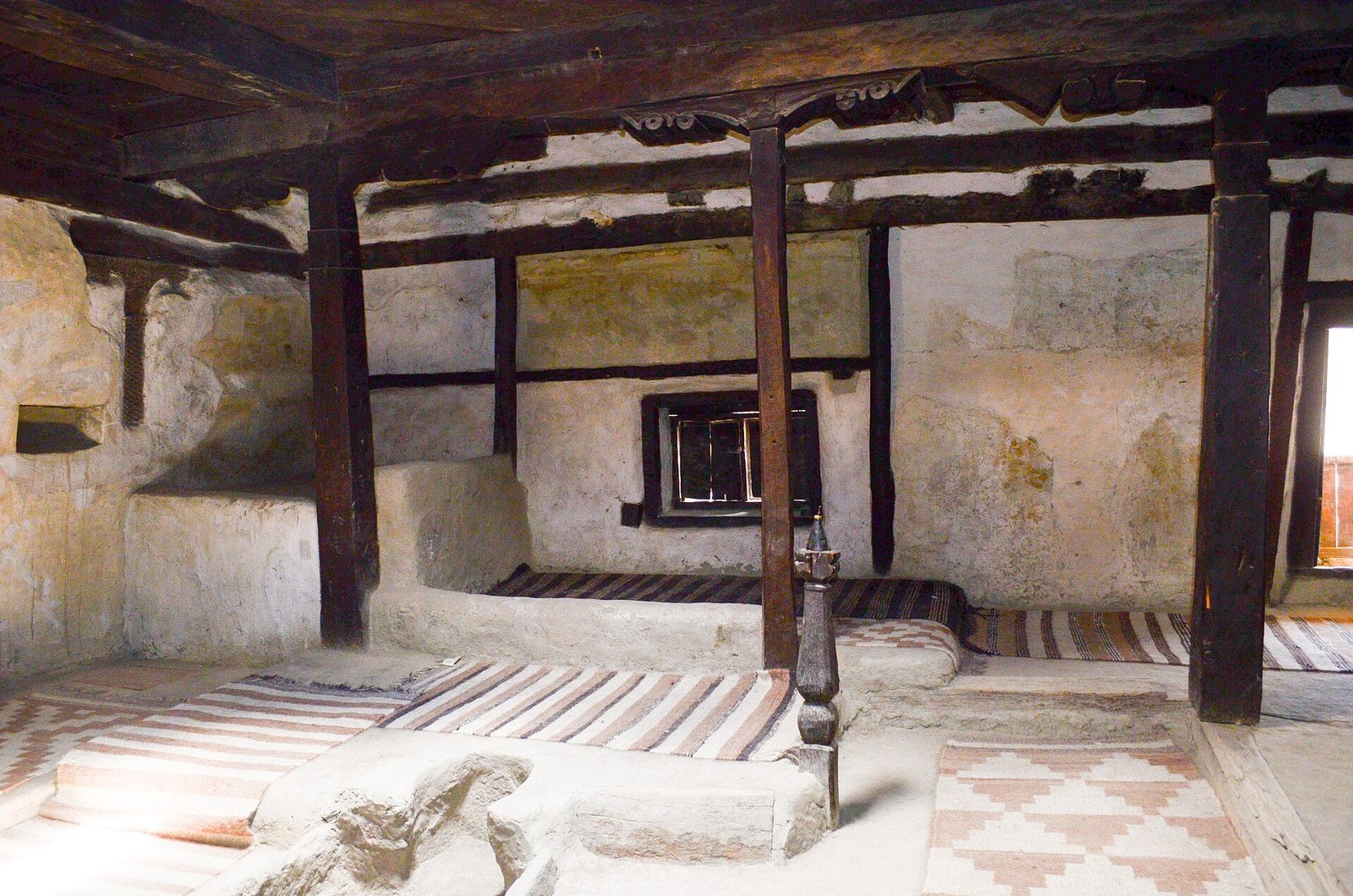
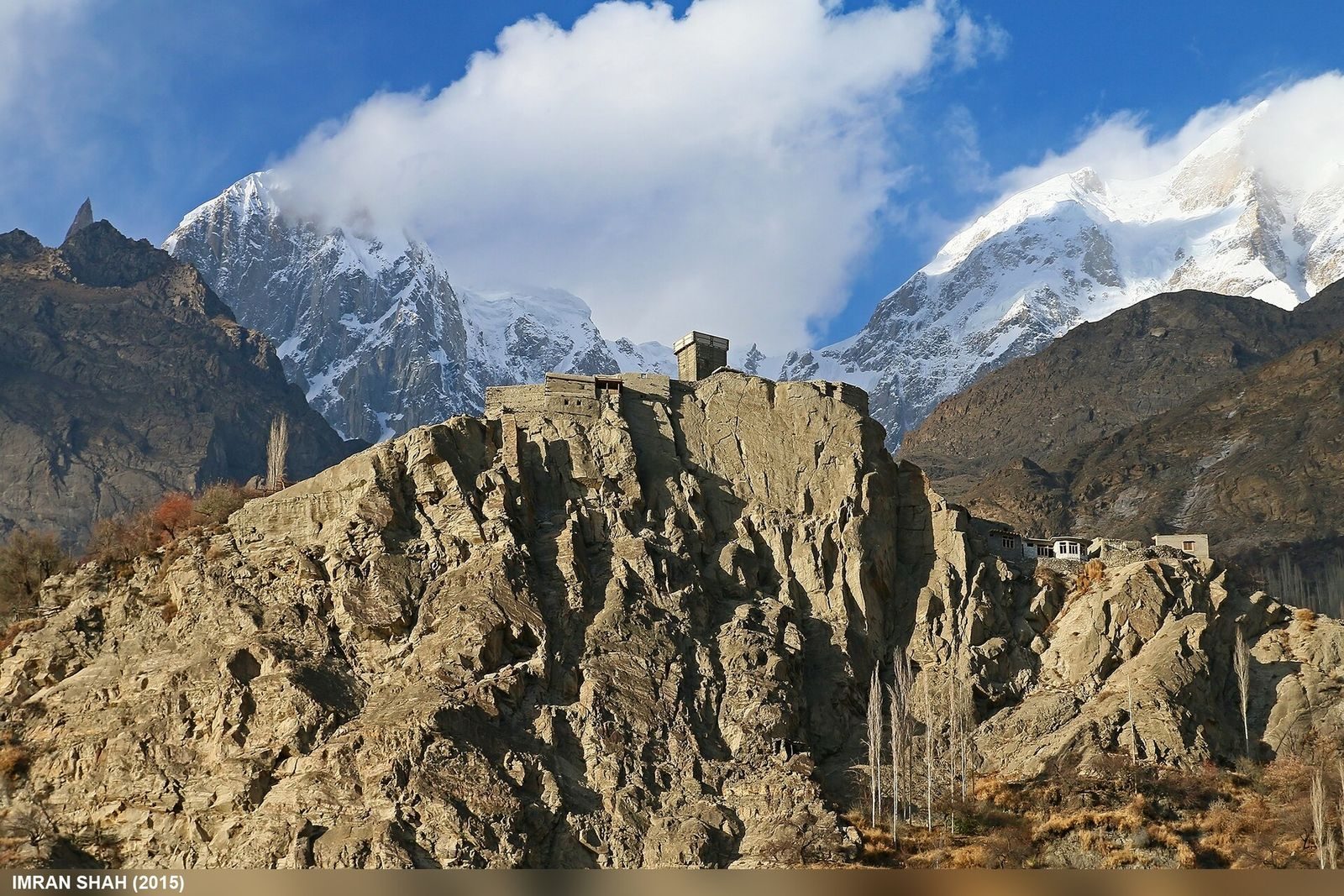
Altit Fort stands on rock above a strong base, and its construction uses stone, wood, and mud. The fort contains small rooms and low doorways decorated with finely carved wood. Its identified features include a principal tower and the named Shikari Tower.