Al Fahidi Fort: Dubai’s Historic Defensive Stronghold and Museum
Site at a Glance
- Country
- United Arab Emirates
- Primary era
- Modern
- Eras represented
- Early Modern, Modern
- Civilizations
- Unclassified
- Site type
- Military
- Remains
- Fort
On this page9 sections
History
Al Fahidi Fort is a defensive stronghold in Bur Dubai, Dubai, United Arab Emirates, whose present form was built in 1878. Its origins reach back to the late eighteenth century. Built to protect the city, it is Dubai’s oldest surviving building.
Defensive stronghold and changing roles
The fort served as a lookout, with guards watching at night to protect the city and residents’ property from thieves. It was also the ruler’s residence until 1896, when the ruler moved to Shindagha, a historic district of Dubai. In later years, the building was used as a court and public prosecutor’s office, an ammunition store, and a prison.
Buti and Saeed, sons of Dubai ruler Rashid bin Maktoum, were imprisoned at the fort before being sent into exile. After their father’s death, they had tried to displace their uncle, Maktoum bin Hasher, another ruler of Dubai in the late nineteenth century.
Restoration and museum
The fort was restored in 1970 using original construction materials. On 12 May 1971, Sheikh Rashid bin Saeed Al Maktoum, a twentieth-century ruler of Dubai, officially opened it as the Dubai Museum to preserve the history and heritage of the city.
In 1987, concern that parts of the fort might collapse led to the museum’s relocation into underground rooms. A new underground section opened in March 1995. The Dubai Culture and Arts Authority manages the site, and the fort’s image has appeared on the front of the United Arab Emirates’ 100-dirham banknote.
Remains
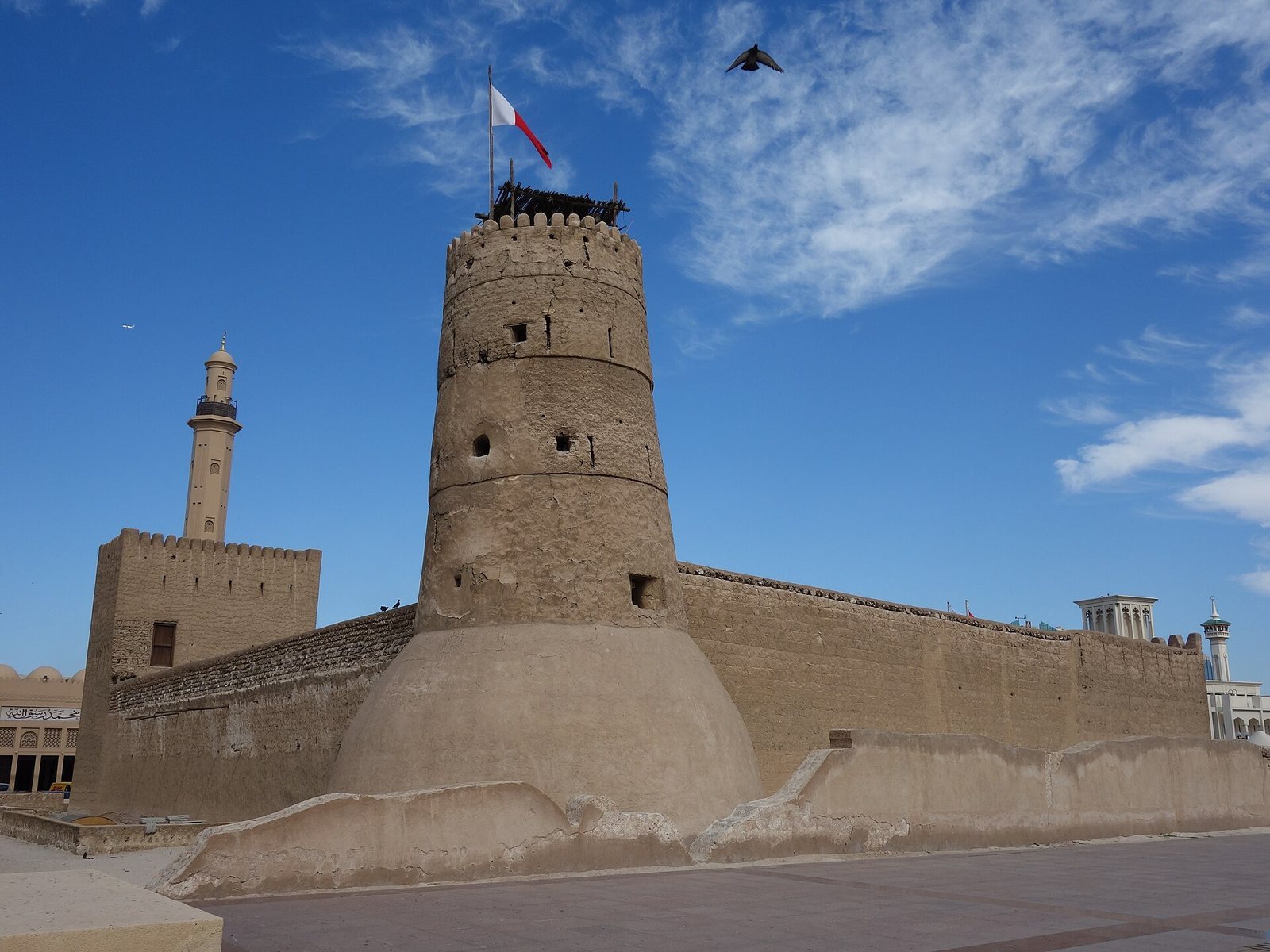
The square fort covers about 1,535 square metres and stands in central Bur Dubai, near the Persian Gulf and the ruler’s administrative offices. It lies between the Ali bin Talib area and Al Fahidi Road, about 60 metres west of the historic Bastakiya neighborhood, with the offices between the neighborhood and the fort. High, thick walls enclose a courtyard. Marine stone coated with plaster, clay, coral, and shell rock bonded with lime form the structure; the roof uses interlinked palm trunks and wood.
Fort structure
The first construction stage comprised the inner section and surrounding wall, covering 723 square metres, along with an east-facing wooden gate and a water-storage basin. Later additions included a large round tower at the northeast corner and a rectangular tower on the northwest side. The fort’s upper parts served as cannon positions, with two large cannons placed atop the round tower. An arms and gunpowder store and several rooms for soldiers were also added; the soldier rooms date to between 1900 and 1920.
Museum displays
Courtyard and fort exhibits
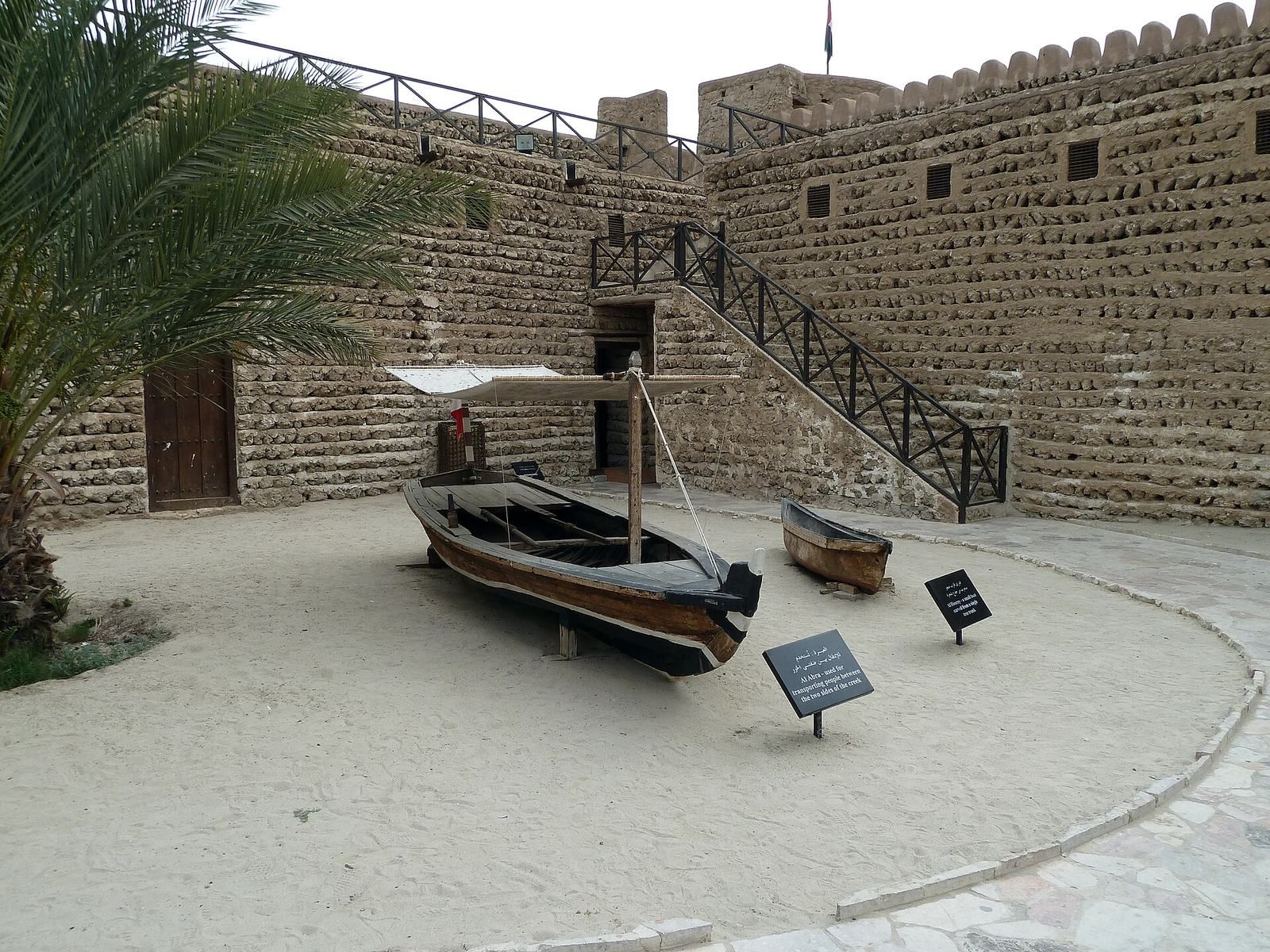
Displays in the courtyard include models of small boats and a traditional house made from palm-frond materials, topped by a traditional wind tower. Inside the fort, models of old weapons and historic war clothing are exhibited.
Underground exhibition
The underground exhibition presents Dubai’s development through scenes of traditional markets, a mosque, a dwelling, farms and oases, desert life, maritime work, pearl diving, fishing, and boatbuilding. Its themed sections cover old Dubai’s markets, mosques, and houses; land, agriculture, and oases; desert life; astronomy and natural phenomena; the sea; archaeology; folk arts; weapons; and the city’s old fortifications. The oasis displays show agricultural settlements, irrigation channels, and water distribution to farmland. Other sections present desert tents, clothing, and fire-making practices, as well as shipbuilding, fishing, pearl diving, and related equipment. The weapons displays address traditional arms, their manufacture, and their use.
Archaeology and cultural life
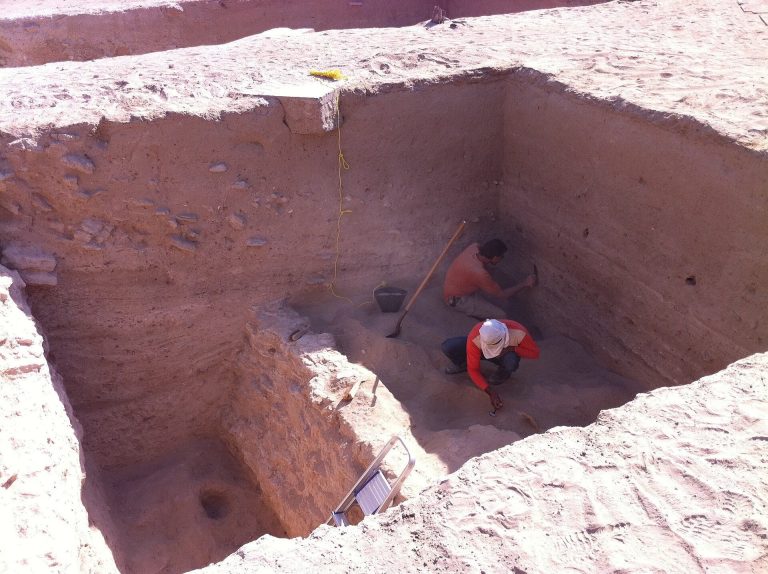
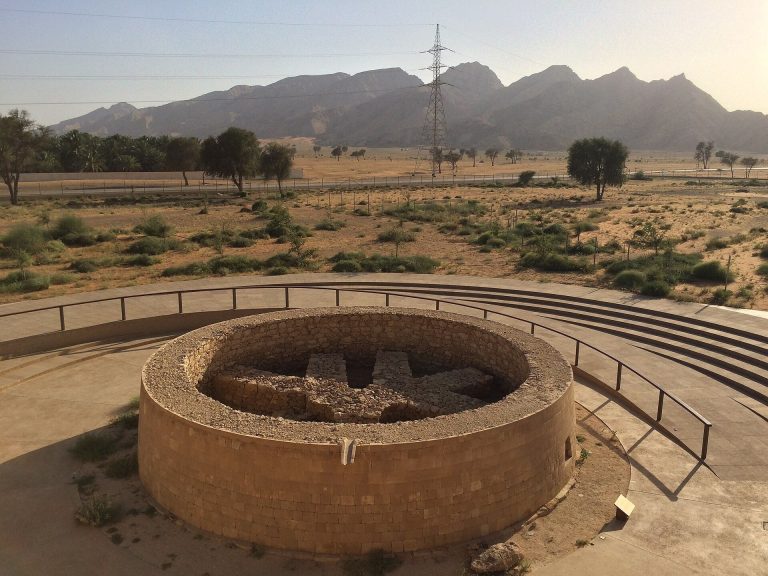
Archaeological displays include copperware, ceramics, and pottery from graves dated to around 3,000–4,000 years ago. Other finds come from archaeological areas at Hatta, Al Sufouh, Al Qusais, and Jumeirah; many are associated with burial sites dated to the first and second centuries BCE. The collections also include bronze objects and stone tools. Displays of folk arts feature drums, tambourines, flutes, and the rababa, a traditional bowed string instrument, as well as the Ayala, a traditional group dance of the United Arab Emirates. The museum also holds a large library of books and historical reference works.