Drake’s Island: A Coastal Fortress in Plymouth Sound
Site at a Glance
- Country
- United Kingdom
- Primary era
- Modern
- Eras represented
- Early Modern, Modern
- Civilizations
- British, English
- Site type
- Military
- Remains
- Fort
On this page11 sections
History
Medieval tenure and Tudor fortification
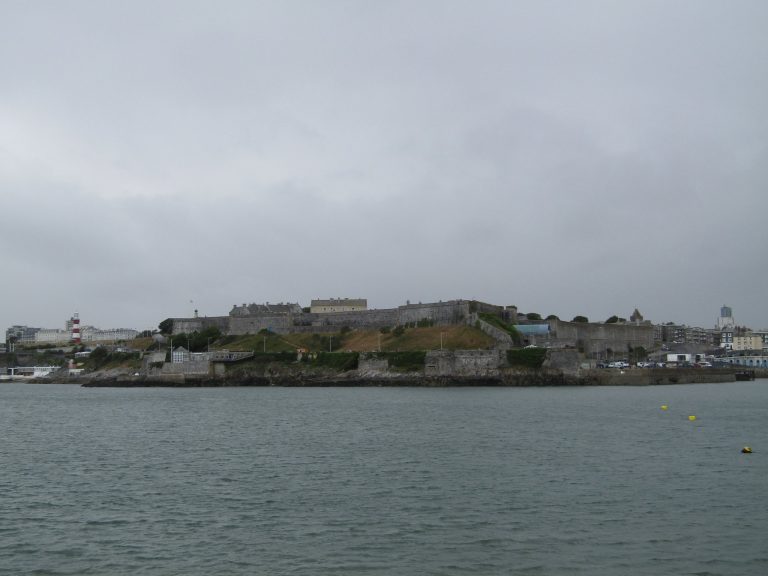
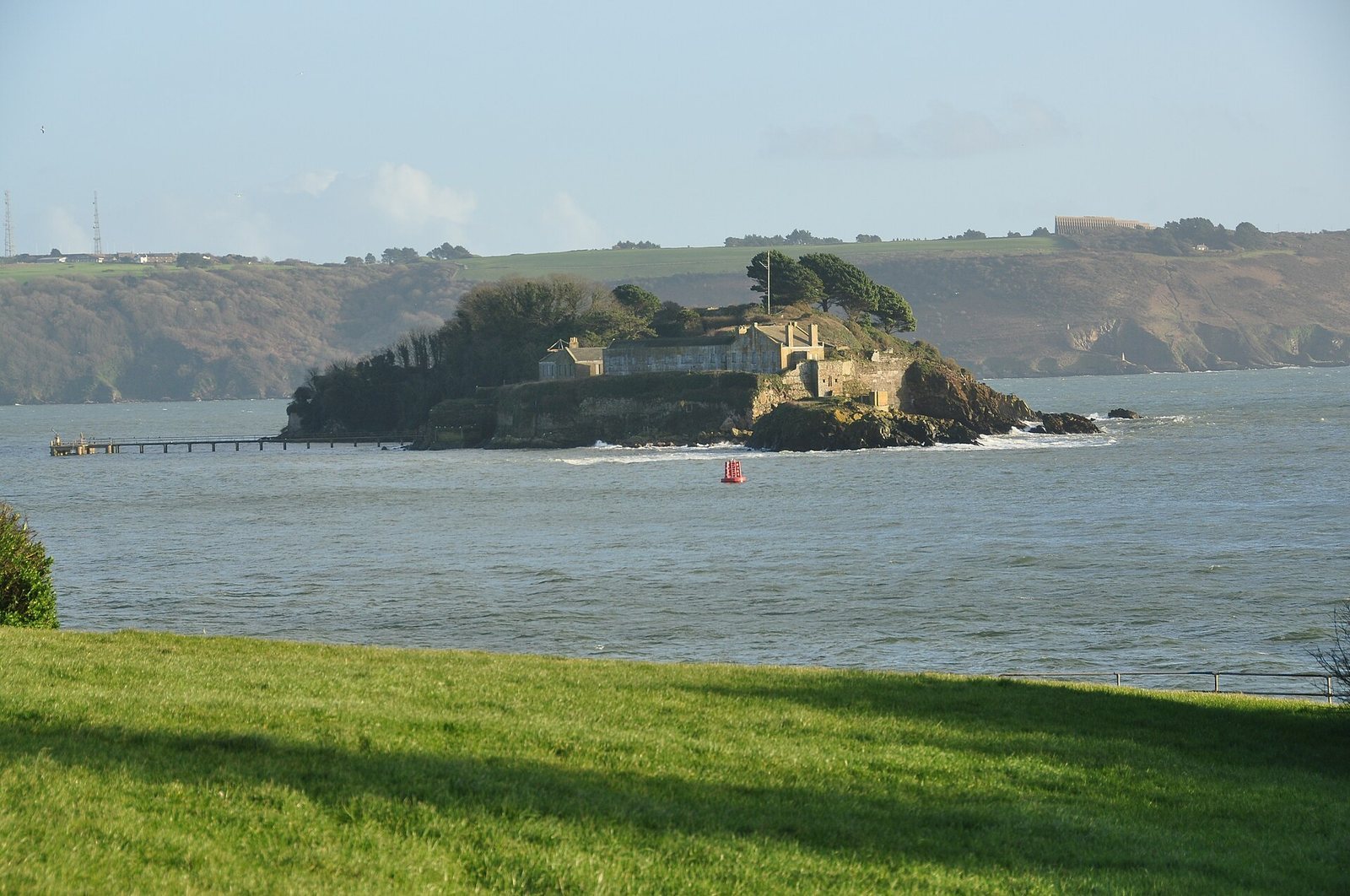
Drake’s Island is an island in Plymouth Sound, United Kingdom, where coastal fortification began in 1549. The island was first recorded in 1135 as St Michael’s, when the Valletort family bequeathed it to a monastery at Plymouth. Its chapel was later rededicated to St Nicholas, giving the island the name St Nicholas’s Island.
In 1549, the chapel was removed to make way for defenses against France and Spain. The late-sixteenth-century fortress included barracks for 300 soldiers. In 1599, as England prepared for the Spanish Armada, shore barricades were added and the fortress was enlarged.
Drake and the Civil War
From the late sixteenth century, the island was sometimes called Drake’s Island after Sir Francis Drake, an English navigator who commanded the first English expedition to sail around the world. Drake departed Plymouth in 1577 and returned in 1580; the island was the voyage’s starting and ending point. In 1583, it passed to the English Crown, and Drake became its governor. St Nicholas’s Island remained in use on maps into the nineteenth century, while Drake’s Island became the usual name in the early twentieth century.
During the English Civil War, fought between supporters of Parliament and supporters of the king, Plymouth declared for Parliament in 1642. The island helped defend the city during the Royalist siege. Sir Jacob Astley, a Royalist commander, served as governor before Sir Alexander Carew took the post. Carew was arrested after accusations that he supported the Royalists and sheltered them, and was later executed in the Tower of London.
Prison and changing defenses
After the restoration of the English monarchy, the island served as a state prison for about 25 years. Robert Lilburne, a Parliamentarian officer imprisoned for life for his part in the execution of Charles I, died there in 1665. John Lambert, a senior general in Parliament’s reorganized New Model Army, was transferred from Guernsey, where he had been imprisoned since 1662, and died on the island in the winter of 1683.
For centuries, the island helped protect the three original towns that later formed Plymouth. The opening of the naval base at Devonport in 1691 gave it a new role as an outer defense post. In 1717, Colonel Lilley judged its defenses ruinous and unable to withstand an attack. The island was again called St Nicholas Island in 1763. By 1771, a force of artillerymen was stationed there, though its defenses could barely resist an invasion. The Royal Artillery maintained the island’s defenses from then until the Second World War.
In June 1774, carpenter John Day died while testing a wooden diving chamber attached to the sloop Maria. His death, which occurred north of the island, was the first recorded fatality during a submarine test.
Modern coastal defenses and military withdrawal
A Royal Commission on the Defence of the United Kingdom recommended major improvements to Plymouth’s defenses in 1859. Work on the island began around 1860 but remained incomplete in 1880. The guns were later modernized, and additional batteries and wire-guided torpedoes strengthened the defenses before the Second World War. During that war, the island again served a military role. The guns were removed in 1947, and the garrison had withdrawn by 1956. Although the War Office declared the island no longer necessary for defense that year, its departure was not complete until 1963.
Adventure centre and development proposals
In 1963, Plymouth City Council obtained a Crown lease to establish a youth adventure training centre, which opened in 1964. The island was connected to mains water that year, and a telephone line followed in 1987. The Mayflower Centre Trust’s adventure centre closed in 1989, after which the Trust surrendered its lease and sold its boats and sports equipment.
The Crown Estate put the island up for sale in 1995, and Dan McCauley bought it with plans for a hotel complex. Plymouth City Council rejected his application for a hotel and leisure complex with a helipad in 2003; he submitted another planning application in 2011. In May 2005, members of the anti-nuclear protest group Trident Ploughshares occupied an empty building on the island.
In 2017, McCauley received planning consent for a proposed hotel and spa with 25 bedrooms, linking Island House, the barracks block and the ablutions building. The island was sold to Morgan Phillips in 2018, and he planned a museum and heritage centre. In August 2026, it was offered for sale again with permission for a 43-bedroom hotel; Phillips’s company, Plymouth Sound Properties Ltd, was in receivership. Island House, the barracks block and the ablutions building are Grade II-listed, an English designation for buildings of special architectural or historic interest.
Remains
Island setting and early fortifications
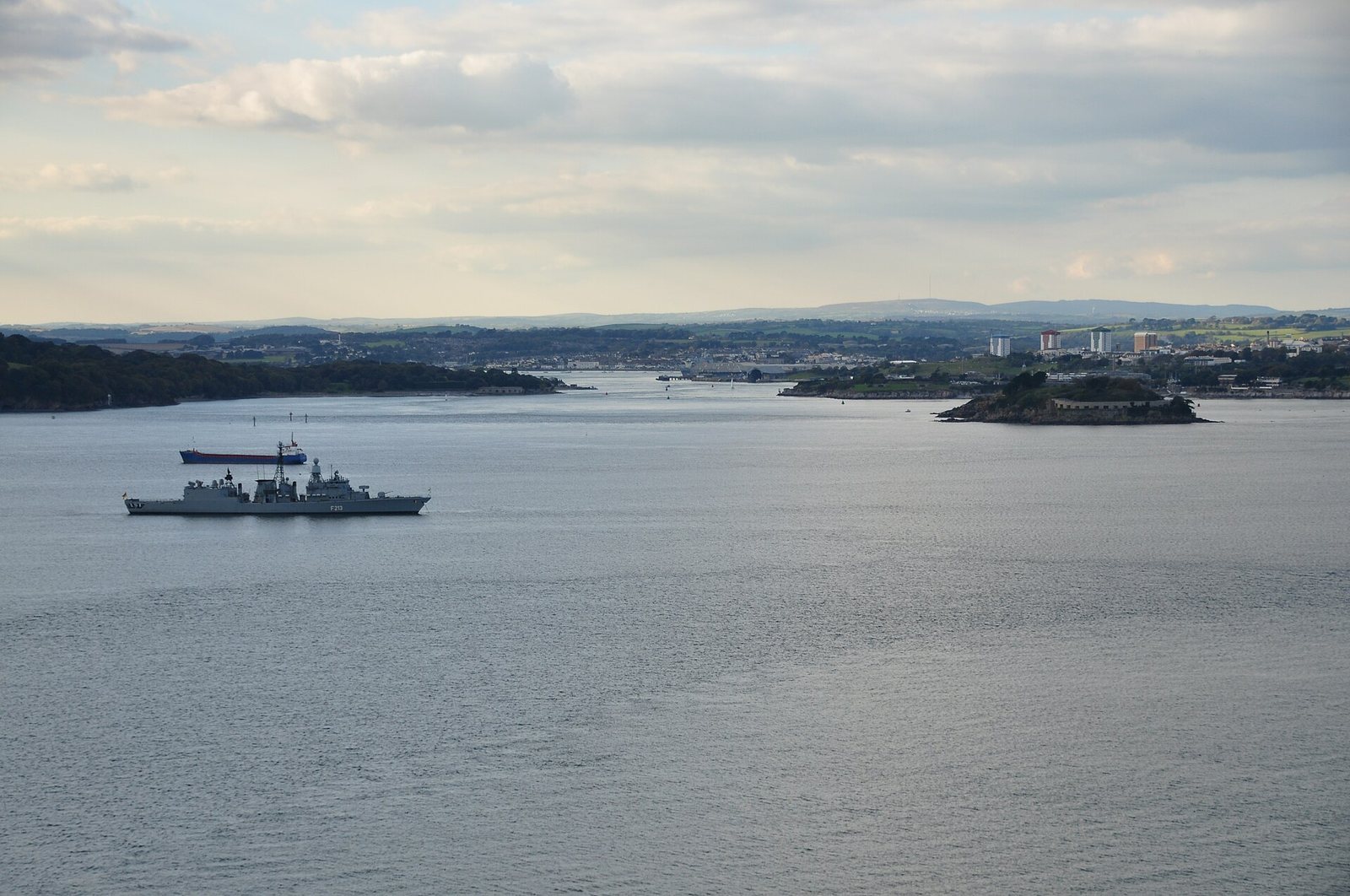
Drake’s Island lies about 500 metres from the mainland. It covers 2.6 hectares, measures roughly 400 metres long and 100 metres wide, and rises to 29 metres. Its rocks include volcanic ash rock and lava, as well as marine limestone from the Devonian period, approximately 419 to 359 million years ago. The fortifications were arranged around a central battery, with further gun positions at the southern and southwestern ends. The late-sixteenth-century works included a fortress and barracks built to accommodate 300 soldiers.
Gun positions and batteries
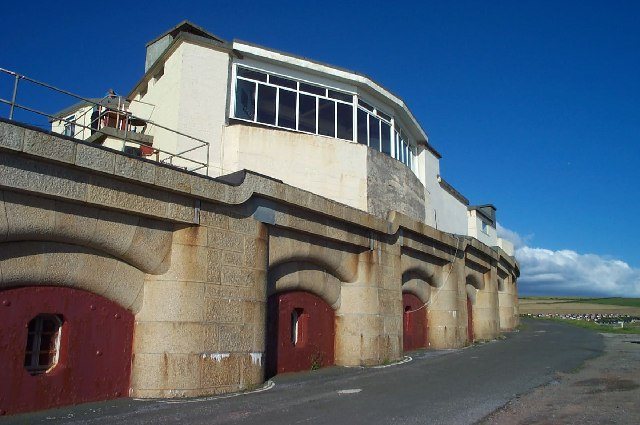
The island’s armament in 1763 comprised twenty-three 32-pounder guns, six 18-pounder guns and two 13-inch mortars. Under the nineteenth-century defense program, five 12-inch guns, loaded through the barrel’s open end, were placed in uncovered positions protected by earthworks. At the southwestern end, a curved line of 21 9-inch guns occupied protected stone gun chambers fitted with iron shields. The 12-inch guns were later replaced by guns loaded at the rear, while the original weapons were buried beneath earth.
Later armament and wartime installations
By 1901, six 12-pounder quick-firing naval guns, designed for rapid firing and reloading, were arranged in two groups of three. Three 6-inch guns became the main armament that year. The island’s defenses also included Brennan torpedoes, early weapons guided by wire. Second World War installations included anti-aircraft guns and a twin 6-pounder gun installed in 1942.
Island buildings
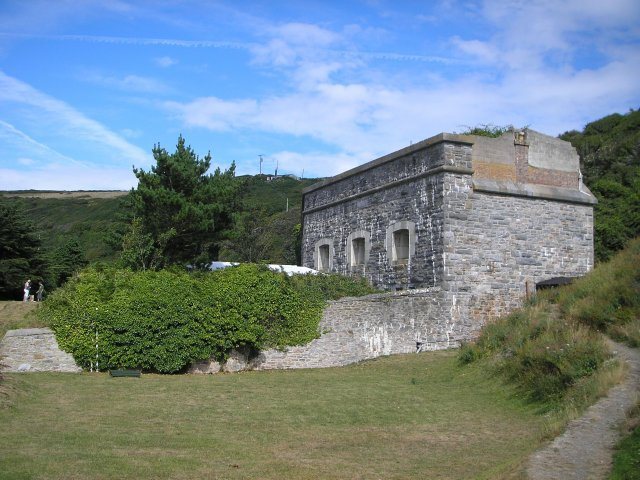
Island House, the barracks block and the ablutions building, which provided washing and toilet facilities, are separate structures on the island.