Fort Knox: A Coastal Defense Fort on the Penobscot River
Site at a Glance
- Country
- United States
- Primary era
- Modern
- Eras represented
- Modern
- Civilizations
- Unclassified
- Site type
- Military
- Remains
- Fort
On this page10 sections
History
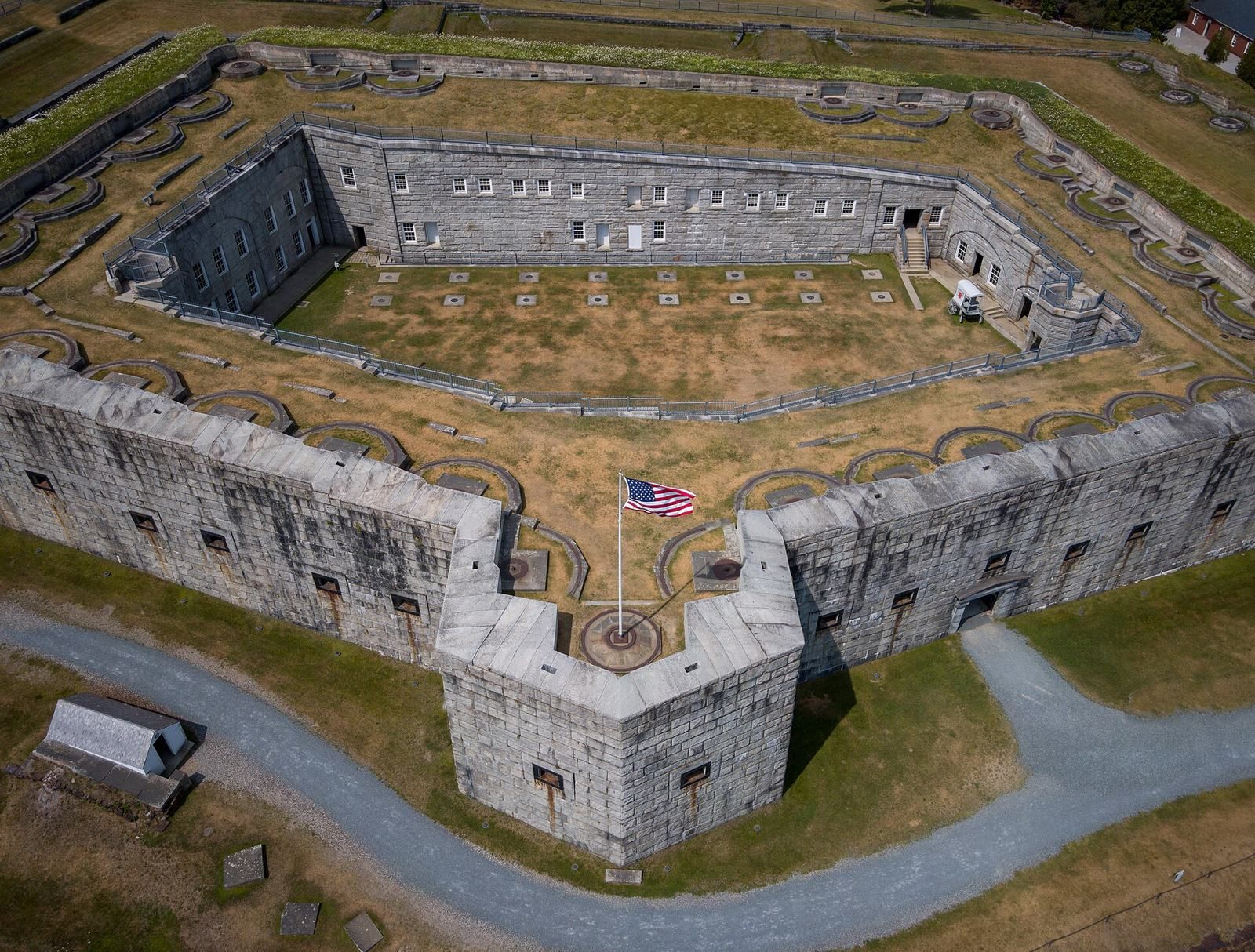
Fort Knox is a coastal fort built by the United States on the western bank of the Penobscot River in Prospect, Maine, United States; construction began in 1844 as part of the Third System, a national program to strengthen defenses against attack by sea. The fort was intended to protect the Penobscot valley and Bangor, both important sources of shipbuilding lumber. Its construction reflected fears of renewed conflict with Britain, shaped by memories of earlier military losses and raids.
The failed Penobscot Expedition of 1779 cost the Americans 43 ships and about 500 casualties. In 1814, British forces won at Hampden, followed by the looting of Hampden and Bangor. These events helped foster anti-British feeling in eastern Maine. The Aroostook War of 1838–1839 renewed concern about another attack. Fort Knox was named for Major General Henry Knox, the first U.S. secretary of war and an artillery commander during the American Revolutionary War. Late in life, he lived near Thomaston.
Construction and military use
Joseph G. Totten, a prominent U.S. military engineer specializing in fortifications, designed Fort Knox. Army engineer officers Isaac Ingalls Stevens and Thomas L. Casey supervised the work. Funding arrived intermittently, and construction continued until federal support for masonry forts ended in 1869. About $1 million had been spent, yet the design remained incomplete. During the Civil War, Casey oversaw changes to accommodate Rodman cannon, large U.S. artillery pieces developed in the nineteenth century, and supervised completion work at the fort.
Fort Knox never saw battle, although it was manned during wartime. Maine volunteers, mostly recruits training before assignment to active duty, formed its Civil War garrison. During the Spanish-American War, a conflict between the United States and Spain, a Connecticut regiment served there. Congress appropriated funds shortly after the war began for a controlled minefield in the river.
After the war, the garrison was reduced to an ordnance sergeant, an Army specialist responsible for weapons and military stores. He maintained the fort and reported to Fort Preble in South Portland. In 1900, a permanent storehouse for naval mines was established at Fort Knox.
State stewardship
In 1923, the federal government declared the property surplus and offered its 125-acre grounds for sale. Maine purchased them for $2,121, and the state has administered the fort as a historic site since 1943. Fort Knox was added to the National Register of Historic Places in 1969 and designated a National Historic Landmark in 1970. The nonprofit Friends of Fort Knox, formed in the 1990s, later took part in the site’s preservation while the state retained ownership.
Remains
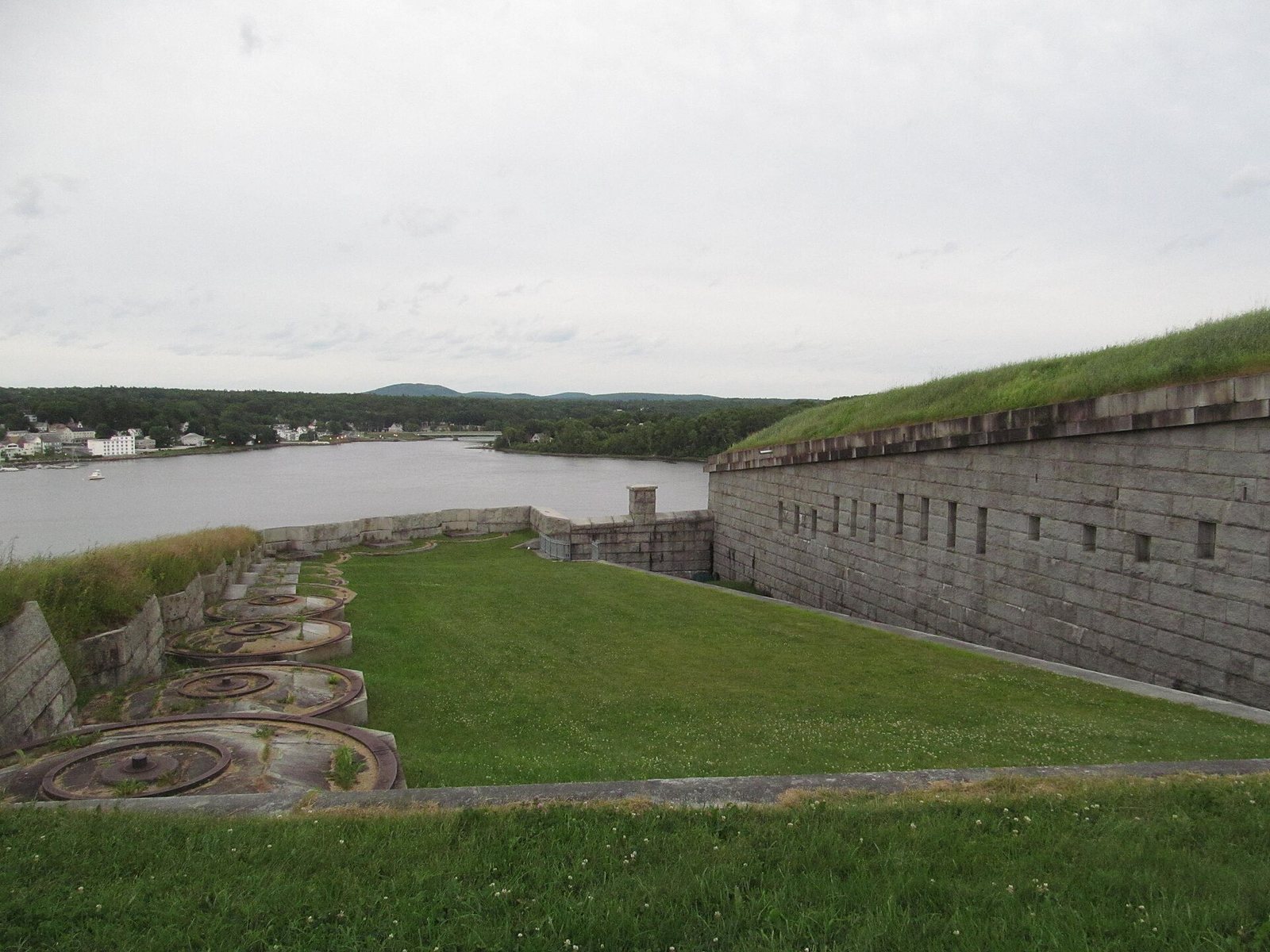
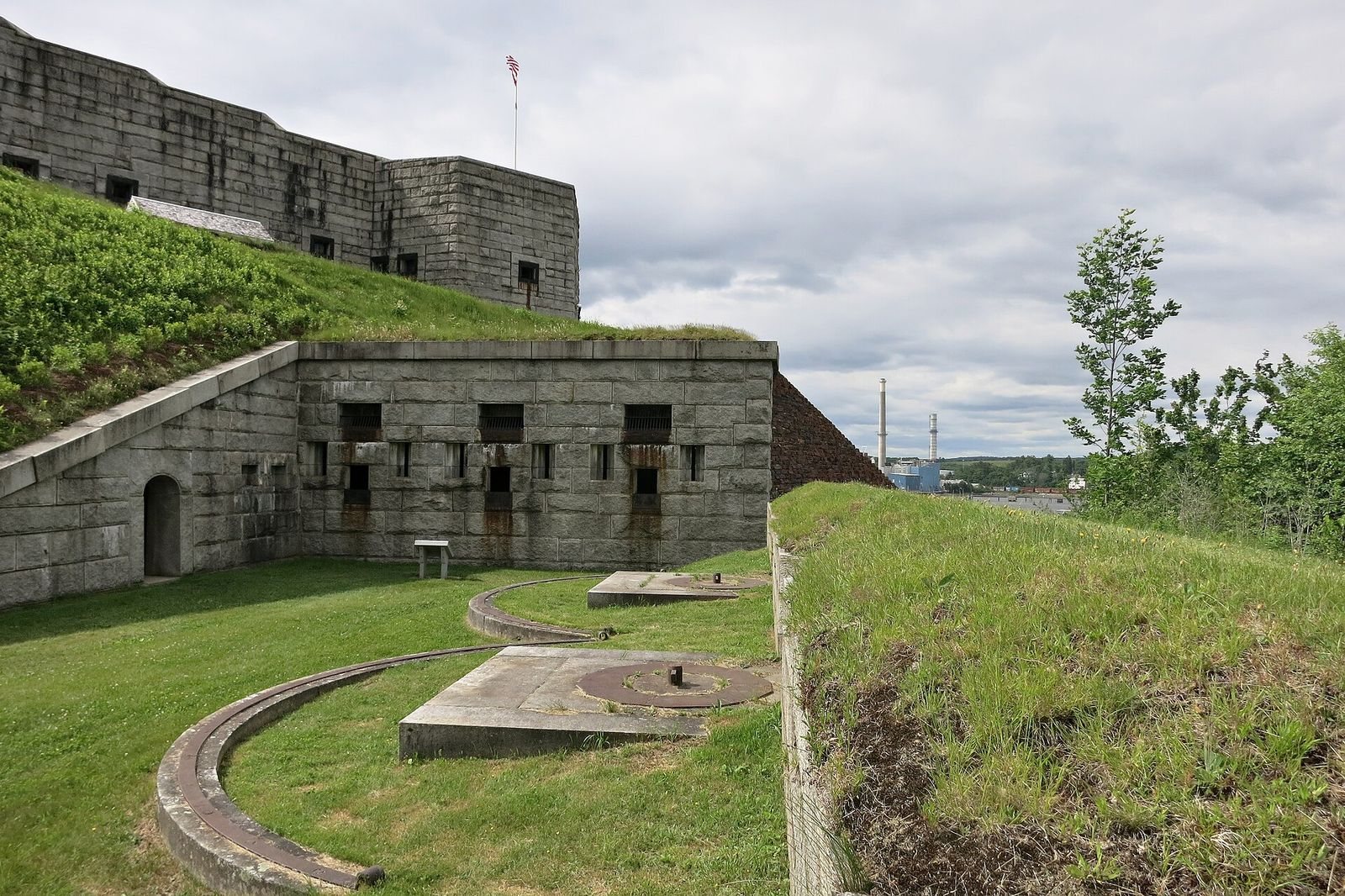
The fort occupies 124 acres about five miles from the mouth of the Penobscot River and is virtually intact. It was the first fort in Maine built entirely of granite. The stone came from Mount Waldo in Frankfort, about five miles upriver from the construction site. The main fort and its open river-facing batteries form the principal surviving defensive works.
Gun positions and artillery
The fort and water batteries
The main fort was equipped for 64 guns. Its planned roof-level barbettes, raised positions for firing over the fort’s protective wall, were never completed. Two open batteries face the river. Each had a furnace for heating cannonballs, intended to set wooden ships alight if a heated ball lodged in a vessel.
Surviving guns
Two 15-inch Rodman guns with unrifled barrels are associated with the water batteries, and one has been remounted. An 8-inch Rodman gun altered with grooves inside its barrel is also at the fort, along with a 10-inch unrifled Rodman gun inside the main work. Each 15-inch gun weighs 50,000 pounds; weapons of this size were the largest manufactured in quantity during the Civil War era.
Several 24-pounder guns used for flank defense also survive. Some rest on original carriages bearing bronze plates marked “Fort Monroe 1862.” Four flank-defense guns have been restored and displayed.
Interior spaces and conservation
Quarters and service spaces
The surviving spaces include the Officers’ Quarters, Battery A’s powder magazine, the enlisted men’s quarters, and a cistern. The former naval-mine storehouse now serves as the Visitor Center.
Repairs and historical records
A Civilian Conservation Corps crew repaired interior masonry, improved drainage, developed a spring, and rebuilt the river-side retaining wall. The Friends of Fort Knox later repaired the quarters, powder magazine, cistern, and other rooms. A plaque at the fort describes the laying of a controlled minefield in the river during the Spanish-American War. A painting of Fort Knox by Seth Eastman dates to between 1870 and 1875.