Tanaka Castle: A Japanese Castle and Edo-Period Domain Seat
Site at a Glance
- Country
- Japan
- Primary era
- Early Modern
- Eras represented
- Early Modern
- Civilizations
- Takeda, Tokugawa
- Site type
- Military
- Remains
- Castle
On this page11 sections
History
Tanaka Castle, also called Tortoise-Shell Castle, was a flatland-style castle in Japan, built on a hill in the marshy Shida Plain. Founded in 1537 as a small fortification, it was ordered by the Imagawa clan and built by their vassals, the Isshiki clan, to protect the western approach to Sunpu, the historical name for present-day Shizuoka City.
Founding and Takeda rule
The castle’s position between the Seto and Rokken rivers, near the Tōkaidō, the principal highway between Edo and Kyoto, gave it strategic value. After the Takeda clan took control of Suruga in 1570, Takeda Shingen captured and enlarged the fortification to defend the province’s western border against the rising power of Tokugawa Ieyasu in neighboring Tōtōmi. The castle took the name Tanaka, and Shingen placed his general Yamagata Masakage in command.
Command changed several times during the 1570s. Itagaki Nobuyasu replaced Yamagata Masakage in 1572, Yamagata Masamitsu became castellan in 1575, and Yoda Nobushige was stationed at Tanaka in 1579. Tokugawa forces attacked in 1582, but Yoda continued to resist until after his lord, Takeda Katsuyori, died. The castle then surrendered after Anayama Baisetsu persuaded its defenders, and Tokugawa retainer Kōriki Kiyonaga entered.
Tokugawa control and domain administration
Following the Tokugawa family’s move to the Kantō region in 1590, Tanaka came under Nakamura Kazutada, the lord of Sunpu. In 1601, Tanaka domain lord Sakai Tadatoshi enlarged the castle grounds, added an outer enclosure, and brought Fujieda-juku, a post town on the Tōkaidō, into the castle town. Sakai moved to Kawagoe in 1609. Afterward, Tokugawa Ieyasu and his son Tokugawa Yorinobu governed the castle from Sunpu.
Ieyasu and later shoguns sometimes used Tanaka as a base for falconry. In January 1616, Ieyasu stopped at the castle and ate sea bream tempura served by the merchant Chaya Shirojiro. A tradition holds that this meal caused Ieyasu’s death.
Tanaka domain and the end of castle rule
From 1633, Tanaka passed among several families, including the Matsudaira, Mizuno, and Hojo. In 1730, Honda Masanori became lord with a fief assessed at 40,000 koku, a rice-based measure of a domain’s yield. His branch of the Honda family remained in control until the end of the Edo period, and the castle served as the administrative seat of Tanaka domain.
In 1868, the last Tanaka lord, Honda Masanao, was transferred to the newly established Nagao domain in Awa Province, as the domain of former shogun Tokugawa Yoshinobu expanded in Shizuoka. Takahashi Deishū, a Tokugawa retainer and teacher of spear techniques, was entrusted with the castle. It ceased to function as a castle that year and was demolished in the early 1870s.
Tanaka is designated a Fujieda City historic site, and four associated buildings and two castle maps are municipal tangible cultural properties. In 2020, the castle site and Honmaru Yagura were recognized as part of a Japan Heritage story connecting Tōkaidō travel, comic literature, and ukiyo-e. Japan Heritage is a national program that recognizes stories linking cultural properties.
Remains
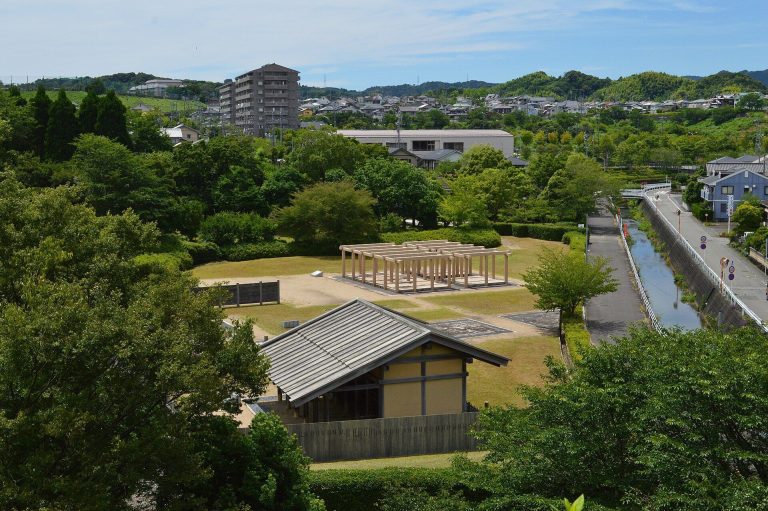
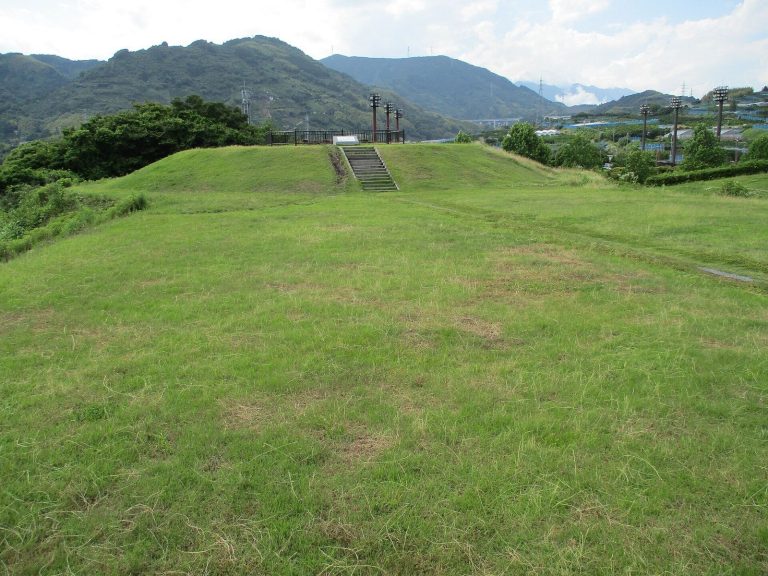
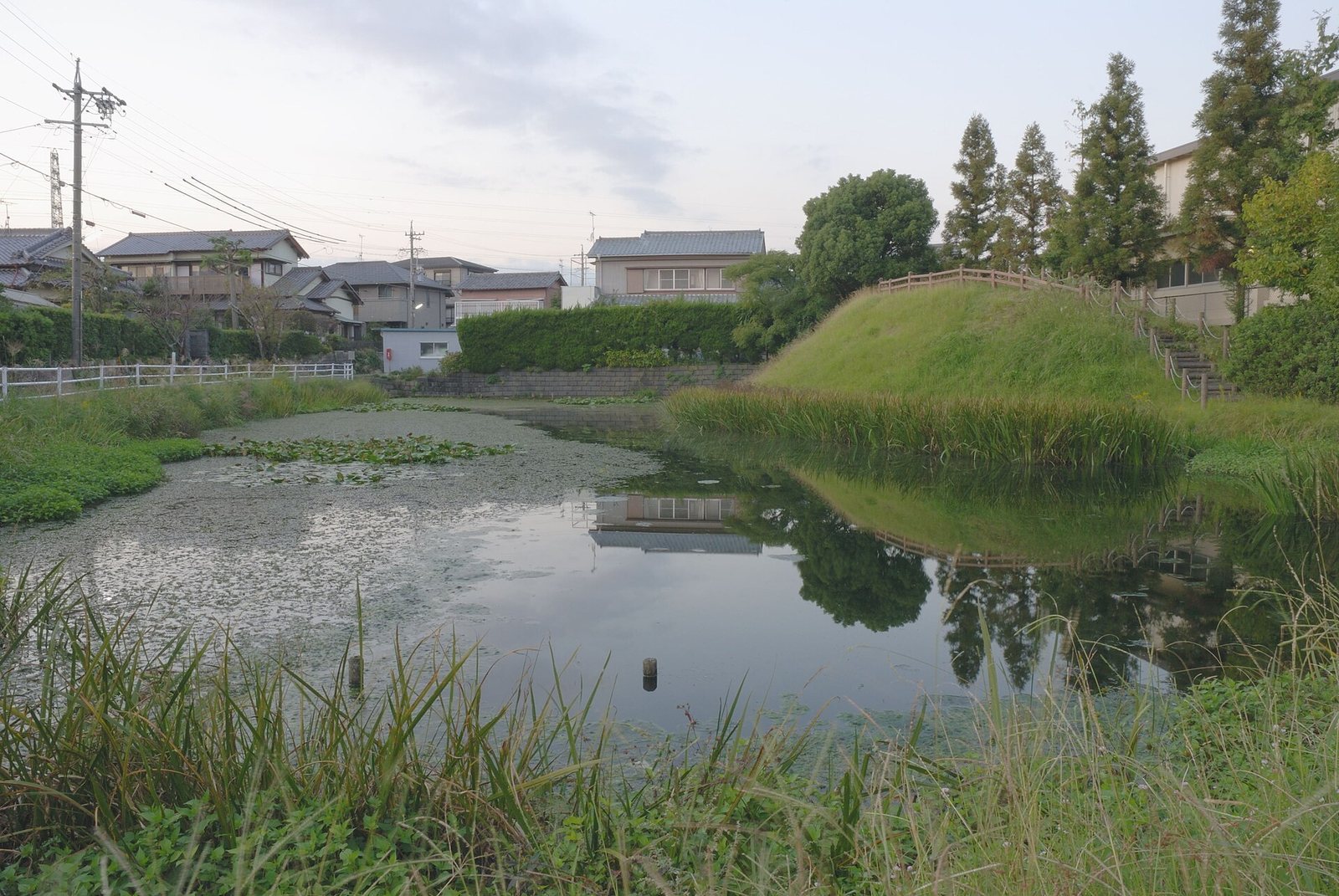
Tanaka’s unusual layout arranged its defenses in concentric circles on a hill amid the marshland of the Shida Plain, between the Seto and Rokken rivers. The remains include parts of the castle’s moats, earthworks, and stonework, while houses and rice fields occupy much of the former castle area.
Enclosures and defenses
Three concentric moats originally surrounded the central enclosure, and each ring had four gates. Sakai Tadatoshi’s enlargement added a fourth moat and an outer enclosure. Six maru umadashi, detached projecting gateworks used in castle defenses, stood outside the second and third enclosures; crescent-shaped moats surrounded them.
The central enclosure (honmaru) and second enclosure (ninomaru) are now occupied by a primary school, while a junior high school occupies the third enclosure (sannomaru). A two-storey tower stood at the southwest corner of the central enclosure.
Buildings and associated structures
Honmaru Yagura
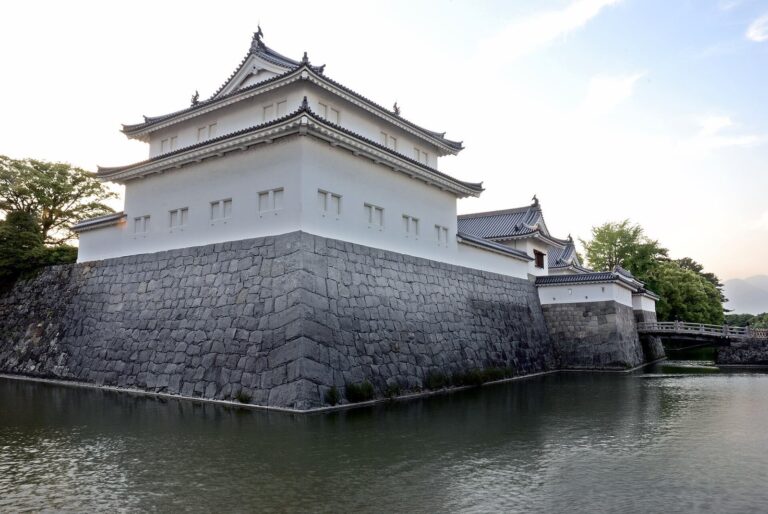
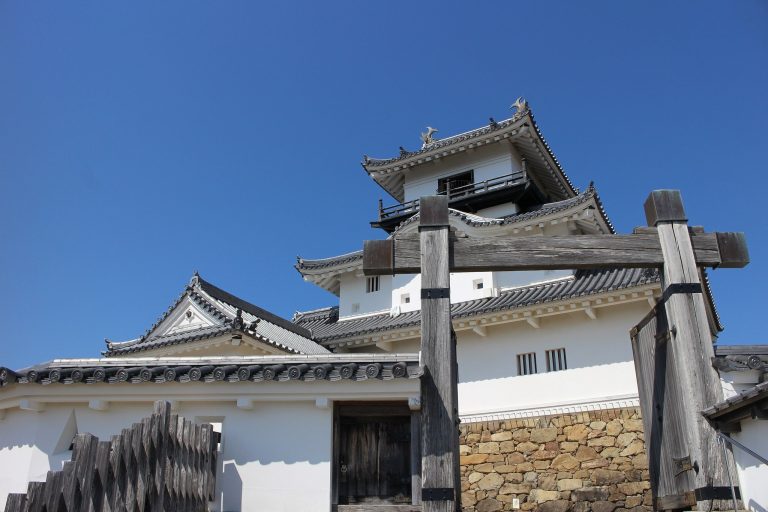
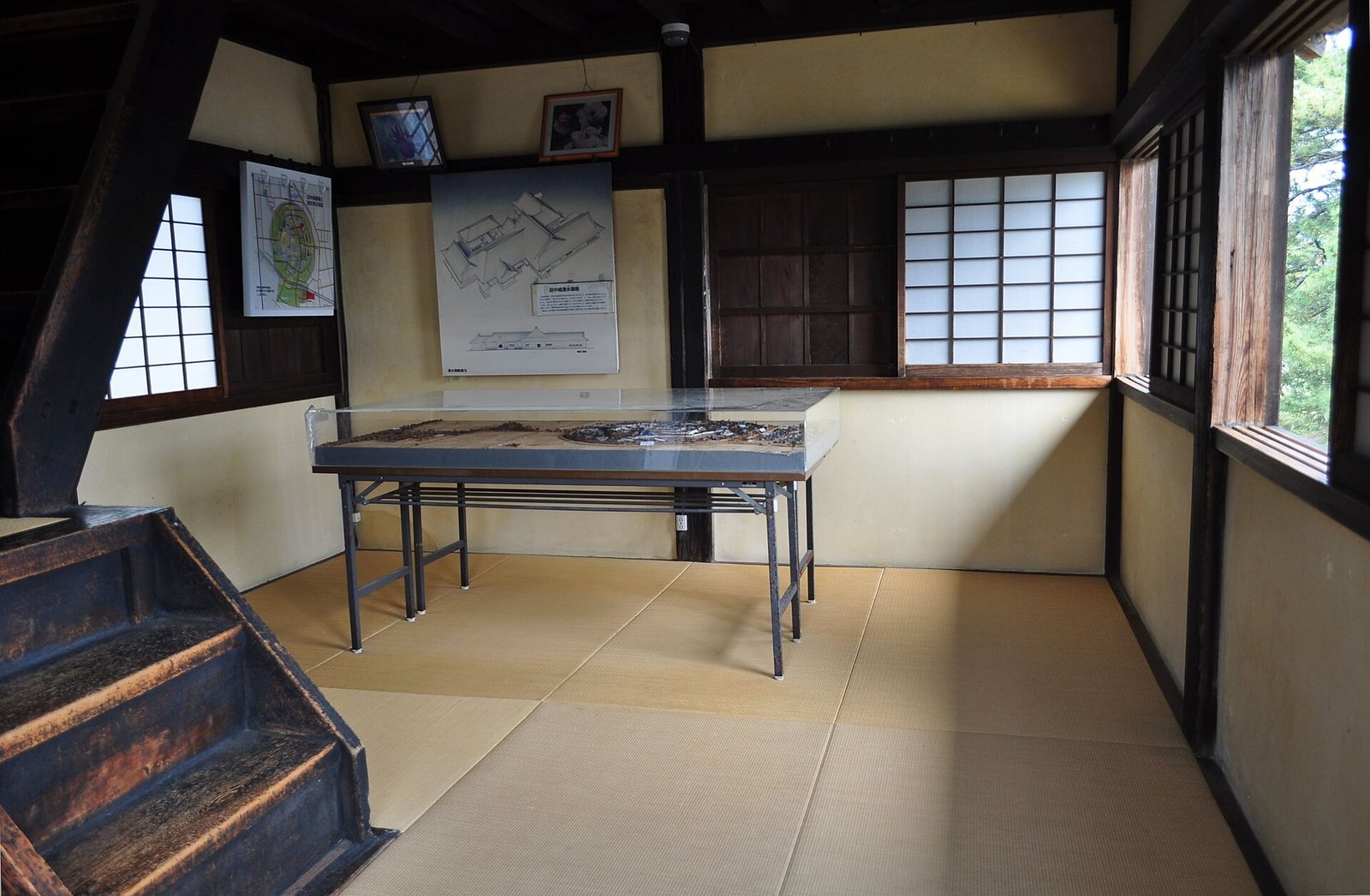
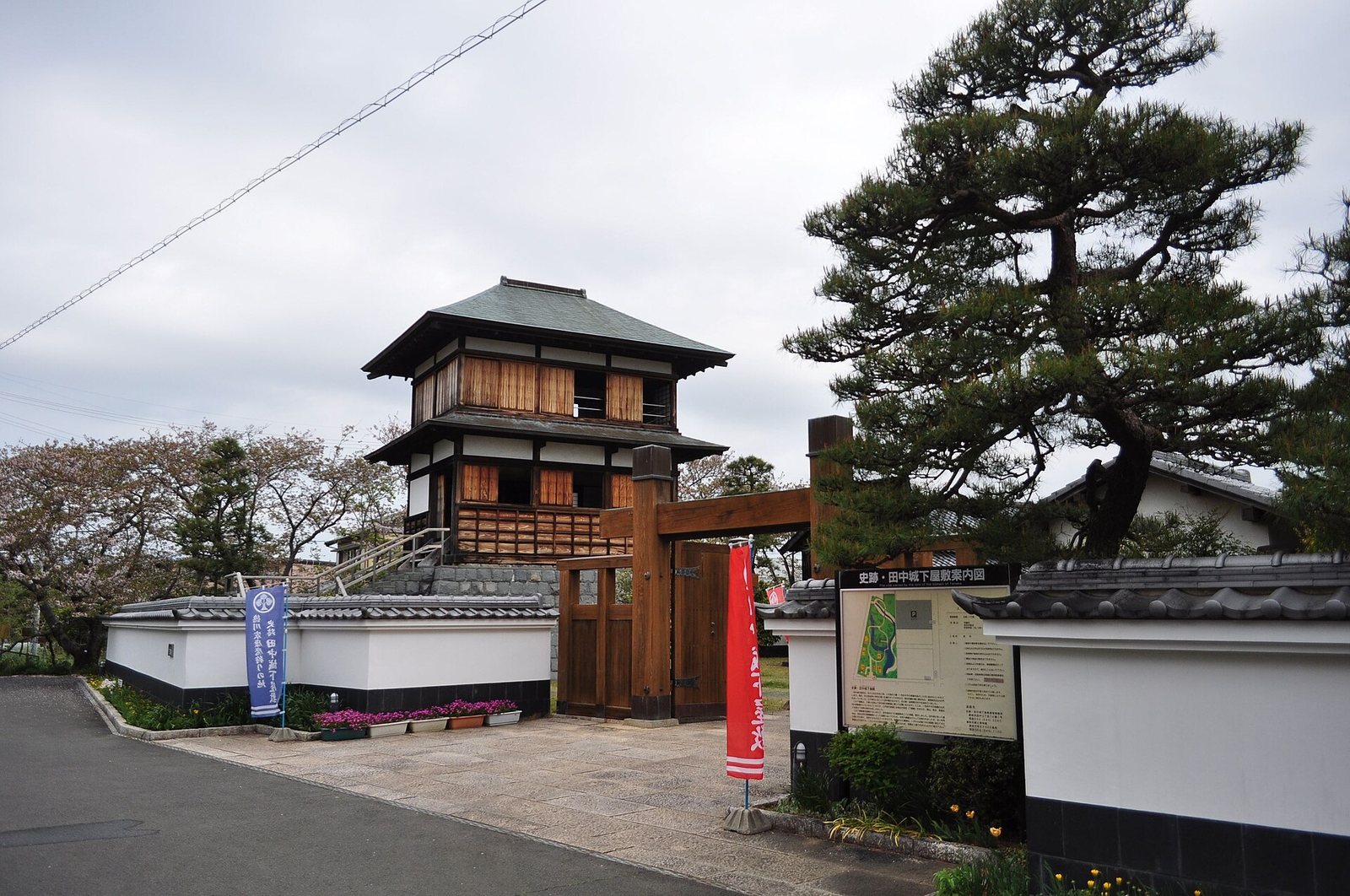
The Honmaru Yagura, a two-storey castle tower, originally stood in the central enclosure. It was sold in 1870 to the Yamamura family, retainers of Shizuoka domain, and moved for use as a residence. Local residents donated it in 1985; in 1996 it was moved again to the historic Tanaka Castle Lower Residence.
Other buildings at the Lower Residence
Three other associated buildings survive at the Tanaka Castle Lower Residence: a village granary, a tea room, and a servants’ quarters and stable.
Impurity Gate
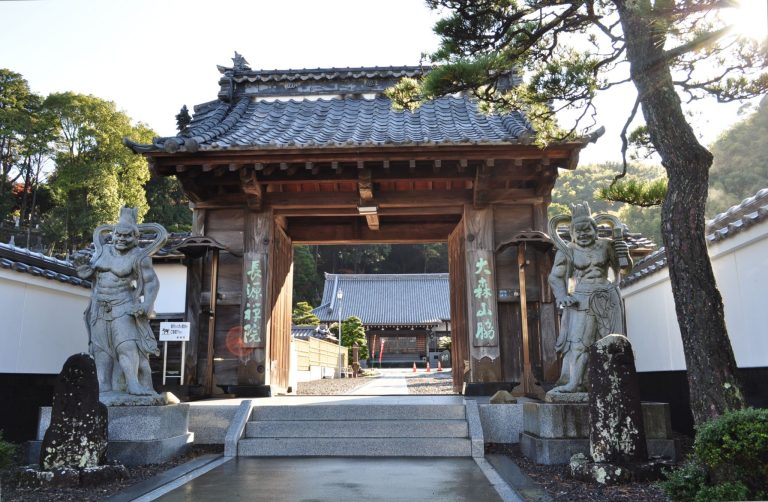
A gate known as the Impurity Gate survives as the entrance gate of a Buddhist temple in Yaizu. Its name refers to an association with handling ritually impure materials.
Castle maps
Two Edo-period maps, the Suruga Province Tanaka Castle Map and an Old Map of Tanaka Castle, are held by the Fujieda City Local History Museum and Literature Museum.