Fort Gross Fredericksburg: A Brandenburg Fort and Center of the Slave Trade
Site at a Glance
- Country
- Ghana
- Primary era
- Early Modern
- Eras represented
- Early Modern
- Civilizations
- Brandenburg-Prussia
- Site type
- Military
- Remains
- Fort
On this page9 sections
History
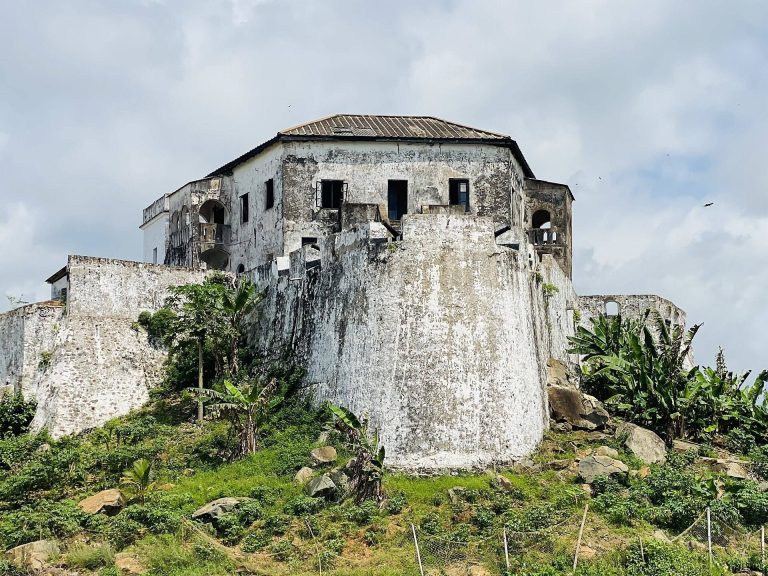
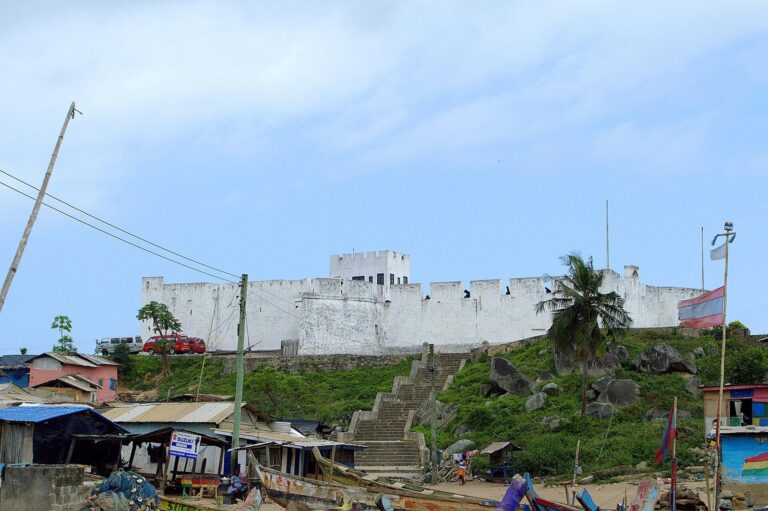
Fort Gross Fredericksburg is a Brandenburg-built fort on Manfro Hill near Princes Town, on Ghana’s western coast. The Brandenburg Africa Company built it in 1683–84 as its headquarters, and it became a major center of the European slave trade. It was one of two Brandenburg forts established in Ghana, alongside Fort Dorothea.
Brandenburg arrival and construction
Two Brandenburg ships reached the African coast on 27 December 1682 under expedition leader Otto Friedrich von der Groeben. Soldiers and sailors occupied the area around Manfro Hill on 31 December, and the Brandenburg flag was raised there on 1 January 1683. On 5 January, an agreement with residents of nearby Pokesu placed the area under Brandenburg protection and work on the fort began. Von der Groeben renamed the hill Grosse Friedrichs-Berg, meaning Great Frederick’s Mountain.
The Brandenburg Africa Company, which engaged in overseas trade and colonial activity, built the fort under the patronage of Frederick William of Brandenburg. He was an elector, a prince entitled to participate in choosing the Holy Roman Emperor, and the fort was named for him. The company was led by Benjamin Raule.
Trade and garrison
The fort became a major holding point in the European slave trade. Enslaved Africans were kept there before being transported, mainly to sugar plantations in the Caribbean. Approximately 300,000 people may have passed through the fort. Dutch authorities intensified the trade after taking control.
A Brandenburg garrison remained at the fort from 1683 to 1717. It initially consisted of 40 sailors and regular soldiers from the Brandenburg naval infantry, a force serving in maritime operations. Harsh climatic, sanitary, and especially medical conditions required regular replacement of personnel. The garrison numbered 59 in 1686 and 25 in 1712.
Dutch transfer and Jan Conny
As Brandenburg-Prussia’s colonial ambitions ended, the colony was sold in 1717, an action attributed to Frederick William I of Prussia. The fort passed to the Dutch West India Company, a chartered Dutch trading company active in Atlantic commerce and colonization, during the transfer of 1717–20. It formally became Dutch property in 1718.
After the last Prussian general director left, his former local ally, the chief Jan Conny, took control of the fort and armed it with captured cannon. Conny resisted repeated major Dutch attacks until the Dutch captured the fort in 1724, after roughly seven years. Local residents regarded him as a hero for holding out. His later fate is uncertain: traditions say he was captured or that his remains lie in Tafo Cemetery in Kumasi.
Later rule and heritage
The Dutch renamed the fort Fort Hollandia and abandoned it in 1815. The colony was sold to the British Crown in 1872, and the fort became part of independent Ghana in 1957. In 1979 it was included in the UNESCO World Heritage listing “Forts and Castles, Volta, Greater Accra, Central and Western Regions.” It is one of roughly 35 historic forts on the Ghanaian coast. The Ghanaian state owns the fort, which also houses a small museum.
Remains
Setting and fort plan
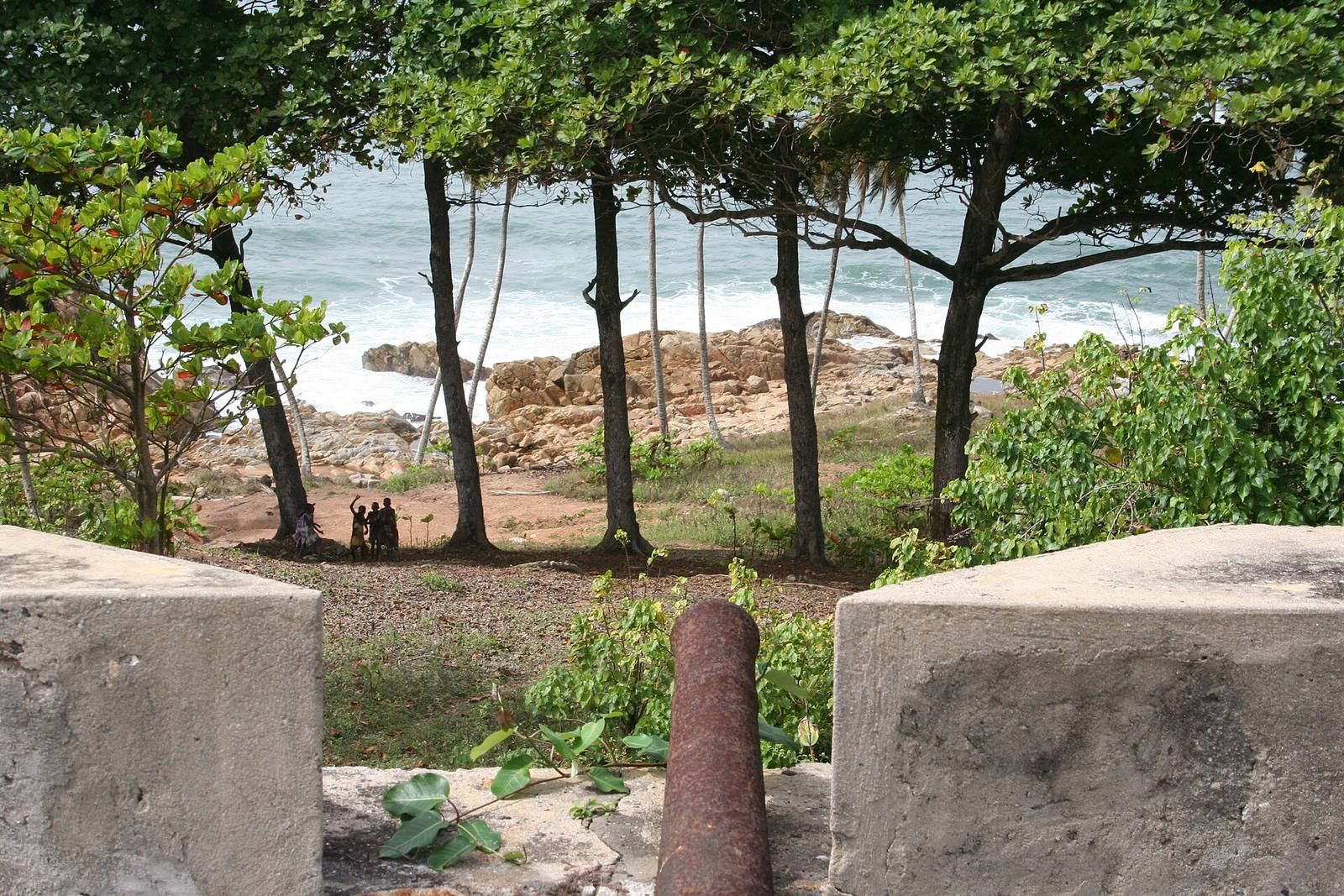
The fort stands on Manfro Hill. Princes Town lies northwest of the ruins, about 100 metres below the hill. The town is near the joined mouths of two rivers, with the larger flowing around its north and west sides. A lagoon east of the town and northeast of the hill separates the mainland from the open sea. The fort had a regular quadrangular plan, with a stone main wall and four pointed corner bastions, projecting defensive structures at the corners. They followed north–south and east–west axes: the northern bastion faced the landward side, while the others faced the sea. The wall incorporated casemates, protected chambers built into a fortification. Construction materials came chiefly from Europe, and stone was shipped from Prussia by sea between 1681 and 1683. The fort held 32 cannon in 1684 and 44 artillery pieces by 1692, most directed toward the sea. A contemporary depiction shows its expanded form after 1686.
Entrance and interior buildings
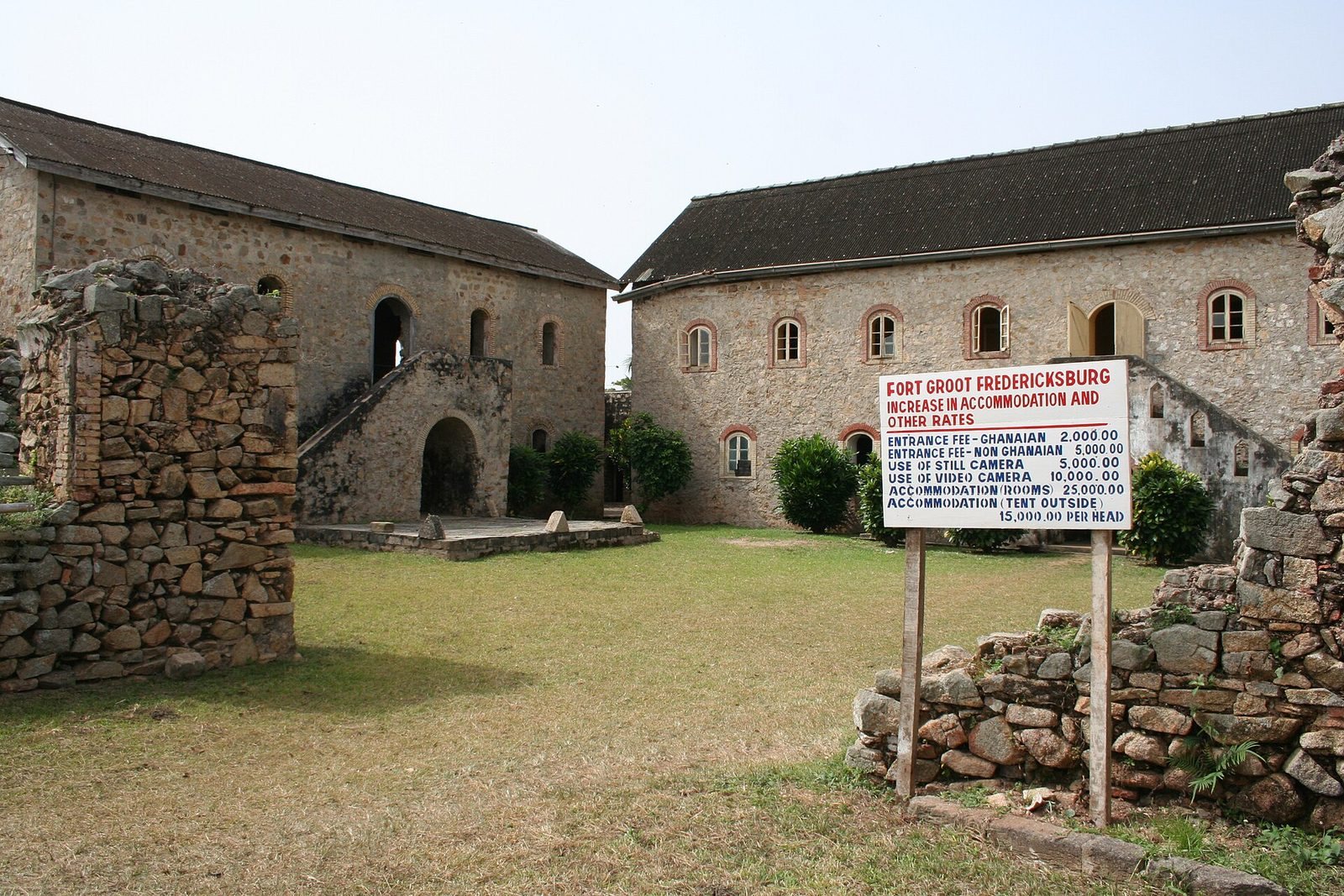
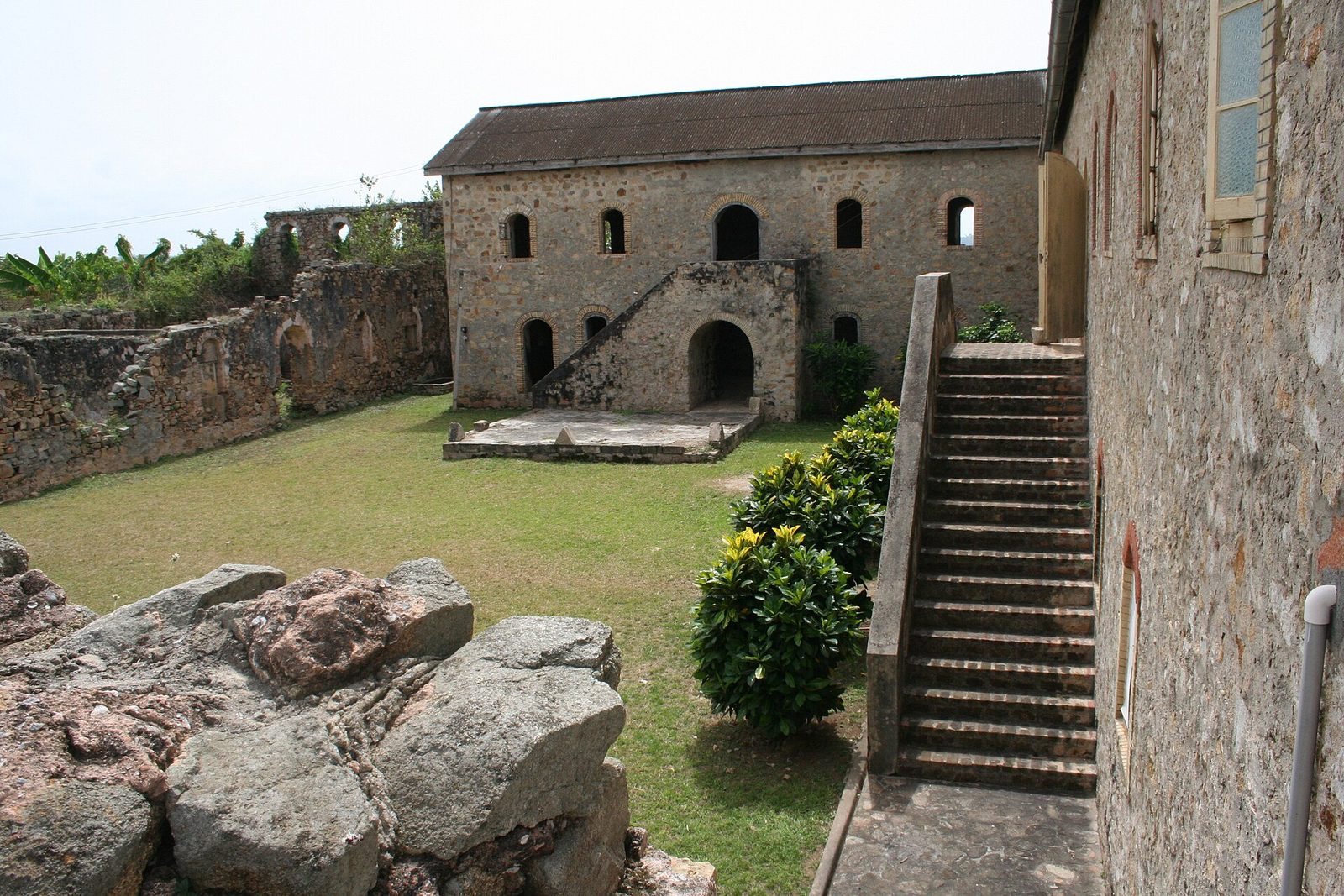
The entrance was on the northeastern side, with a bell tower, 10 metres high, above the gate. Opposite it, on the inner southwestern side, stood the governor’s house, also called the commandant’s house. A later outer defensive work was built against the southeastern exterior wall and had its own entrance. The internal features include an entrance area, courtyard, staircase leading toward the main building, outbuildings, and subterranean prison cells.
Surviving fabric
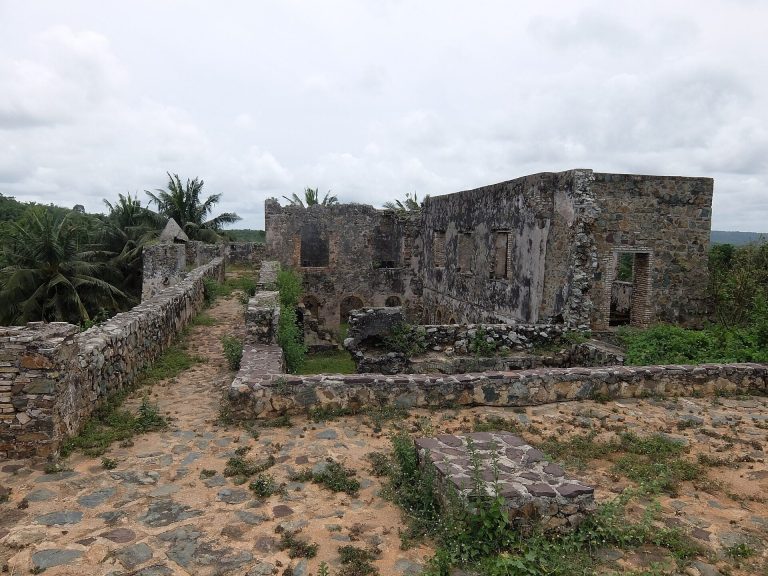
The fort is partly ruined. Its south and west sides, including the governor’s house, remain in fairly good structural condition.