Church of Santa Lucia: A Baroque Catholic Church in Serra San Quirico
Site at a Glance
- Country
- Italy
- Primary era
- Early Modern
- Eras represented
- Medieval, Early Modern
- Civilizations
- Papal States
- Site type
- Religious
- Remains
- Church
On this page11 sections
History
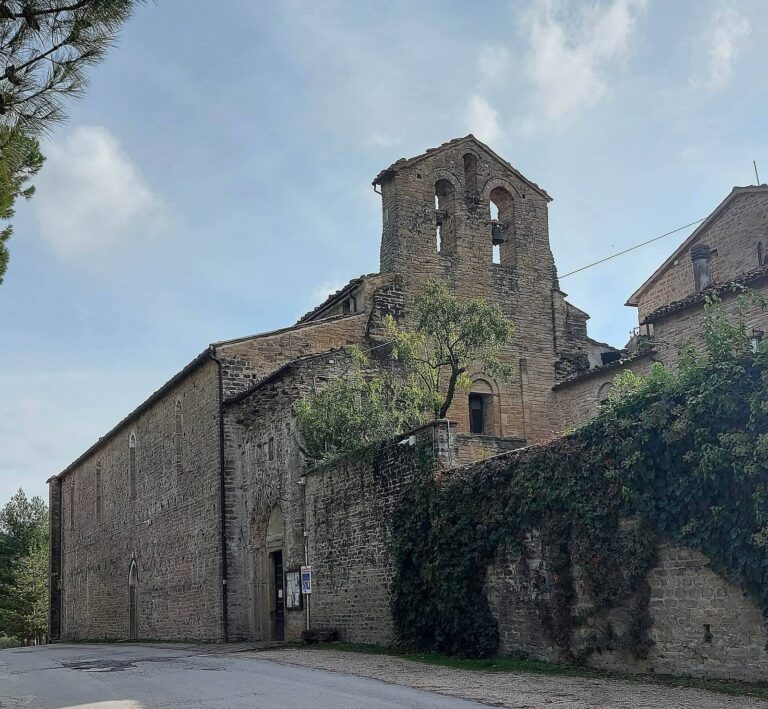
The Church of Santa Lucia is a Catholic church dedicated to Saint Lucy, a Christian martyr venerated in Catholic tradition, in Serra San Quirico, Italy. It belongs to the Diocese of Fabriano. Its rebuilding in the Italian Baroque, an ornate artistic style of the seventeenth and eighteenth centuries, was commissioned in 1650 after an earthquake destroyed its predecessor during the seventeenth century. The church is an important example of Baroque architecture.
Medieval origins and parish
The church was in existence by 1276. In 1289 it passed to the Sylvestrine Order. The Sylvestrine Congregation is a Catholic monastic community in the Benedictine tradition, founded by the medieval monk Sylvester Guzzolini. Its monks opened a hospice, a place offering lodging and care, which grew into the Monastery of Saint Lucy.
The church became a parish in 1504 and retained that status until 1986.
Baroque rebuilding
The Sylvestrine monks intended the rebuilt church to serve as an elaborate sacred setting celebrating their congregation. It was reconsecrated in 1726. An earthquake damaged the building in 1741, after which it was repaired.
Napoleonic disruption and later use
During the Napoleonic period, the rule of Napoleon Bonaparte, the French emperor, included the suppression of religious orders. The church’s sacred furnishings and reliquaries began to disperse. Private individuals took some items into their care to protect them from looting, while monks removed canvases to prevent their requisition under Napoleon.
The adjoining former monastery now houses several institutions. These include the Historical Map Collection of the Marche, with regional maps dating from the sixteenth century onward; the Ermanno Casoli Prize Museum of contemporary art, named for the Italian artist; the Natural History Museum of the Territory; and the headquarters of the Gola della Rossa and Frasassi Regional Natural Park.
Remains
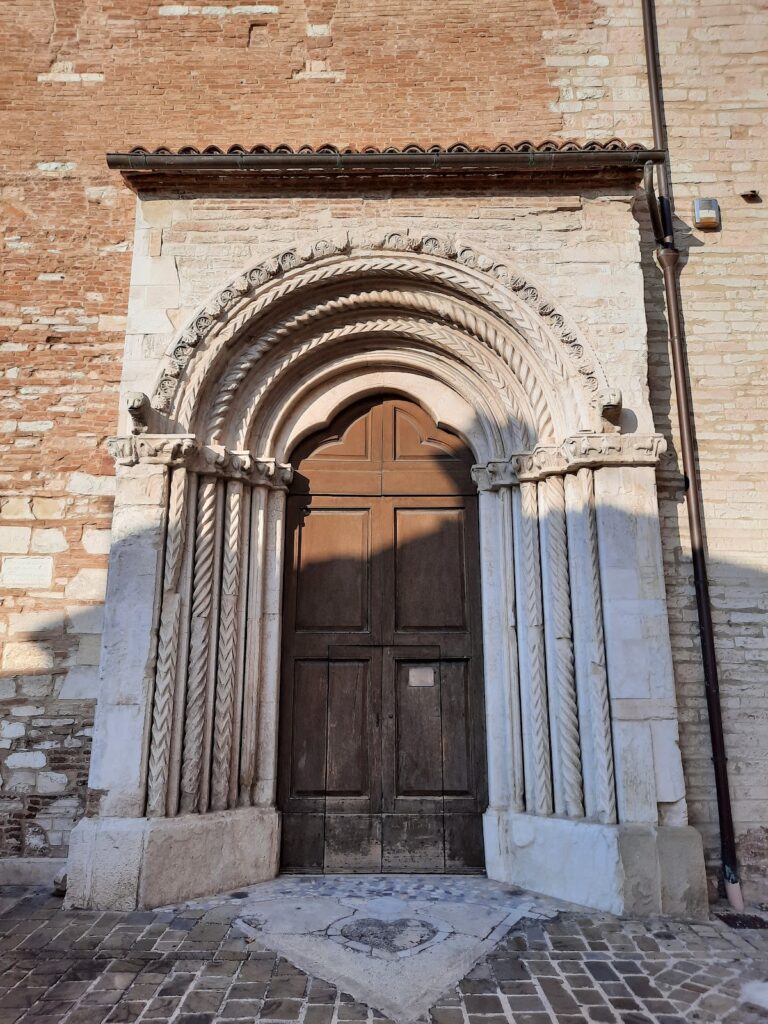
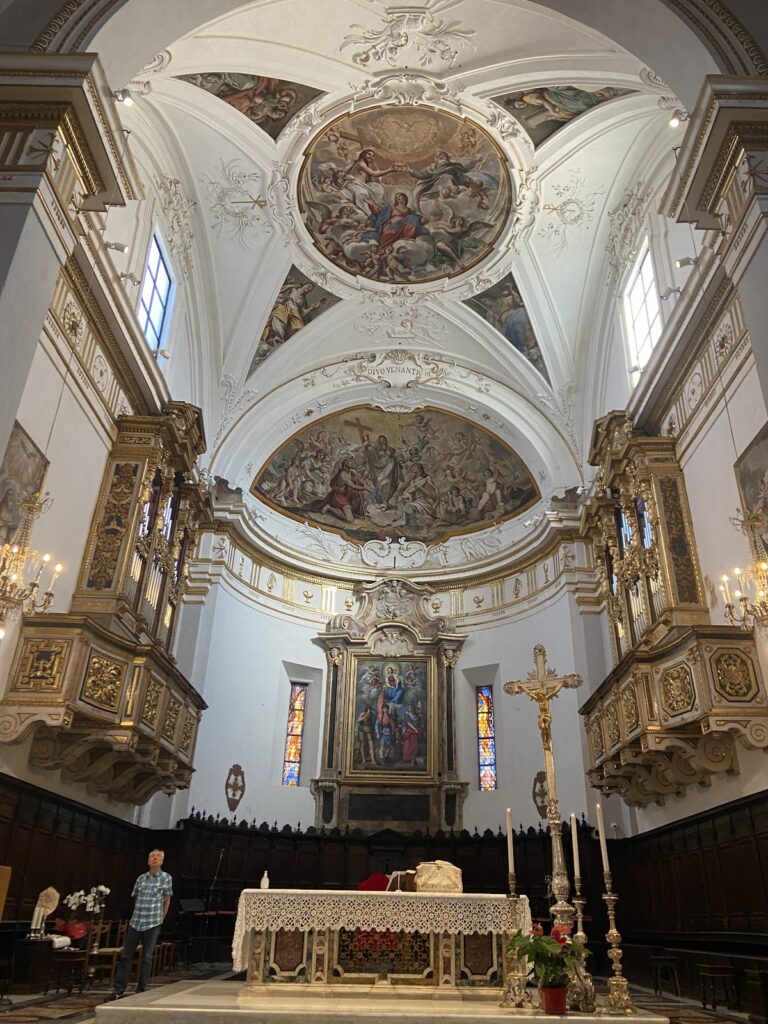
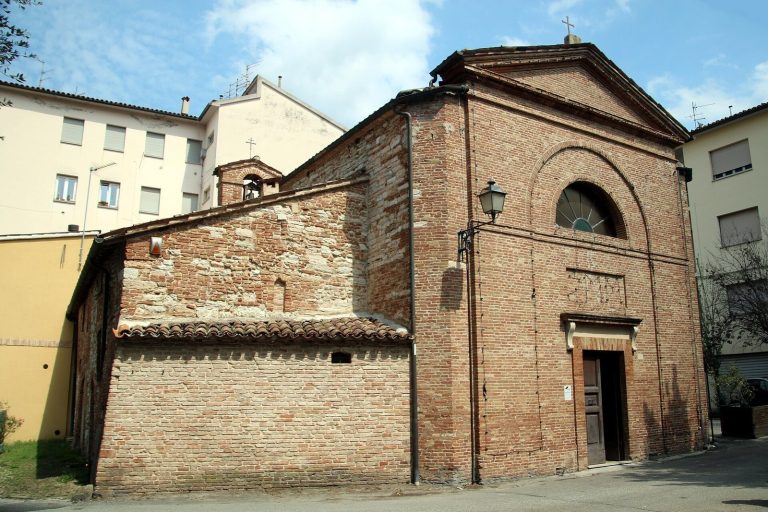
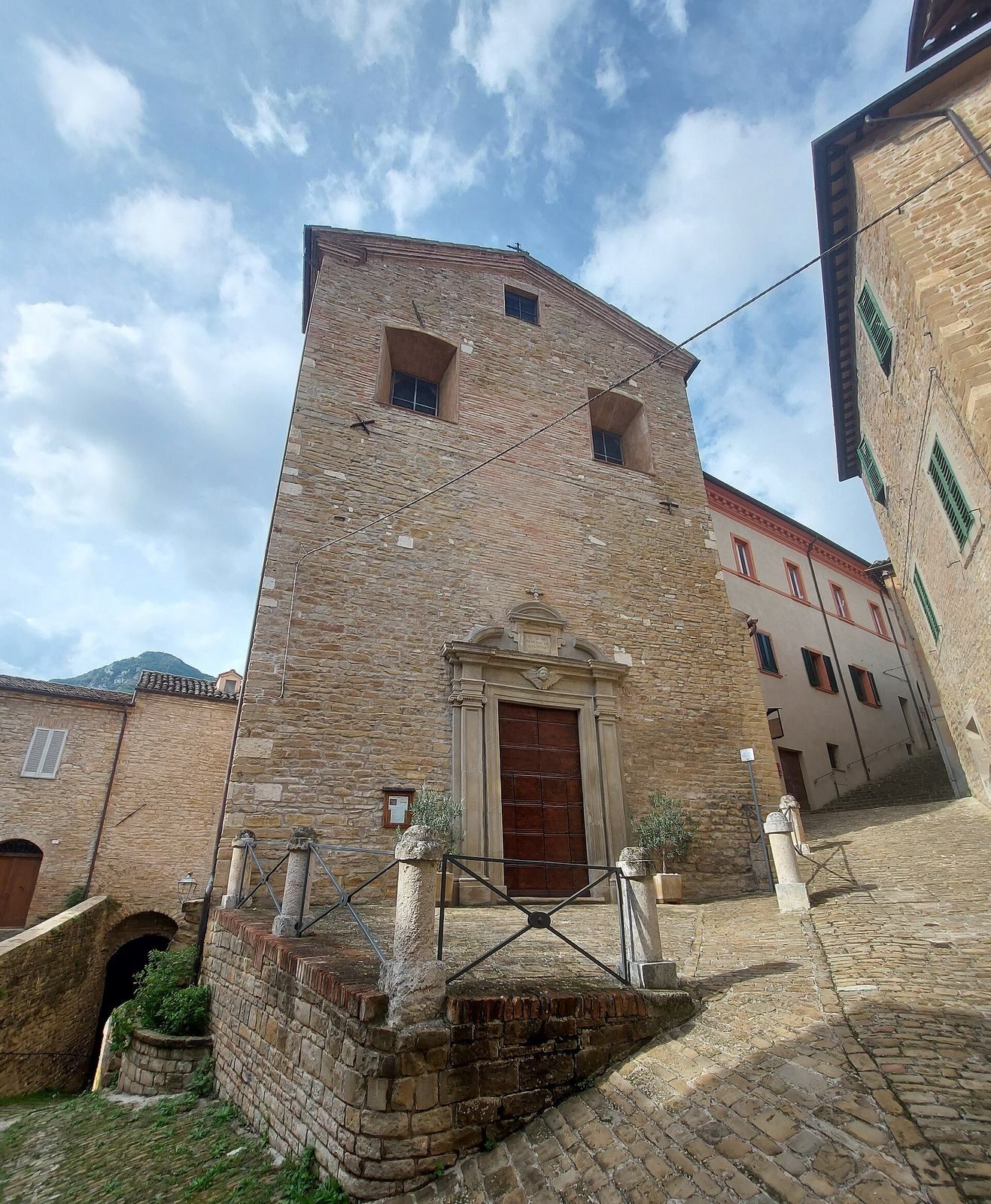
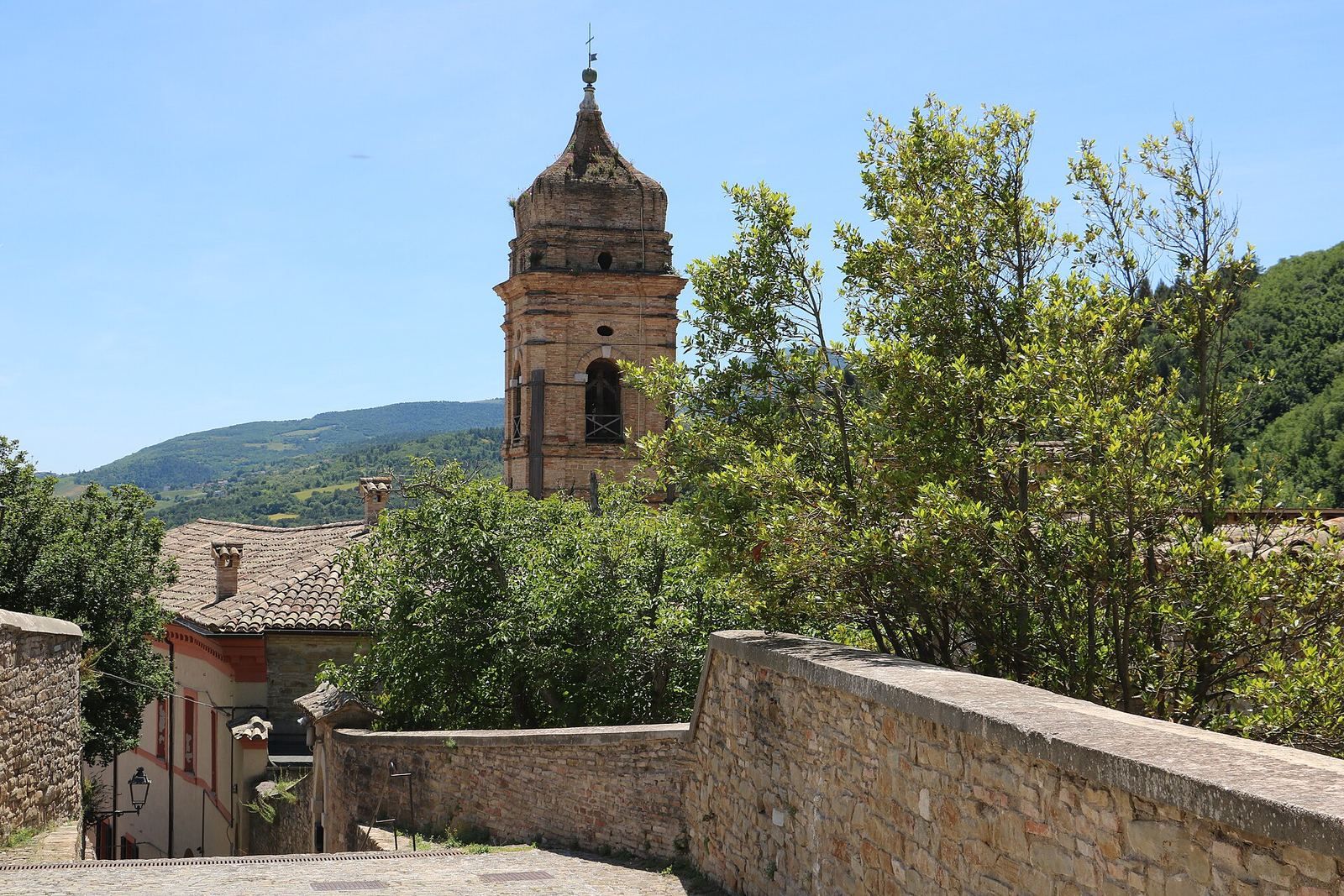
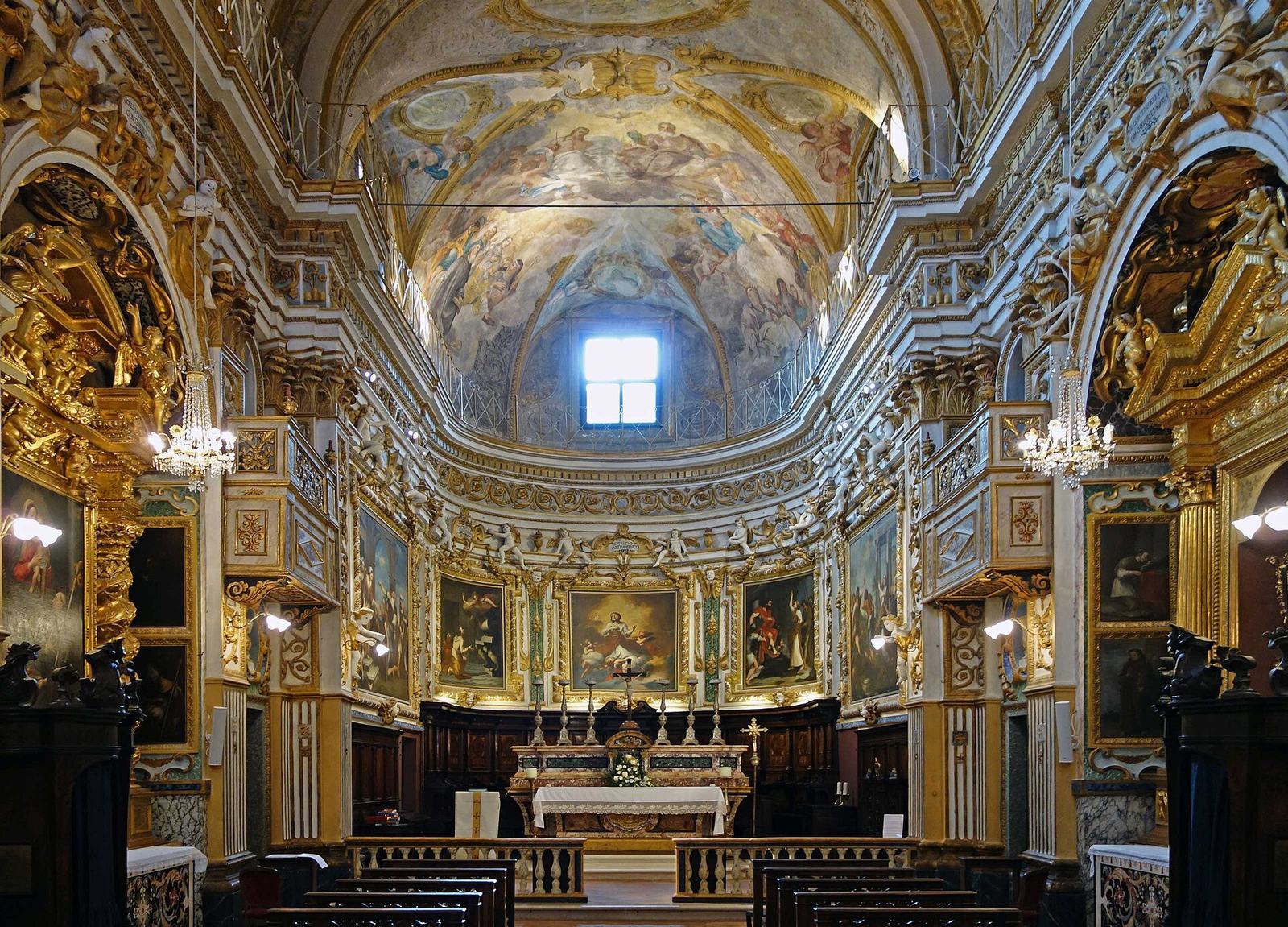
The church has a restrained exterior that preserves features inherited from an earlier Romanesque building, a medieval architectural style. Its façade has two square windows and a Baroque portal, while a bulb-shaped bell tower rises above the town. The building measures 27 metres long by 9 metres wide. Inside, a long plan centered on a single nave has three chapels opening off each side. Each chapel has an altar frontal decorated with multicoloured inlaid scagliola, a decorative plaster technique that imitates or creates coloured stone effects. Paintings, stucco, carving, and gilding enrich the interior.
Interior paintings and furnishings
Paintings in the chapels
The second chapel on the left contains Saint Lucy between the Madonna and Saint Catherine, attributed to Guido Reni, a prominent Italian Baroque painter. Saint Catherine is a name shared by several Christian saints. Flaminio Armezzani, a fellow townsman who served as a judge in Ferrara, bought the painting and donated it to the church. The first chapel on the right holds Pasqualino Rossi’s Assumption of the Virgin into Heaven, painted in 1642, while the first chapel on the left contains Madonna of Carmel. Giovanni Francesco Romanelli’s Blessed Hugh is in the second chapel on the right. In Catholic usage, “Blessed” refers to recognition through beatification, a status preceding sainthood. The third chapel on the left contains Madonna with Saints Joseph and Sylvester by Cavalier d’Arpino, the name used by painter Giuseppe Cesari.
Apse canvases
Five large canvases in the apse, the recessed sanctuary end of the church, depict the Martyrdom of Saint Lucy. They follow designs by Pasqualino Rossi, who painted the central canvas himself. Artists of the Bolognese School, an artistic tradition centered in Bologna, painted the other four.
Ceiling paintings
Giuseppe Malatesta of Fabriano painted the scenes on the ceiling. Those above the nave show the Glory of Saint Sylvester and medallions depicting members of the Sylvestrine Order who had been beatified. In the apse, the paintings show Saint Sylvester and Saint Lucy welcomed into Paradise by Christ and God the Father.
Main altar and choir
The main altar is made of polychrome marble. The Sylvestrine monks commissioned it in 1739, and it was consecrated after repairs following the 1741 earthquake. Walnut-burl choir stalls with inlaid panels extend around the altar.
Organ and sacred collection
The inner face of the entrance wall holds an organ with a carved, gilded case dated 1675–76. The instrument was made at the same time by the Roman master Giuseppe Maria Testa. The church’s sacred collection once included saints’ relics, furnishings, and reliquaries made of silver and gilded wood. The canvases the monks removed during the Napoleonic period bear tears from their removal.