Syzran Kremlin: A 17th-Century Russian Fortress
Site at a Glance
- Country
- Russia
- Primary era
- Early Modern
- Eras represented
- Early Modern
- Civilizations
- Russian
- Site type
- Military
- Remains
- Citadel
On this page11 sections
History
Foundation and early defenses
The Syzran Kremlin is a fortified complex in Russia, founded in 1683 under an early decree of co-tsars Peter I and Ivan V. Prince Grigory Kozlovsky, a voivode (military-administrative governor), was ordered to recruit service troops, military personnel serving the state, and establish a fortress on the Syzranka River. The stronghold was intended to protect trade routes as Russia expanded southeast.
Kozlovsky chose high ground between the Syzranka and Krymza rivers, where an earlier settlement may have stood. It was possibly associated with the Volga Bulgars, a medieval polity. Settlers from Kazan, Tetushi, and Cheboksary established several communities around the fortress. Two lines of timber obstacles initially enclosed them; these were later replaced by a stockade with towers and gates.
Eighteenth-century change
The Church of the Nativity of Christ was built in 1717 and remodeled in the 1730s in a style influenced by medieval Moscow architecture, a Russian tradition associated with the medieval city’s churches and fortifications. During the Pugachev uprising of 1773–1775, a major rebellion against the Russian government, Syzran served as a government strongpoint. Yemelyan Pugachev’s forces captured the Spasskaya Tower, its sole participation in combat.
Over the eighteenth century, the Kremlin’s wooden defenses deteriorated. Walls beside the Syzranka began to collapse and were replaced by a stockade. A brick church was built at the Spasskaya gate where a wooden passage gate had stood.
Urban rebuilding and heritage status
Around the turn of the nineteenth century, the remaining earthen defenses were removed as Syzran was rebuilt according to a regular plan. The Spasskaya Tower, as well as the ensemble formed by the tower and the Church of the Nativity of Christ, has federal cultural heritage status in Russia.
Remains
The Kremlin occupies Kremlin Hill at the confluence of the Volga, Syzranka, and Krymza rivers, within the historic core of Syzran. The original fortress had an irregular polygonal plan and timber defenses. Its surviving features include the Spasskaya Tower and the Church of the Nativity of Christ.
Enclosure and defenses
Timber enclosure
The pine-log wall extended about 618 metres around the fortress and stood on a stone base roughly one metre high. The base may incorporate masonry from an earlier fortress associated with the Volga Bulgars or the Golden Horde, a Mongol successor state.
Landward defenses
On the land side, a moat and a low rampart defended the enclosure. The rampart was about one metre high and 247 metres long, with laid stone and wickerwork defensive baskets.
Spasskaya Tower
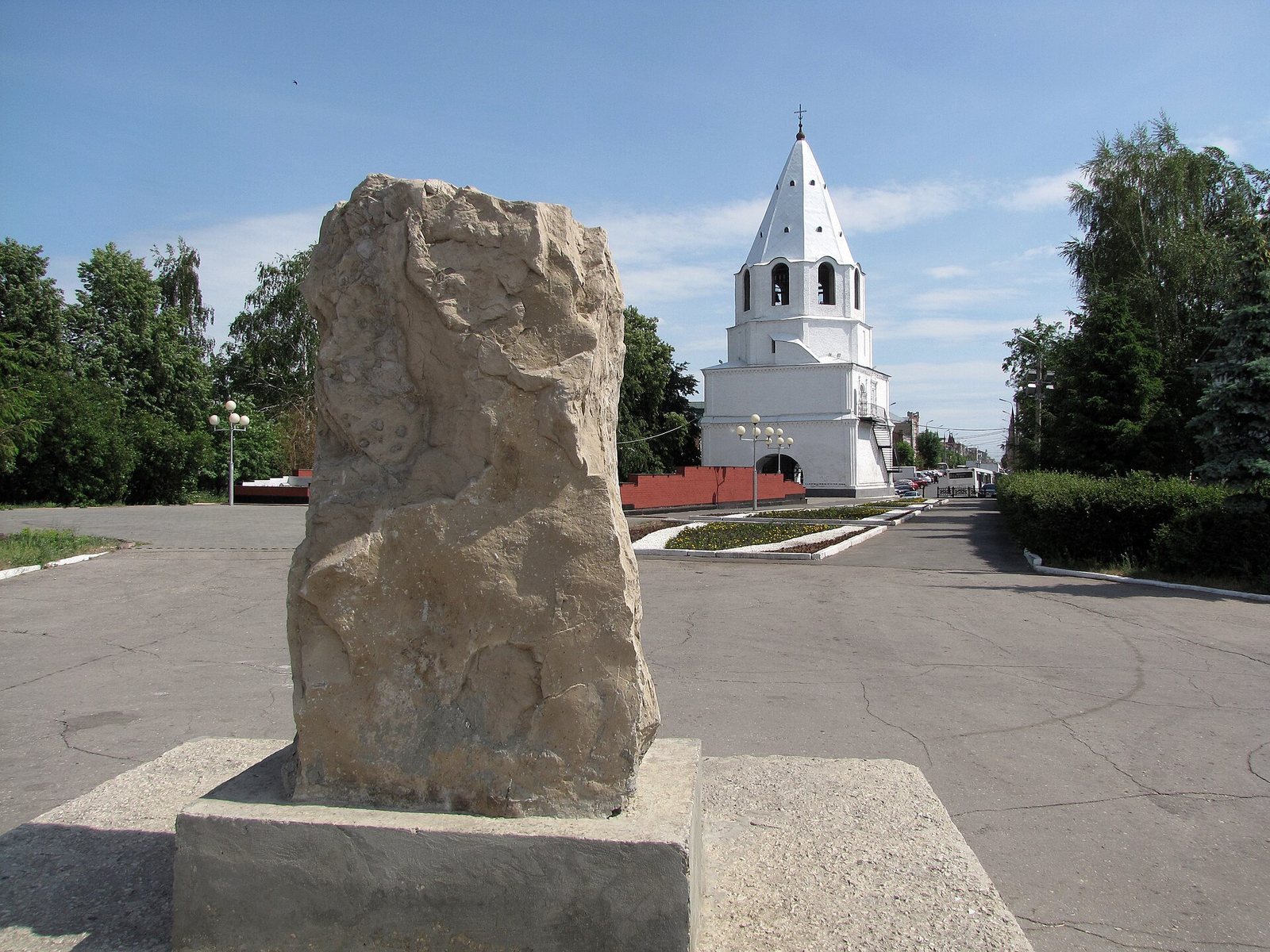
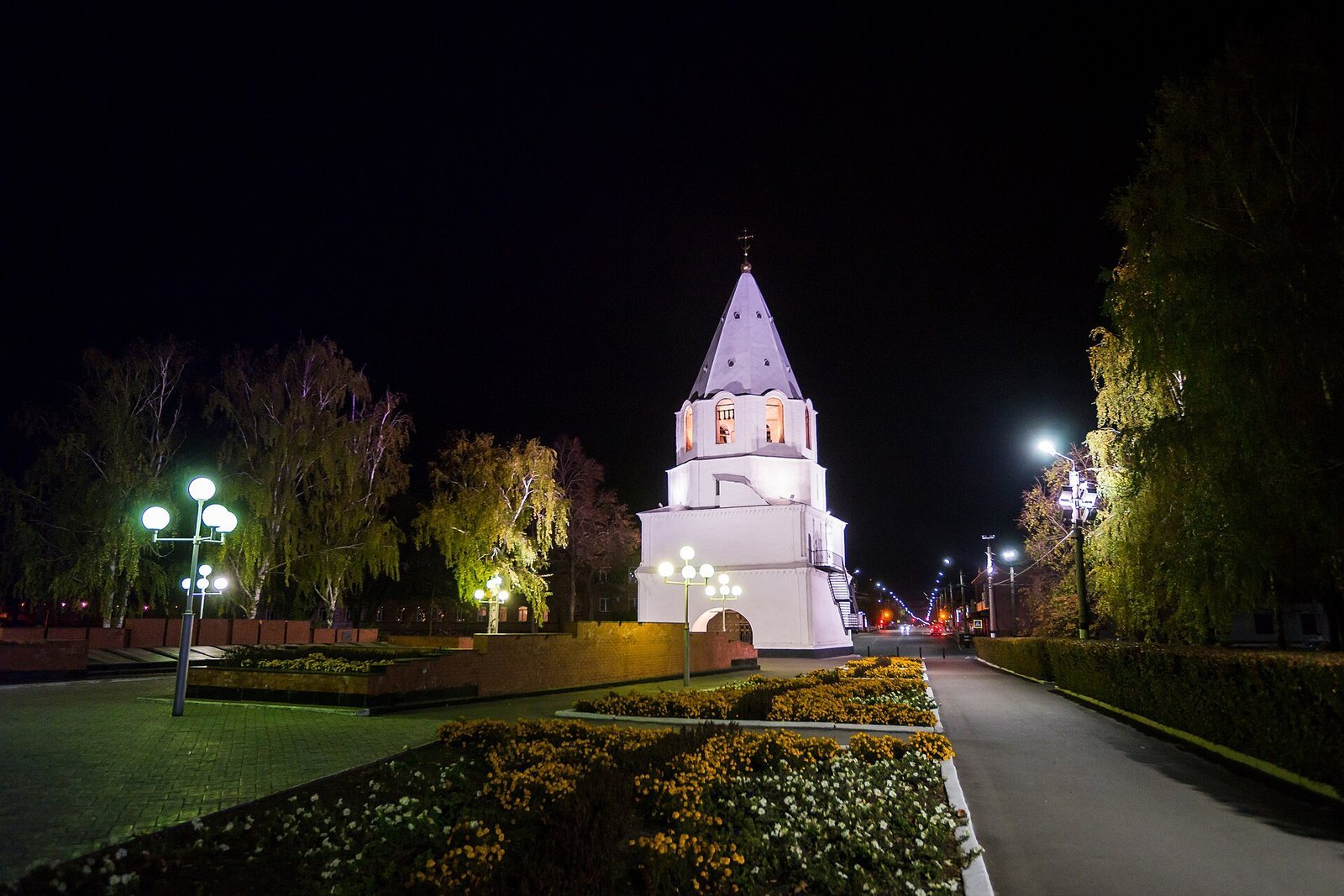
At 27 metres high, the stone Spasskaya Tower is the only surviving tower of the fortress. It has a square base and an octagonal upper section, with a tent-shaped interior ceiling and a bell chamber above. A museum now occupies the tower. Its church is dedicated to the Savior Not Made by Hands, a Christian image of Christ traditionally believed to have formed without human hands.
Buildings and grounds
The former enclosure contained a governor’s courtyard, a chancellery, a powder magazine, and other government buildings. The Church of the Nativity of Christ remains within the Kremlin.
Memorial and landscaped grounds
A small flower-planted alley lies in front of the Spasskaya Tower. The grounds also contain a memorial complex honoring fallen soldiers, designed to complement the historic buildings.