Fort Robinson: A U.S. Army Post and Historic Site in Nebraska
Site at a Glance
- Country
- United States
- Primary era
- Modern
- Eras represented
- Modern
- Civilizations
- Unclassified
- Site type
- Military
- Remains
- Fort
On this page12 sections
History
Fort Robinson is a former U.S. Army post near Crawford, Nebraska, United States, established in 1874 as a military camp beside the Red Cloud Agency. Federal authorities authorized the camp in March that year to station troops at the agency and support U.S. obligations under the 1868 Fort Laramie Treaty, an agreement with Native nations that recognized the Great Sioux Reservation and set out federal commitments.
The agency and the Army post
After the treaty, the Red Cloud Agency, a federal office dealing with the Lakota and other Plains peoples, was established on the North Platte River. It moved in August 1873 to the White River near present-day Crawford. About 13,000 Native people lived within the area it served. The Army named its nearby camp for Lieutenant Levi H. Robinson, who had been killed near Fort Laramie in February 1874. In May, the camp shifted about 1.5 miles west of the agency. The agency moved to South Dakota in October 1877, a relocation that helped establish the Pine Ridge Reservation, associated with the Oglala Lakota. In January 1878, the Army renamed the camp Fort Robinson.
The Sioux Wars and the death of Crazy Horse
Fort Robinson served as a U.S. military base during the Sioux Wars, a series of armed conflicts between the United States and Native nations, including Lakota and Cheyenne groups. Disputes over the Black Hills, a region sacred to the Lakota and Cheyenne, intensified after an Army expedition found gold there in 1874 and a rush of prospectors followed. Federal efforts to stop prospecting and obtain a transfer of the hills failed. In December 1875, the government issued an ultimatum requiring Sioux groups to return to reservations. The Battle of Warbonnet Creek took place near the fort in July 1876.
In May 1877, Oglala Lakota leader Crazy Horse and about 1,100 followers surrendered at Fort Robinson after cold and hunger had weakened their people. On September 5, while resisting imprisonment, he was stabbed in the back with a bayonet by Private William Gentles. The wound pierced his lung and kidney. Dr. McGillicuddy ordered that he be taken to the Adjutant’s Office, where he died near midnight.
The Northern Cheyenne and the 1879 escape
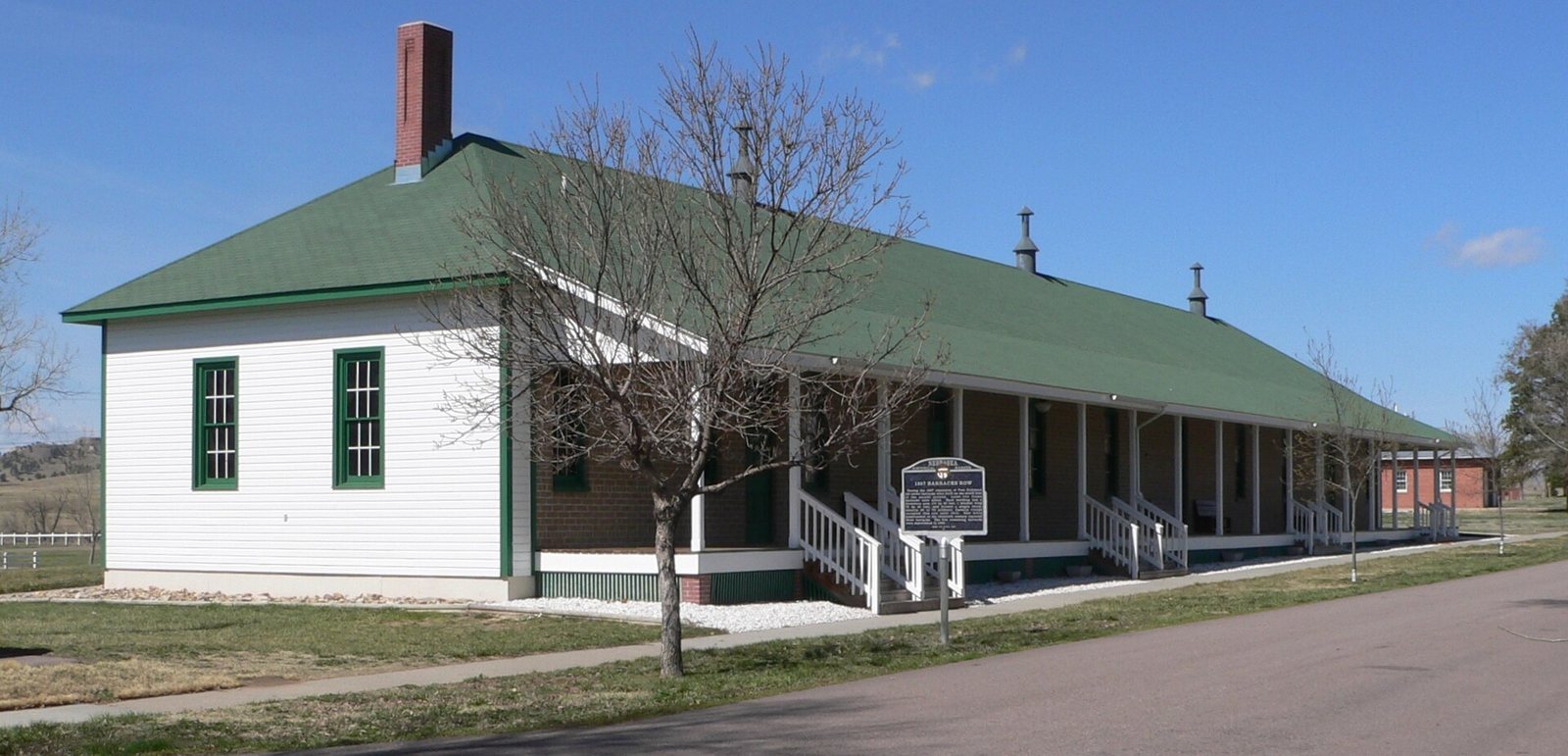
In October 1878, about 300 Northern Cheyenne led by Morning Star, also known as Dull Knife, were surrounded near Chadron Creek during a severe snowstorm and forced to surrender. Soldiers took them to Fort Robinson and confined them in empty barracks. Their horses and most of their weapons had been taken. The Cheyenne feared they would not survive a return to Indian Territory, the name then used for what is now Oklahoma. On January 3, 1879, soldiers began withholding food, water, and firewood in an effort to compel them to submit.
After soldiers arrested chiefs Wild Hog and Old Crow on the morning of January 9, the Cheyenne resolved to escape that night. At about 10 p.m. they fled the barracks toward Soldier Creek, south of the fort. Soldiers pursued them and killed men, women, and children. Known as the Fort Robinson massacre, the killings marked the end of the Sioux and Cheyenne wars in Nebraska. In 1901, the U.S. Supreme Court described the episode in terms of profound shock and sorrow.
A smaller group led by Little Wolf escaped to Montana. Survivors later received permission to settle on the reservation of Lakota leader Red Cloud, and the Northern Cheyenne subsequently obtained a reservation on the Tongue River. Morning Star spent his final years there with surviving family members.
Cavalry service and later military uses
The 9th Cavalry Regiment, one of the Army’s Black regiments whose soldiers were known as Buffalo Soldiers, was stationed at Fort Robinson from 1885. The post was enlarged and served as the regiment’s headquarters from 1887 to 1898. It also supported the Army’s 1890 campaign in the Pine Ridge Reservation. Second Lieutenant Charles Young, a Black officer and West Point graduate, served at the post from 1889 to 1890 before reassignment to the regiment.
Fort Robinson remained an operational military post until 1916. In 1919 it became the world’s largest quartermaster remount depot, breeding and training horses and mules for Army use. The military also bred its stallions with local stock to improve the latter. During the Great Depression, a transient was murdered aboard a Chicago and Northwestern freight train within the fort.
During the Second World War, Fort Robinson housed a military dog-training center and a German prisoner-of-war camp. The first 600 prisoners, veterans of the Afrika Korps, arrived on November 19, 1943. The camp held about 500 to 600 people until after the Allied invasion of Normandy in June 1944. A later influx brought the population to its peak in December. In early 1945, German sailors replaced most of the Army prisoners, and that autumn the camp became a satellite of the Scottsbluff prisoner-of-war camp. It closed in May 1946.
Transfer and preservation
The Army decided to abandon the post in 1947 and transferred it to the U.S. Department of Agriculture the following year for use as a beef-cattle research station. After some historic buildings were demolished in the mid-1950s, preservation efforts began. History Nebraska, then known as the Nebraska State Historical Society, began acquiring property in 1955 and opened a museum at the site in 1956. The Agriculture Department ended its work there in 1971 and transferred its remaining property to Nebraska.
Nebraska established Fort Robinson State Park in 1956 after purchasing land the year before. The park expanded with a federal land transfer in 1964 and reached its full extent in 1972 after the state purchased the adjoining James Arthur Ranch. Fort Robinson and the larger Fort Robinson and Red Cloud Agency historic district received National Historic Landmark status in 1960; the district was added to the National Register of Historic Places in 1966. Today the fort is a central part of the state park, which is managed by the Nebraska Game and Parks Commission. History Nebraska and the University of Nebraska-Lincoln operate some buildings.
Remains
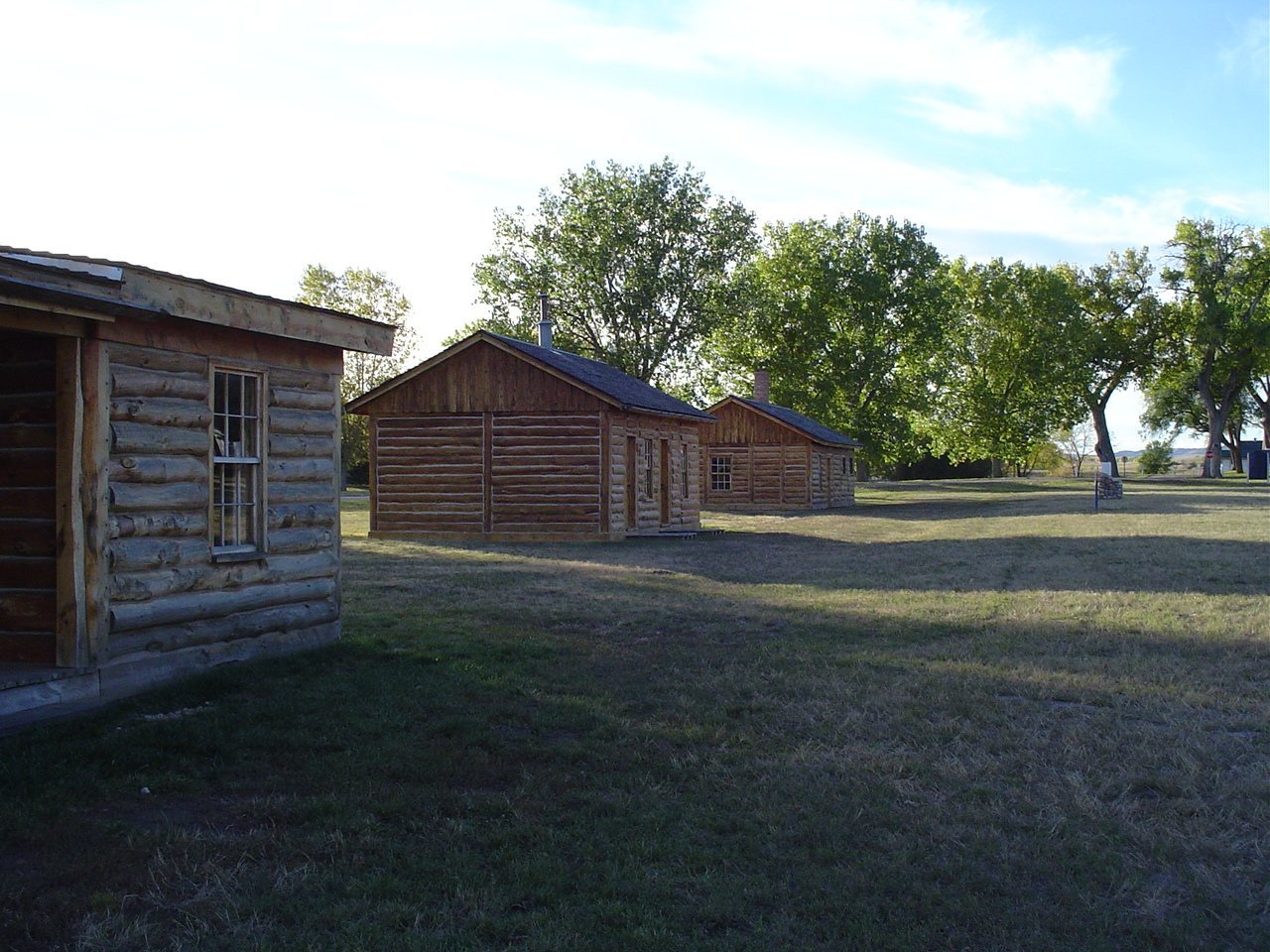
Fort Robinson lies in the Pine Ridge region of northwest Nebraska. The state park covers about 22,333 acres across Dawes and Sioux counties, while the Fort Robinson and Red Cloud Agency historic district covers about 2,500 acres. The district includes the fort and, about 1.5 miles east, the site of the second Red Cloud Agency. It also encompasses the Camp Canby site and the 1886 Percy Homestead.
Post buildings and facilities
Administrative buildings and quarters
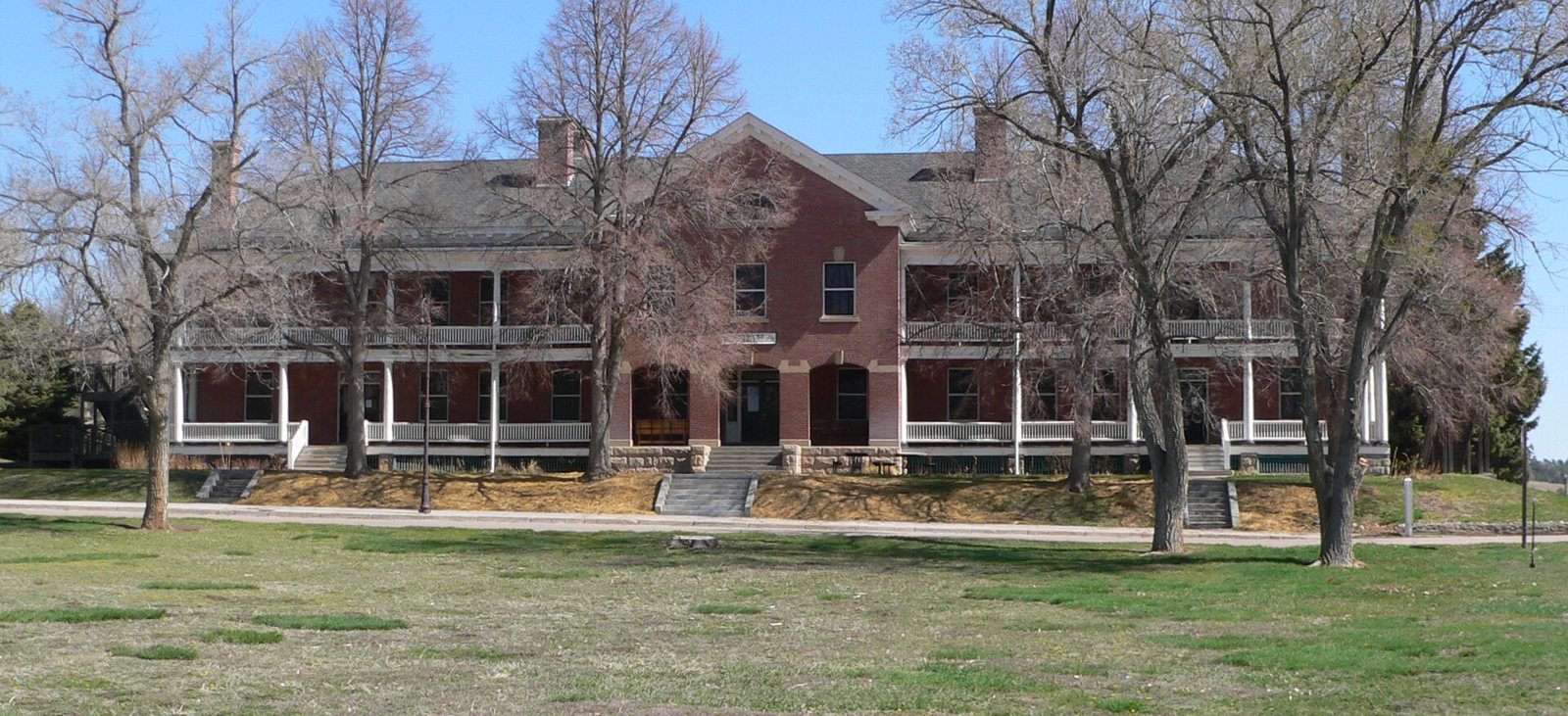
The post’s historic buildings include the 1875 guardhouse and Adjutant’s Office, along with officers’ quarters built in 1887. The Adjutant’s Office is identified as the place where Crazy Horse died, and a historic plaque marks the location. The 1905 post headquarters building houses the Fort Robinson Museum.
Service and recreation buildings
The post includes a blacksmith shop built in 1904 and a veterinary hospital dating to 1908. Its gymnasium and theatre were also built in 1904. A military supply storehouse now serves as a playhouse.
Museums and research facilities
The historic Army Theatre building houses the Trailside Museum of Natural History, operated by the University of Nebraska State Museum. A library at the site holds research materials on Fort Robinson and military and western history.
Cemetery
The post cemetery is among the historic sites within the district.