Nemuro Peninsula Chashi Sites: Ainu Enclosures and Earthworks
Site at a Glance
- Country
- Japan
- Primary era
- Early Modern
- Eras represented
- Medieval, Early Modern
- Civilizations
- Unclassified
- Site type
- Military
- Remains
- Fort
On this page4 sections
History
Ainu sites from the sixteenth to eighteenth centuries
The Nemuro Peninsula Chashi Sites are a group of 24 Ainu enclosures in Hokkaido, Japan, generally thought to date from the sixteenth to eighteenth centuries. The Ainu are an Indigenous people of northern Japan and nearby regions. Chashi refers to an Ainu site or enclosure, often interpreted as a fort. This period broadly overlapped with Japan’s Sengoku era of political and military conflict and the Edo period that followed, governed by the Tokugawa shogunate. The sites are associated with the social, economic, and political conditions of their time. Their purposes are not fully established: they may have served as lookout points, sacred places, or places for negotiation, with defensive and religious uses also considered likely. The group includes 24 of the 32 chashi identified in the Nemuro area, one of Hokkaido’s concentrations of sites; several hundred have been identified across the island.
The 1789 rebellion and later recognition
The group is associated with the Menashi–Kunashir rebellion, an Ainu uprising against Japanese authorities in the region in 1789. The sites were designated together as a National Historic Site in 1983, and the designation was extended in 1984. In 2006, the group became the first entry on the Japan Castle Foundation’s list of Japan’s Top 100 Castles.
Remains
The sites extend along the peninsula’s northern coast. Most occupy bluffs above the Sea of Okhotsk, at elevations generally between 5 and 50 metres. Many are near river mouths or inlets, locations that may have supported fishing. Their plans are circular or rectangular, and their ditches take square, U-shaped, or semicircular forms, with the last two shapes more common.
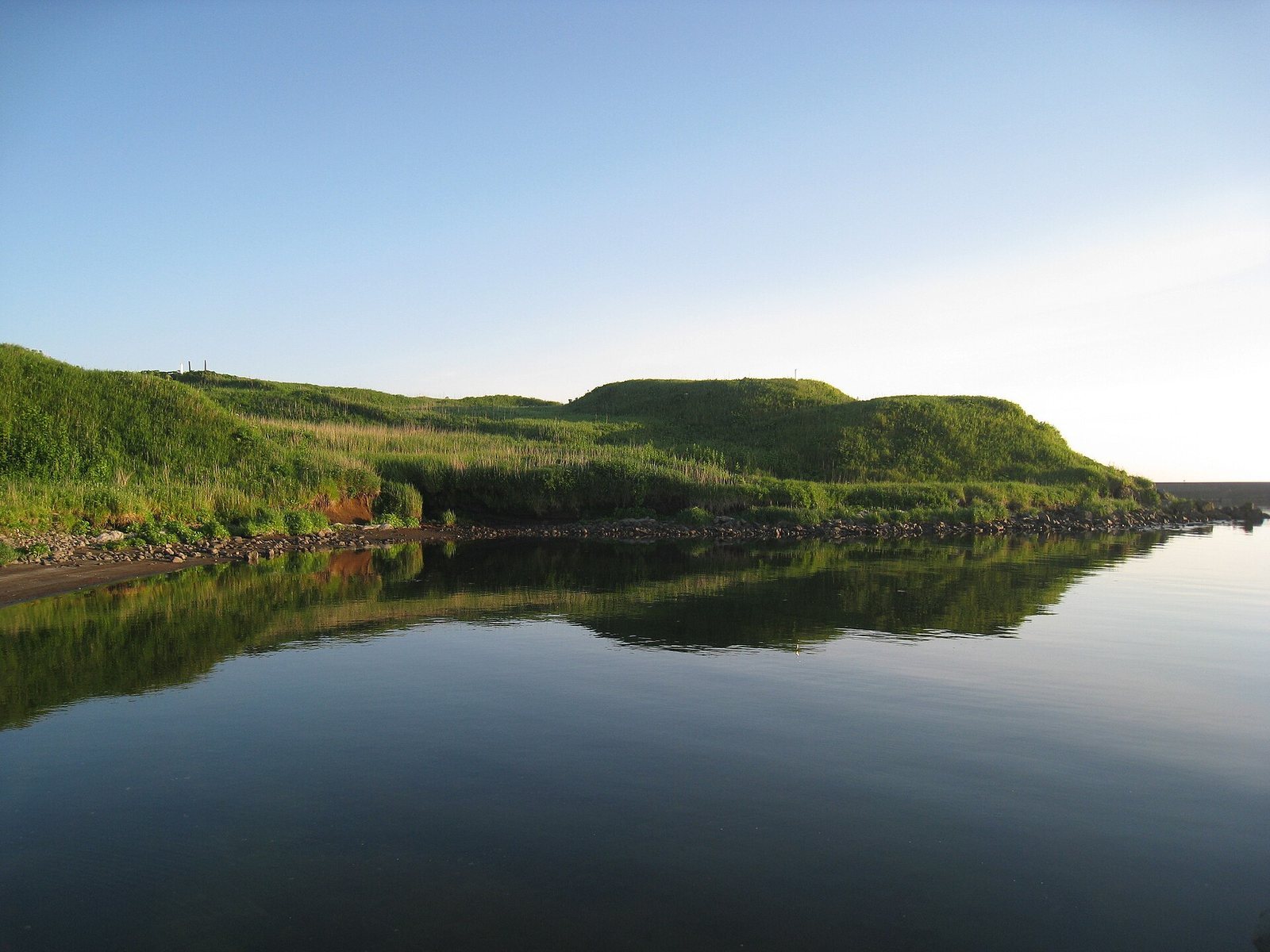
Surviving features include grass-covered circular mounds, traces of former clay walls, and dry ditches. The ditches are generally well preserved and identifiable. At Notsukamafu, two semicircular ditches are each 5 metres wide and 3 metres deep. A ditch at another site measures 3 metres wide and 0.5 metres deep.
The Nemuro Museum of History and Nature holds materials related to the sites, along with several miniature dioramas depicting their earthworks.