Kammerhof: Mining Administration Complex in Banská Štiavnica
Site at a Glance
- Country
- Slovakia
- Primary era
- Early Modern
- Eras represented
- Medieval, Early Modern, Modern
- Civilizations
- Austrian Empire, Habsburg, Hungarian
- Site type
- Civic
- Remains
- Palace
On this page13 sections
History
Kammerhof is a historic mining-administration complex in Banská Štiavnica, Slovakia. It developed gradually from the twelfth century, then took much of its present form after 1550, when older buildings were rebuilt for the Imperial Mining Chamber.
From medieval growth to imperial administration
Shortly after 1550, the Maximilian Imperial Mining Chamber was transferred to Kammerhof from Kremnica. The Mining Chamber, an administrative body overseeing mining and related industries, and the chief chamber count’s office, led by a senior mining official, managed mines, smelters, and mints across what is now central Slovakia. The redesign is probably attributable to Pietro Ferrabosco, an Italian architect who worked for the Imperial Mining Chamber in Vienna.
The complex was enlarged and rebuilt more than once. Work in 1627 and again in 1815 shaped the form it retains today.
Later use and conservation
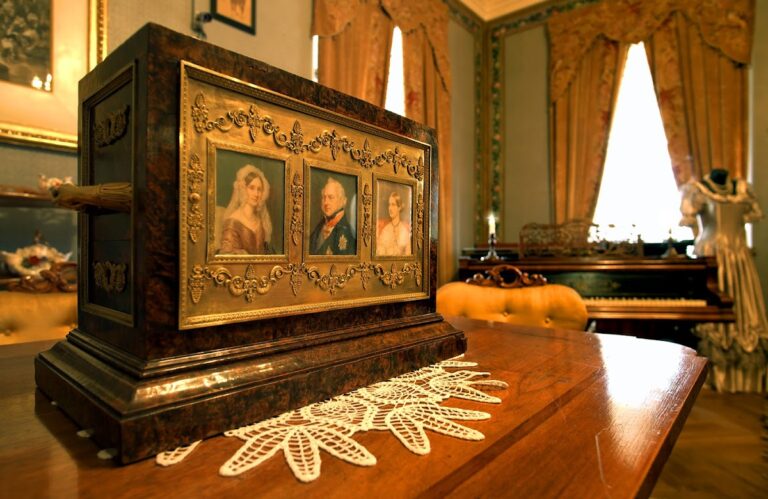
During Czechoslovakia, a Central European state established in 1918, Kammerhof served as the headquarters of local ore mines until the late 1960s. After mining ended in Banská Štiavnica, the building was adapted for the Slovak Mining Museum. It now houses the museum’s headquarters and exhibitions on mining, mining education, and the history and technology of mining.
The complex was designated a national cultural monument in 1961 and added to Slovakia’s Central List of Monuments. Reconstruction campaigns in 1968–1970 and 1980–1986 included archaeological investigations in two of its courtyards.
Remains
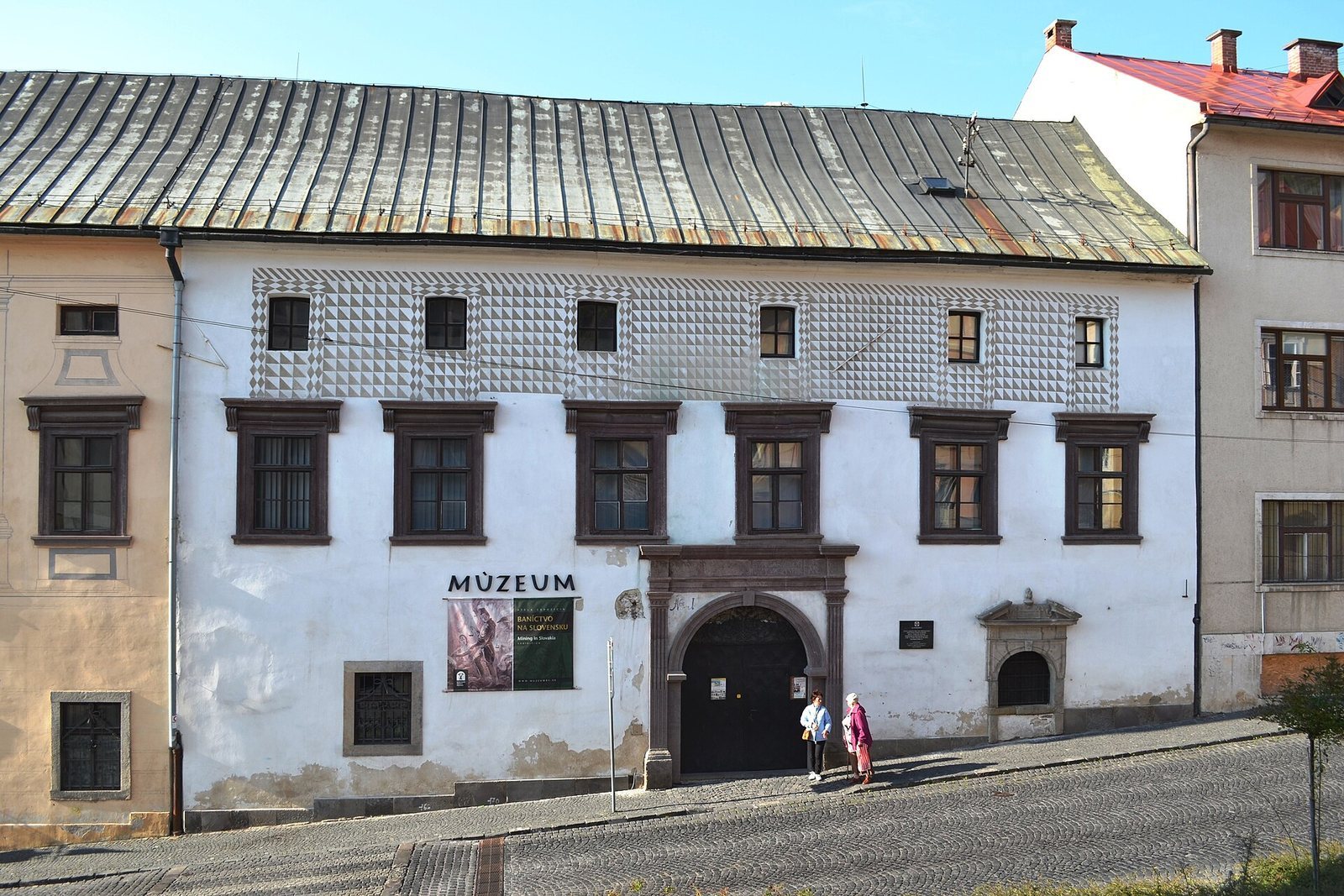
Kammerhof is a two-storey masonry complex with an irregular plan and three courtyards. Its long, uneven façade follows the slope of Kammerhofská Street. It is among the largest building complexes in central Banská Štiavnica and incorporates fabric from earlier buildings.
Medieval buildings and industrial remains
Earlier buildings
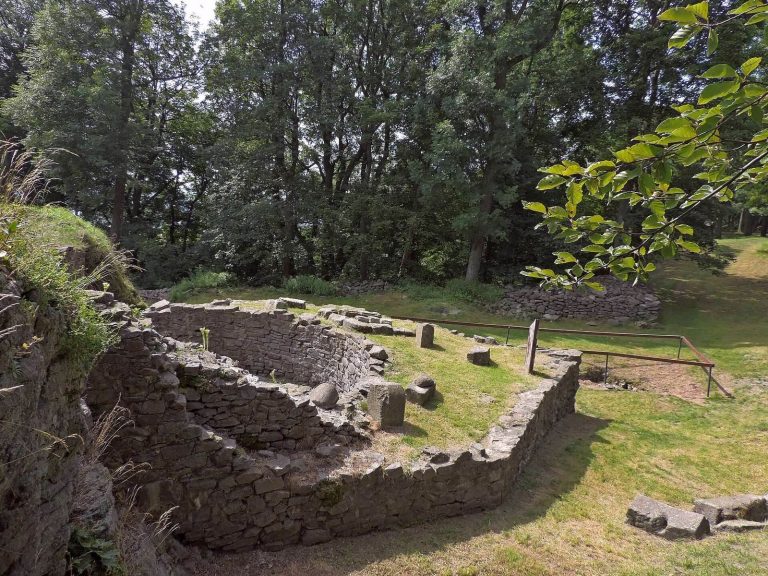
Archaeological investigations revealed narrow plots and Romanesque buildings, an early medieval European architectural style, dating back at least to the thirteenth century. These included a rectangular residential tower. Elements of older Romanesque and Gothic, a later medieval European architectural style, buildings were found in both the front and rear parts of the complex.
Metalworking remains
Traces of tower-like masonry residences and a metallurgical building also survive. In the rear section, technical ceramics point to a fifteenth-century ore-smelting workshop and installations used to separate metal.
Renaissance and defensive features
Entrance and façade
The complex retains Renaissance features, from a major European architectural style, including a dated ornamental entrance portal, formal first-floor windows, and sgraffito, decoration made by cutting through a surface layer to reveal a contrasting one. The entrance to the carriage passage has a vault with lunettes, crescent-shaped spaces between vaults and walls, supported by consoles. A staircase leads to the first floor.
Bastions and former defenses
Two round Renaissance bastions, projecting defensive structures, stand at the rear. A defensive wall ran from them toward New Castle. At the lower end of the building, a former town gate stood on the street axis. A wall from the gate ran past the Dominican church and monastery toward the fortifications of the oldest settlement on Glanzenberg.
Chapel and meridian
Mining office chapel
A chapel for the mining office was installed on the ground floor of the upper section between 1621 and 1627 and served by Jesuits, members of a Catholic religious order. It has a single nave, or main worship space, beneath a barrel vault, a tunnel-like arched ceiling, with lunettes. The chapel also has a window facing the main street and an entrance portal.
Štiavnica meridian
The Štiavnica meridian crosses a courtyard, where a stone marker sits beneath a Renaissance loggia, an open-sided gallery.