Jebel Barkal: An Ancient Kushite Religious and Royal Center in Sudan
Site at a Glance
- Country
- Sudan
- Primary era
- Classical
- Eras represented
- Bronze Age, Iron Age, Classical, Medieval
- Civilizations
- Christian Nubian Kingdoms, Egyptian, Kushite
- Site type
- Religious
- Remains
- Sanctuary
On this page16 sections
History
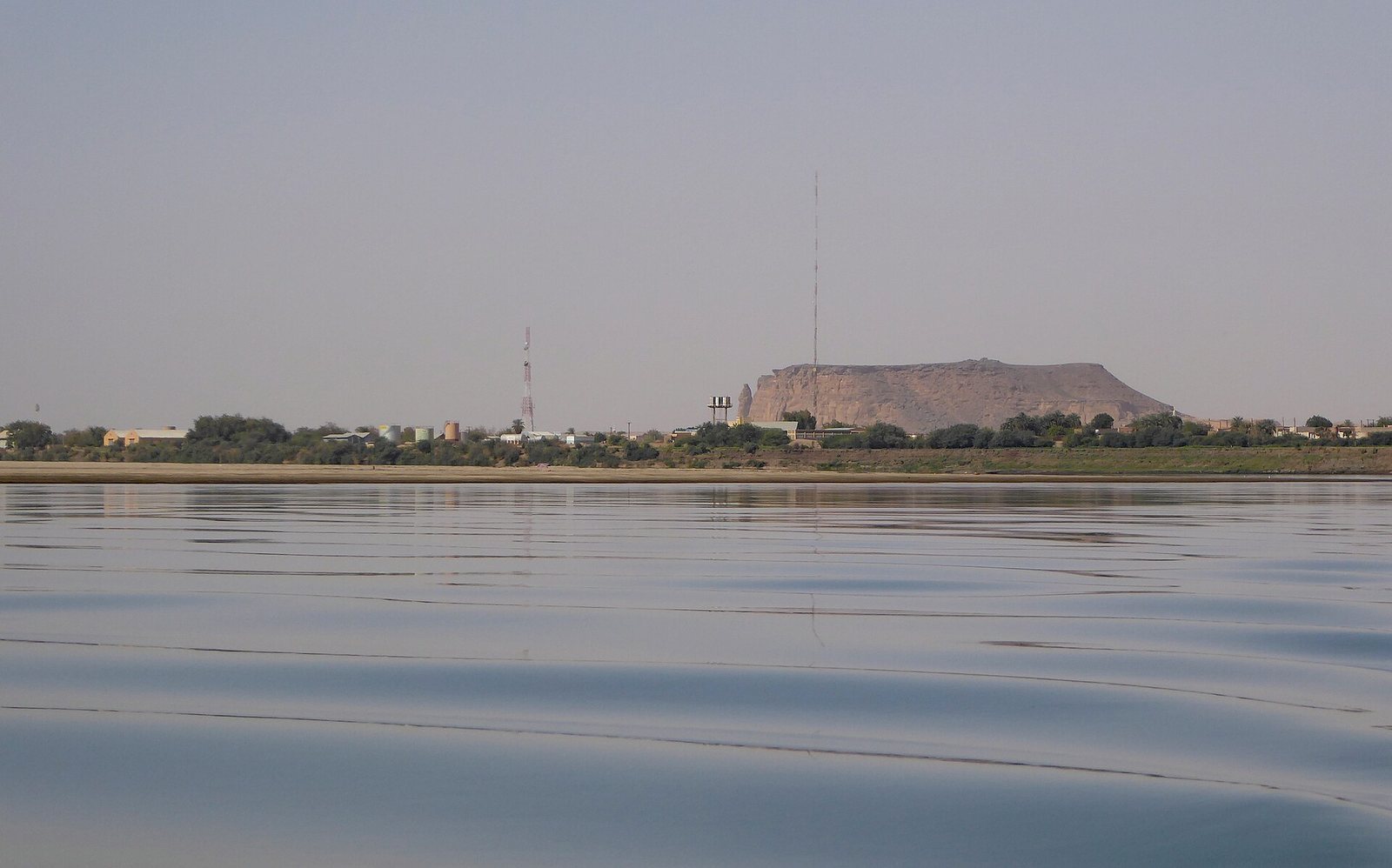
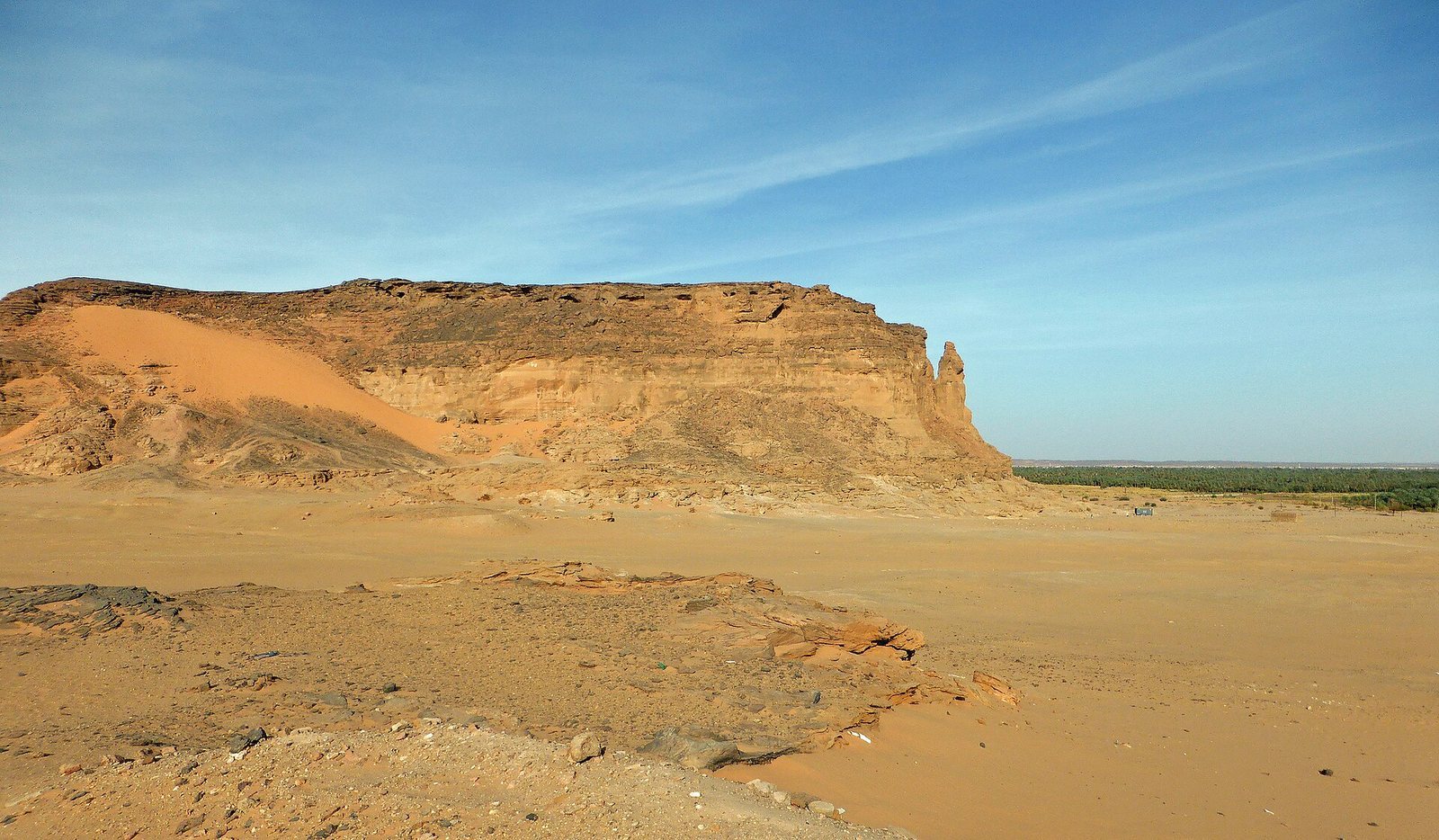
Jebel Barkal is a flat-topped mesa and ancient religious and royal center near Karima, Sudan. Its earliest known occupation dates to the ancient Nubian Kerma culture. Egyptians established a fortified settlement there around 1450 BCE, and the site later became a major center of the Kingdom of Kush.
Kerma and Egyptian rule
Scattered pottery sherds mark the earliest known occupation. Kerma communities appear to have revered the mesa animistically, and this tradition seems to have continued under Egyptian and later Kushite rule.
Pharaoh Thutmose III conquered the area around 1450 BCE and established a fortified settlement as the southern limit of Egypt’s empire. The settlement and surrounding region became known as Napata. During most of the Egyptian New Kingdom, a temple complex grew around a sanctuary of Amun of Napata. Amun was a major ancient Egyptian god, and Amun of Napata was a local, ram-headed form of the deity. Building activity declined in the New Kingdom’s final years and after its collapse in 1169 BCE.
Napatan Kush
After 800 BCE, Jebel Barkal became the capital of a resurgent Kingdom of Kush under Napatan rulers. Kushite kings Kashta, Piye, and Taharqa, who also ruled Egypt as pharaohs of its 25th Dynasty, built, enlarged, and renovated major structures at the site.
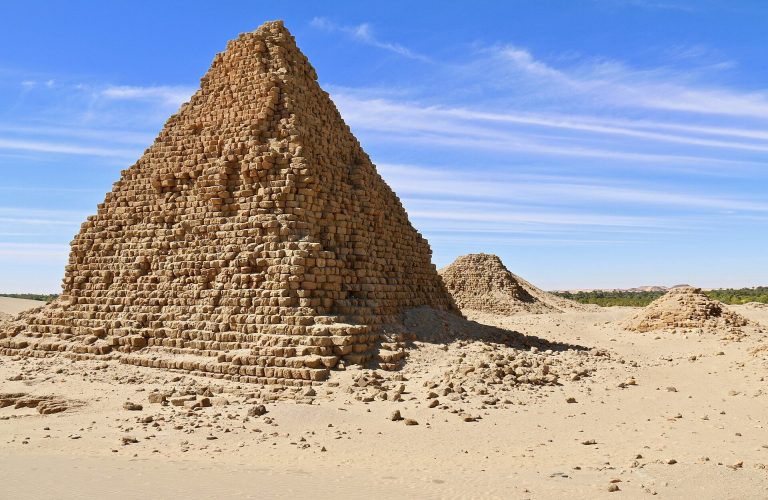
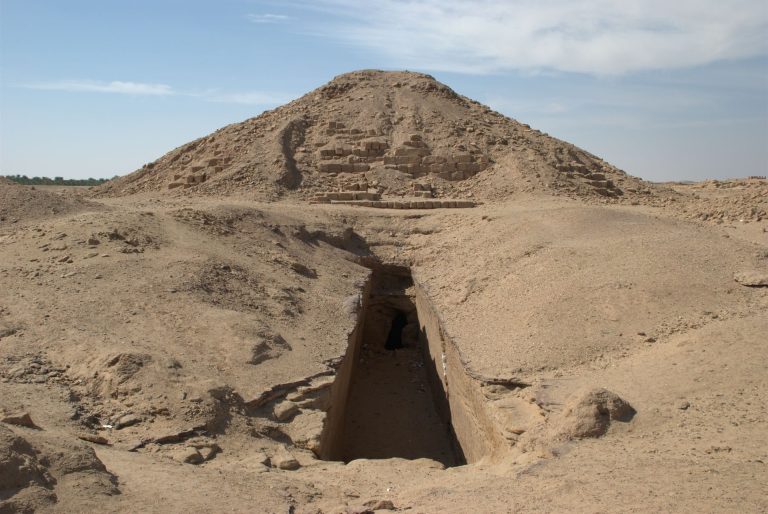
When Assyria conquered Egypt around 661 BCE, the Kushites continued to rule Kush. Jebel Barkal and Meroë became important urban centers, and the site’s palaces and temples continued to be renovated from the seventh to the early third century BCE. Most royal burials of this period were at Nuri, about nine kilometers northeast of Jebel Barkal.
Meroitic and medieval periods
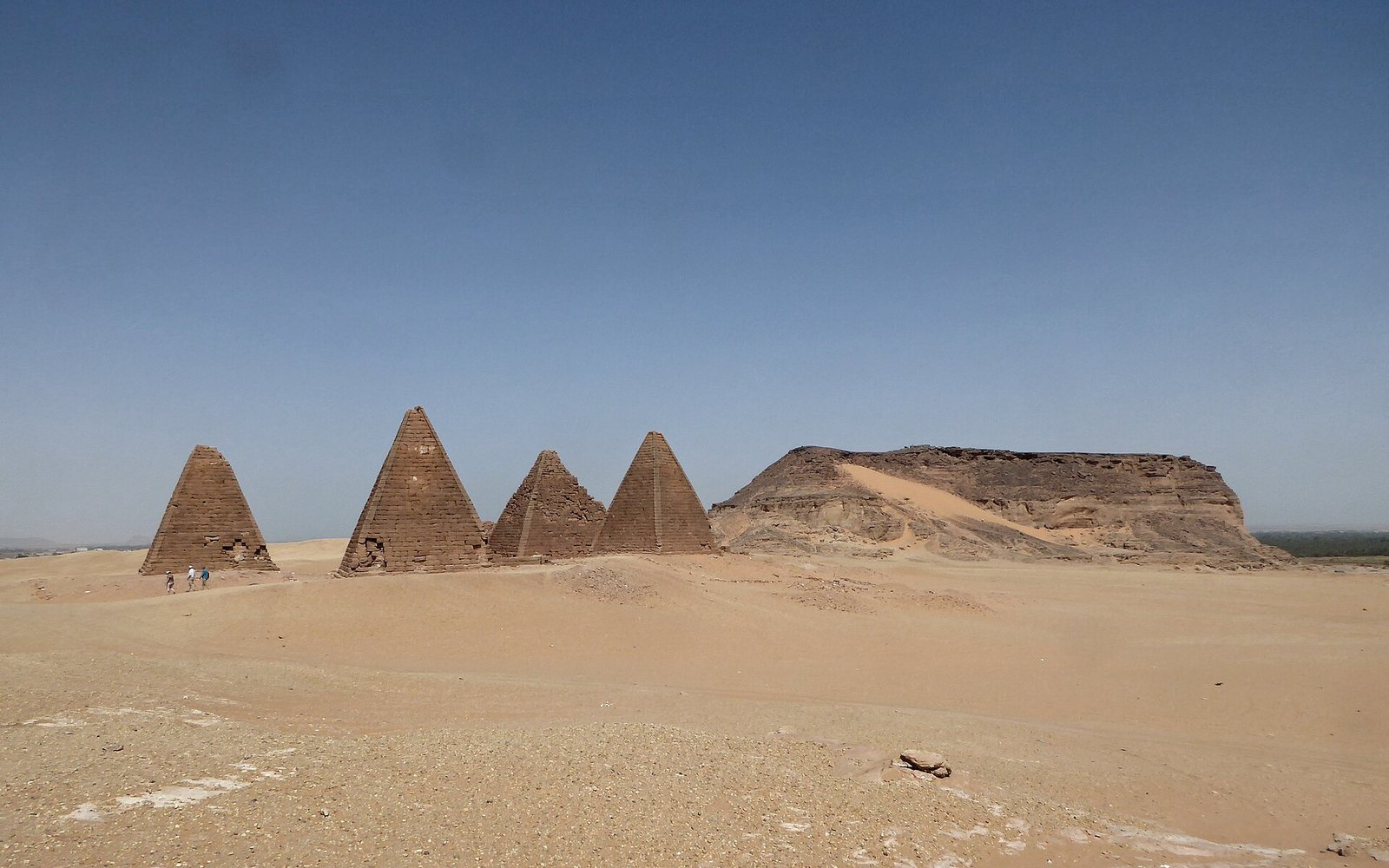
Around 270 BCE, Kushite royal burials shifted to Meroë, marking the beginning of the Meroitic period. Jebel Barkal remained an important city, with successive palaces, including construction associated with King Natakamani, and continued temple building and renovation. The unusual construction of royal pyramids at Jebel Barkal during the first century BCE and first century CE may reflect the prominence of local families, though the reason is uncertain.
After the collapse of Kush in the fourth century CE, Jebel Barkal remained occupied during medieval Christian Nubia. Burials and funerary inscriptions point to this later community. The Temple of Amun remains sacred to local people.
Exploration and excavation
European explorers Frédéric Cailliaud and Louis Maurice Adolphe Linant de Bellefonds described and drew the temples in 1821. Karl Richard Lepsius recorded further details in 1844, including architectural features that have since disappeared. In 1862, an Egyptian officer recovered five inscriptions from the Third Intermediate Period and sent them to the Cairo Museum.
Scientific excavations began in 1916 with a Harvard University and Museum of Fine Arts, Boston expedition led by George Reisner, who worked at Napata through 1920. From the 1970s, archaeologists from the University of Rome La Sapienza continued exploration under Sergio Donadoni; a Boston Museum team led by Timothy Kendall joined in the 1980s. The wider property, listed as Gebel Barkal and the Sites of the Napatan Region, became a UNESCO World Heritage Site in 2003.
Remains
The archaeological area covers 121 hectares around the mesa, which rises 104 meters and stands at an elevation of 287 meters near the Nile. At least 13 temples were built, enlarged, and renovated around the mesa over more than 1,500 years. The remains include temples at its foot, palaces, urban rubble heaps, and a group of royal pyramids.
Temples
Temple of Amun
At the foot of the mesa, the Temple of Amun formed the center of a wider temple complex. Only its final pillars remain standing. A colossal statue of King Aspelta from the temple is now held by the Museum of Fine Arts, Boston.
Temple of Mut
The Temple of Mut retains well-preserved chambers with carved and painted walls. Their scenes include the lion-headed deity Apademak with King Taharqa, and Taharqa followed by Queen Takahatenamun, who shakes a sistrum, a ritual rattle. A stone ram statue is also associated with the site.
Temple B700
Built by King Atlanersa and decorated by King Senkamanisken, Temple B700 lies west of the main temple and is now largely destroyed. Its pylon shows Senkamanisken striking enemies before Amun. An inscription presents Amun as choosing Senkamanisken as king, granting divine authority to his rule. On certain ritual occasions, the temple received Amun’s sacred barque, a ceremonial boat used in religious processions, from nearby Temple B500. B700 may also have served for coronations of early Napatan kings in the mid-seventh century BCE. Its barque stand, depicting Atlanersa holding up the heavens, is now in the Museum of Fine Arts, Boston.
Palaces and urban remains
Palace B100
B100 is a large Meroitic building dating to the first century CE. Initially interpreted as an administrative building, it is now identified as a palace.
Napata’s urban remains
Rubble heaps mark the area of Napata’s ancient settlement, which has not been extensively excavated. The earliest identified buildings there date to the middle of Egypt’s 18th Dynasty.
Royal cemetery and finds
Royal pyramids
Jebel Barkal served as a royal cemetery, with the earliest burials dating to the third century BCE. A southern group forms part of the pyramid cemetery. Bar. 1 belonged to a king of the mid-first century BCE, while Bar. 2 is attributed to King Teriqas, who ruled around 29–25 BCE. Bar. 4 is uncertainly assigned to Queen Amanirenas, and Bar. 6 is associated with Queen Nawidemak, both of the first century BCE. Bar. 7 may belong to King Sabrakamani of the third century BCE. Bar. 9 belonged to a king or queen of the early second century CE. Bar. 11, Bar. 14, and Bar. 15 are associated respectively with Kings Aktisanes, Aryamani, and Kashmerj Imen, all linked to the third century BCE.
Objects from Jebel Barkal
The Stele of Piye, discovered at Jebel Barkal, is now in the Cairo Museum. A gold bracelet from a royal family member’s tomb dates to the Meroitic period, around 250–100 BCE. A djed amulet, bearing an ancient Egyptian symbol associated with stability, dates to the 25th Dynasty and is now in the British Museum.