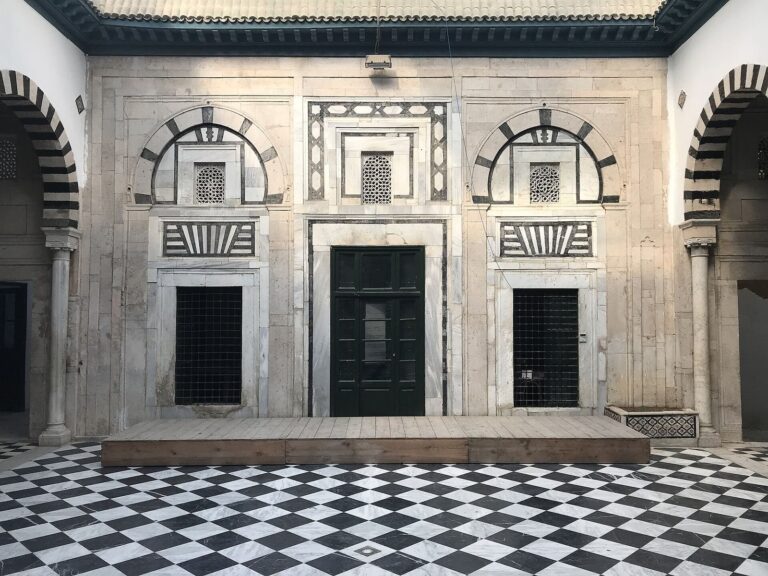
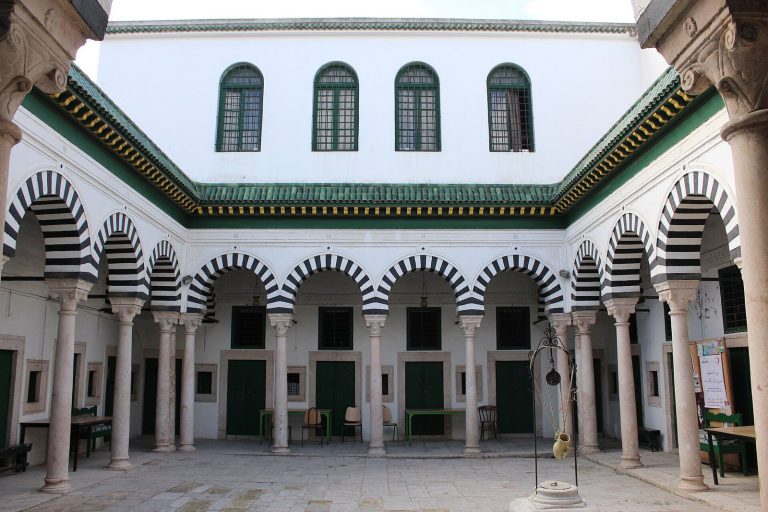
Madrasa of Andaloussiya: An Ottoman-Era School in Tunis
Site at a Glance
- Country
- Tunisia
- Primary era
- Early Modern
- Eras represented
- Early Modern
- Civilizations
- Ottoman
- Site type
- Religious
- Remains
- Madrasa
On this page8 sections
History
Foundation under Ottoman rule
The Madrasa of Andaloussiya, an institution of Islamic learning, stands in Tunis, Tunisia. It was founded around 1625–1626 during the Ottoman period by Muslims who had arrived from Spain after King Philip III’s 1609 expulsion decree. Many were Moriscos, Muslims and descendants of Muslims in Spain, some of whom had been forced to convert to Christianity. They were also called Andalusians, referring to their connection with al-Andalus, the Muslim-ruled parts of Iberia. Many settled in northern Tunisian towns, including Tunis, and contributed to the region’s economic, cultural, and social life.
The school was a community undertaking rather than a government project. Its construction was led by a naqib, a representative of the sharifs, people traditionally regarded as descendants of the Prophet Muhammad, together with two other community members. The same group built the Subhan Allah Mosque in Bab Souika. The name Andaloussiya recalls the Andalusian community associated with the school’s foundation. It is also known as Madrasa El Younsiya, Madrasa of Sidi El Ajmi, and Madrasa of the Conquest.
The school was among the earliest madrasas established in Tunis under Ottoman rule. The rulers had founded the El Yusefiya Madrasa shortly before it. The Mouradiyya Madrasa followed in the late seventeenth century, and Tunisia’s Husaynite dynasty established further schools, particularly during the eighteenth century.
Restoration and later use
By 2000, the madrasa had fallen into complete ruin. The Municipality of Tunis carried out a comprehensive restoration that year, after which the building became the headquarters of an association offering assistance at home to people with severe disabilities. The madrasa is part of the Medina of Tunis World Heritage Site.
Remains
Plan and associated structures
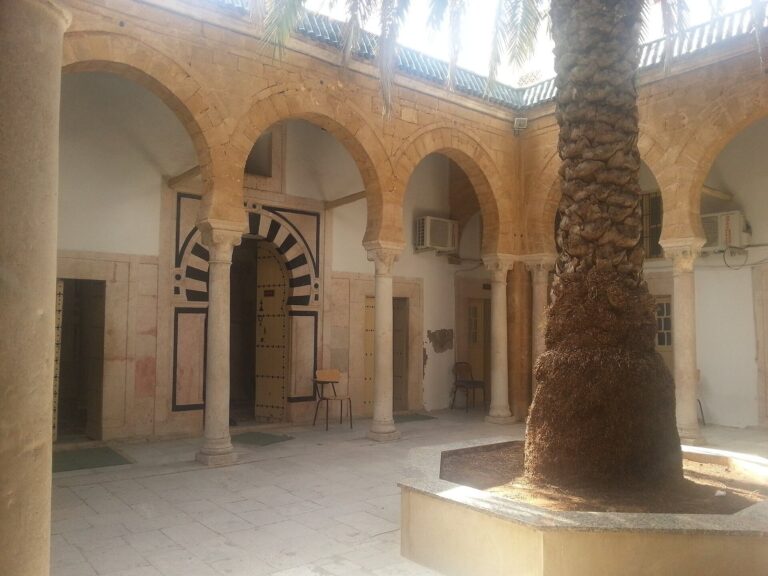
The madrasa’s plan is organized around a lozenge-shaped courtyard, with rooms opening directly onto three sides and the mosque occupying the fourth. It stands on Errakah Street in El Hara, Tunis’s Jewish quarter, near the religious lodge of Sidi El Ajmi and a mausoleum associated with Sidi Younes.
Entrance and courtyard
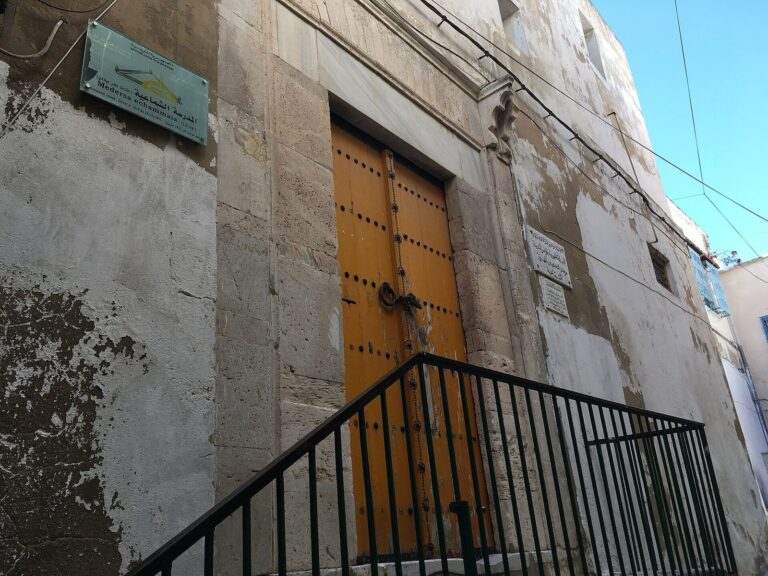
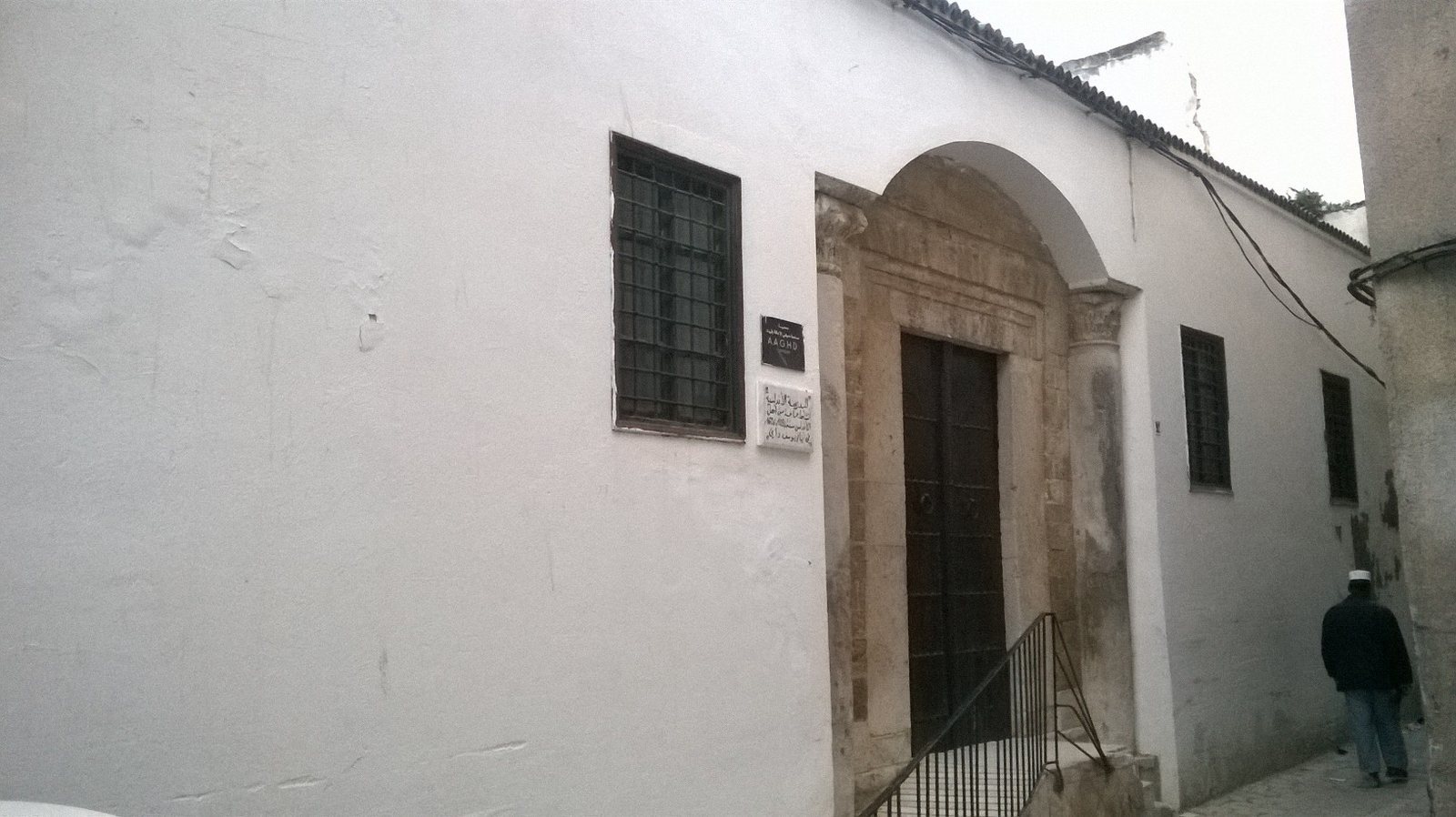
The entrance opens into a vestibule. An ablution room lies to the right, and the passage continues to the courtyard. Unlike the arcaded courtyards of other madrasas in Tunis, this courtyard has no arcades; the surrounding rooms open directly onto it.
Madrasa mosque
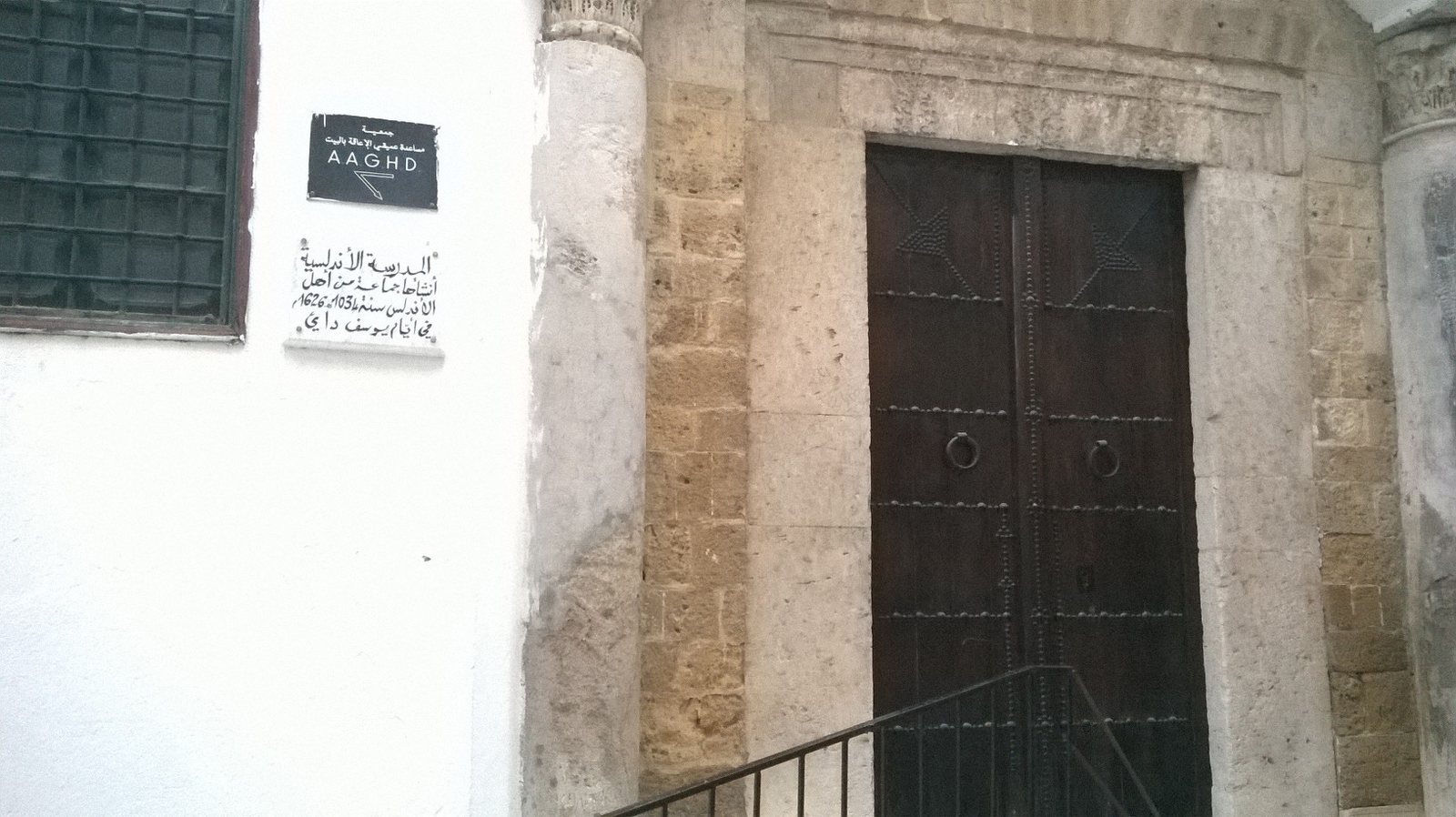
The mosque is rectangular, with two naves and three bays. Two low windows flank its entrance. An inscription above the doorway gives the madrasa’s construction date.
Nearby mausoleum
The nearby mausoleum is associated with Sidi Younes, a saint who died in 1106 and taught the Quran to Sheikh Mahrez ibn Khalaf.