Alcázar de Colón: A Fortified Palace in Santo Domingo
Site at a Glance
- Country
- Dominican Republic
- Primary era
- Early Modern
- Eras represented
- Early Modern
- Civilizations
- Crown of Castile, Spanish
- Site type
- Civic
- Remains
- Palace
On this page7 sections
History
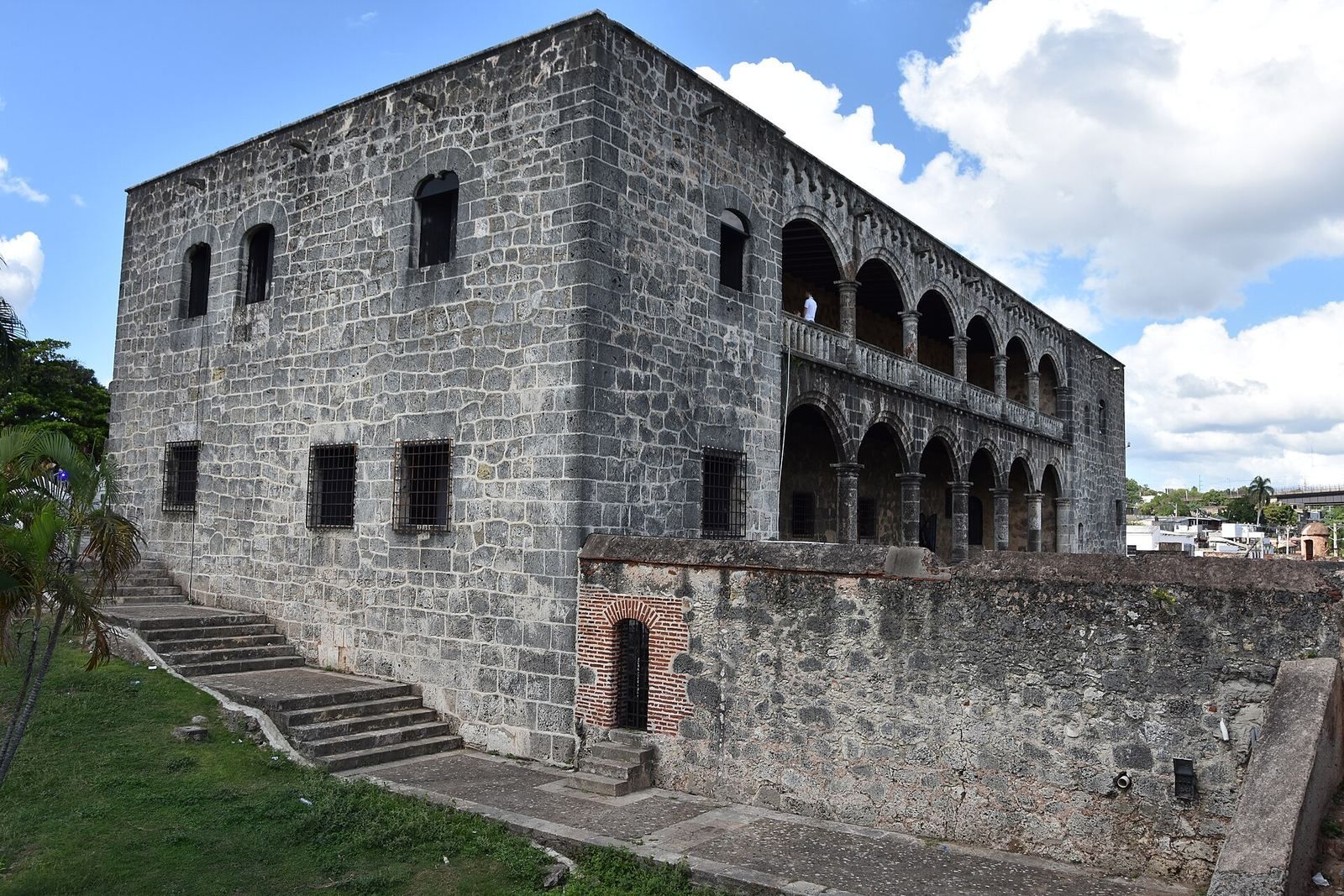
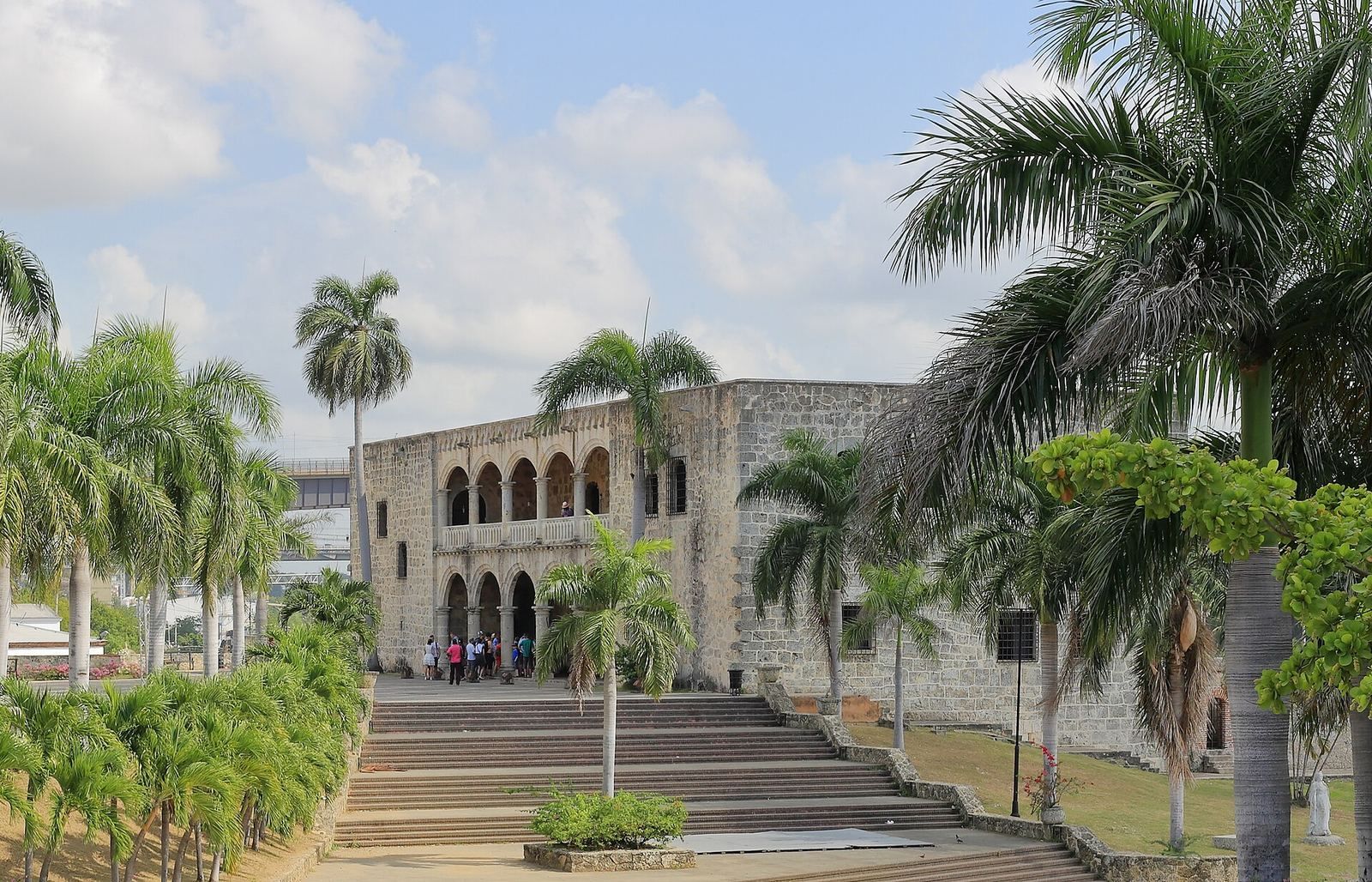
The Alcázar de Colón is a fortified palace in Santo Domingo, Dominican Republic, built by the Spanish between 1510 and 1514. Its architecture is predominantly Gothic, a medieval European style, with Renaissance influences based on classical forms and Mudéjar elements, an Iberian Christian tradition incorporating Islamic influences. Commissioned by Diego Columbus as his family residence and governor’s mansion, it was the first fortified European palace built in the Americas.
Columbus family and colonial administration
Diego, the firstborn son of Christopher Columbus, arrived in Santo Domingo in 1509 as governor and served as the fourth governor of the Indies. Ferdinand II of Aragon granted him a site near the Ozama River for a home for Diego and his descendants.
Diego lived at the palace with his family, and his children Juana, Isabel, Luis, and Cristóbal were born there. It was the only known residence in the New World of a member of Christopher Columbus’s family. After Diego died in Spain in 1526, his widow, María Álvarez de Toledo, remained until her death in 1549. Three generations of the family lived there, possibly into the late sixteenth century.
During the early Spanish colonial period, the residence served as a base for planning expeditions of conquest and exploration. Hernán Cortés and Pedro de Alvarado, Spanish participants in the conquest and colonization of the Americas, visited the palace.
Capture and decline
In 1586, English sea captain Sir Francis Drake and his forces captured and looted the palace, taking many valuable objects. Ownership was then contested in court for nearly two centuries. As the Captaincy General of Santo Domingo, a Spanish colonial administrative and military jurisdiction, declined in influence, the building deteriorated. It was abandoned by the mid-eighteenth century and was in disrepair by 1776, when plans to convert it into a prison were considered but not carried out.
Restoration and heritage
The Dominican Republic declared the palace a National Monument in 1870. The government restored it between 1955 and 1957 and converted it into a museum. The Alcázar forms part of the Colonial City of Santo Domingo, which was inscribed on the UNESCO World Heritage List in 1990.
Remains
Building and layout
The palace stands on a plot near a rocky islet overlooking the Ozama River. Coral rock and coral blocks form its masonry, and its design followed that of an existing structure at Mancera de Abajo in Salamanca, Spain, whose ruins survive. The residence originally had 55 rooms, gardens, and courtyards. The surviving building is about half its former size, with 22 rooms; it now houses a museum in those rooms. Windows and a balcony are among the palace’s features.
Museum collections
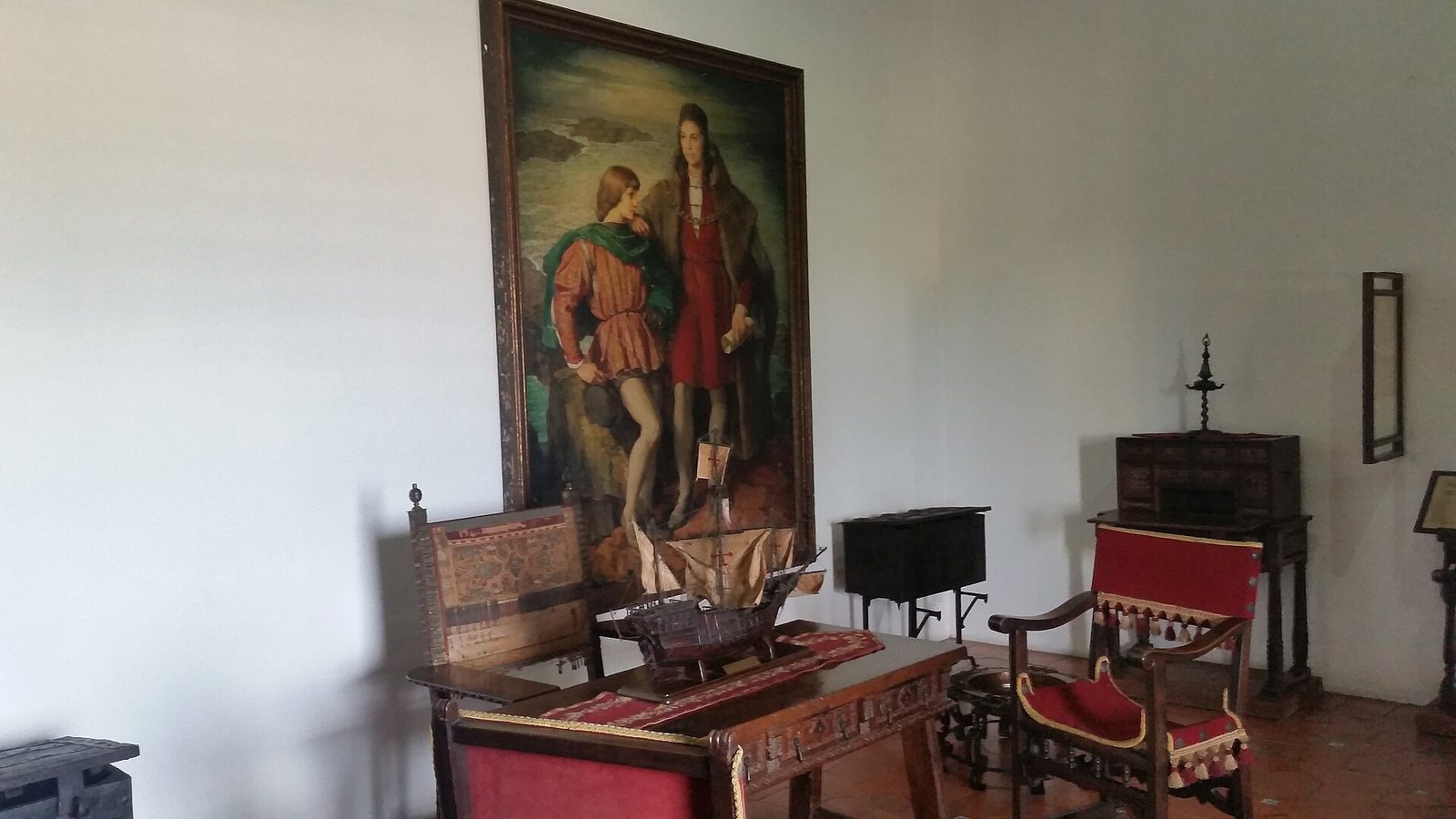
The museum displays European art from the late Middle Ages and Renaissance, acquired in the 1950s. Its collection is the most important of its kind in the Caribbean. The tapestry collection spans the fifteenth to seventeenth centuries and includes works made by the Flemish Van Den Hecke family from designs by French painter and designer Charles Le Brun.