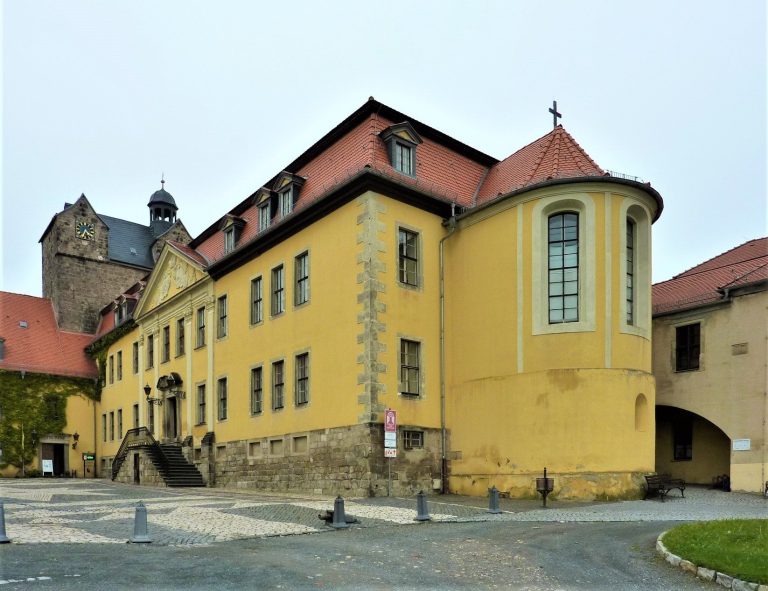
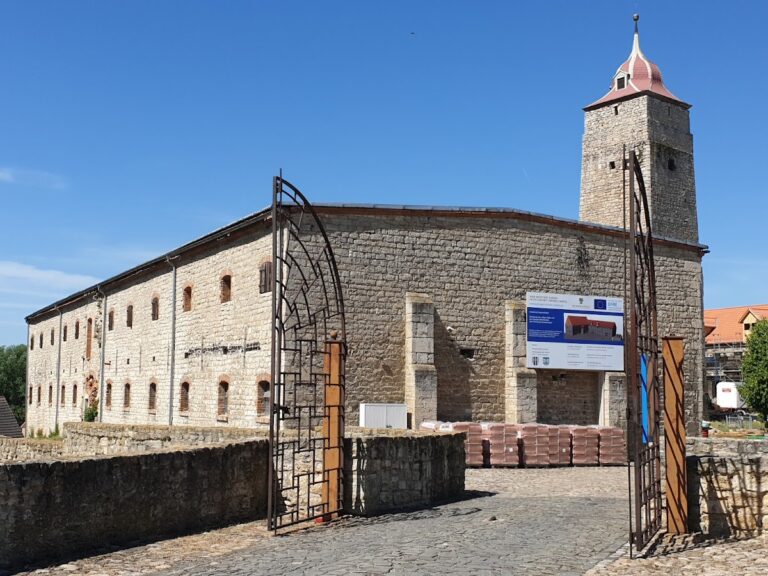
Collegiate Church of St. Servatius: Quedlinburg’s Romanesque Collegiate Church
Site at a Glance
- Country
- Germany
- Primary era
- Medieval
- Eras represented
- Medieval, Modern
- Civilizations
- German, Holy Roman Empire
- Site type
- Religious
- Remains
- Church
On this page27 sections
History
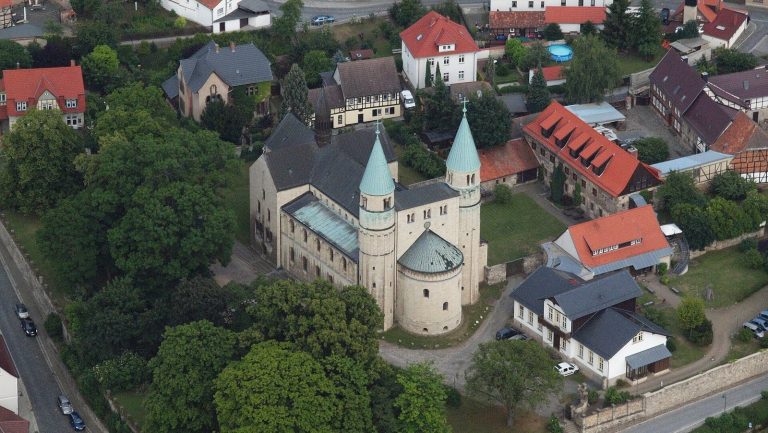
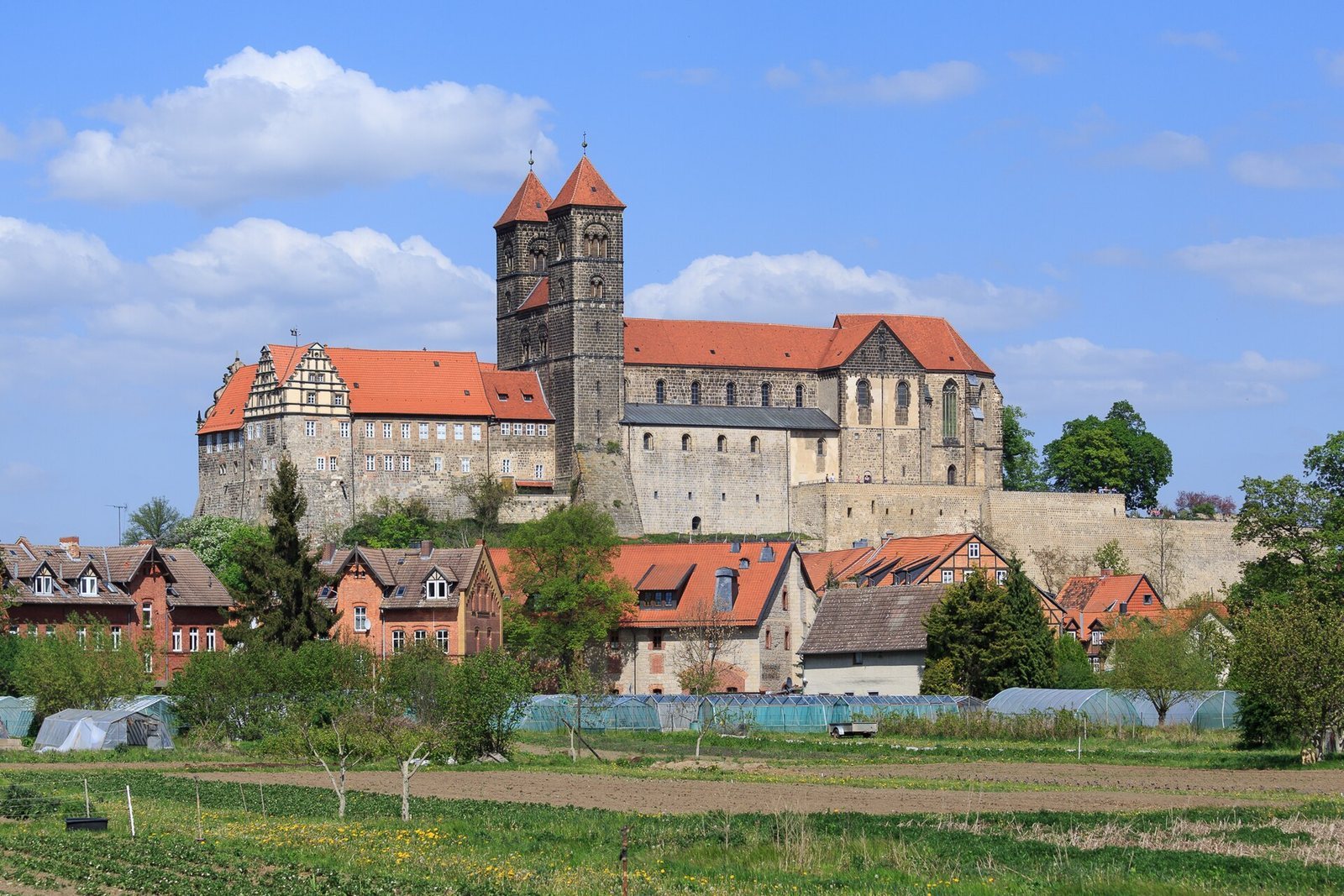
The Collegiate Church of St. Servatius stands on the Schlossberg in Quedlinburg, Germany, and served the women’s religious foundation established there in 936. The present high-Romanesque church was begun after a fire in 1070 and reconsecrated in 1129. It became the burial place of the foundation’s royal founders and its abbesses.
Foundation and early churches
A castle chapel stood on the site before the foundation was established. King Henry I was buried before its main altar. When the castle became a women’s collegiate foundation, an endowed religious community governed by an abbess, the chapel was replaced by a larger church. In 961, Abbess Mathilde, Henry I’s granddaughter and a daughter of Otto I, brought relics of St. Servatius from Maastricht to Quedlinburg. Servatius was a late-antique bishop venerated as a saint.
Under Abbess Mathilde, a third church was built, with its first construction phase completed by 997. It was consecrated on 24 September 1021 in the presence of Emperor Henry II. The church was dedicated to Saints Dionysius and Servatius. A fire destroyed it in 1070.
The Romanesque church and its medieval role
Construction of the present church began soon after the fire, and it was reconsecrated at Pentecost in 1129 in the presence of King Lothar III. The church served as the burial place of the foundation’s founders, Henry I and his wife, Queen Mathilde, as well as Quedlinburg’s abbesses. Queen Mathilde’s remains are in the crypt; Henry I’s remains have not been confirmed there.
The church is also called Quedlinburg Cathedral, although it was never the seat of a bishop. The title reflected Abbess Mathilde’s rank as metropolitana, an ecclesiastical position comparable to that of an archbishop.
Gothic remodeling and restoration
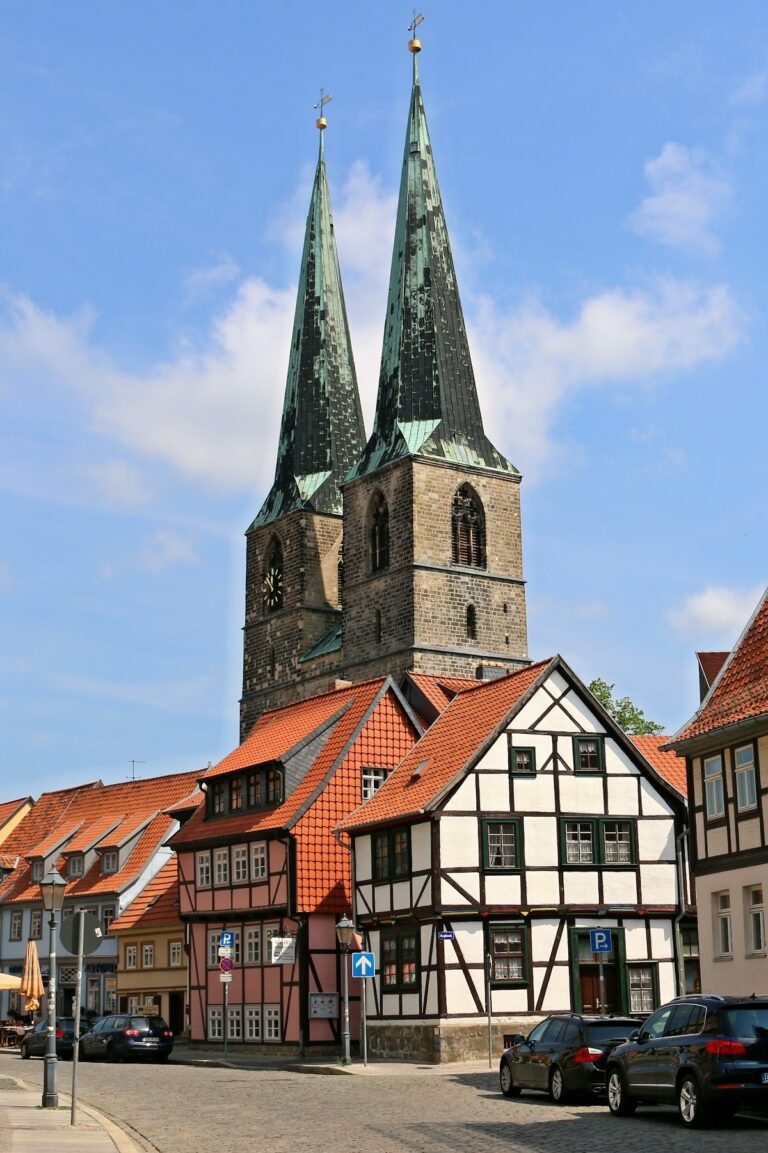
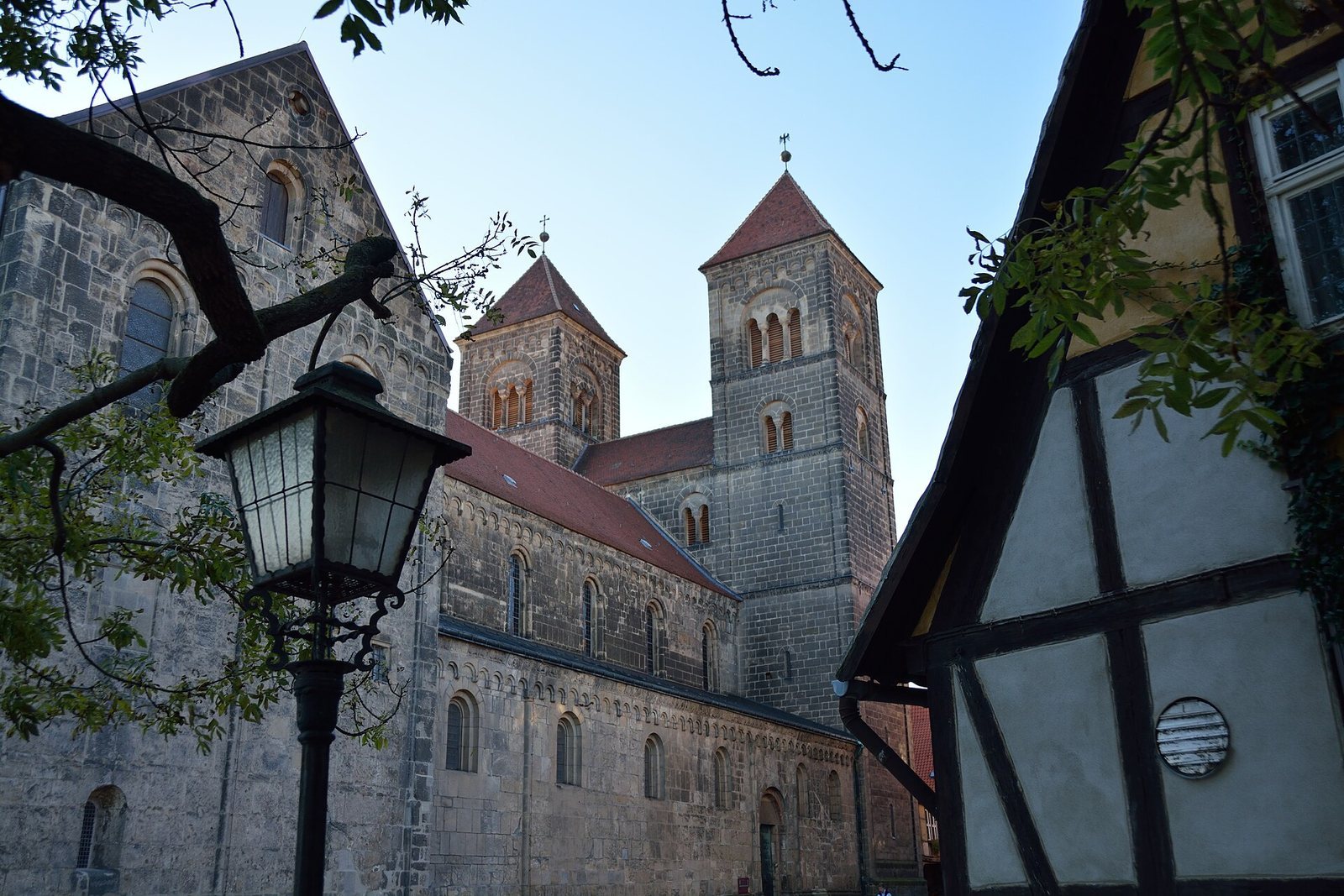
Abbess Jutta von Kranichfeld oversaw the Gothic remodeling of the high choir, completed by 1320. A major restoration directed by Ferdinand von Quast took place from 1863 to 1882. The work included the addition of two neo-Romanesque towers with pointed spires.
Nazi appropriation and postwar recovery
In 1935, Heinrich Himmler was told that 2 July 1936 would mark a thousand years since Henry I’s death. Himmler arranged a major commemoration and vowed to search for the king’s remains. During a state ceremony on 2 July 1936, Nazi officials removed crucifixes and the Bible from the altar despite the congregation’s opposition. Himmler took the key to the church treasury and was said to have communed with Henry I.
During excavations on the Schlossberg, SS officer Rolf Höhne found bones that Himmler identified as Henry I’s. On 2 July 1937, they were ceremonially placed in the empty grave beside Queen Mathilde. The bones belonged to an abbess, not the king. The SS took over the church in 1938, intending to make it a shrine, and altered the choir’s interior between 1938 and 1940.
American forces returned the church to its congregation after the Second World War, and Christian services resumed in June 1945. Artillery fire damaged the tower spires on 17 April 1945; lower pyramid-shaped roofs replaced them between 1946 and 1948. A large part of the treasury, stolen by an American soldier at the end of the war, reappeared in 1987 and was returned to the church in 1993 after a legal dispute. Many of its gifts came from Ottonian rulers, the dynasty associated with Otto I and his successors.
Since 1994, the church has formed part of the UNESCO World Heritage property that includes Quedlinburg’s collegiate church, castle, and old town. Its inscription under criterion iv recognizes an architectural ensemble that illustrates an important stage in human history. The church is also protected as cultural property under the Hague Convention, which provides for the protection of such property during armed conflict. Quedlinburg’s Lutheran congregation uses the church, and the Catholic community of St. Mathilde holds a service there on 14 March for its patronal observance.
Remains
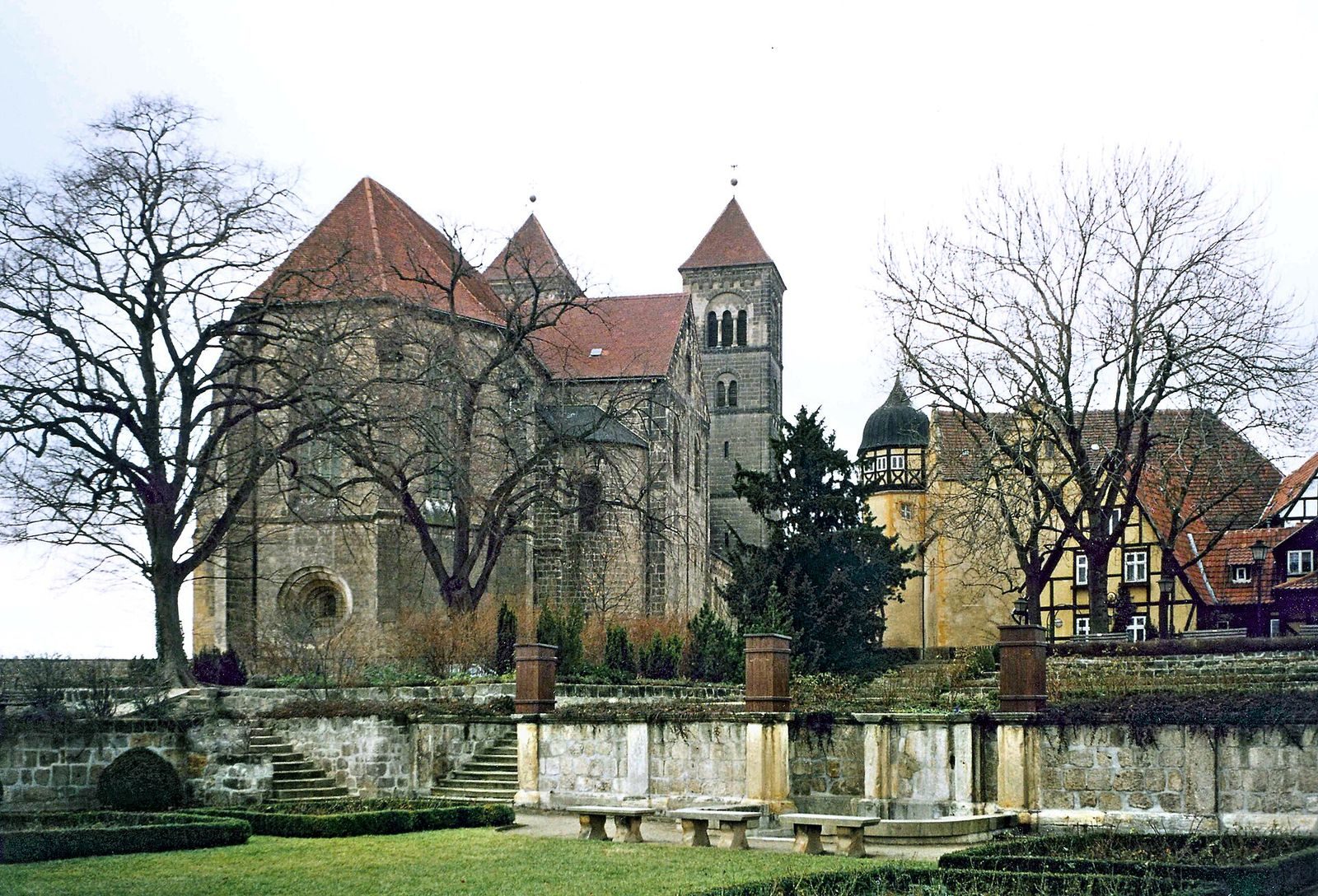
Built on the Schlossberg, the church is a high-Romanesque, three-aisled basilica, with a central nave flanked by two side aisles. A flat ceiling covers the interior. The building’s surviving fabric combines Romanesque construction with a Gothic high choir and later changes to the towers, furnishings, and treasury displays.
Romanesque church
Nave and exterior
Round-arched decorative bands run across the nave and towers, while exterior pilasters and interior ornament show Lombard Romanesque influence, a tradition associated with northern Italy. In the nave, two columns alternate with a pier between the central and side aisles, an arrangement known as the Lower Saxon support system. Capitals, the carved tops of columns, and the blocks above them carry abundant plant and animal carving, especially eagles. Animals also feature in the friezes on the upper walls above the side aisles.
Towers
The two towers are neo-Romanesque additions from the nineteenth-century restoration. Their original pointed spires, called Rhenish helmets, were a roof form associated with the Rhineland. After artillery damaged the spires in 1945, they were replaced with the lower pyramid-shaped roofs that remain today.
Crypt and burial spaces
Servatius shrine and side chapel
The crypt’s confessio, a shrine structure associated with a saint’s grave or relics, was incorporated into an earlier church and later filled in. It was uncovered in the nineteenth century in the form visible today. A stairway on the crypt’s southern side leads to the Chapel of St. Nicolai in vinculis, probably built before 997. Its two columns have simplified Ionic capitals, the shaped tops of the columns, beneath broad blocks with sharply cut edges.
Burials and coffins
The crypt contains the founders’ burial place, but no monument to them. Queen Mathilde’s remains are there. Henry I’s sarcophagus is no longer in the church; surviving parts are displayed in the adjacent castle museum alongside material on the Nazi period. A stairway also leads to the princely crypt, where the room climate contributes to the mummification of bodies. Coffins there include those of Aurora von Königsmarck, Abbesses Anna II of Stolberg and Anna III of Stolberg-Wernigerode, and Marie Elisabeth of Schleswig-Holstein-Gottorf.
Grave slabs
Romanesque and Gothic grave slabs commemorate abbesses Mathilde, who died in 999; Adelheid I, who died in 1044; Beatrix I, who died in 1062; Agnes II of Meissen, who died in 1203; Bertrada von Krosigk, who died in 1231; Osterlinde von Falkenstein, who died in 1232; Gertrud von Amfurt, who died in 1270; and Margareta von Schraplau, who died in 1379. A separate slab depicts the knight Friedrich von Hoym with a shield and sword; he died in 1391.
Crypt paintings
Fragments of paintings applied to dry plaster survive on the crypt ceiling. They depict biblical subjects, including the story of Susanna. A conservation project from 2002 to 2009 secured the paintings and added extensive lighting.
Choir and furnishings
High choir
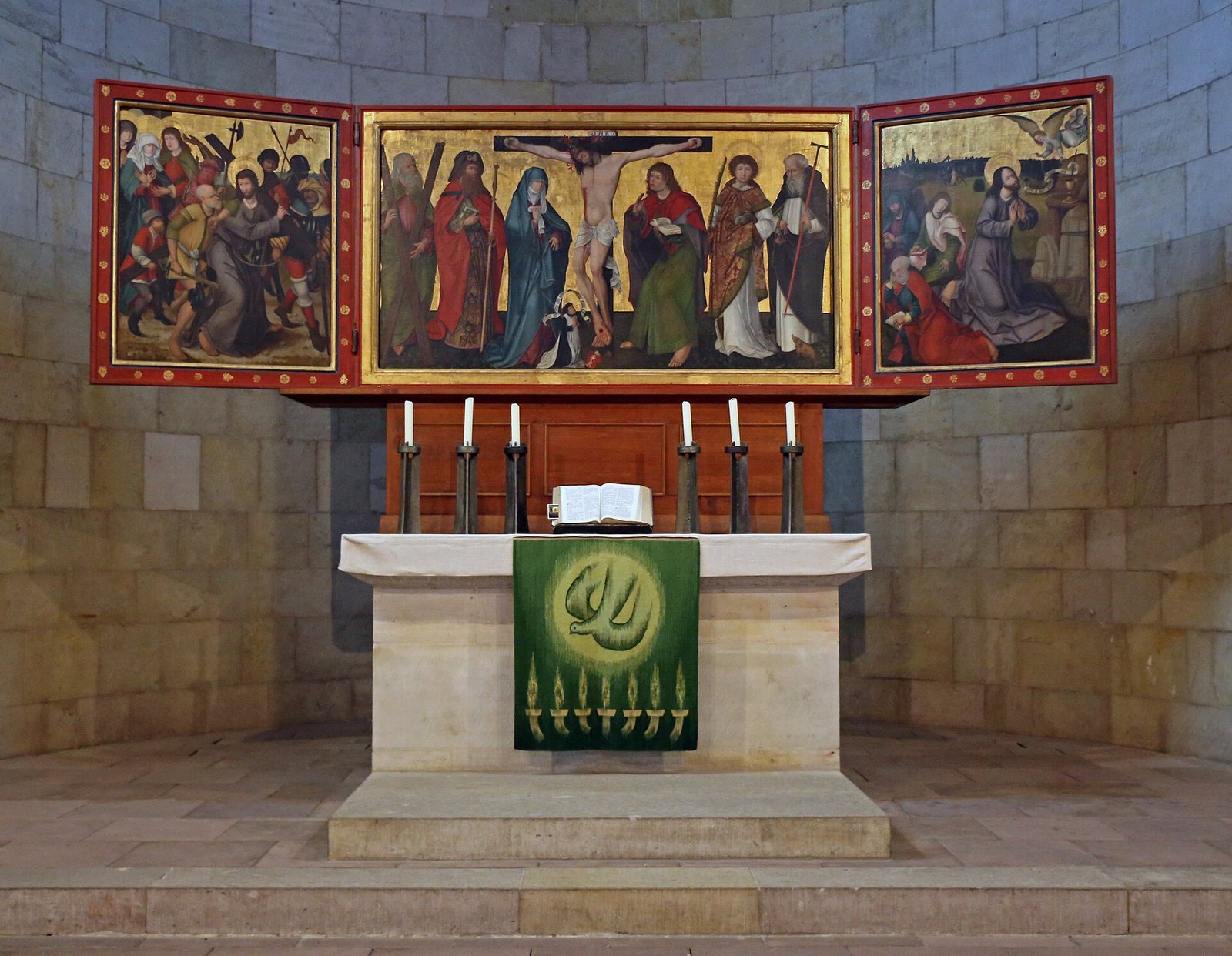
The exterior of the high choir retains its Gothic appearance, while its interior reflects the changes made under Nazi control. From 1938 to 1940, the altar, pulpit, and choir stalls were removed, the Gothic vault was destroyed, and a pseudo-Romanesque apse was installed. The Gothic interior has not been reconstructed.
Tapestry
A knotted tapestry commissioned by Abbess Agnes II and dedicated to St. Servatius once adorned the high choir. Made by hand on the Schlossberg over more than twenty years, it measured about 5.60 by 7.40 metres. Its subject is the marriage of Mercury and Philology, a story attributed to the fifth-century writer Martianus Capella. About half survives in fragments, displayed in a tapestry room since 2006.
Altar furnishings
The triumph cross installed at Easter 2006 is made of aluminium and was created by Thomas Leu. Its figure is smaller than originally designed, expressing a connection between Christ on the cross and the dissolving figure of Christ ascending after the resurrection. Leu also designed the accompanying altar candlesticks. Christine Leweke made the altar frontal, a decorative covering for the front of the altar.
Organ
The organ stands on the south side of the high choir. It replaced an earlier instrument made unusable by moisture damage. Built by Alexander Schuke of Potsdam under Hans-Joachim Schuke, it was handed over in 1971. It has 1,994 pipes and follows a neo-Baroque sound ideal, reviving features of Baroque organ music and design.
Bells and tower clock
Bells
Five bells hang in the north tower. The largest, Aurora, was cast in 1705 and hangs by itself in the top storey, where it is rung by rope on major feast days. The oldest and second-largest, the Sunday Bell, dates to 1504. Three bells made in 2002 are named the Death Bell, Prayer Bell, and Sacrament Bell. Their decorations include vines and foliage, hands, and a chain of human figures; their inscriptions refer respectively to entrusting one’s spirit to God, calling on God, and God providing food.
South tower clock
The south tower once carried a clock. Its three dials and pairs of hands occupied the gables of the former spire, facing west, south, and east. Two striking bowls remain in the upper storey on the north side, along with the clock’s mechanical works. Structural constraints meant that the south tower did not house ringing bells.
Treasury
Treasury rooms
The treasury is displayed in rooms beside the north and south sides of the choir. The northern room had long served as the abbey treasury; the southern room was fitted out for exhibitions in the early 1990s. Its principal objects include reliquaries, manuscripts, a shrine, a jug, and items associated with St. Servatius.
Reliquaries and carved objects
The Servatius reliquary is an ivory casket with gold filigree. It was probably made around 870 at the court of Charles the Bald. Its front shows Jesus with eleven apostles, with Judas omitted, beneath round arches and signs of the Babylonian zodiac. Gold filigree was probably added around 1200 at Abbess Agnes II’s commission. A first-century carved amethyst on the front represents the head of St. Dionysius.
The Henry comb, an ornamental ivory comb made in Syria or Egypt in the seventh or eighth century, was later fitted with gold horse heads. Those additions date to the ninth or tenth century, and only their necks survive. The Henry I reliquary was made around the time the Samuel Gospel Book received its binding. Its lid and sides have tenth-century ivory carvings; its front and back carry eleventh-century images of twelve seated apostles carved from walrus ivory. The Catherine shrine, made between 1230 and 1240, is decorated entirely in gold.
Gospel books
The Samuel Gospel Book is a Carolingian manuscript, from the period of the earlier dynasty, comprising 191 parchment leaves written in gold ink. Its gilded cover dates to 1225–1230 and is set with gemstones and nine enamel medallions. Mary appears on the front, with the church’s patron saints, Servatius and Dionysius, below her. The book takes its name from its principal scribe, Samuel.
The Otto-Adelheid Gospel Book, probably first used by Emperor Otto III at Easter in 1000, has a Latin text and a gold binding with four ivory scenes from the life of Jesus: the Nativity, baptism, crucifixion, and removal from the cross. Another Gospel book, dated 1513 and formerly kept at a Quedlinburg monastery, has a richly decorated cover with gold images and gemstones.
Other treasury objects
The treasury also holds a tenth-century staff and stole associated with Servatius, although their attribution to the saint, who died in 384, is incorrect. Its oldest object is a first-century alabaster jug associated with the wedding at Cana, the biblical episode in which Jesus turned water into wine. Emperor Otto I donated the jug, which was believed to have been used at the wedding.