Ardre Church: A Medieval Parish Church in Ljugarn, Sweden
Site at a Glance
- Country
- Sweden
- Primary era
- Medieval
- Eras represented
- Medieval, Modern
- Civilizations
- Swedish
- Site type
- Religious
- Remains
- Church
On this page16 sections
History
Medieval origins
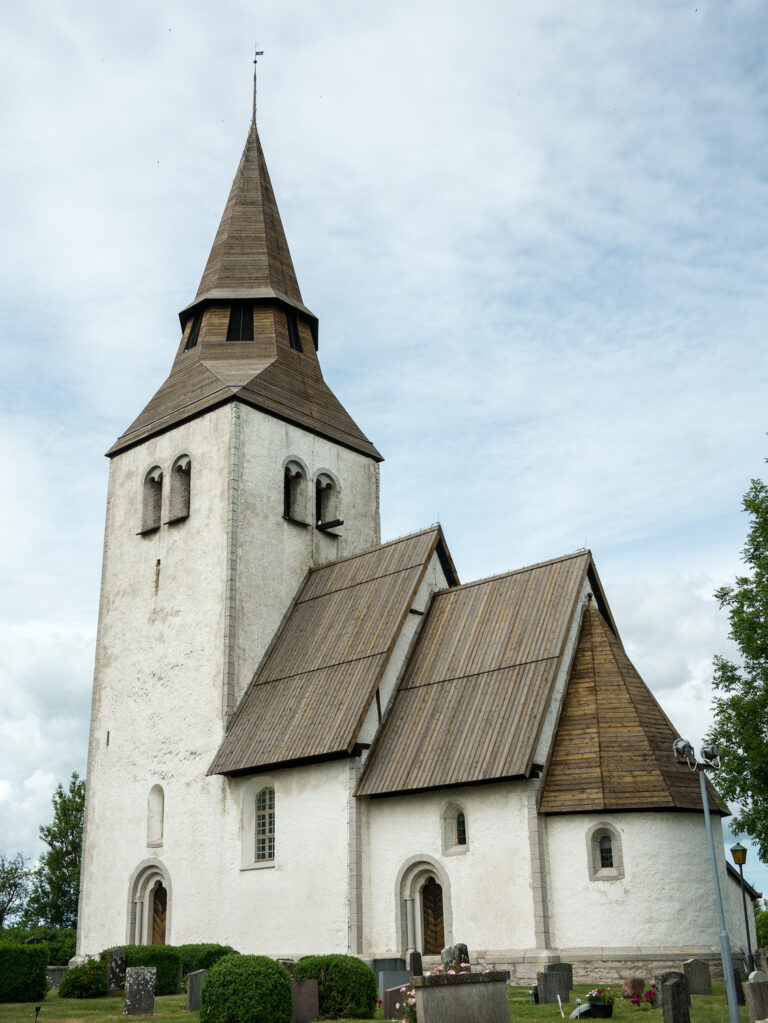
Ardre Church is a medieval parish church in Ljugarn, Sweden, with a recorded consecration date of about 1200. Its Romanesque (a medieval style associated with rounded arches) tower belonged to an earlier church of the 12th century. Around 1250, that building’s nave (main worship area) and chancel (area around the altar) were replaced by the present ones.
The church served as the parish church of Ardre from the Middle Ages. It was Roman Catholic before becoming part of the Lutheran Church of Sweden. Since 2005, it has belonged to Garde congregation in the Diocese of Visby.
Later changes and restoration
A sacristy, a room for preparing services and storing church furnishings, was added around 1801–02. Extensive renovation in 1900–02 remodelled the interior to designs by Axel Herman Hägg, a Swedish architect and artist also known as Axel Haig. The exterior was restored in 1973–75, followed by work on the interior in 1981.
Remains
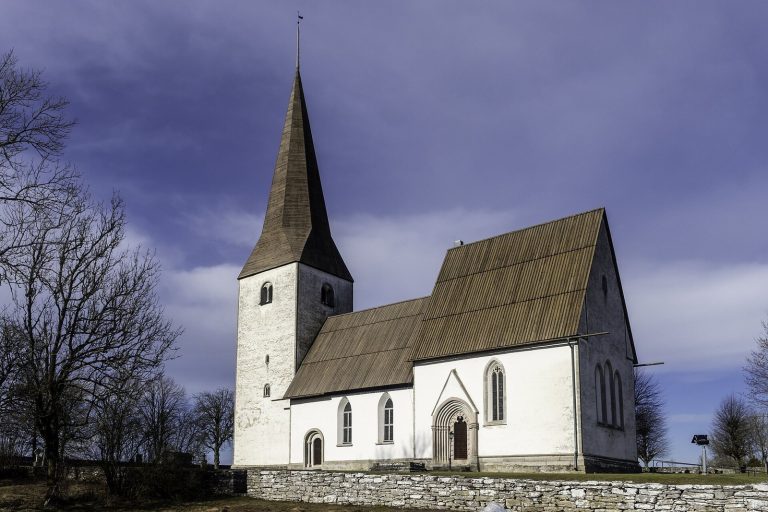
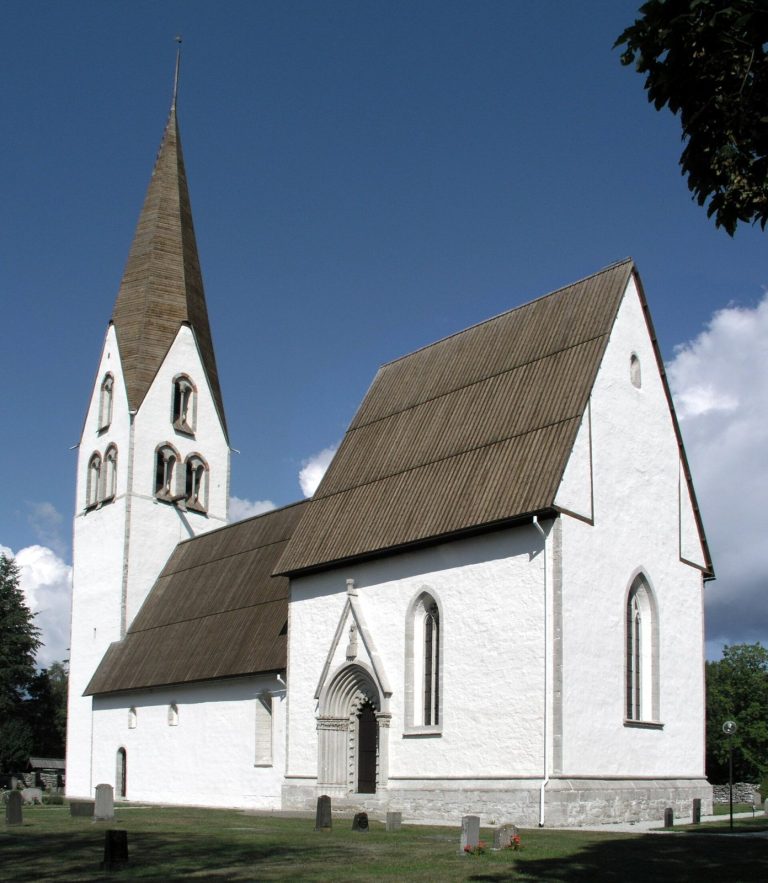
Built of plastered limestone, the church is among the smallest on Gotland. Its medieval fabric combines successive architectural features with later additions and interior work.
Church architecture
Plan and roofs
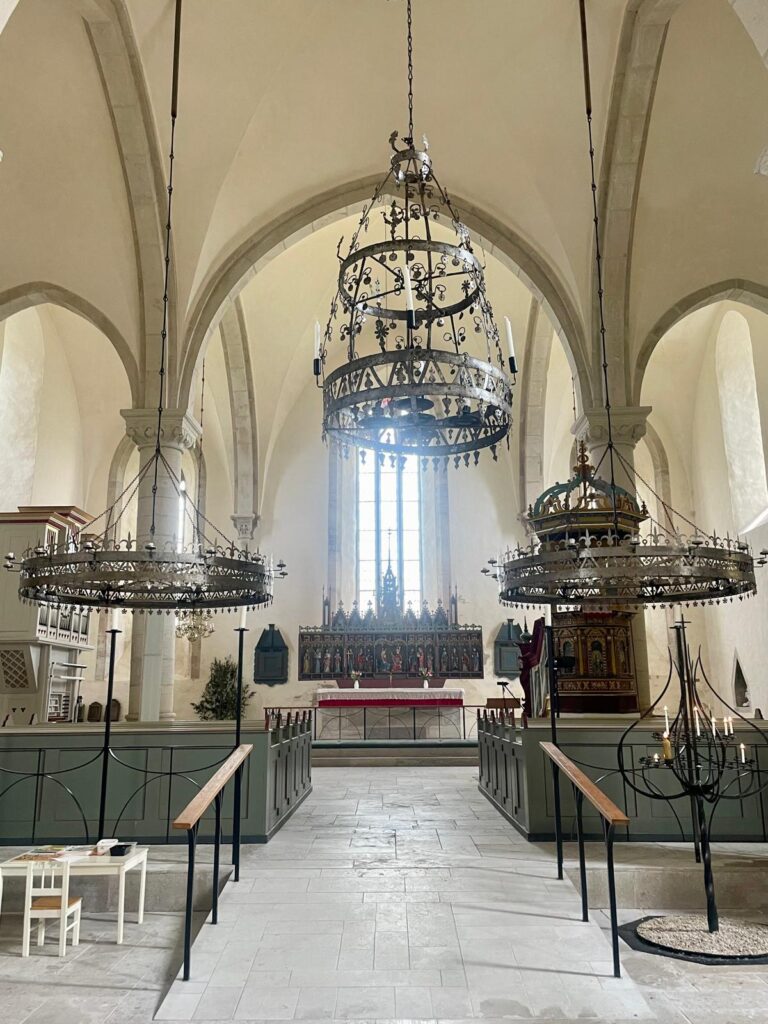
The church has a single-nave hall plan, with a narrower chancel ending in a straight east wall. The tower stands at the west end, opposite the altar at the east. A black roof of tarred shingles covers the church; inside, tent vaults, ceilings rising toward a central point, span the nave, chancel and tower chamber. The sacristy has a three-sided roof.
Tower and doorways
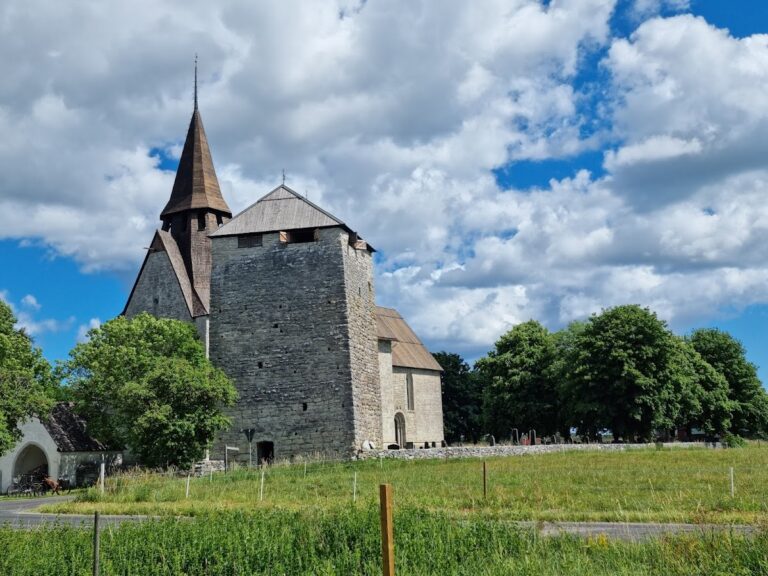
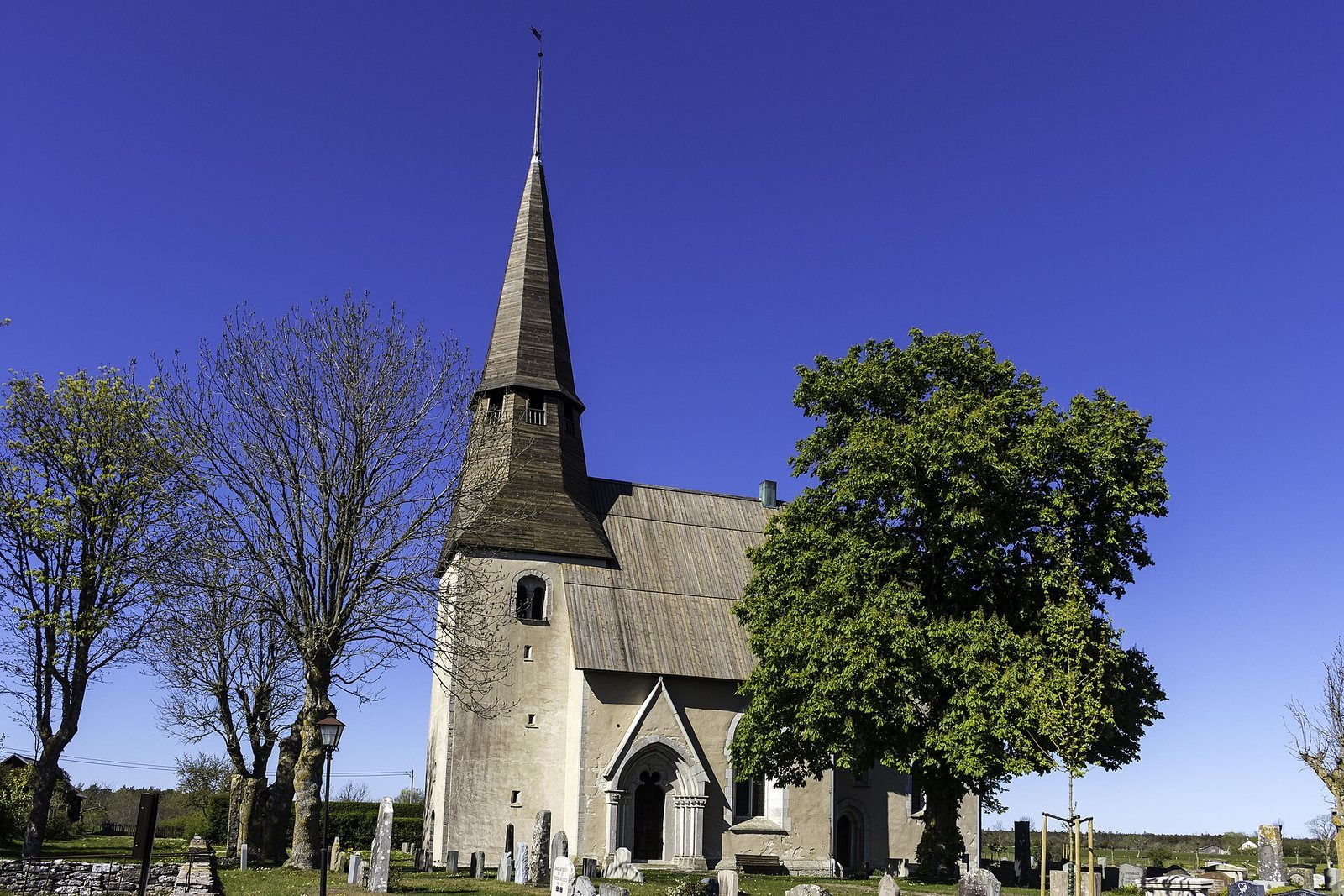
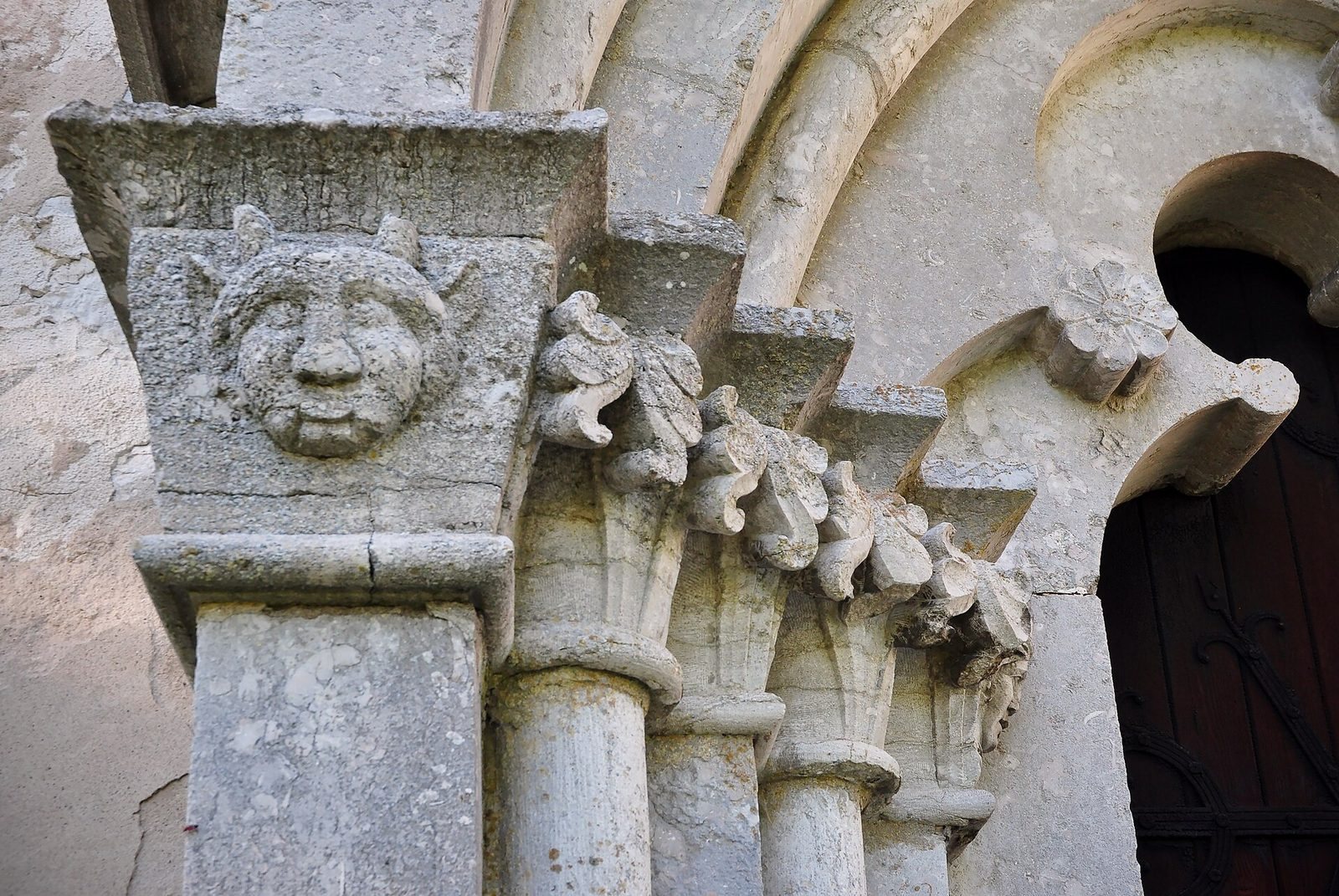
The Romanesque tower has a tall spire that accommodates a bell chamber, with sound openings and a small canopy. A hood added in 1902 replaced a similar earlier one. The chancel’s small Romanesque doorway, thought to have come from the earlier church, has richly carved capitals, the decorated tops of columns. The tower’s west doorway is also Romanesque, but plain. The nave has two Gothic doorways, Gothic being a medieval style associated with pointed arches: a taller southern entrance with a high gabled panel and a simpler northern one.
Interior and archaeological finds
Painted decoration and pews
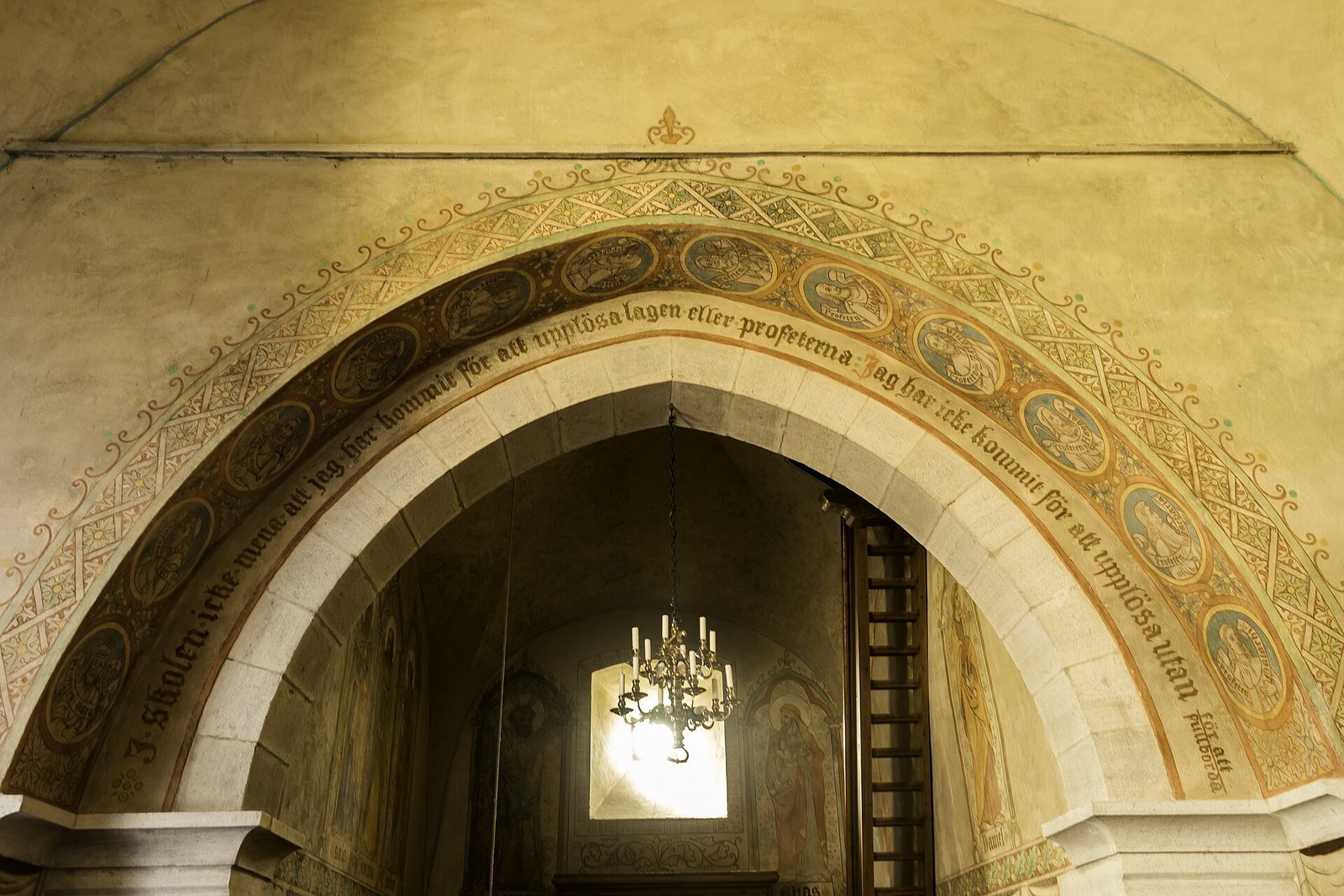
The interior renovation of 1900–02 added paintings to the walls and vaults, along with pews. Their Gothic Revival elements, a later reuse of Gothic forms, incorporate motifs drawn from a pulpit dating to the first half of the 17th century. Hägg also made carved oak angels for the church in 1902.
Medieval furnishings
The furnishings include a wooden triumphal cross, a large cross displayed above the chancel opening, from the mid-13th century; a limestone baptismal font from the first half of the 13th century; and an altarpiece from the early 14th century. A carved wooden Madonna dates to around 1500.
Stained glass
The chancel’s three-window group includes three stained-glass panels dating to around 1300. The other panels were made by Carl Wilhelm Pettersson in 1901.
Organs
An organ made by Åkerman & Lund in 1900 had three stops, controls that select different sounds, and is now in storage. Hägg designed its façade. A mechanical organ made by J. Künkels Orgelverkstad in 1990 has a case designed by Ture Jangvik as a copy of Hägg’s 1902 case. Its Gothic Revival design drew inspiration from medieval French organs.
Ardre Stones
Eight Viking Age runic and picture stones, collectively known as the Ardre Stones, were found beneath the church floor during the 1900–02 restoration. They may have been placed in a coffin as an offering altar within a funerary cult.
Structures west of the church
Former school
The former school west of the church is now a parish hall.
Castal foundations
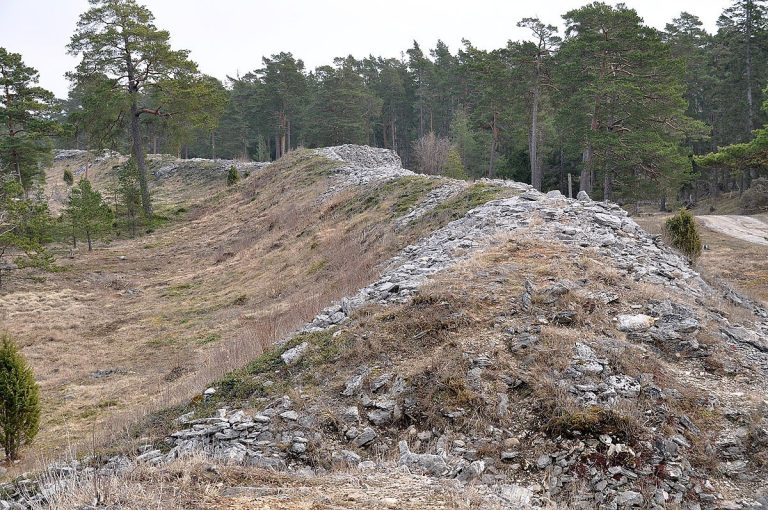
Also west of the church are the foundations of a medieval castal, a fortified tower for defence or watch. The square structure measured 15 by 14 metres, and its foundations stand 1.4 metres high.