Rabati Castle: A Historic Fortress Complex in Georgia
Site at a Glance
- Country
- Georgia
- Primary era
- Medieval
- Eras represented
- Medieval, Early Modern, Modern
- Civilizations
- Georgian, Ottoman
- Site type
- Military
- Remains
- Castle
On this page12 sections
History
Lomsia and the Jaqeli princes
Rabati Castle is a historic fortress in Akhaltsikhe, Georgia. Georgian chronicles attribute the founding of its predecessor, Lomsia, to Prince Guaram Mampali in the ninth century. By the end of that century, the fortress belonged hereditarily to the Jaqeli princes.
At the end of the twelfth century, Lomsia took the name Akhaltsikhe, meaning “New Fortress.” Rabati first named a fortified quarter associated with trade, where Jewish merchants and craftspeople lived. The name later came to refer to the whole fortress, particularly after its modern reconstruction.
In the late twelfth century, the Jaqeli family rebelled against Georgia’s royal dynasty and backed Yuri, a former husband of Queen Tamar who sought the throne. After the rebellion was defeated, Tamar transferred the family’s estates to another branch of the Chorchaneli house, which established a new Jaqeli line. Under its rule, Akhaltsikhe grew into a city whose defenses extended beyond the castle.
Capital of Samtskhe
In the first half of the fourteenth century, King George V granted the Jaqeli princes the title of atabeg, a high-ranking title used by rulers and governors in parts of the medieval Caucasus. Akhaltsikhe later served for a long period as the capital of the Principality of Samtskhe. The Jaqelis built their residence and a Christian church-monastery within the fortress.
Timur’s campaigns in the Caucasus brought an attack on Akhaltsikhe in the late fourteenth century. About a century later, a Turkic army led by Sultan Yaqub burned almost the entire city.
Ottoman rule
The Ottoman Empire began taking control of Samtskhe in 1578. The Jaqeli princes surrendered Akhaltsikhe in 1579 and converted to Islam, helping them retain their authority. The 1590 Treaty of Constantinople placed Samtskhe under Ottoman rule. When Akhaltsikhe became the center of an Ottoman province in 1628, the Jaqelis adopted the title of pasha in place of their inherited atabeg title. A pasha was a high-ranking Ottoman official, and the province governed by one was known as a pashalik.
Under Ottoman rule, the fortress expanded as a frontier stronghold. Its upper section held administrative buildings and about a thousand homes. Residents were exempt from taxes but could be called upon to defend the city. The principal mosque also had a library described as exceptionally rich. In the eighteenth century, Haji Ahmed Pasha Jaqeli built the Akhmediye Mosque, a madrasah (Islamic school) and a minaret (a tower associated with a mosque) inside the fortress.
A Russian force under General Alexander Tormasov besieged Akhaltsikhe in 1810 but withdrew after suffering heavy losses and an outbreak of plague in its camp. In August 1828, during the Russo-Turkish War, Russian forces under General Ivan Paskevich defeated a larger Ottoman army, bringing the city under Russian control. Ottoman forces tried to retake the fortress in February 1829. Its Russian-led garrison resisted from 20 February to 4 March, held out for twelve days after the first assault, and received reinforcements before the Ottoman withdrawal. The Treaty of Adrianople, signed in 1829, confirmed Ottoman withdrawal from the area.
In 1850, by order of Russian Emperor Nicholas I, the Akhmediye Mosque was consecrated as a church dedicated to the Virgin Mary. It served as a church until 1920. During the Crimean War in 1853, 18,000 Ottoman troops under Ali Pasha were stopped near Akhaltsikhe by 7,000 troops under Prince Ivan Andronikov, most of them Georgian irregular cavalry. Their victory helped halt the Ottoman advance into the South Caucasus.
Restoration and museum use
Extensive restoration and reconstruction began in May 2011 and continued through 2012, repairing and completing ruined structures. The work was controversial, and Turkey contributed funding because of its interest in preserving Ottoman heritage. During negotiations in 2013, Turkish Prime Minister Recep Tayyip Erdoğan accepted Georgian President Mikheil Saakashvili’s proposal to keep the mosque dome’s gold-colored finish rather than cover it with lead. Rabati is now a historical and architectural museum complex. The Samtskhe-Javakheti regional museum occupies Jaqeli Castle in the upper section.
Remains
Layout and defenses
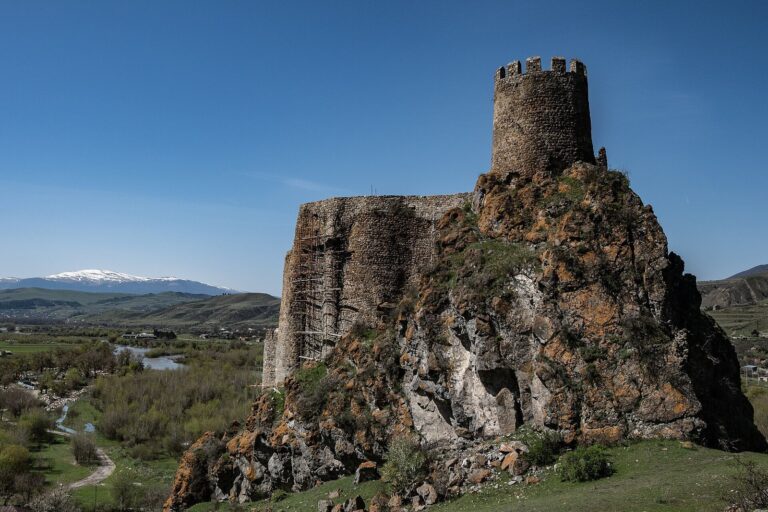
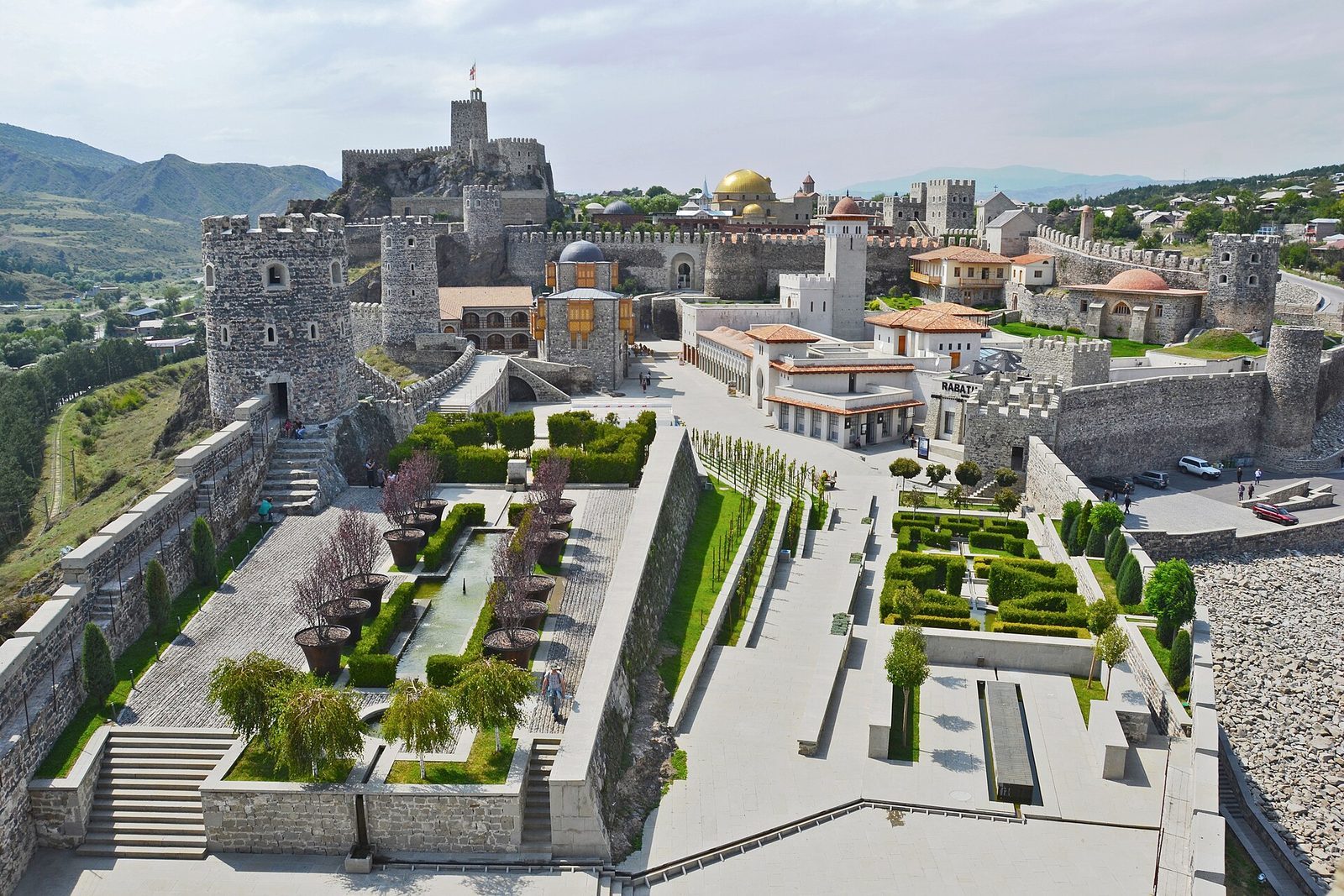
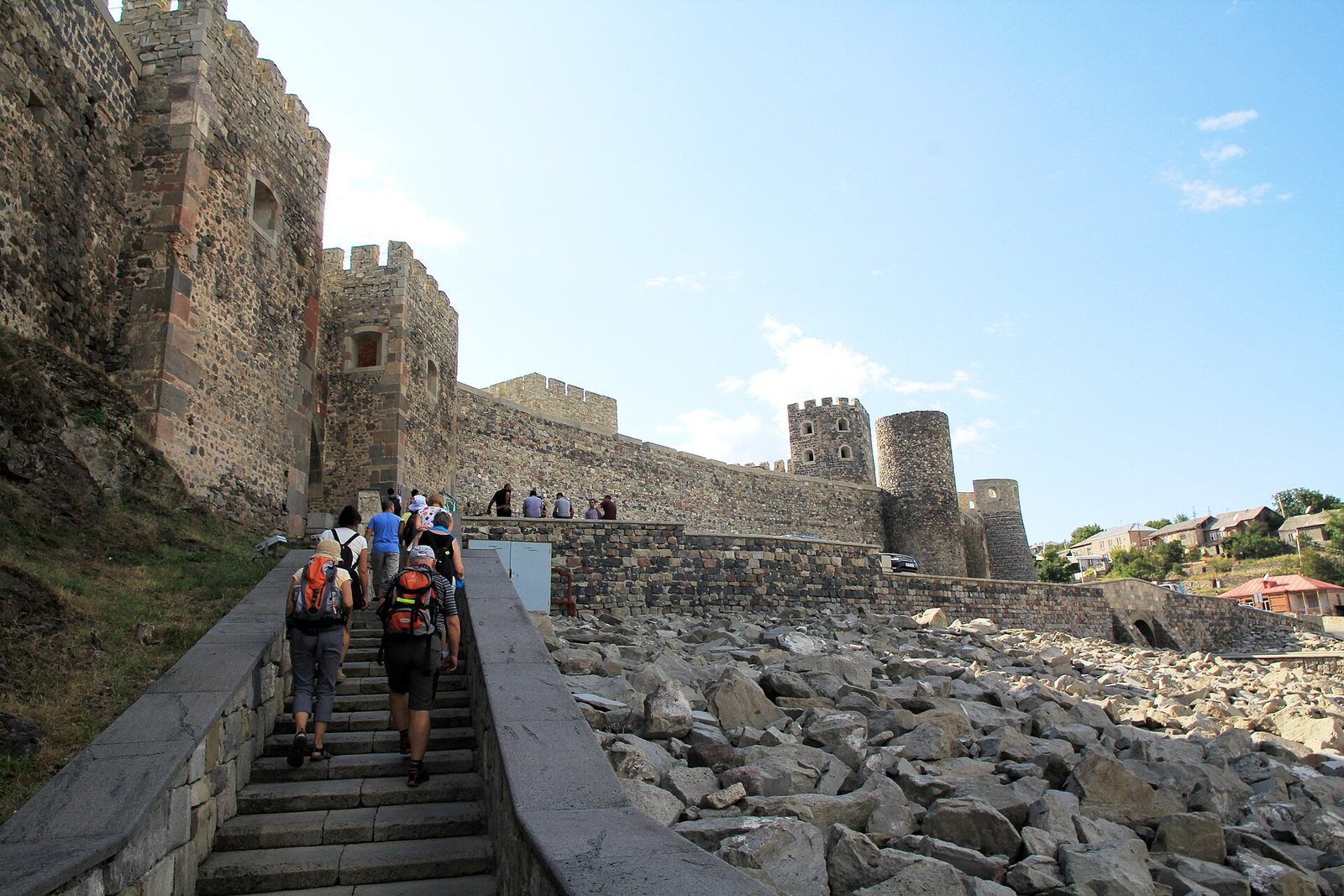
The complex covers about seven hectares and has an upper, historic section and a lower, modern section. The historic settlement was arranged as a town, a castle and a citadel, or fortified stronghold. Three ramparts surrounded the castle, which was linked to nearby areas by tunnels. The upper fortress stood on a high cliff beside a river and was protected by two lines of walls with towers. It had two gates, and its walls carried forty guns.
Principal structures and restored fabric
Jaqeli Castle
The castle grounds included a courtyard, an arsenal, a mint, a bathhouse and a church. Today, the castle houses the regional museum of Samtskhe-Javakheti.
Citadel
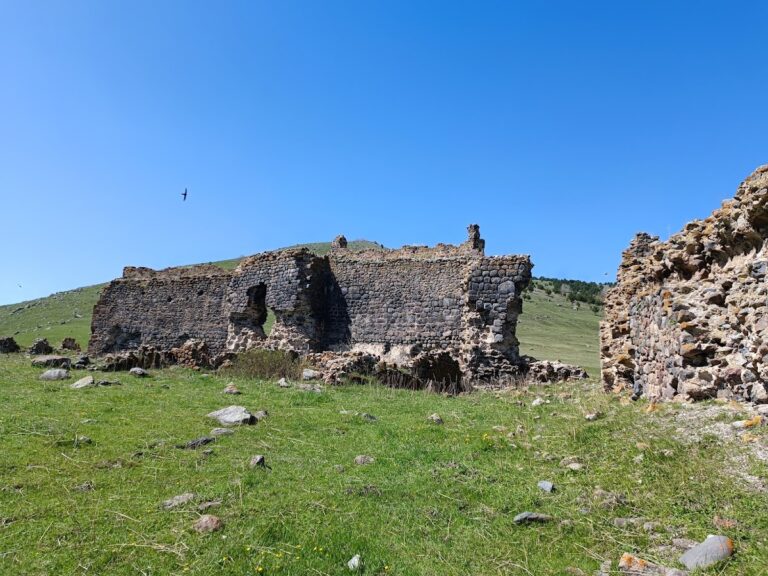
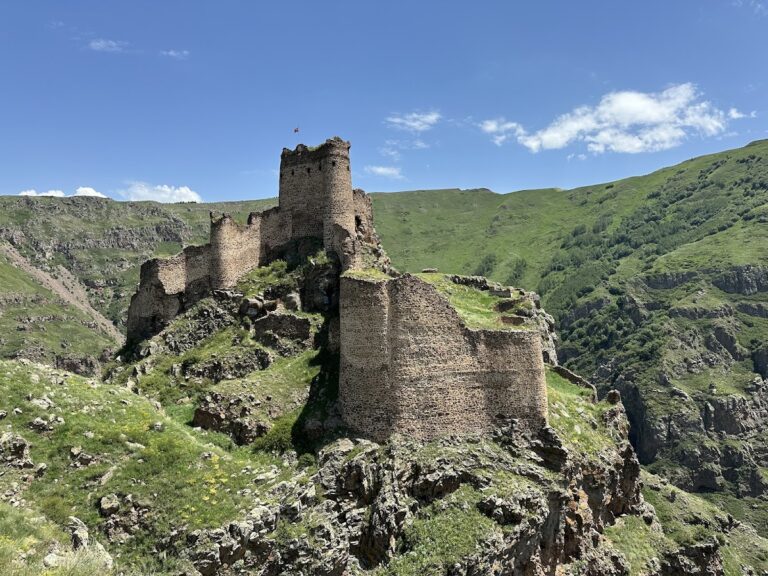
The citadel occupied steep, bare rock enclosed by a stone wall. Its position above the upper fortress formed part of the site’s layered defensive layout.
Akhmediye Mosque complex
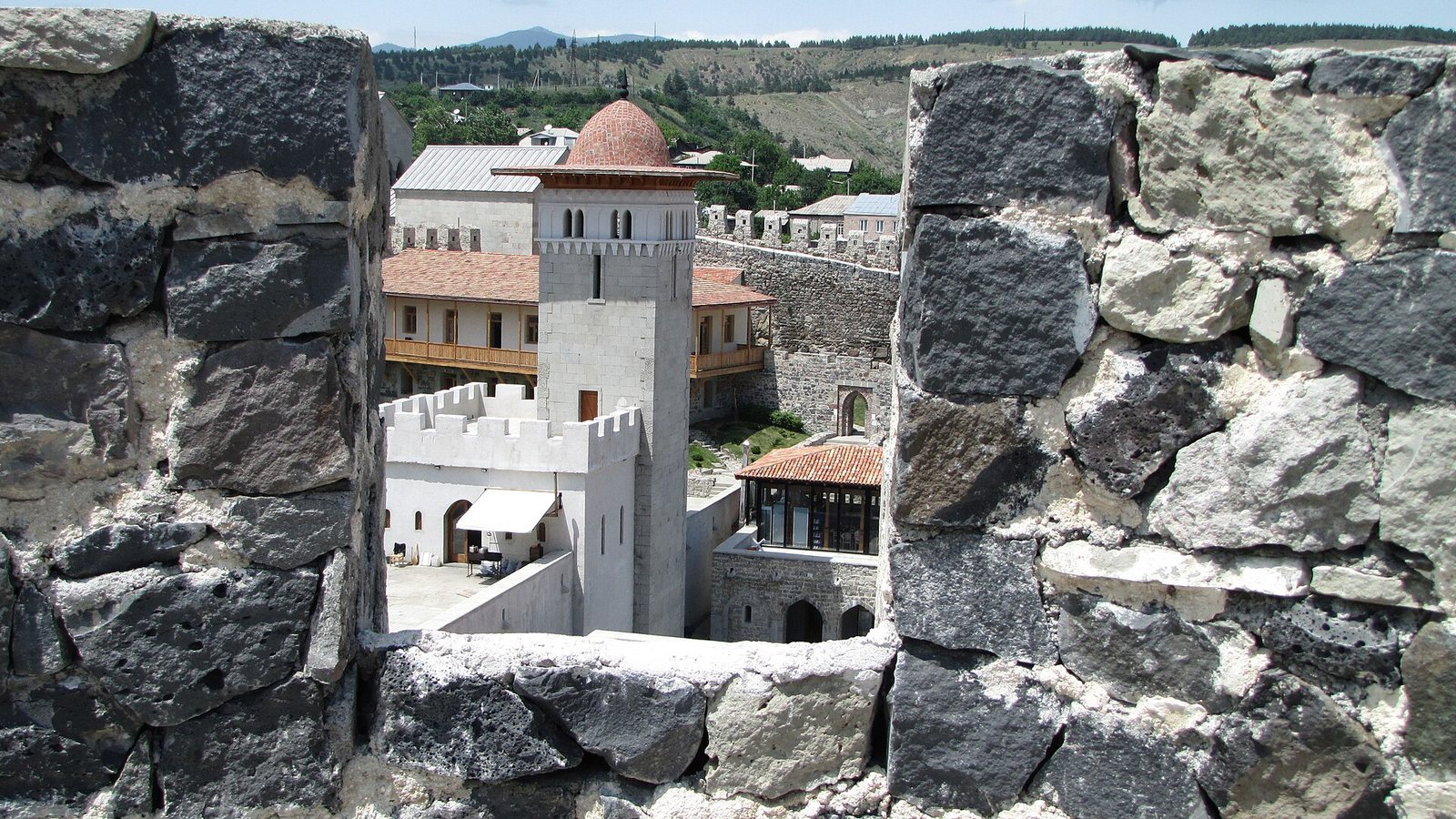
The mosque was built over the foundations of Georgian Orthodox churches. Its design drew on Hagia Sophia in Constantinople and the typical arrangement of a Georgian Orthodox church. The restored complex includes the mosque’s gold-colored dome, the associated madrasah and the minaret.
Courtyards, streets and historic quarter
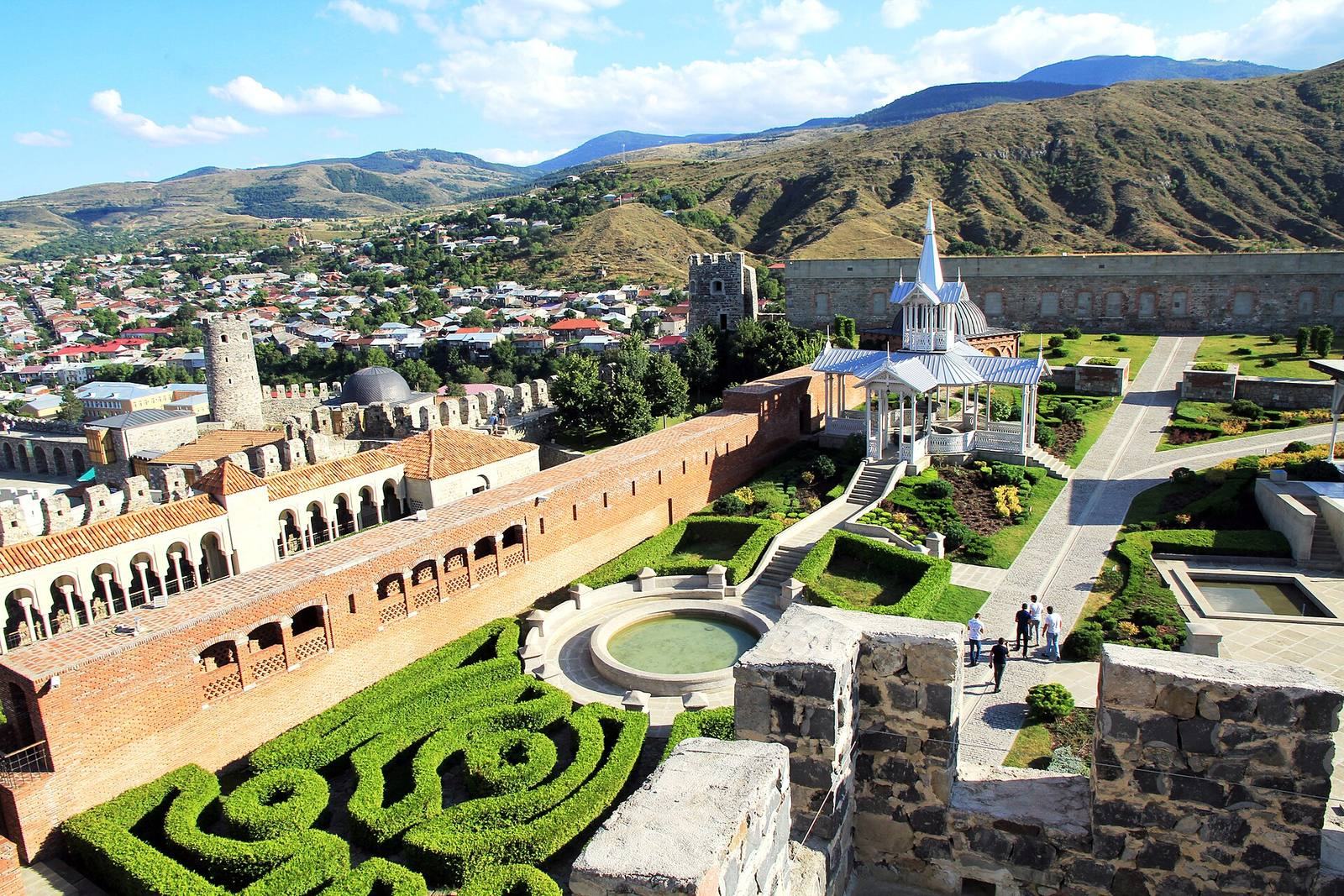
The upper section also contains a garden and interior courtyards. Restoration repaired two main streets, renewed their paving and repaired building facades and roofs. A tunnel leading to the Potskhovi River was also restored. Beside the fortress, the rebuilt historic quarter has narrow paved streets and houses of the Georgian Darbazi type, characterized by enclosed, gallery-like balconies.