Cueva de La Pasiega: A Paleolithic Cave-Art Site in Spain
Site at a Glance
- Popularity
- High
- Country
- Spain
- Primary era
- Stone Age
- Eras represented
- Stone Age
- Civilizations
- Unclassified
- Site type
- Civic
- Remains
- Rock Art
On this page17 sections
History
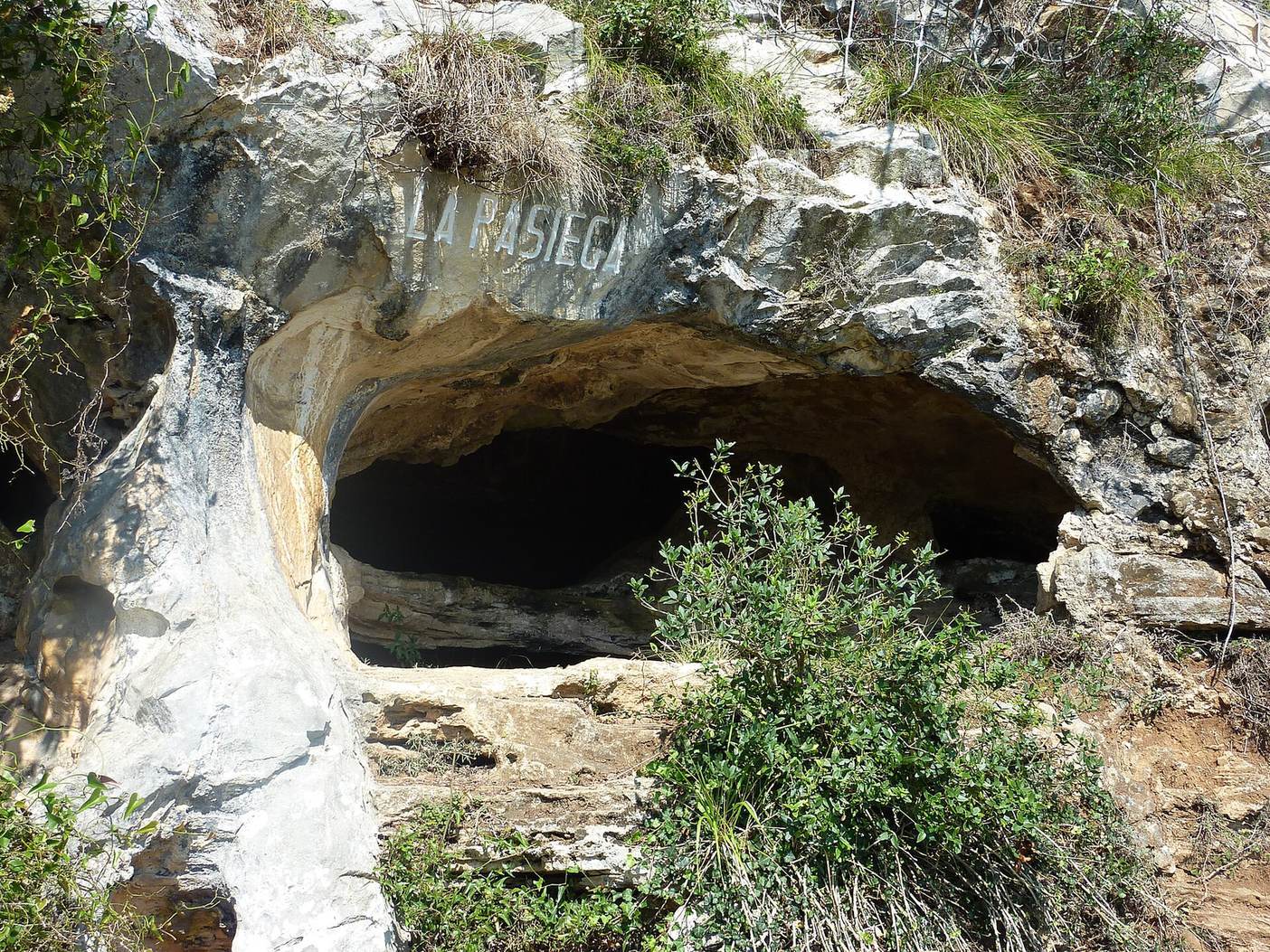
Cueva de La Pasiega is a Paleolithic cave-art site at Monte del Castillo in Cantabria, Spain, part of the Monte Castillo cave complex. Its archaeological finds are chiefly associated with the Upper Solutrean and Lower Magdalenian, phases of the European Paleolithic, although older material has also been found. The date and meaning of the cave’s art remain subjects of debate.
Discovery and archaeological research
Prince Albert I of Monaco visited the site in 1909 and supported archaeological investigations connected with its early publication. The cave’s scientific discovery followed in 1911, when Paul Wernert and Hugo Obermaier were excavating at El Castillo. Workers told them about a nearby cavity known as La Pasiega, and they confirmed that it contained rock art. Henri Breuil, Obermaier, and Hermilio Alcalde del Río then began a systematic study. Their work appeared in a regional publication in 1911 and a dedicated monograph in 1913, helping establish La Pasiega as an important subject in Spanish prehistoric research.
Jesús Carballo directed an excavation in 1951. The lowest layer contained objects whose possible association with the Mousterian, a Paleolithic culture, remained uncertain. Above it, excavators found a richer Upper Solutrean layer with laurel-leaf points, finely shaped notched points, and spear points. A later layer contained engraving tools, awls, and perforated bone and tooth objects, possibly belonging to the Lower Magdalenian. These finds have helped researchers propose dates for the paintings. Study and excavation continued intermittently, including work by Rodrigo de Balbín Behrmann and César González Sainz.
Chronology, interpretation, and recognition
Proposed chronologies for the paintings have changed over time. The 1913 monograph assigned parts of the art to the Aurignacian and Solutrean, with a small number of two-color works possibly belonging to the Magdalenian. Breuil later divided the decoration into eleven phases. André Leroi-Gourhan and González Echegaray and González Sainz assigned much of Gallery A and the first group in Gallery C to Style III, and much of Gallery B and the second group in Gallery C to Style IV. These are categories in a system for classifying Paleolithic art, not calendar dates. Francisco Jordá instead placed the works in a broad Solutrean-Magdalenian Middle Cycle and challenged an Aurignacian date for some paintings. Absolute dating has weakened confidence in stylistic schemes without resolving every question.
A uranium-thorium date published in 2018 came from carbonate associated with the sign known as the Trap. The method dates carbonate through the decay of uranium into thorium, rather than directly dating pigment. The result was interpreted as indicating an age exceeding 64,000 years, with an estimate of about 64,800 years and a broad reported uncertainty interval from 51,560 ± 1,090 to 79,660 ± 14,900 years. This prompted the suggestion that the sign might be Neanderthal art. The interpretation is disputed: concerns include the possibility that uranium loss made the carbonate appear older, and archaeological comparisons place similar signs in the Solutrean or early Magdalenian. The animal figures associated with the sign were not themselves dated.
Researchers have also disagreed about how the galleries were organized and what the images meant. Leroi-Gourhan interpreted recurring horses and cattle-family animals as symbolic pairings within a network of sanctuaries. One proposed arrangement places sanctuaries in Galleries A and B in the east and Gallery C in the west, with Zone D either a smaller sanctuary or an extension of the western one. Another interpretation treats Galleries B and C as outer sanctuaries and Gallery A as an inner one. Blocked openings complicate attempts to reconstruct the original arrangement, and Gallery B may have served both habitation and ritual purposes. The small number of apparently wounded animals, principally a bison in panel 83 that may have been struck by a projectile, has prompted doubts that hunting magic alone explains the art. Differences between depicted animals and archaeological animal remains have also encouraged interpretations involving mythology, social and economic life, or artistic aims. Other proposals treat recurring signs as expressions of symbolic traditions or markers associated with communities in eastern Asturias and western Cantabria.
Spain declared the cave a monument in 1924. Monte Castillo-La Pasiega entered a UNESCO World Heritage listing in 1985, and in 2008 La Pasiega became part of the expanded property named Cave of Altamira and Paleolithic Cave Art of Northern Spain.
Remains
Cave form and overall imagery
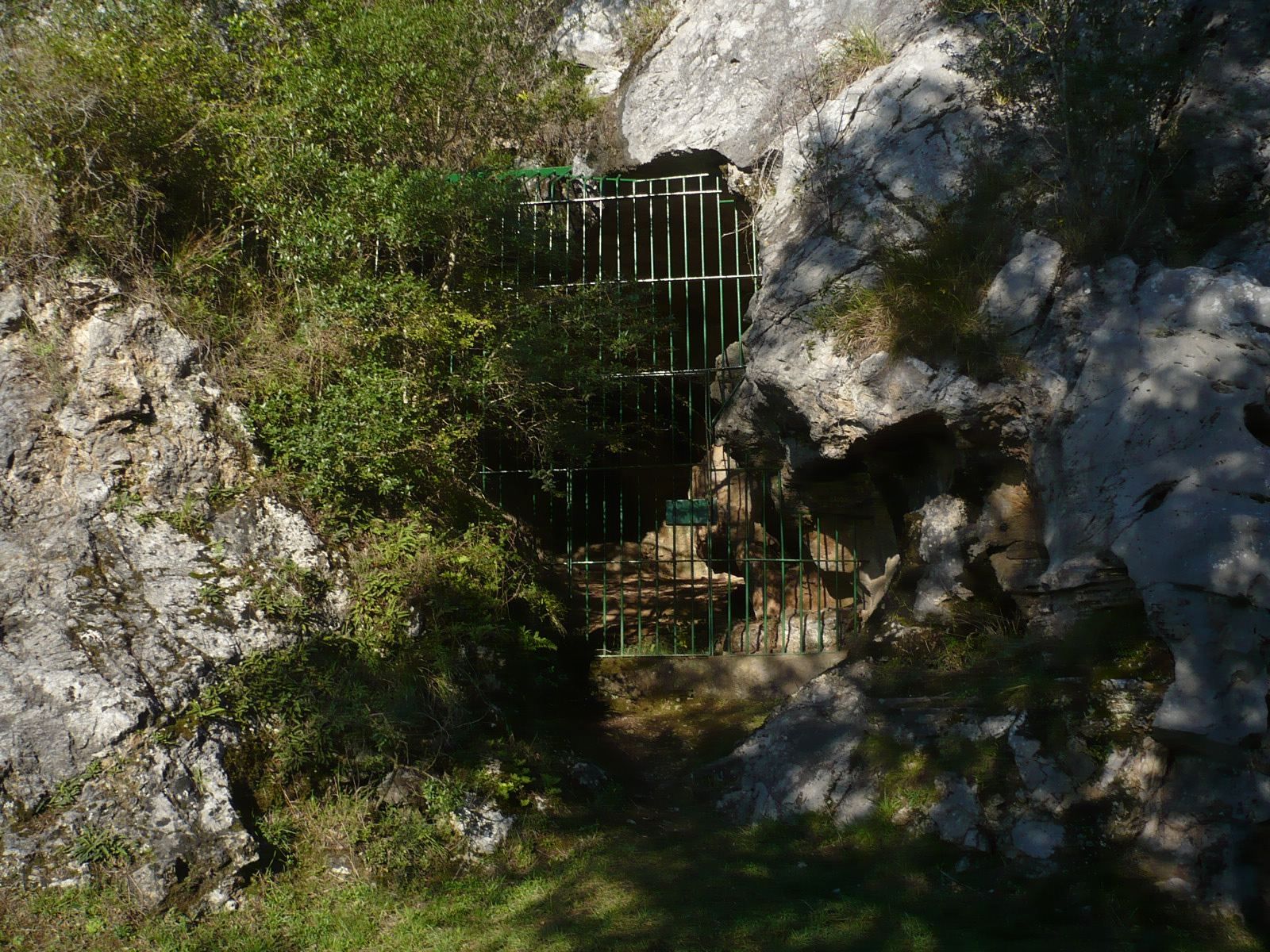
The known cave extends about 120 metres. Its principal gallery runs roughly parallel to the mountain slope for about 70 metres, then branches into winding passages and chambers. Six small openings connect the cave with the surface; most are blocked, and two have been adapted as entrances. The explored passage from the entrance used today extends about 95 metres and narrows farther in. More than 700 images and marks have been counted, including 97 deer, 80 horses and other equines, 32 goats or ibex, and 31 cattle-family animals, chiefly bison and aurochs, wild cattle ancestral to domestic cattle. The inventory also includes two reindeer, a carnivore, a chamois, a giant deer, a bird, a fish, a possible mammoth, and about 40 unidentified four-legged animals. More than 130 abstract signs, several possible human-like figures, and hundreds of faint marks and traces add to the total.
Decorated galleries
Gallery A: first double frieze
Gallery A is reached by descending a small shaft. Its principal painted groups begin about 75 metres from the present entrance. The first major composition forms a double band of images on the left wall, with numerous deer, especially females, many horses, and a bison near the centre. A vulva image paired with a stick-like mark appears among the signs. The artists used dotted shading and linear drawing, with red predominant and yellow and reddish-purple also present. Flat areas of color accent two figures, including deer heads.
Gallery A: passage groups
Smaller clusters along the left wall bring deer, abstract signs, and a few cattle-family animals together; some of the latter may be aurochs. Farther along the narrowing passage, a second large composition spreads across both sides. Horses and deer occur in similar numbers, alongside fewer cattle-family animals, including two bison. A possible female human-like figure and about 30 rectangular signs are also part of this group. A smaller cluster contains five deer, a mountain goat, cattle-family animals, and seven square signs, one resembling an orange stripe.
Gallery A: ridge and opposing composition
A third major group occupies a mineral ridge hanging from the ceiling. It includes roughly ten female deer, horses, two cattle-family animals, and a four-sided sign. Black outlines, black horses, a yellow square, and red figures create a varied palette; one red doe is painted against scraped rock. Opposite it, a closely related group includes similar numbers of deer and horses, two bison, a hand-shaped sign, and a red mark resembling a bison’s head. A horse and bison form a central pair in this composition, where red modeling gives the figures depth.
Gallery B
Gallery B branches from Gallery A about 60 to 70 metres from the entrance used today. Its main chamber contains fewer images than Gallery A, with deer and horses in similar numbers and fewer cattle-family animals. Other figures include a fish and a large ibex, or wild mountain goat. Three central panels repeat a pairing of horse and bison, while three others show horses on walls or columns of cave mineral deposits. Additional images include a small engraved doe, black deer, red signs, a male ibex, and a positive handprint made by pressing a pigment-covered hand against the rock, with six fingers visible. Abstract marks include stick-like forms, club- or key-shaped signs, a grid, and a distinctive complex sign called the Inscription. Red paint ranges from modeled figures to thick areas shaped by scraping and stronger strokes; engraved lines are particularly common on horses.
Gallery C: Room XI
Gallery C is reached through a passage to the left of the entrance, via Gallery D. Room XI has a direct opening to the exterior, now blocked by rubble and stones. One major group lies near what is thought to have been an original entrance. It includes mostly female deer, some male deer, several cattle-family animals, two horses, a goat, possible animal-like and human-like figures, dots, sticks, and other signs. The images use red most often, alongside engraved deer, black figures, yellow signs, and a cattle-family animal painted red with a black outline. A black handprint and the Trap sign are also present.
Gallery C: second group
Across Room XI, near the passage to Zone D, a second major group is dominated by horses, followed by cattle-family animals, with deer and ibex also represented. Mushroom-shaped, feather-shaped, stick-like, and dotted signs accompany the animals. Repeated and closely spaced engraved lines and black pigment are prominent; yellow, red, and purple appear less often, and some figures use two colors. The blocked exterior opening and other obstructed passages affect attempts to reconstruct how the paintings originally related to one another.
Zone D
Zone D lies between the major decorated areas and contains fewer, more dispersed images. Two small groups repeat the pairing of horses with cattle-family animals.
Abstract signs and human images
Signs across the galleries
The abstract signs include dots, lines, polygonal shapes, club- or key-shaped marks, and tectiforms, roughly rectangular signs that may have internal divisions or projections. Tectiforms are the most numerous type and occur at the narrow end of Gallery A and in the first large group in Room XI. Comparable signs appear in other Spanish and French caves, including nearby El Castillo. Dot signs are especially prominent in Galleries B and C; in Gallery C, some painted dots accompany engraved female deer. Lines take arrow-, branch-, feather-, or stick-like forms. Bundles of stick-like marks occur near the entrances to Galleries B and C. Breuil suggested that these might guide people or warn of hazards, while Leroi-Gourhan interpreted them as male symbols.
The Trap and the Inscription
The Trap is a black, square-like sign laid over two older red animal figures, partly enclosing a bison and a doe. Breuil and Leroi-Gourhan treated the sign and animals as works from different dates, though they differed over its form and meaning. Leroi-Gourhan understood the animals to be enclosed deliberately; Jordá and Pilar Casado López compared the mark with images of enclosed places in other caves. The Inscription in Gallery B is another elaborate sign. Breuil considered it a possible code, Leroi-Gourhan read it as a combination of female symbols, and Jordá associated it with a bag-shaped mark.
Human figures and hand images
Human-related images include about three oval vulvas, one rectangular example, and one triangular example near the Trap. A hand-shaped sign has been compared with examples from Santián. The cave also contains the six-fingered positive handprint in Gallery B, a grid-like mark, and a separate black hand image with extended strokes that may suggest an arm. The number of possible human-like figures is disputed, with estimates ranging from one to four. The most widely accepted figure, in Room XI, has a red body and large mouth, black hair, and black horns thought to have been added later. A yellow-ochre line beneath it was interpreted by Breuil as a phallus, and two unusual red signs occur nearby.