Pontlevoy Abbey: A Benedictine Monastery and School in France
Site at a Glance
- Popularity
- Medium
- Country
- France
- Primary era
- Early Modern
- Eras represented
- Medieval, Early Modern, Modern
- Civilizations
- French
- Site type
- Religious
- Remains
- Fortified Monastery
On this page16 sections
History
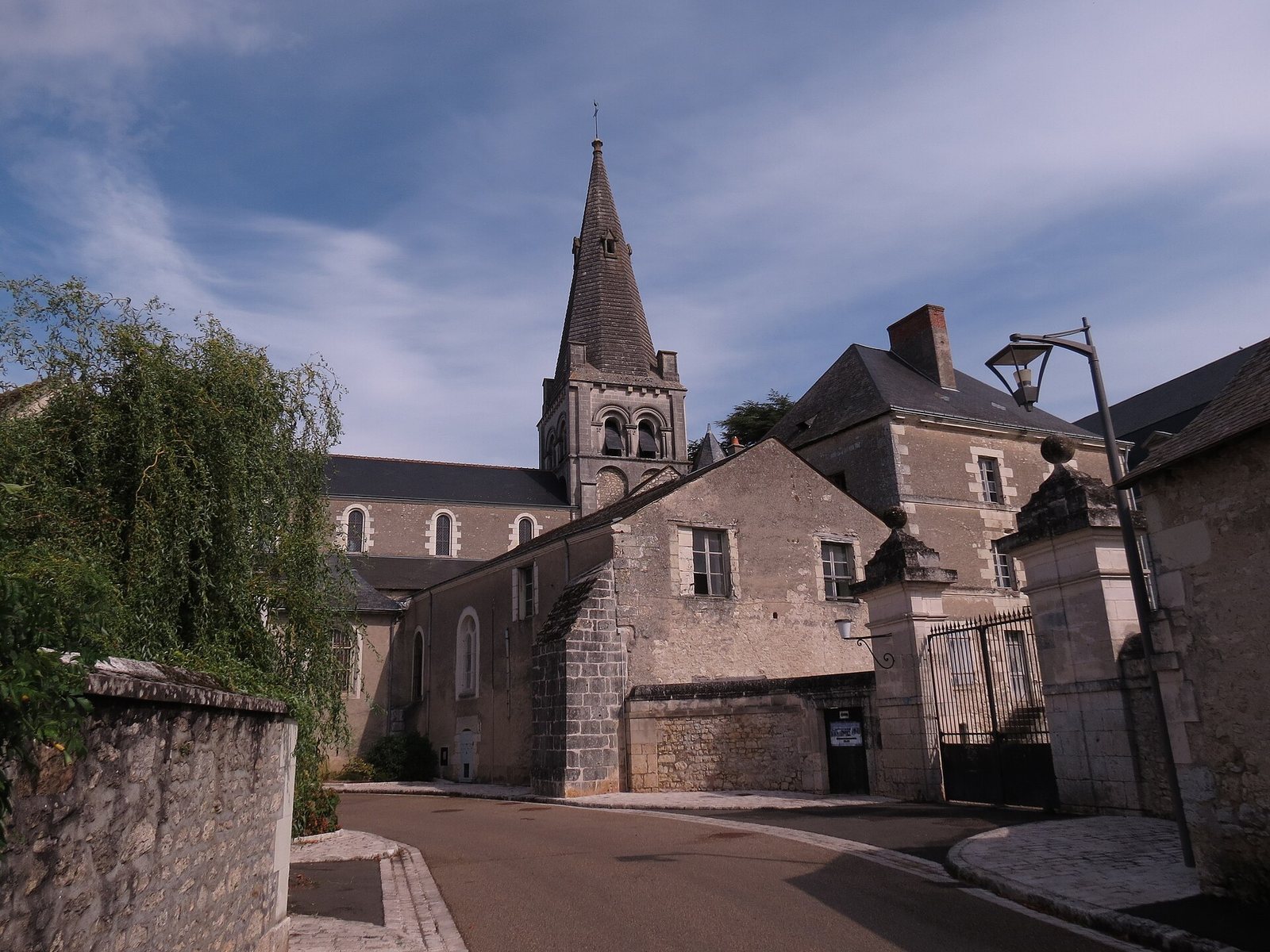
Pontlevoy Abbey is a former Benedictine abbey and present school complex in Pontlevoy, France, founded in 1034 by Gelduin, a local lord who held land from Eudes II, Count of Blois. Its church is predominantly Gothic, and the site’s history reaches from medieval monastic life into several centuries of education. The abbey also became part of the defensive strategy of the counts of Blois against the counts of Anjou.
Foundation and medieval abbey
In 1026, Eudes II granted Gelduin the land of Chaumont to compensate him for the loss of Saumur. Gelduin fortified the land, which became a strategic position in the conflict between Blois and Anjou. Tradition links the abbey’s foundation to a pilgrimage: while returning by boat from the Holy Land, Gelduin was caught in a storm and vowed to build a church at Pontlevoy if Mary, the mother of Jesus, saved him. In the story, she appeared dressed in white and calmed the sea. Gelduin then founded a Benedictine abbey dedicated to her, associated with the title Our Lady in White.
Gelduin endowed the monastery with land, and monks arrived from Saint-Florent, whose abbey had been destroyed by Foulques Nerra, Count of Anjou and Gelduin’s enemy. Ansbert of Saumur became Pontlevoy’s first abbot. Gelduin died between 1040 and 1044 and was buried at the entrance to the new abbey church. In later centuries, the monastery received further gifts from worshippers and the lords of Chaumont. In 1280, its monks left during a dispute with John II, lord of Chaumont, who had been condemned by the Church.
English forces pillaged the abbey in 1357. The chapel had burned in 1390, and the church was burned by the English in 1407, after earlier wartime damage. Jean III Louveau, abbot from 1401, had been trying to repair the complex. Pierre Saire, elected abbot in 1407, sought permission in 1422 to fortify it against further raids and pillaging. Work completed in 1426 restored Gelduin’s old castle and one tower, then added two more. The following year, residents of Pontlevoy and Thenay undertook to guard the fortress as vassals of the abbey.
Abbot Guillaume de Plainvilliers sought papal support for repairs after war and pillaging. His initial requests for help through indulgences or alms failed, but Pope Eugene IV later ordered an inquiry and provided assistance. After the area was pacified, work on rebuilding the chapel began on 5 November 1446. Guillaume died in 1467 and left his property to the abbey.
Commendatory abbots and religious conflict
In 1467, the commendatory system was introduced. A commendatory abbot held the office and its revenues without necessarily taking part in monastic life, and abbots were no longer always chosen by the monks. Louis XI appointed François de Brillac, who received papal blessing as abbot on 15 January 1468. A 1516 concordat, a formal agreement between church and state, allowed the Pope to receive annates, payments from the revenues of ecclesiastical offices, while giving the French king the right to appoint abbots.
The monks opposed the appointment of Louis d’Anjou-Mézières, whom they had elected despite the king’s objections, and a lawsuit followed between Louis and François de Brillac. Louis brought monks from Marmoutier in an unsuccessful effort to reform monastic life. Another attempt, in 1532, to enlarge the community with clergy from Blois was also poorly received. Bernard de Ruthie’s arrival marked the end of the abbot’s spiritual authority over the monks. In 1544, Francis I granted Pontlevoy town status, enclosed it with walls, and authorized markets and fairs.
During the French Wars of Religion, a conflict between Catholics and Protestants in sixteenth-century France, Protestant forces occupied the abbey for about three months across the winter of 1562–63. They pillaged the buildings and robbed and ransomed the monks, leaving them without supplies or an administrator for the abbey’s property and income. After the Pacification of Amboise eased conditions, renewed fighting brought another attack in 1568, and the abbey was destroyed. Tradition says the attackers spared the church and used it for Protestant worship. The abbey was repaired in 1576, but Abbot Louis de Brézé left because it no longer generated income. Cardinal Charles de Bourbon subsequently took it over.
In 1623, Cardinal Richelieu, then a commendatory abbot, agreed to unite Pontlevoy with the Congregation of Saint-Maur, a Benedictine reform congregation. The abbey was in ruins. In 1644, the monks received permission to open a seminary, a school for training clergy, and a boarding college; six monks of the congregation arrived that year. Pierre de Bérulle took over the abbey in 1647, made further repairs, and restored property to the monks, helping revive monastic life under the Benedictine Rule, the monastic code associated with Saint Benedict. The college educated boarders, including sons of noble and wealthy families, and also drew students from England. In 1729, the abbey’s revenues were joined to the Diocese of Blois and the title of abbot was abolished.
Military college and changing schools
In 1776, Louis XVI made the abbey a royal military preparatory college, one of twelve such academies in France. It was intended for fifty scholarship pupils chosen by the king and about fifty fee-paying boarders. The French Revolution suppressed the military school, but the college continued under a secularized Benedictine. During the Reign of Terror, the period of political repression and executions from 1792 to 1795, the abbey was heavily affected, while the revolutionary Convention opposed religious education. From 1795, director and owner Chapotin organized a governing committee. The presence of former religious educators, pupils from Christian families, and worship that had continued until 1793 brought legal difficulties.
After the Falloux Law expanded freedom of education, the college faced growing competition from regional secondary schools. It came under direct operation on 15 June 1843, and Abbé Peschoud became director in April 1844. Lightning struck the bell tower during the opening-day Mass in October 1847. In 1862, Abbé de Forges arranged urgent improvements to the facilities, including hot baths, a reorganized infirmary, and separate chapels for confession and the infirmary. From 1867, the college faced years of deficits linked to earlier financial mismanagement. On St Vincent’s Day in 1884, a fire started in a supervisor’s room and spread along a nearby beam, damaging a dormitory and other rooms.
From January 1918, the abbey housed a convalescent hospital for American troops, with 500 beds in the convent. The premises also included a cinema, post office, military orchestra, and troop quarters. The last soldiers left in 1919. Falling enrolment brought the college to a close in 1938, and Spanish refugees occupied the school that year. In 1939, the army medical service requisitioned part of the complex for a military hospital, while the Interior Ministry opened an annex.
German units arrived on 14 or 15 June 1940 without fighting, and the college closed in 1942. German troops camped in the gardens and fired artillery toward bridges over the Cher. Before leaving in 1944, they set fire to classrooms, laboratories, collections, and dormitories. Afterward, the abbey became a vocational guidance centre for sons of prisoners of war, repatriates, and people who had died for France. It trained young people, generally aged fourteen to sixteen, in trades such as carpentry, masonry, machine fitting, boiler-making, and blacksmithing. The centre had 220 regional trainees in 1945 and closed in 1948. The college returned to the abbey before closing again in 1959.
In 1967, the National Centre for the Promotion of Rural Craft began major works at the abbey, but financial difficulties ended its activities after a year. Promotrans, a driver-training association, took over in 1972, continued the works, and established modern facilities. It left for Vendôme in 1992, and the abbey closed again. American businessman Murray Wikol acquired the buildings in 2001 through the Euram-Center association for educational and cultural exchanges with the United States. The centre hosted American university students and cultural activities until it closed in 2017 because of a lack of students.
A real-estate company formed to acquire the monument bought it in 2018. Since 2019, the abbey has again housed classes and a boys’ boarding residence for the Catholic school of Pontlevoy. The school is under the authority of the Diocese of Blois and has an agreement with the Community of Saint Martin, which provides chaplaincy. The abbey is protected as a historic monument under designations dating to 1934 and 1991.
Remains
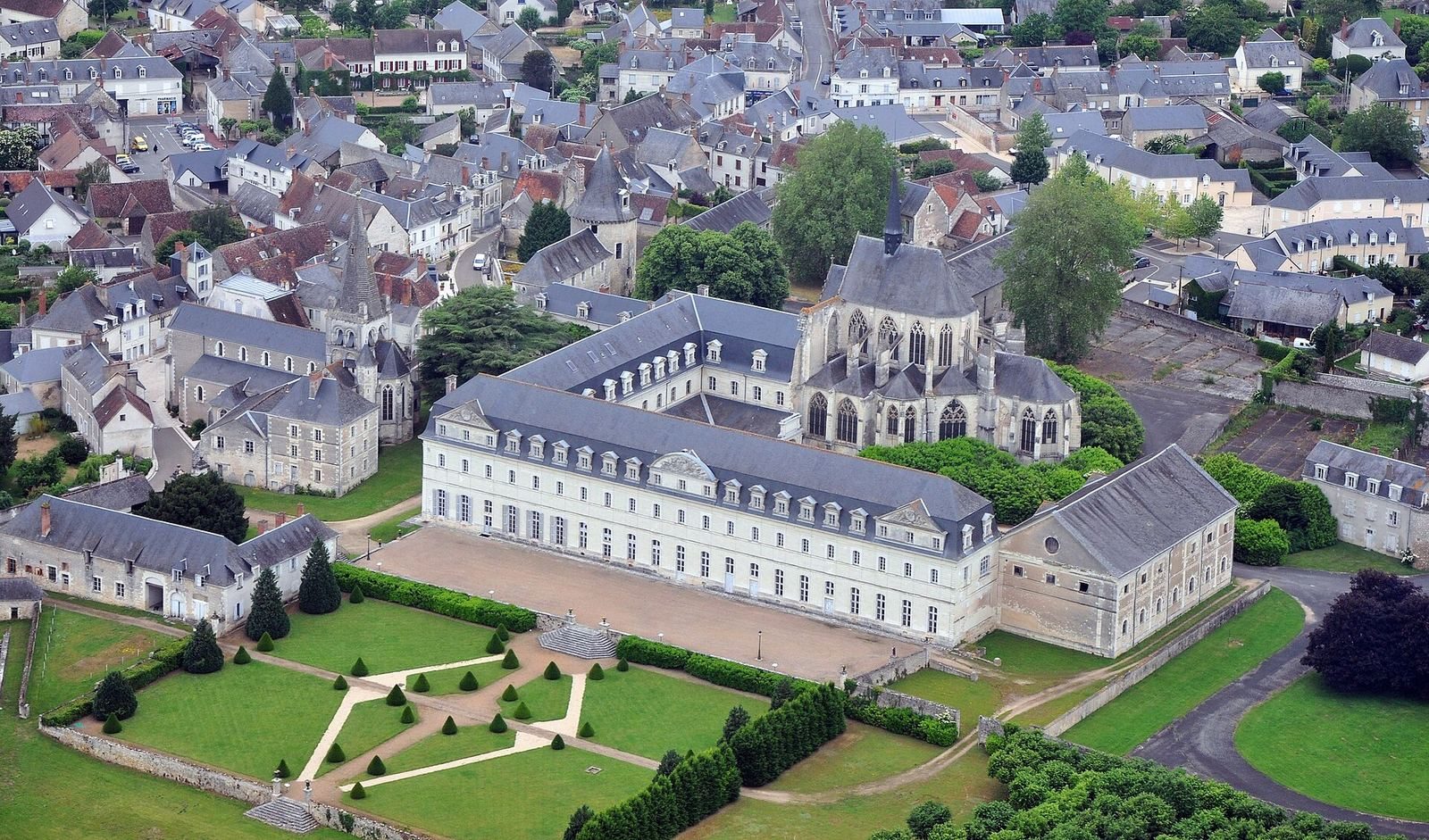
The complex brings together the Gothic church, adjoining chapels, and enclosed ranges adapted over time for monastic and educational use. Its buildings are arranged around courtyard spaces, with historic defensive towers incorporated into the school complex. The church’s eastern end retains the clearest expression of its Gothic design.
Church and chapels
Abbey church
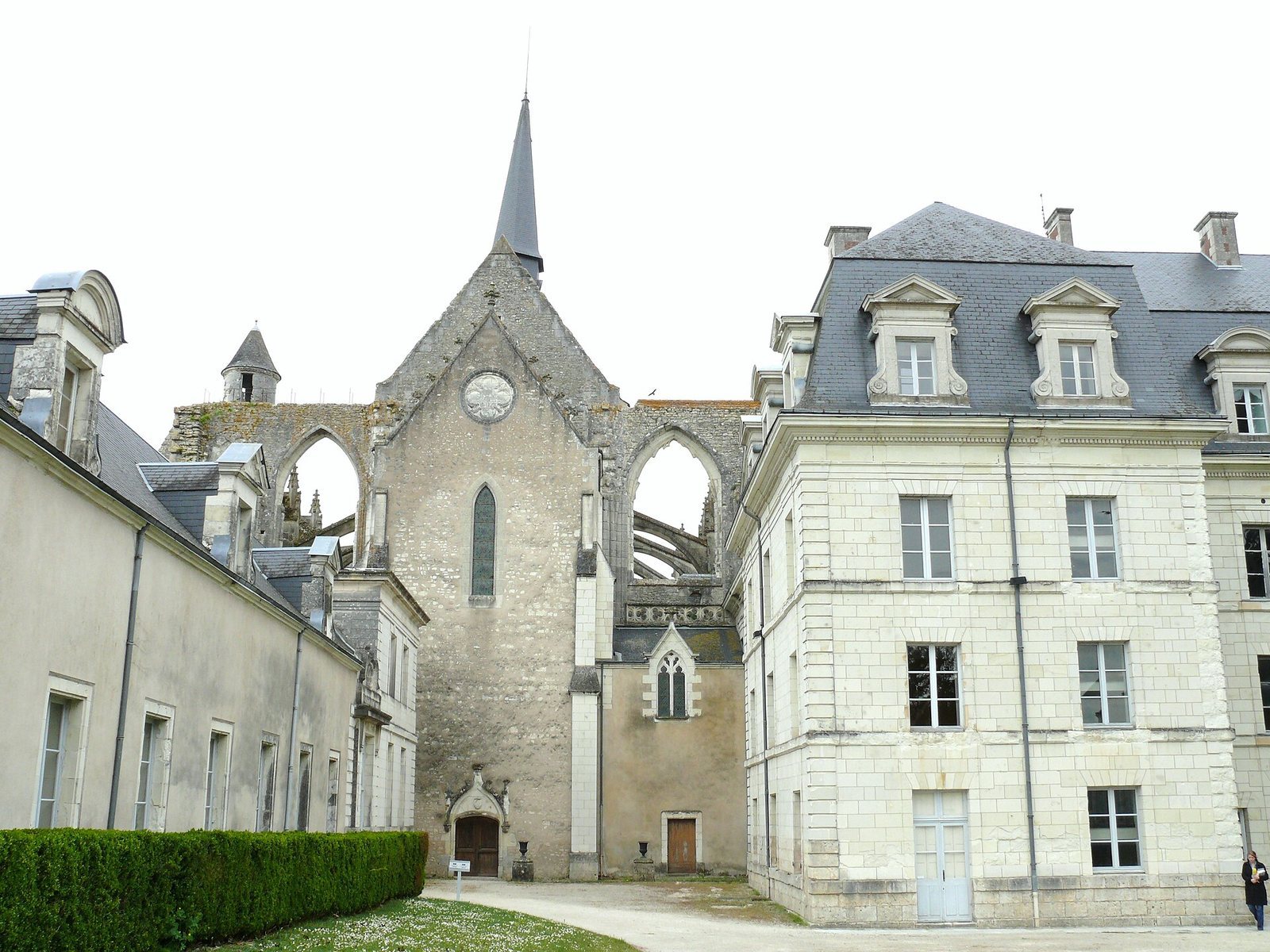
The church was conceived on a large scale. Viewed from the east, its surviving end has the form of a complete Gothic cathedral, with flying buttresses, exterior supports for church walls, and trefoil tracery, stone window patterns with three lobes, in the radiating chapels that extend from the sanctuary end. The church’s apse, its sanctuary end, and choir, the area used by clergy and singers, were rebuilt after wartime destruction. A gravel courtyard occupies the area of the former nave.
A small statue of the Virgin and Child, dating to the eleventh century, stands on the wall behind the altar. The child leans against Mary’s left shoulder, and she holds his left hand to her heart. Its simple, untrained style has been taken to suggest that it was made by a local mason rather than a professional sculptor. The church’s bells, Louise-Augustine and Marie-Antoinette, were added in 1774.
Chapels
Saint Michael’s Chapel adjoins the church. A doorway between the two buildings survives, although it is blocked. Another chapel on the site was dedicated to Saint Christopher.
Monastic enclosure and defensive buildings
Southern cloister
A small cloister, a covered walkway around an open courtyard, lies south of the complex and was rebuilt by François Brillar. Huguenots partly destroyed it. The site was enclosed along its western and southern sides, and a building was linked to the cloister by a long passage.
Courtyard and towers
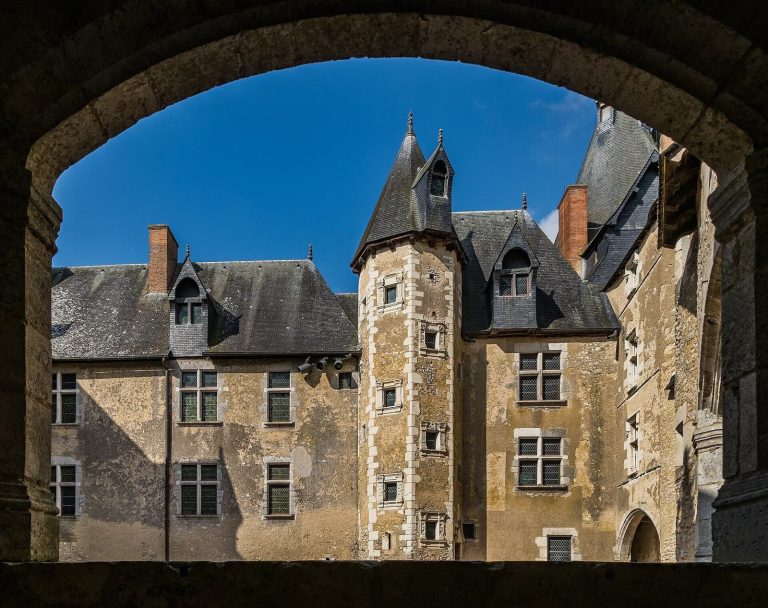
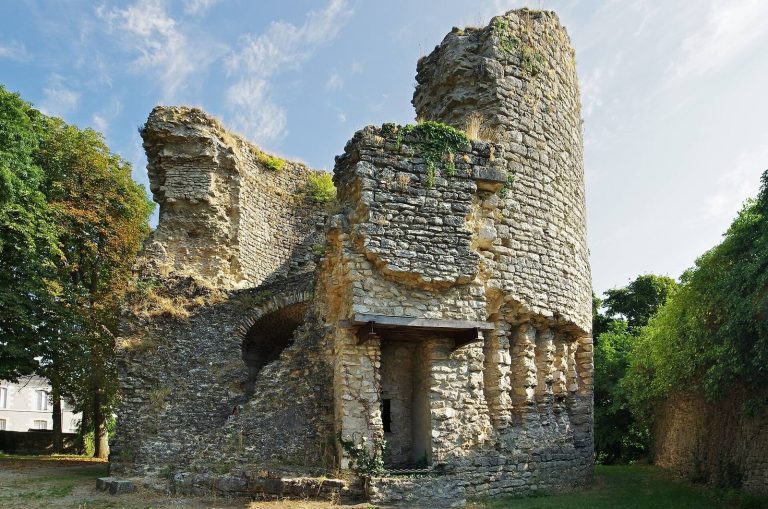
By 1706, four ranges of buildings enclosed a courtyard between two large medieval defensive towers. The round tower was converted into an infirmary, while the square tower housed the youngest pupils. These earlier defensive structures thus became part of the college’s working accommodation.
Eastern residence
An older residence on the eastern side includes a hexagonal tower and is thought to have served as an abbot’s residence.
School buildings and grounds
Classrooms and service spaces
Between 1706 and 1720, a cellar for the seminary was excavated, and two service rooms were fitted into the kitchen. Around 1725, extensions beside the square tower provided a laundry, cloakrooms, and quarters for instructors. Two classrooms were added, while other rooms were converted into a warming room for younger pupils and two billiard rooms. Each division had a warming room.
Later building changes
A large eighteenth-century building, three storeys high and topped by a mansard roof, a roof with steep lower slopes, forms part of the complex. The old keep was demolished, and a building extending from Thenay Street to the chapel was rebuilt, with work completed around 1786. Stables built in 1788 later became a laundry.
In 1843, work completed a dormitory staircase begun by Abbot Bize. A dormitory of individual cells in the Green Gallery was moved above it, study rooms were rebuilt, and English-style gardens were laid out. During the work, labourers uncovered a tombstone belonging to Jean Louveau.
Riding hall and courtyard tree
The former horse-riding hall is now used for activities including concerts. A large cedar of Lebanon stands in the courtyard. It was planted to honour Louis XVI’s accession and was recognized as a remarkable tree in 2015.