Vicksburg National Military Park: Civil War Siege and Battlefield Site
Site at a Glance
- Rating
- 4.7
- Popularity
- Medium
- Country
- United States
- Primary era
- Modern
- External website
- Open
- Eras represented
- Modern
- Civilizations
- Unclassified
- Site type
- Military
- Remains
- Fort
On this page10 sections
History
Vicksburg National Military Park is a Civil War battlefield park in Vicksburg, Mississippi, United States, preserving the site of the Siege of Vicksburg and commemorating the wider Vicksburg Campaign. The American Civil War was fought between the Union and the Confederacy from 1861 to 1865, and Vicksburg was strategically important because it controlled a major section of the Mississippi River.
The Vicksburg Campaign
The campaign’s siege phase lasted from March 29 to July 4, 1863, while the Siege of Vicksburg itself ran from May 18 to July 4. Earlier operations included the Battles of Chickasaw Bayou, Arkansas Post, Grand Gulf, Snyder’s Bluff, Port Gibson, Raymond, Jackson, Champion Hill, and Big Black River Bridge. The Union victories at Vicksburg and Port Hudson gave the Union control of the Mississippi River.
The park preserves the ground associated with the siege and defense of Vicksburg, including the military positions used during this decisive campaign.
Creation and later administration
Vicksburg National Military Park was established on February 21, 1899, to commemorate the siege and the Confederate defense of the city. The park and cemetery passed from the War Department to the National Park Service on August 10, 1933. The National Park Service is the United States federal agency responsible for administering national parks and other protected historic areas.
In the late 1950s, part of the park was transferred to the city in exchange for closing local roads through the remaining grounds and allowing construction of Interstate 20. The National Park Service continues to maintain the monuments on the transferred land. The park was added to the National Register of Historic Places, the federal inventory of places recognized for historical or architectural importance, on October 15, 1966. In 2000, the Mississippi House of Representatives approved funding for a monument recognizing African-American soldiers in the Civil War.
Grant’s Canal
Grant’s Canal was begun in June 1862 with President Abraham Lincoln’s approval. Union Major General Benjamin Butler initiated the project and assigned its construction to Brigadier General Thomas Williams. Disease, sickness among the soldiers and formerly enslaved laborers, and falling river levels halted the work in July.
Union Major General Ulysses S. Grant ordered the project restarted in January 1863 during the Vicksburg Campaign and assigned the work to Brigadier General William T. Sherman. Grant and Sherman did not expect the canal to succeed, but Grant used the work to keep troops occupied while preparing the campaign against Vicksburg. The canal was intended to divert the Mississippi River so Union vessels could bypass Confederate artillery at Vicksburg, but technical problems prevented it from fulfilling that purpose.
Remains
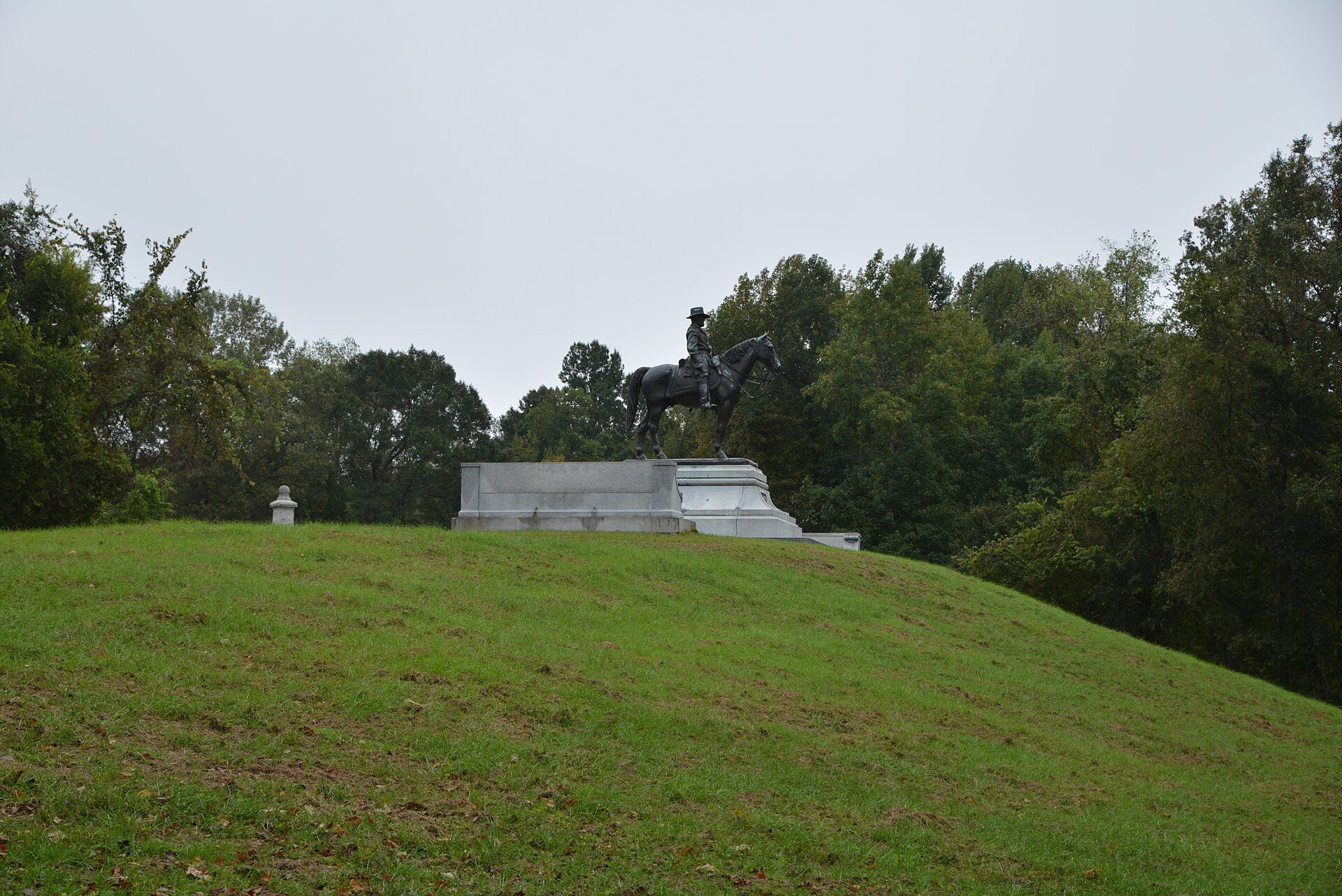
The park extends along the Mississippi River and contains reconstructed forts and trenches associated with the 47-day siege. Its battlefield includes 1,325 historic monuments and markers, 20 miles of historic trenches and earthworks, and 144 emplaced cannons. Earthworks are defensive constructions made from excavated or piled earth, including trenches and embankments. A 16-mile tour road and a 12.5-mile walking trail pass through the park, which also includes two antebellum houses, structures built before the Civil War.
Battlefield monuments and military remains
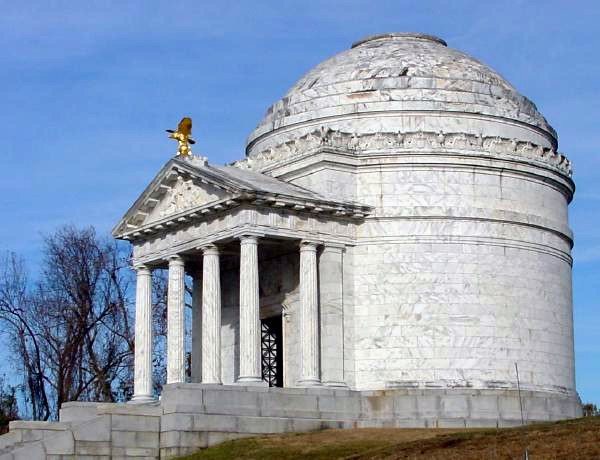
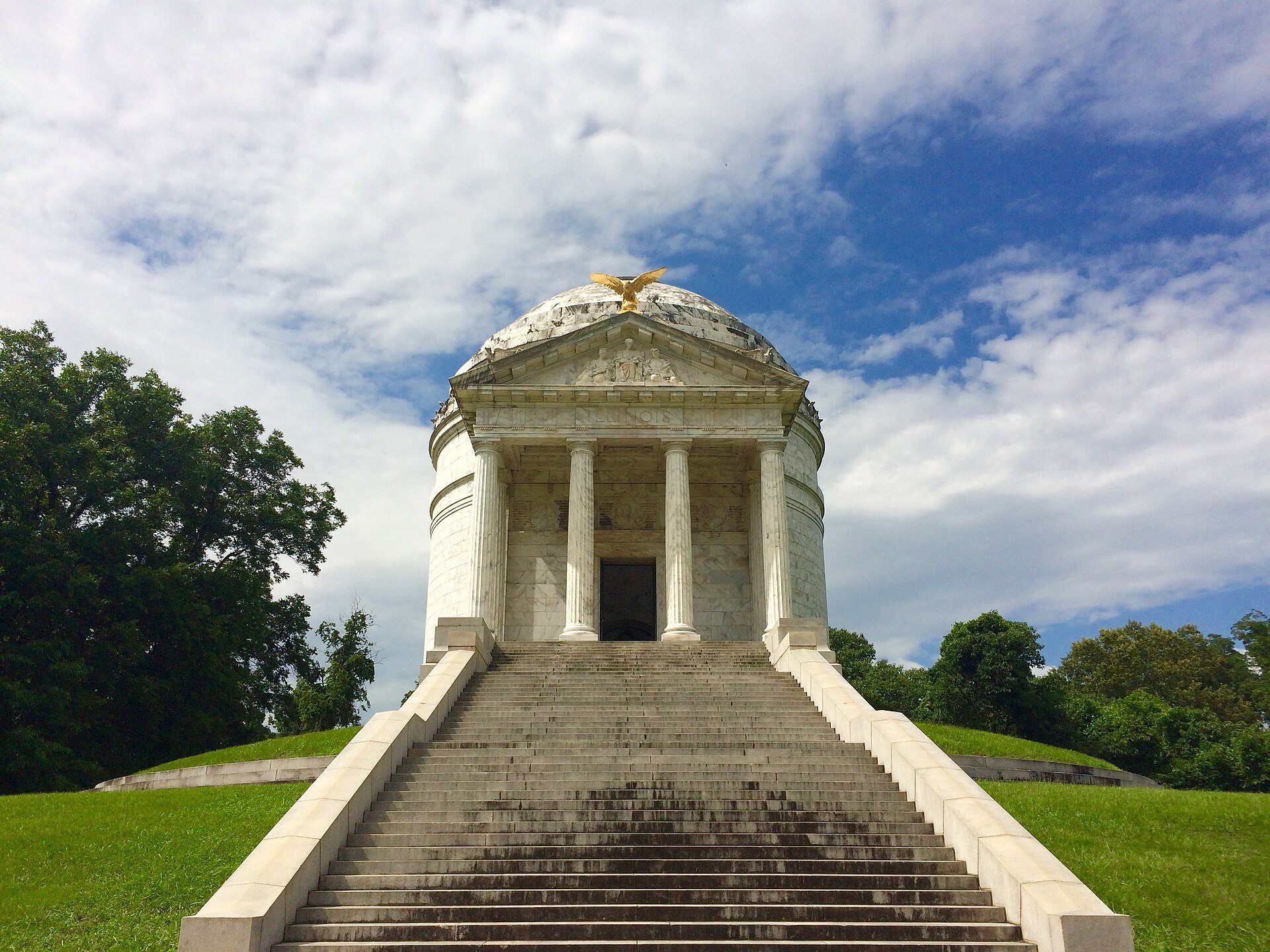
Illinois Memorial
The Illinois Memorial has 47 steps, commemorating the 47 days of the Vicksburg siege. It forms part of the park’s extensive collection of monuments and markers associated with the campaign.
USS Cairo
The restored gunboat USS Cairo is preserved in the park. An ironclad, meaning an armored warship protected by iron or steel plating, it was sunk in the Yazoo River on December 12, 1862, and recovered in 1964. Also known as the “Hardluck Ironclad,” it was the first United States ship sunk by a torpedo.
Vicksburg National Cemetery
Vicksburg National Cemetery occupies 116.28 acres within the park and abuts Beulah Cemetery. Civil War burials took place there from 1866 to 1874. The cemetery contains 18,244 burials, including 12,954 unidentified individuals, and is closed to new interments. It also contains one Commonwealth war grave, that of a Royal Australian Air Force airman buried during World War II.
Grant’s Canal remnants
The surviving remnants of Grant’s Canal form a detached section of the military park across from Vicksburg near Delta, Louisiana. They preserve part of the canal project that was intended to create a route around the Confederate artillery overlooking the Mississippi River.