Wat Phra Chao Lan Thong: A Historic Buddhist Temple in Chiang Saen
Site at a Glance
- Rating
- 4.6
- Popularity
- Low
- Country
- Thailand
- Primary era
- Medieval
- Eras represented
- Medieval, Modern
- Civilizations
- Unclassified
- Site type
- Religious
- Remains
- Temple
On this page14 sections
History
Wat Phra Chao Lan Thong is a Buddhist temple and archaeological monument in Chiang Saen District, Chiang Rai, Thailand. Founded in 1489 during the Lanna period, it was established by Phraya Sriratchat Ngoen Kong, a governor of Chiang Saen and grandson of King Tilokaraj of the Mangrai dynasty, the ruling house of medieval Lanna. The temple became associated with Phra Chao Lan Thong, a large sacred Buddha image, and with the traditional belief that this place formed the heart, or “navel,” of Chiang Saen.
Foundation under Phraya Sriratchat Ngoen Kong
Phraya Sriratchat Ngoen Kong was also known as Muen Hoi Ngua or Muen Ngua. Tradition relates that silver and gold emerged from the ground in the royal precinct when he assumed the governorship, leading to his new name, which refers to silver and gold. Afterward, he and his officials founded the temple, commissioned its principal Buddha image, and built a chedi, a Buddhist reliquary monument, to contain a relic identified with the Buddha’s heart. The temple received the name Wat Phra Chao Lan Thong.
The site was also called Wat Luang Klang Wiang and Wat Sadoe Mueang. These names reflect its association with the center of the walled city. Its traditional identity as Chiang Saen’s civic and spiritual center later shaped the development of the city pillar shrine.
Revival of Chiang Saen
After Chiang Saen was defeated, the city was revived in 1877 under Phraya Ratchadetdamrong, also known as Chao Inta. He organized people from Lamphun and former Chiang Saen residents who had moved to the Chiang Mai and Lamphun area to clear the city and restore its temples. Wat Phra Chao Lan Thong was restored during this revival.
During this period, the temple’s first abbot, Kru Ba Pho, descended from former Chiang Saen residents who had relocated to Chiang Mai. He cleared the central area and held a major merit-making ceremony there before new buildings had been erected, reinforcing the site’s continuing religious importance.
The city pillar shrine
In 1976, the abbot Phra Kru Suwan Wisutthikhun, also known as Phra Maha Thongsuep Wisutthacharo, proposed the construction of the Chiang Saen City Pillar Shrine. Site preparation and fundraising began in 1979, the foundations were laid in 1989, and the shrine was completed in 1999 after further contributions. The temple is registered as a Thai historical site.
Remains
The surviving complex occupies the central area of the former walled city. Its physical remains include the original worship hall, a two-phase chedi, several Buddha images transferred from abandoned temples, and the later city pillar shrine. Together, these features preserve the site’s religious associations and its traditional connection with Chiang Saen’s urban center.
Temple core
Original worship hall
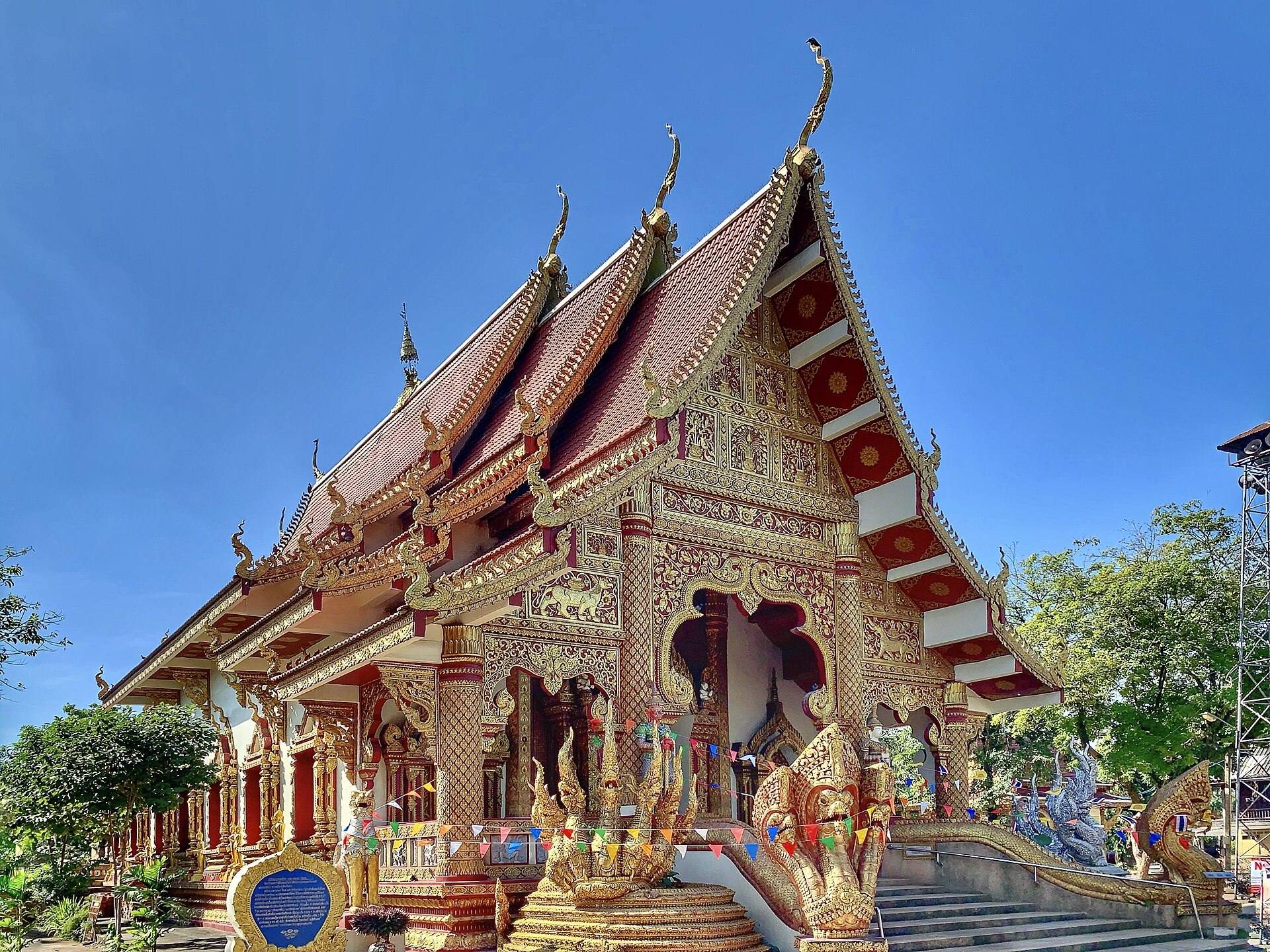
The original vihara, a Buddhist assembly or worship hall, stood at the center of the city. It measured approximately 10 metres wide and 18 metres long. Its scale reflects the central role of the temple within the historical city.
Reliquary chedi
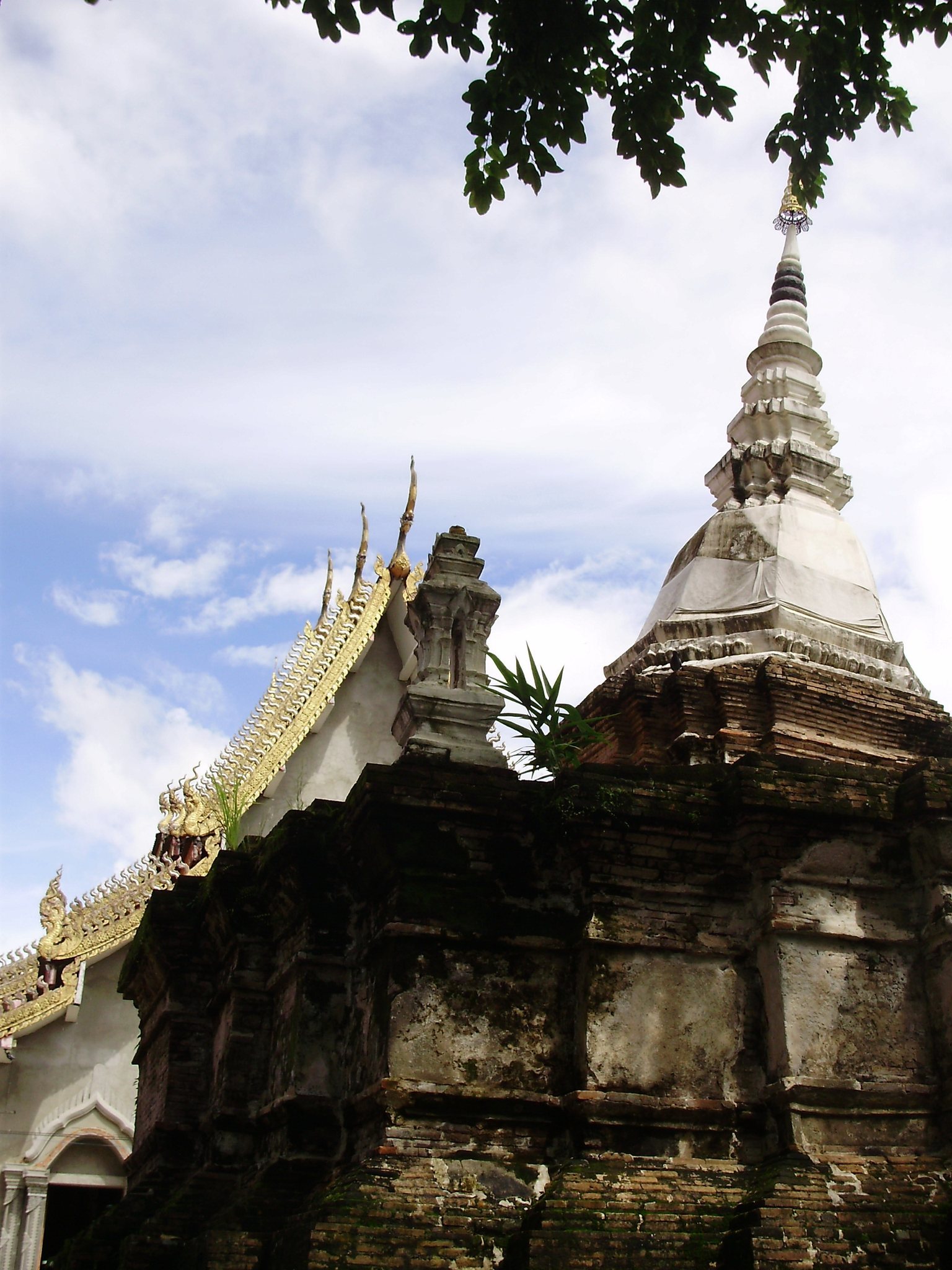
The temple’s chedi was originally about 6 metres wide at the base and 14 metres high. Its present base measures approximately 13 metres across. The surviving structure preserves two construction phases: the earlier chedi remains within the later enclosure, with its upper section still visible, while the surrounding structure may have been built to strengthen it or may represent an unfinished attempt to enclose the original monument.
Sacred Buddha images
Phra Chao Lan Thong
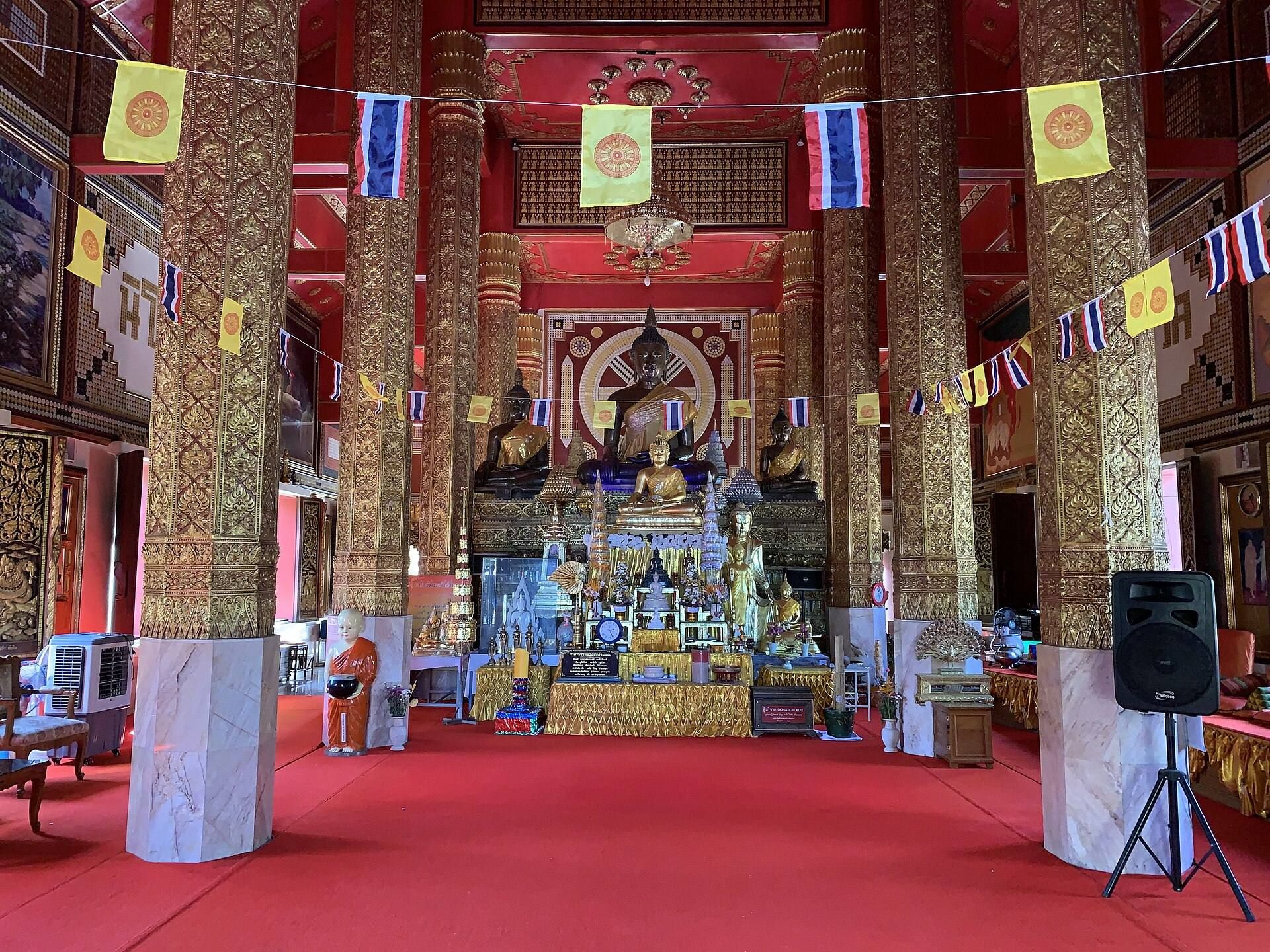
Phra Chao Lan Thong, the principal image, was cast in 1489 from five types of metal or alloy. It is gilded, weighs approximately 1,200 kilograms, measures about 2 metres across the lap, and stands more than 3 metres high. Its date links the image directly with the foundation of the temple.
Phra Singh Nueng Chum Chiang Saen
Phra Singh Nueng Chum Chiang Saen was formerly housed at the abandoned Wat Chedi Luang before being transferred to Wat Phra Chao Lan Thong. An inscription beneath its base is partly illegible. It refers to the establishment of Wat Phra Kaeo and Wat Phra Kham on Don Thaen island between 1382 and 1386, together with royal donations. The inscription has been interpreted as possibly connecting the image with Queen Yot Sunthara and King Saen Mueang Ma, although the place where it was originally commissioned remains uncertain.
Phra Chao Saen Saew
Phra Chao Saen Saew, also called Phra Chao Saen Sae, came from the abandoned Wat Saen Mueang. An inscription below its base dates the image to 1729 and names the governors of Chiang Rai and Chiang Saen, along with the consort of Prince Lak Thi of Chiang Saen, as its makers and patrons. The image was dedicated to Prince Yot Ngam Mueang, the consort’s son.
Phra Chao Thong Thip
Phra Chao Thong Thip was transferred from the abandoned Wat Phra Chao Thong Thip. The bronze image measures 1 cubit and 15 inches across the lap and is kept in a monastic residence building at the temple. It is described as belonging to the Sukhothai style, the Buddhist artistic tradition associated with the Sukhothai kingdom from the thirteenth to fifteenth centuries.
Chiang Saen City Pillar Shrine
The Chiang Saen City Pillar Shrine is a later feature associated with the traditional belief that Wat Phra Chao Lan Thong occupies the city’s central heart. It functions as a sacred civic marker connected with the founding and spiritual center of a Thai city, extending the temple’s role beyond worship to the symbolic organization of Chiang Saen itself.