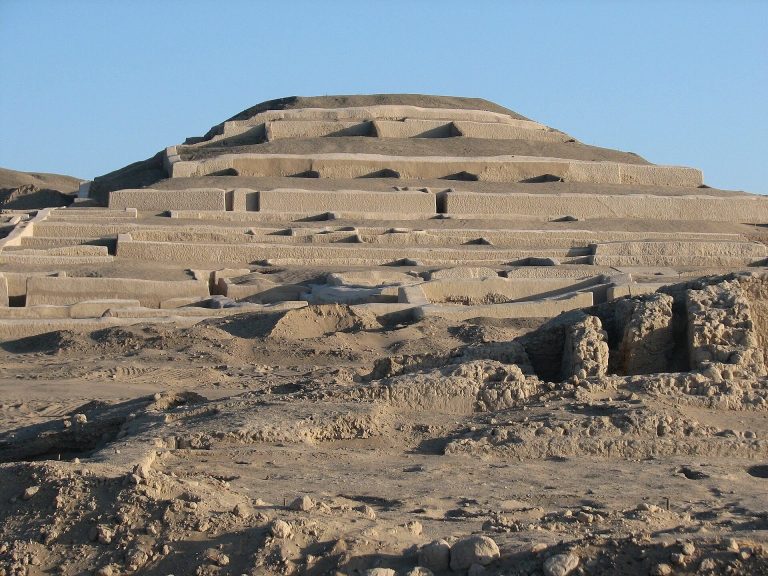
Chauchilla Cemetery: A Pre-Hispanic Necropolis in Peru
Site at a Glance
- Rating
- 4.5
- Popularity
- Low
- Country
- Peru
- Primary era
- Medieval
- Eras represented
- Classical, Medieval
- Civilizations
- Wari
- Site type
- Burial
- Remains
- Necropolis
On this page9 sections
History
Chauchilla Cemetery is a pre-Hispanic burial ground in the Las Trancas valley near Nazca, Peru. Used over several centuries, it is associated with the Nazca cultural tradition, although its precise chronology and cultural affiliation remain uncertain. Proposed connections include the Nazca culture, the Wari period, and the Carrizales-Poroma culture. The cemetery provides important evidence for the funerary practices of southern Peru.
Origins and cultural associations
The cemetery was formerly known as the Cemetery of the Llamas because llama remains were found frequently in the graves as funerary offerings. Its burials reflect an Andean belief that the dead were reborn or continued another life after death. The fetal position of the bodies and the objects placed with them have been interpreted within this religious framework.
Archaeological study and looting
Investigation began in the early twentieth century with work by Max Hule in 1905 and Mejia Xesspe in 1927. Hans Horkheimer studied the cemetery in 1947, followed by William Duncan Strong in 1953 and David Robinson in 1957.
During the twentieth century, extensive looting removed most of the archaeological objects and scattered human bones and pottery throughout the cemetery. In 1997, most of the scattered bones and looted pottery were returned to the tombs. Excavation and restoration between 1996 and 2004 helped stabilize the site, which was formally declared an archaeological site and protected under Peruvian law from 1997.
Environmental damage and preservation
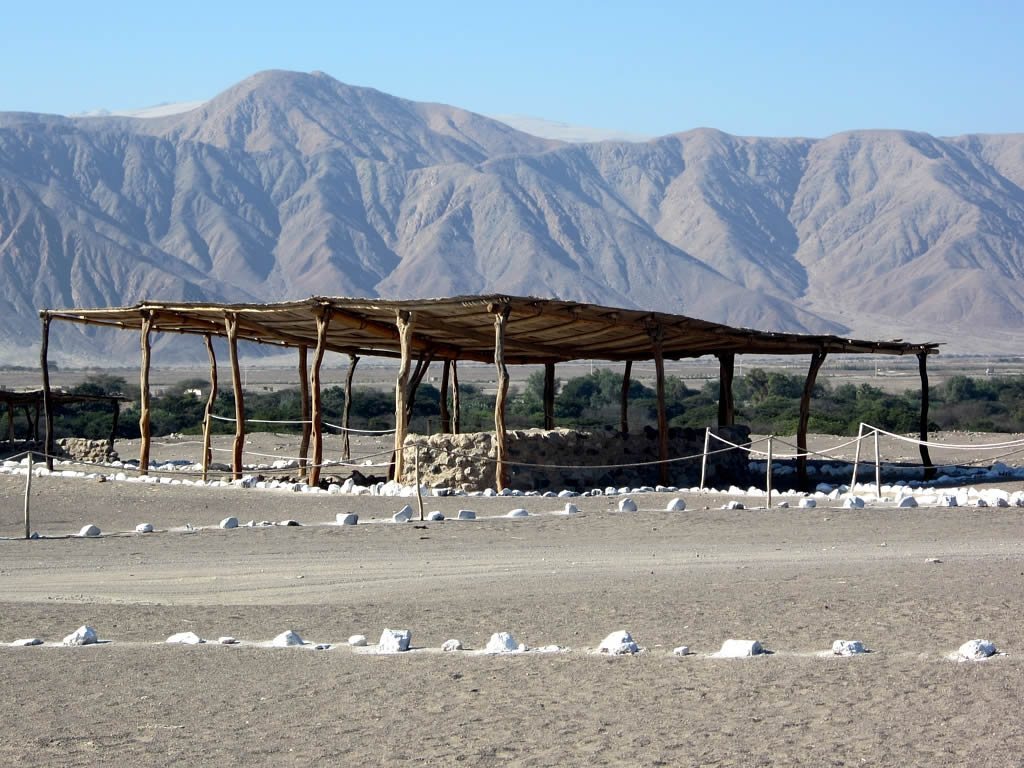
Heavy rainfall in 2007 led archaeologists to close the cemetery for a year. Rodents have also damaged the mummies, prompting consideration of permanently sealing the tombs with glass panels. The cemetery remains an open-air archaeological site where mummies can be seen in their original tombs, a condition described as unique in Peru.
Remains
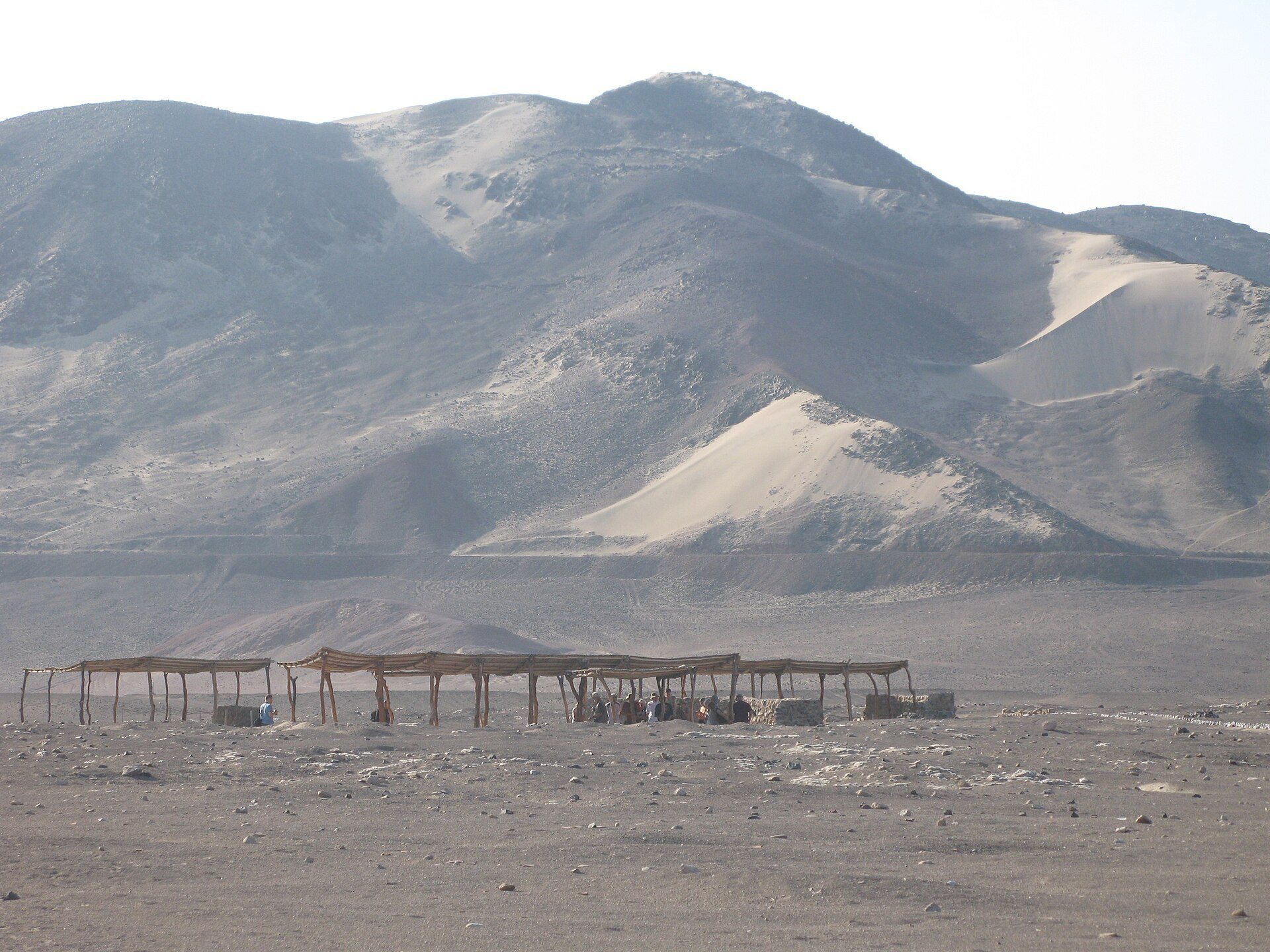
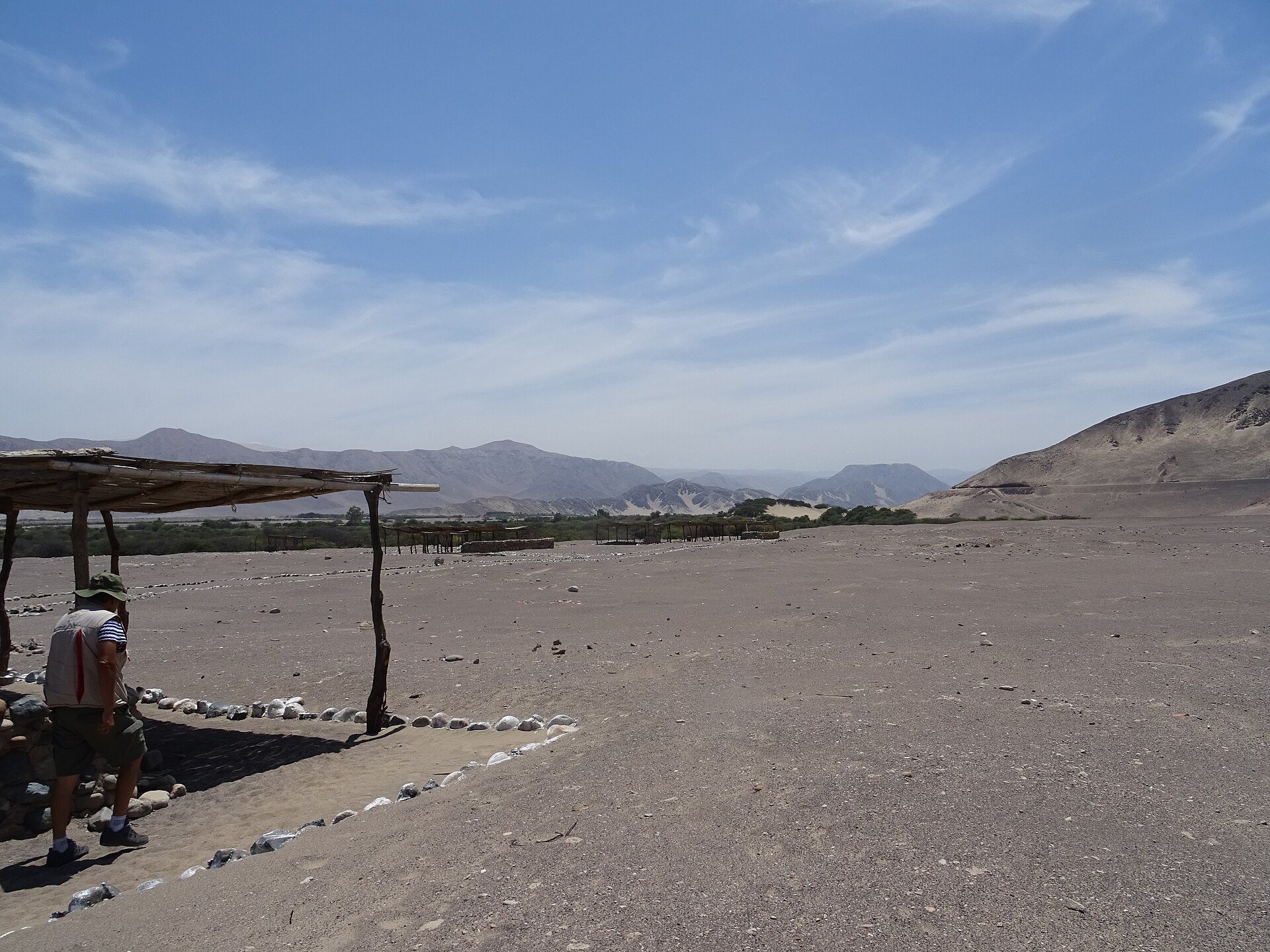
Chauchilla Cemetery extends across an archaeological area about 2 kilometers long and 0.4 kilometers wide in the arid Nazca Desert. It lies in the Las Trancas valley, beside the Poroma riverbed. The dry climate has contributed substantially to the preservation of human remains. A museum hall displays some archaeological finds, while about twelve restored tombs form a surviving group within the cemetery.
Tombs and cemetery layout
The tombs are mainly square or rectangular, with some circular examples. Their walls consist of parallelepiped-shaped adobe bricks, meaning unfired blocks of earth, and their bases were paved. Roofs were originally made from huarango trunks covered with reeds, pacai or maize leaves, and earth mixed with sand. Some graves were marked, and both individual and collective burials are represented.
Burials and offerings
Mummified bodies
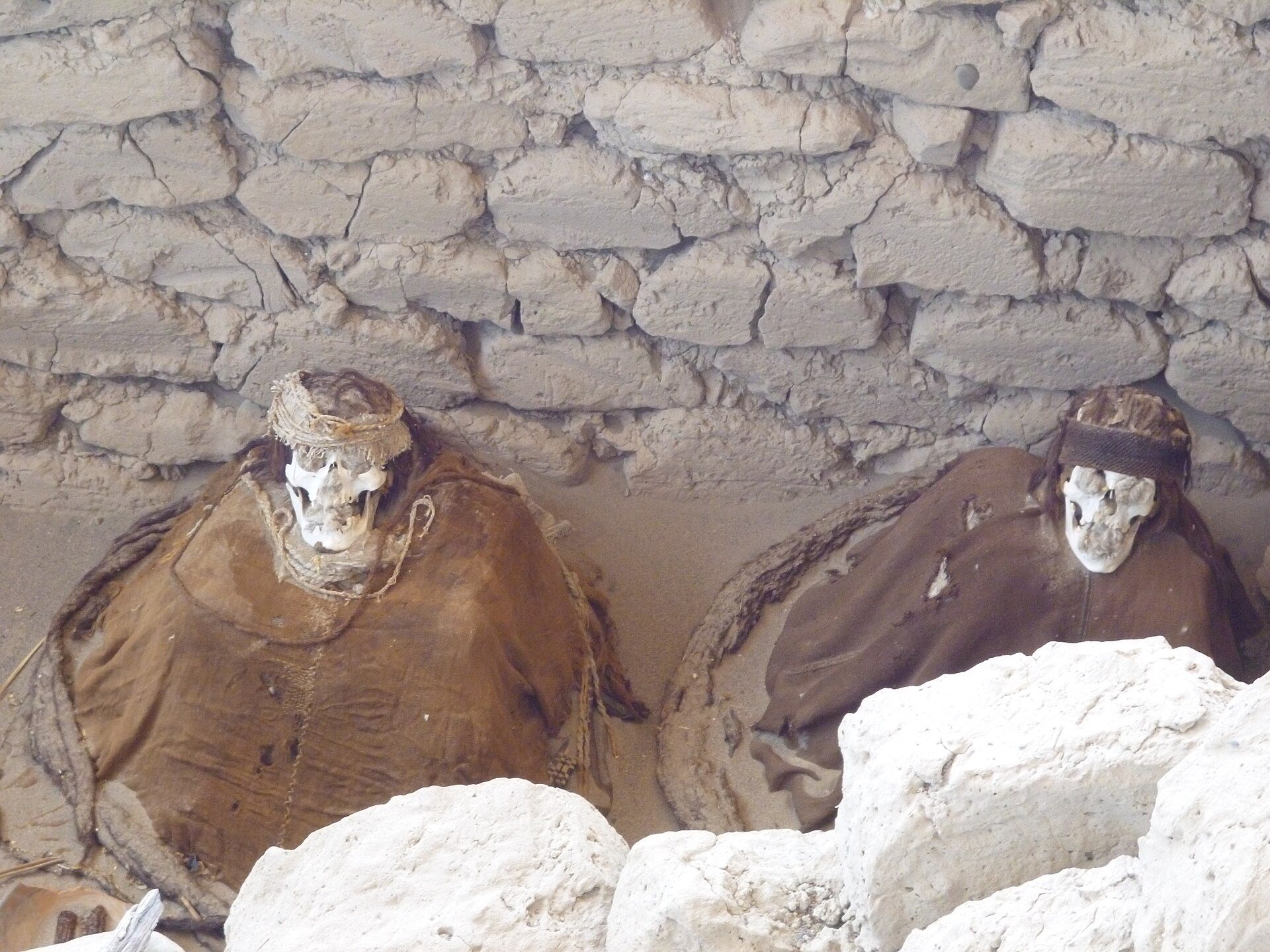
The bodies were placed in a fetal position facing east toward the rising sun. Their knees were drawn near the chin, while the arms were bent or crossed over the chest. Cords made from reed, cotton, or camelid wool held the bodies in place, and cotton or wool coverings formed the funerary bundles. The dead wore embroidered cotton clothing, and some bodies were treated with resin, which is thought to have repelled insects and slowed bacterial decay. Some bundles could remain exposed for extended periods during ancestor rituals, with cinnabar, a red mineral pigment, applied to parts of the body. The bodies were not artificially mummified through a separate preservation procedure.
The restored tombs contain mummies and skeletal remains, including bodies whose fetal positions remain visible. In some cases, the desert conditions have preserved hair and traces of skin or other soft tissue.
Grave offerings
Offerings included pottery, sometimes containing food or other substances, as well as birds, camelids, food, coca, spondylus shells, domestic and decorative implements, textiles, and metal objects. Spondylus, a large marine shell used in ancient Andean ritual and exchange, was among the materials associated with the burials. Llama remains occur particularly frequently. Pottery fragments, textiles, human bones, and mummified remains also form part of the archaeological material associated with the cemetery, although much of it was removed by looting before some bones and pottery were returned to the tombs.