Galua Paka Mosque: A Historic Sunni Mosque in Bangladesh
Site at a Glance
- Rating
- 4.6
- Popularity
- Very Low
- Country
- Bangladesh
- Primary era
- Early Modern
- Eras represented
- Early Modern
- Civilizations
- Mughal
- Site type
- Religious
- Remains
- Mosque
On this page5 sections
History
Galua Paka Mosque is an old Sunni Muslim mosque in Durgapur village, Rajapur Upazila, Jhalokathi District, Bangladesh. Mahmudjan Akand, a locally influential Muslim, built it about 300 years ago. An abandoned inscription found near the mosque provides the basis for dating its construction.
Foundation and local tradition
Local tradition connects the mosque with a story from a later renovation. When bushes around the building were cleared, large poisonous snakes were said to emerge. A local religious leader reportedly advised that part of the mosque be opened, after which the snakes left the site.
Renovation and protection
Shortly before Bangladesh became independent, the mosque was in danger of collapsing. The local philanthropist F.M.A. Kuddus Khan took the initiative to renovate it, and the front veranda was later extended. In 1999, the Government of Bangladesh placed the mosque under the Department of Archaeology, the institution responsible for investigating, protecting, and conserving the country’s archaeological heritage, and allocated funds for its restoration.
Remains
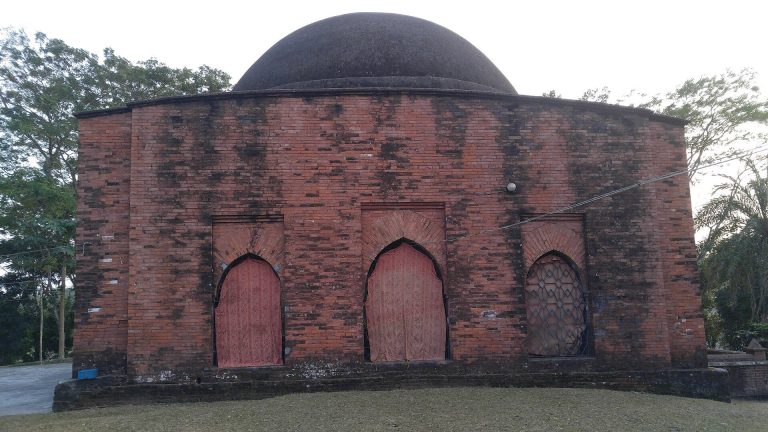
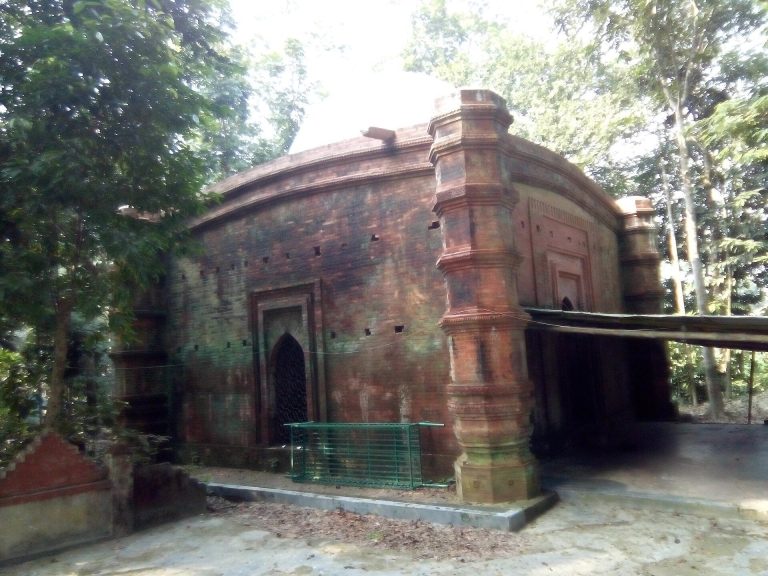
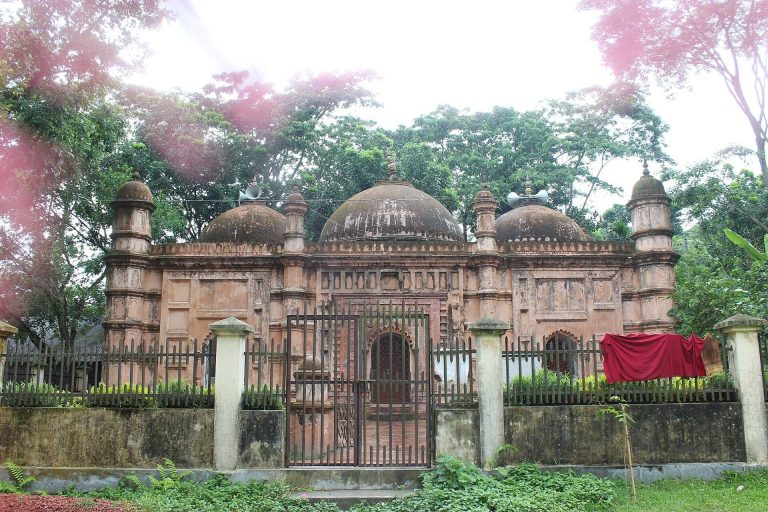
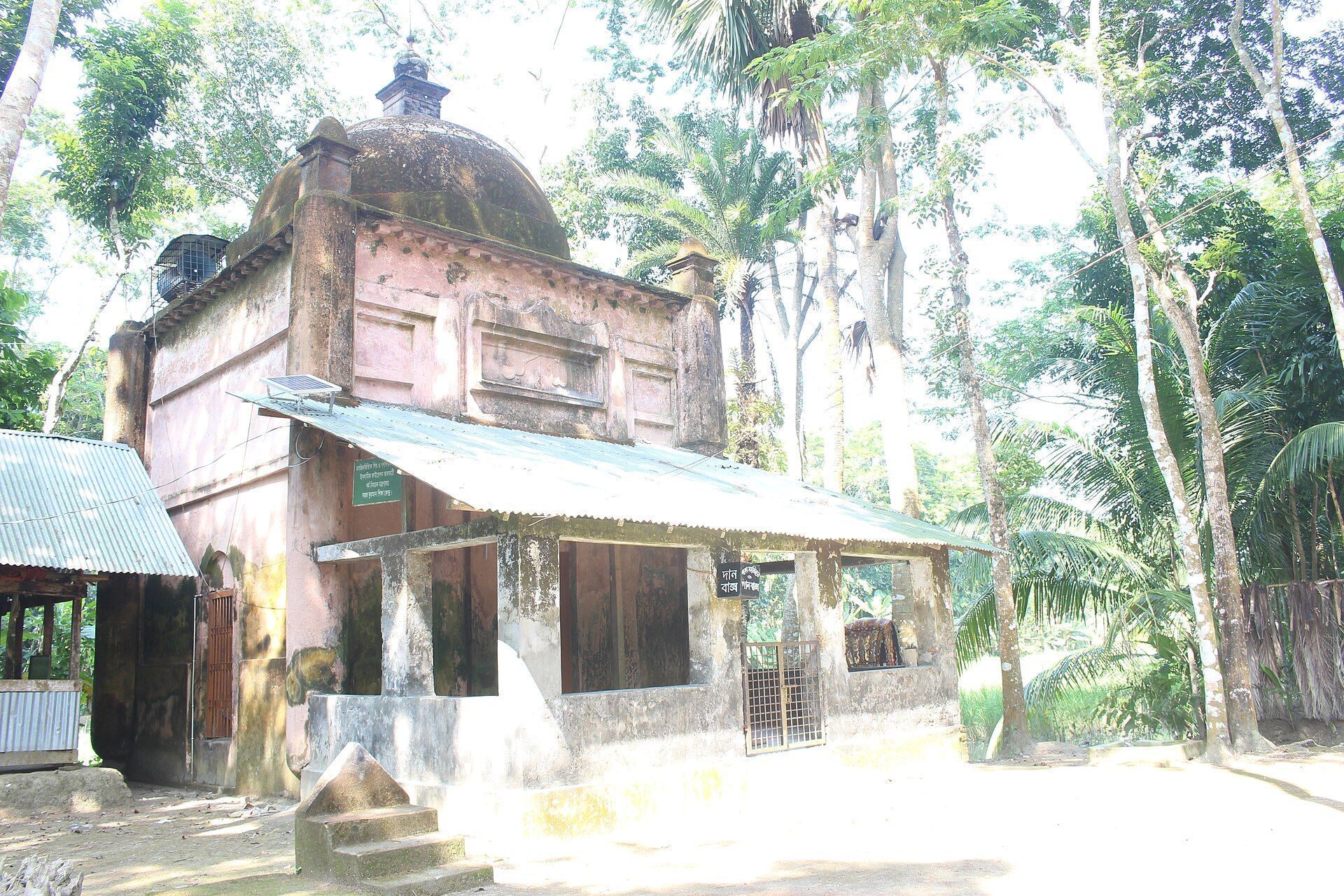
The mosque stands beside the Bhandaria–Rajapur highway in Durgapur village, near Barabari and about one kilometre east of Galua Bazar. Its surviving form has a single dome set over a relatively broad base, with a front veranda forming part of the later building arrangement.
Building and later alterations
The original structure was built of terracotta brick. Later renovations have covered the brickwork, so the masonry is no longer visible on the exterior. The front veranda was extended during subsequent alterations, adding to the form of the historic mosque that survives today.