Blythe Intaglios: Prehistoric Ground Figures in California
Site at a Glance
- Rating
- 4.5
- Popularity
- Very Low
- Country
- United States
- Primary era
- Classical
- Eras represented
- Iron Age, Classical, Medieval
- Civilizations
- Unclassified
- Site type
- Religious
- Remains
- Sanctuary
On this page8 sections
History
The Blythe Intaglios are a group of prehistoric or historic ground figures near Blythe, California, in the United States. Created by scraping designs into the surface of the Colorado Desert, their age, makers, and original purpose remain unresolved. The group is the best-known part of a wider concentration of more than 200 desert geoglyphs, most of them along the Colorado River.
Meaning and ceremonial interpretations
The figures may have served ceremonial purposes. Patterns and circles near them suggest that local groups may have danced at the site, while trails, rock alignments, and cairns occur in the surrounding area. Ethnographic interpretations connect the figures with Yuman oral history and cosmology, in which they may represent mythic characters at locations associated with events in creation traditions.
Quechan and Mojave traditions identify the human figures with Mastamho, a creator figure in lower Colorado River Indigenous traditions. Animal figures have also been associated with Hatakulya, one of two mountain-lion-like beings involved in creation narratives. Some researchers have proposed that the intaglios marked stopping places on a keruk, a mourning ceremony that commemorated the dead and reenacted the creator’s death. Warfare has been suggested as one possible reason related ceremonies and geoglyph styles spread along the Colorado River.
Age and modern recognition
The figures have not received a single accepted date. Thirteen accelerator mass spectrometry radiocarbon dates from figures in the region range from 900 BCE to AD 1200. Other estimates place the figures broadly between several hundred and several thousand years old. If the quadrupeds represent horses, their creation would belong to a later period, after Spanish reintroduction of horses to North America.
Pilot George Palmer noticed the figures while flying between Las Vegas and Blythe in 1932. Arthur Woodward, curator of history and anthropology at the Natural History Museum of Los Angeles County, surveyed the area later that year, and Malcolm J. Rogers studied and sketched the intaglios in 1939. Publicity, including a 1952 National Geographic article, brought visitors and contributed to damage to some figures. The Bureau of Land Management erected protective fences in 1974. The Blythe Intaglios entered the U.S. National Register of Historic Places in 1975 and also carry the designation California Historical Landmark No. 101.
Remains
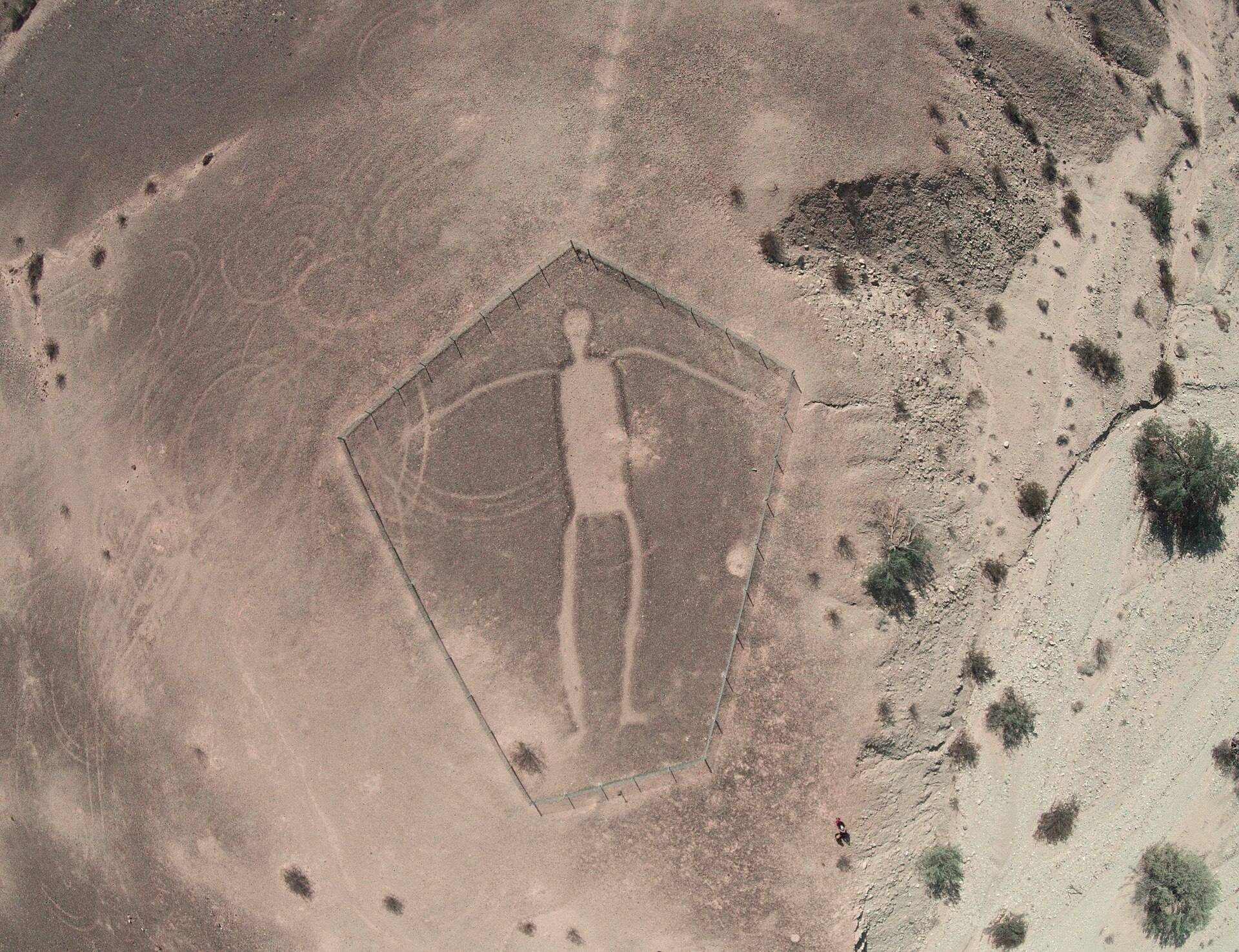
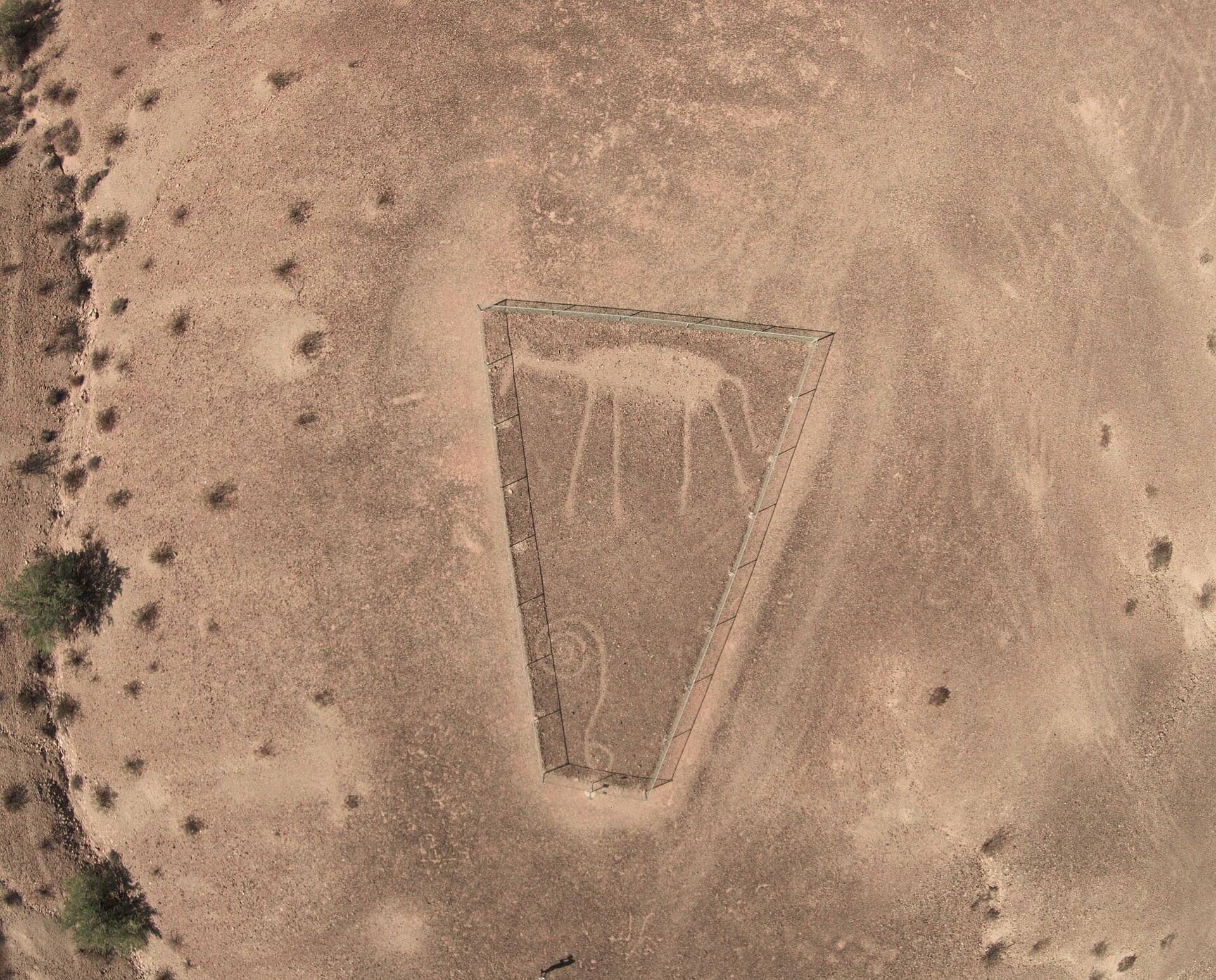
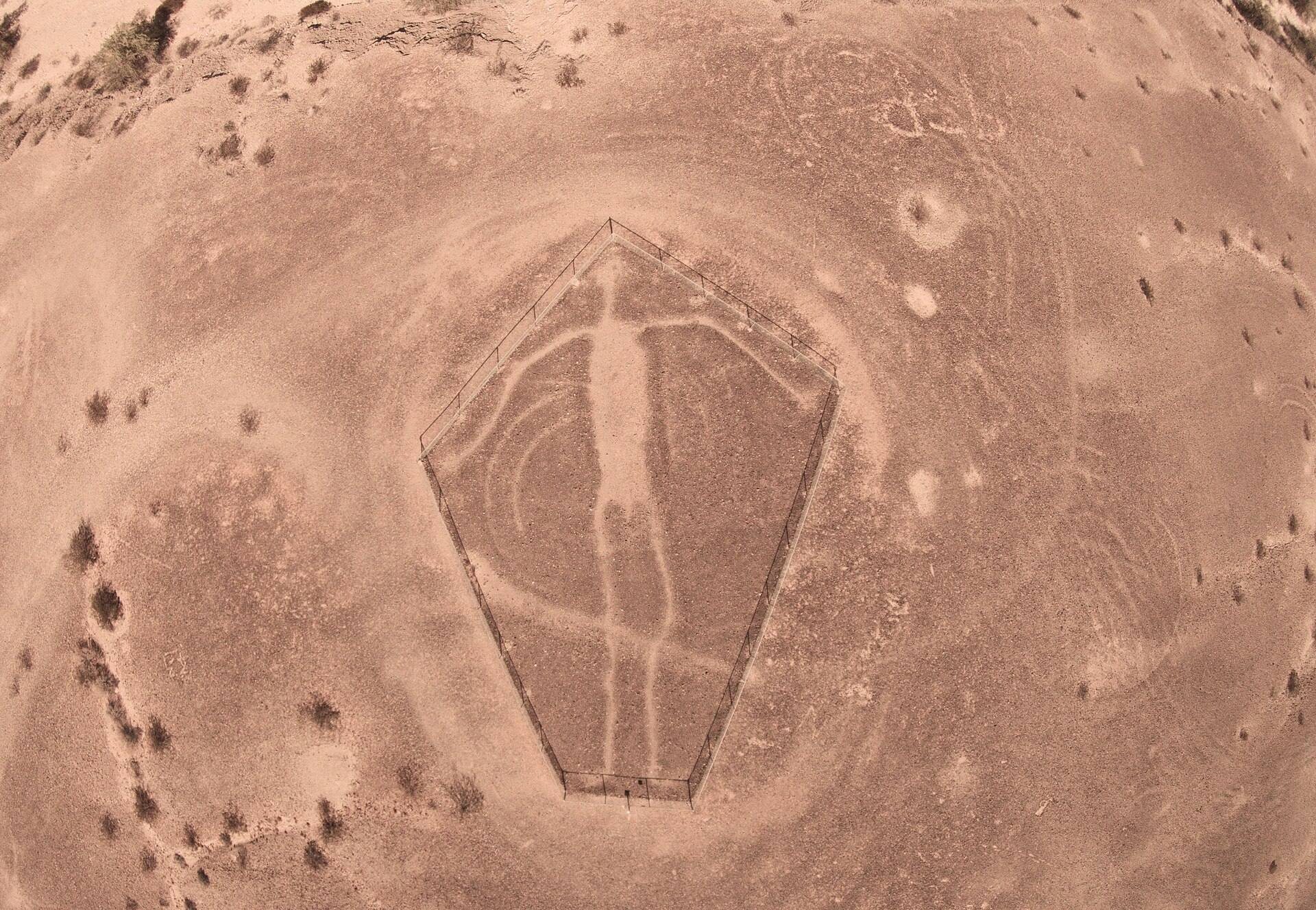
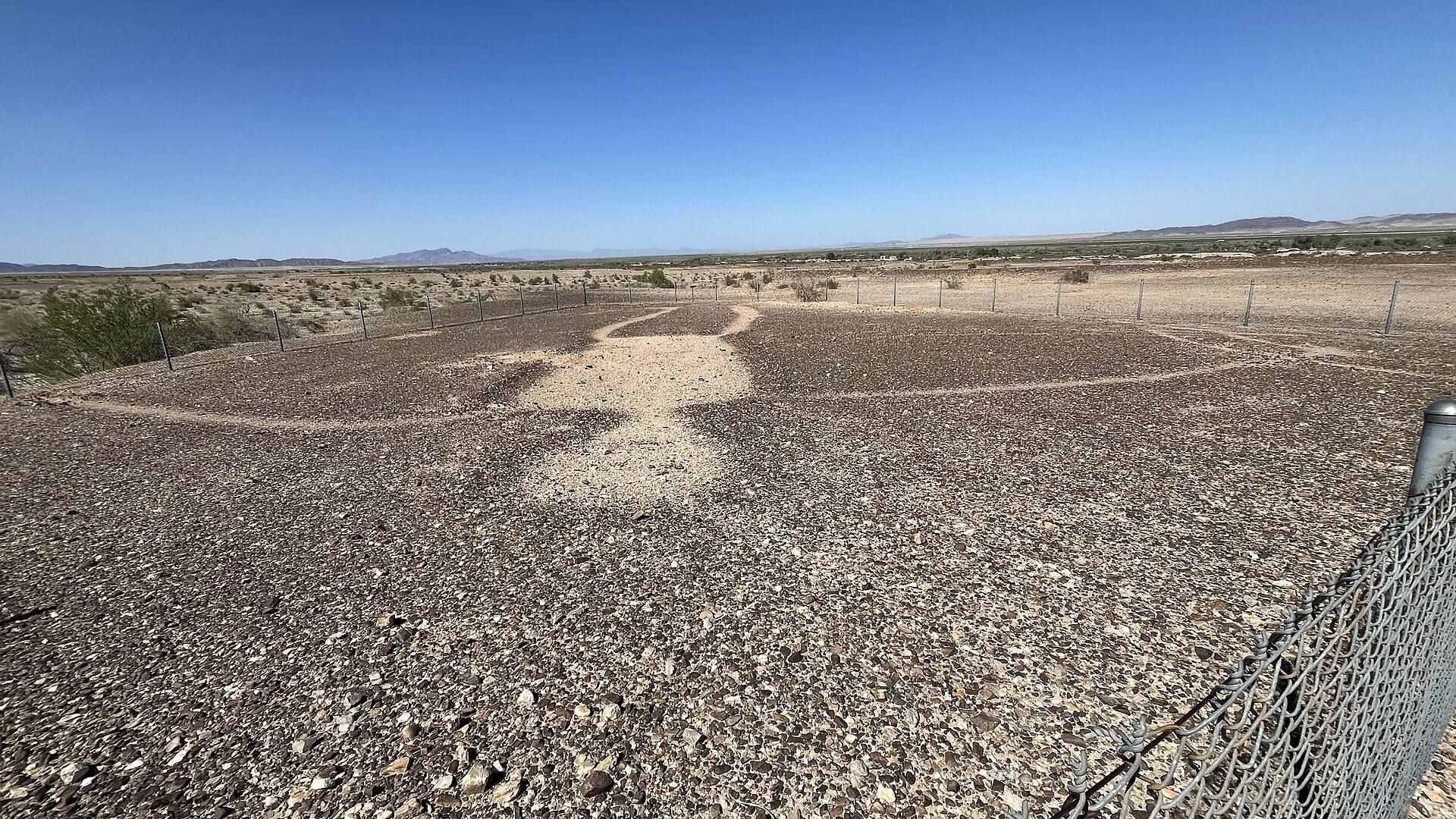
The intaglios are immense designs cut into flat terraces of the Colorado River floodplain, east of the Big Maria Mountains and near the river. An intaglio is a ground figure made by cutting or scraping into the surface rather than building material upward. The principal group contains three human figures, two four-legged animals, and a spiral. Harner reported two spirals in 1953. The Blythe group and nearby geoglyphs together contain several dozen figures.
Figure construction
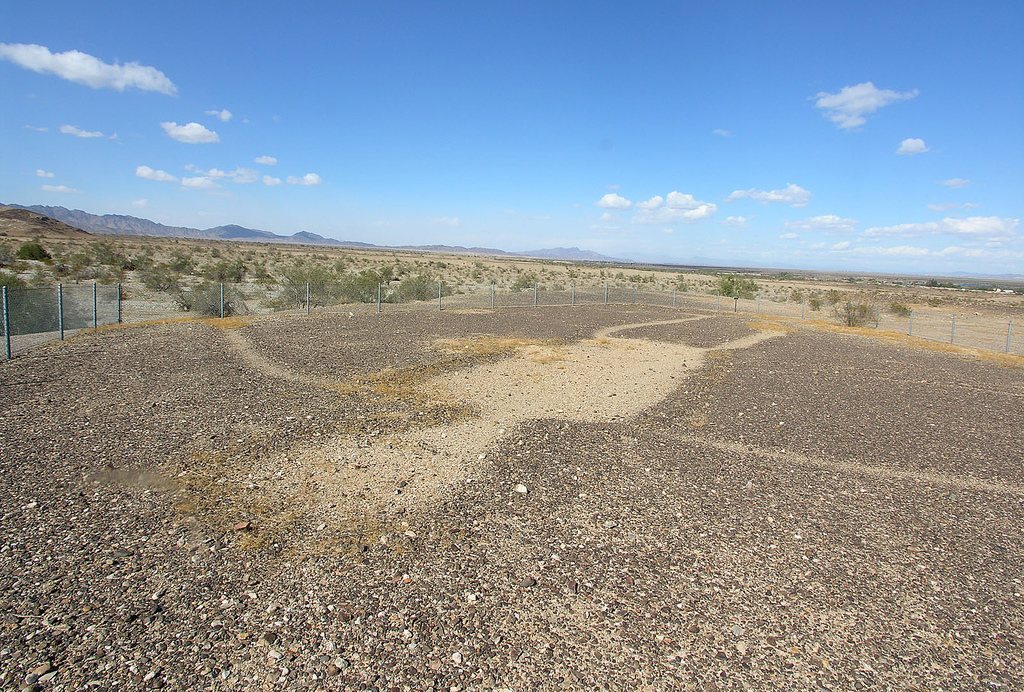
The makers formed the designs by scraping away darker surface rocks or pebbles to reveal lighter soil. Displaced material gathered along the scraped lines and helped outline each figure, while the exposed soil was stamped down, reducing plant growth along the cleared areas. The scale of the designs makes them difficult to comprehend from ground level, and aerial viewing provides the clearest view of their overall forms.
Human and animal figures
Human figures
The largest human figure measures approximately 171 feet, or 52 meters, in length, while the smallest measures approximately 95 feet, or 29 meters. Across the wider group of nearly sixty sites containing humanoid figures, torsos are generally deeply entrenched and limbs are more shallowly etched. The figures near Fort Mojave in Arizona include separate approximately 18-foot, or 5.5-meter, forms associated with Mastamho and Kataar, a name connected with another mythic figure in creation traditions.
Animal figures and spiral
One humanoid figure near a quadruped resembling a mountain lion measures approximately 65 to 80 feet, or 20 to 25 meters, in length. The principal Blythe group also includes another four-legged animal and a spiral, with a second spiral reported in the wider group in 1953. Chain-link fences surround several of the figures as part of their physical protection.