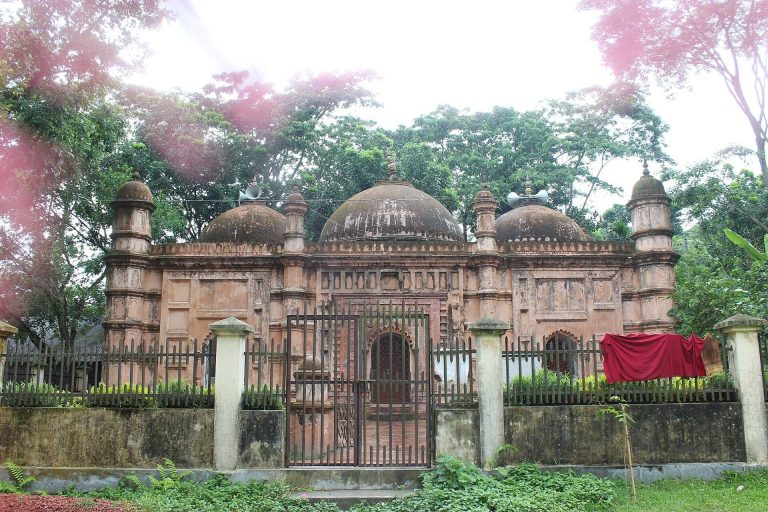
Bibi Chini Mosque: A Mughal-Era Mosque in Bangladesh
Site at a Glance
- Rating
- 4.4
- Popularity
- Low
- Country
- Bangladesh
- Primary era
- Early Modern
- Eras represented
- Early Modern
- Civilizations
- Mughal
- Site type
- Religious
- Remains
- Mosque
On this page6 sections
History
Mughal Foundation and Religious Tradition
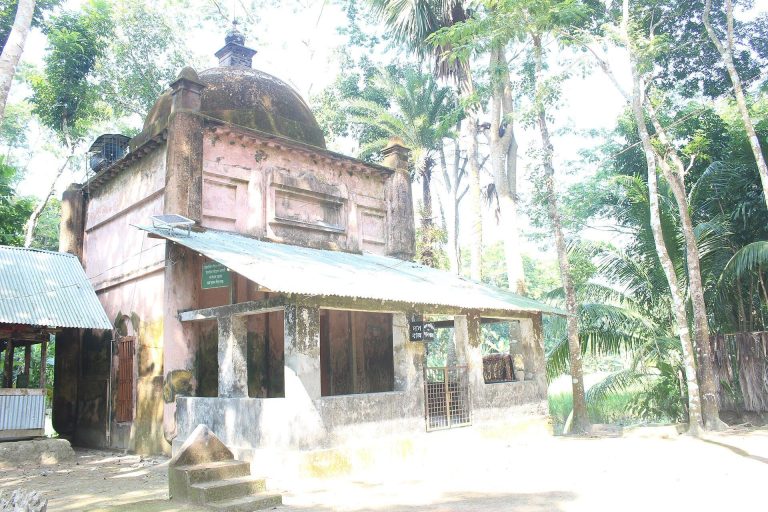
Bibi Chini Mosque is a Mughal-era Sunni mosque and archaeological site in Bibi Chini village, Betagi Upazila, Barguna District, Bangladesh. Its design belongs to the Mughal architectural tradition, which commonly used domes, arches, substantial masonry, and brick construction in religious buildings across Bengal.
Shah Neyamat Ullah, an Islamic preacher who had travelled from Persia to Delhi, reached the area in 1659 with several disciples. Shah Shuja, the son of Mughal emperor Shah Jahan and governor of Bengal and Odisha, became his disciple and asked him to establish a mosque at Bibi Chini. Local tradition says that Shah Neyamat Ullah travelled by boat from Delhi along the Ganges River and then the Bishkhali River before arriving at the village.
The village is said to have taken its name from Chini Bibi, also identified as Hayach Bibi Chini, one of Shah Neyamat Ullah’s daughters. The mosque later became known as Bibi Chini Mosque because of its location there. Shah Neyamat Ullah died in 1700 and was buried beside the building. Three nearby graves are traditionally identified as those of the preacher and his daughters, Chini Bibi and Isha Bibi.
Protection and Restoration
The Betagi Upazila administration carried out the mosque’s first renovation in 1985. In 1992, Bangladesh’s Department of Archaeology, the government body responsible for protecting the country’s archaeological heritage, assumed responsibility for its maintenance and renovation and listed the mosque as an archaeological site. The department undertook further restoration in 1993. The protected mosque is owned by the Department of Archaeology.
Remains
Mosque Building
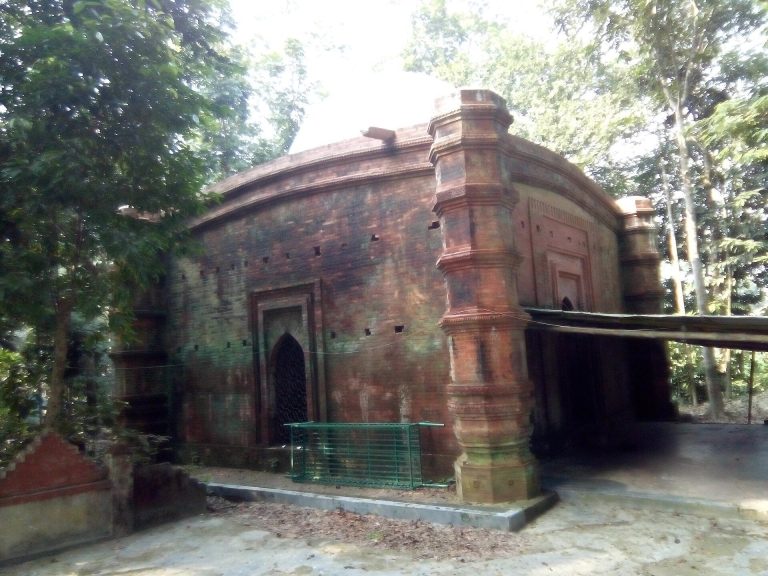
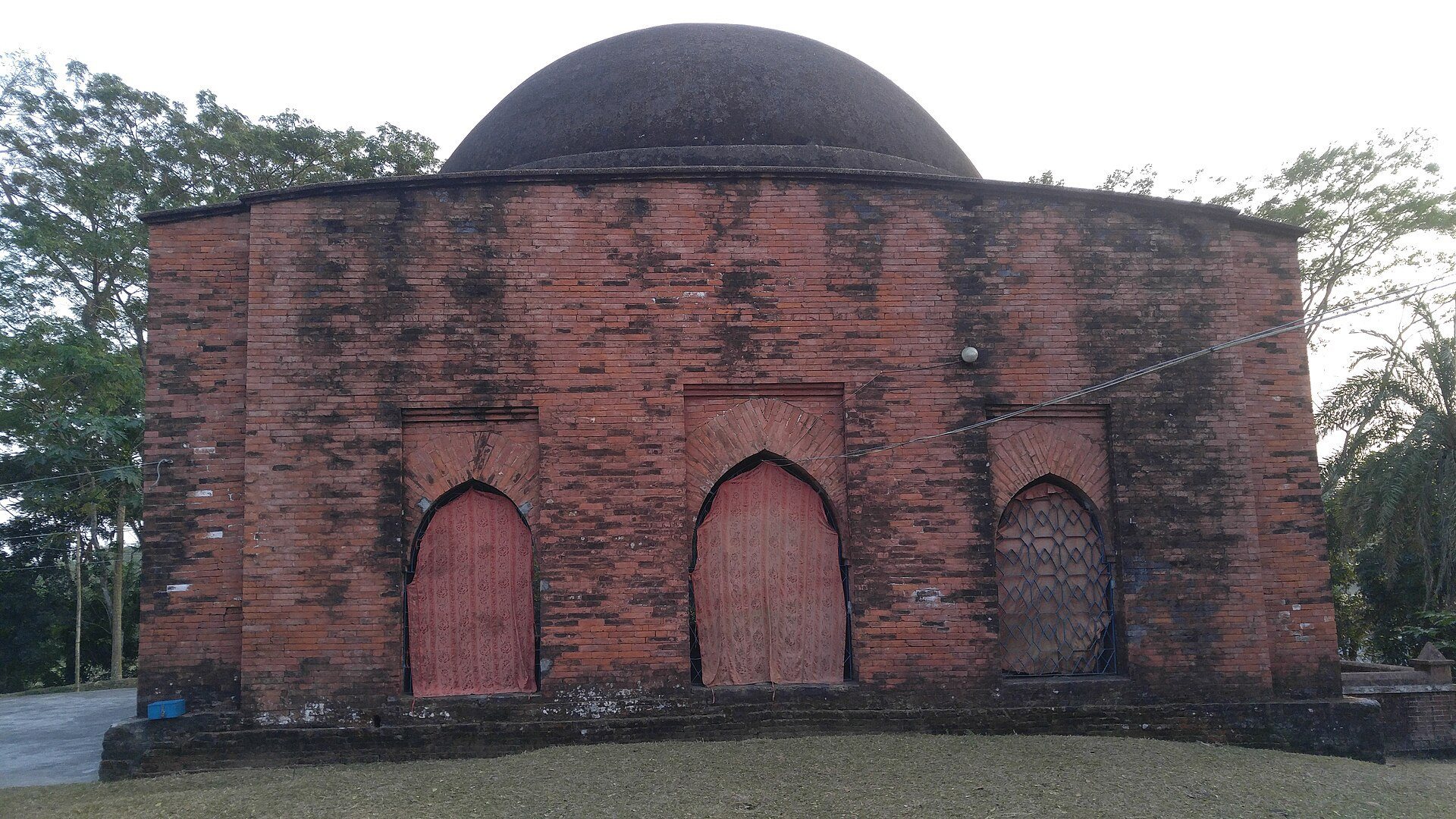
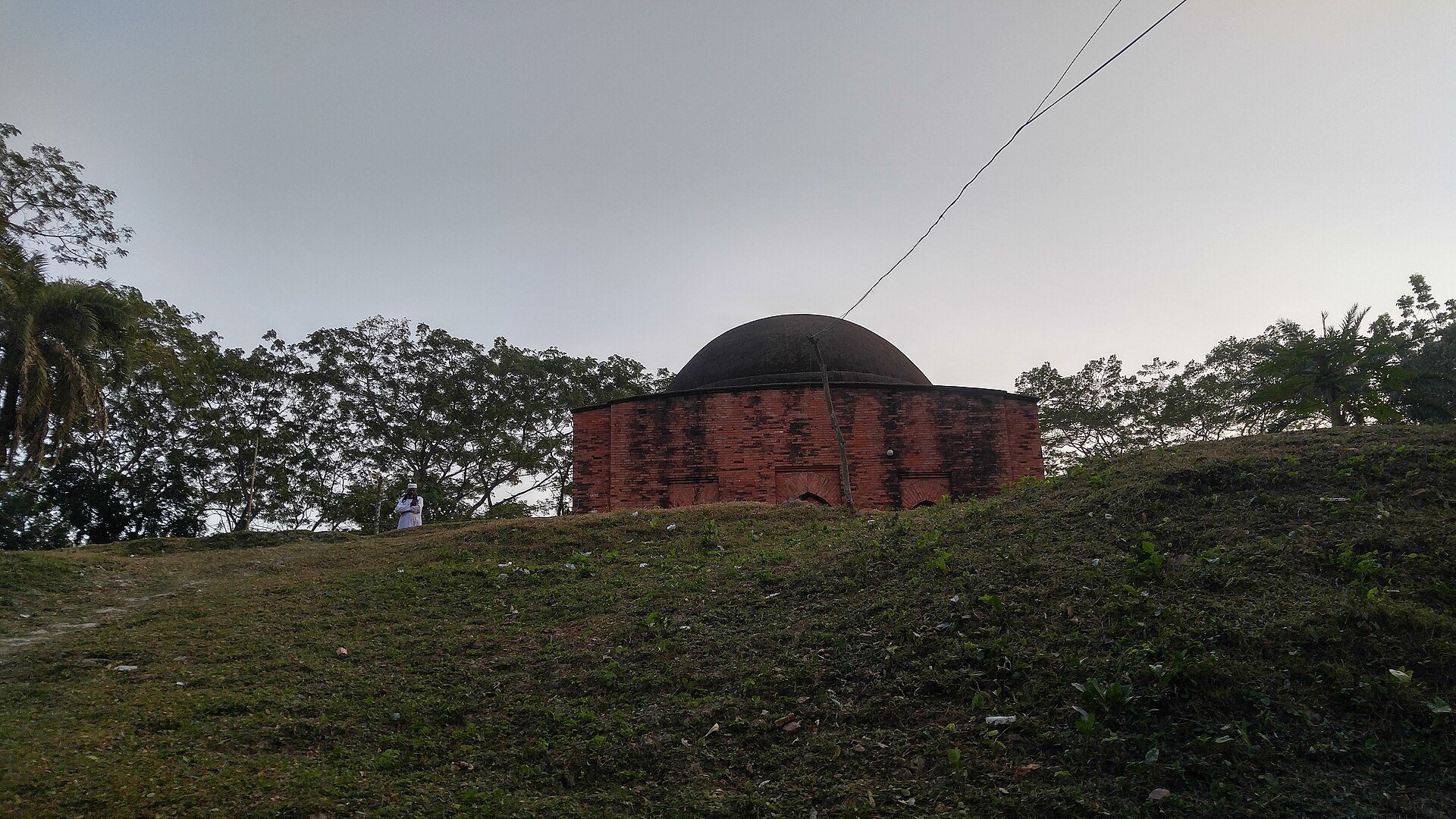
The mosque stands on a raised mound in Bibi Chini village and follows Mughal architectural design. It is a compact square building, measuring approximately 33 feet, or 10 metres, in both length and width. Its walls are about 6 feet, or 1.8 metres, thick, and the structure has a single dome and three entrances.
Arches are believed to have formed part of the mosque’s construction. Mughal-period bricks remain visible in the building and support its association with the Mughal period. The surviving masonry, thick walls, dome, and entrances give the small structure its principal architectural character.
Associated Graves
Three graves beside the mosque are linked by local tradition to Shah Neyamat Ullah and his daughters, Chini Bibi and Isha Bibi. Each grave measures approximately 40 to 45 feet in length. They remain part of the site’s historical setting but are close to disappearing.