Petroglyph Canyon: A Prehistoric Rock-Art Site in Montana
Site at a Glance
- Rating
- 4.6
- Popularity
- Very Low
- Country
- United States
- Primary era
- Stone Age
- Eras represented
- Stone Age
- Civilizations
- Unclassified
- Site type
- Civic
- Remains
- Rock Art
On this page7 sections
History
Discovery and Recognition
Petroglyph Canyon is an archaeological site in Montana, United States, extending across the Montana-Wyoming border. Although the canyon had appeared on maps since 1859, its small size kept it relatively obscure. An archaeological survey discovered its rock carvings in 1967, when the name Petroglyph Canyon came into use.
The name received official recognition in stages. The site was listed on the U.S. National Register of Historic Places on November 20, 1975, as an important archaeological site, and the Board on Geographic Names formally adopted the name in 1992. The National Register historic district covers 160 acres, or 65 hectares.
Archaeological Importance
The canyon drew substantial attention during the late twentieth century because of its numerous prehistoric petroglyphs. A petroglyph is an image or mark made by removing or abrading part of a rock surface. The artistic styles at Petroglyph Canyon resemble those of some distant sites more closely than those of nearby sites, giving the canyon importance for regional comparison and the study of population movement.
When the site was listed, modern vandalism had added new carvings and occasional digging had reached areas associated with stone-tool manufacture. These activities had not substantially reduced the canyon’s archaeological quality. Bureau of Land Management archaeologists hoped that further study would compare the site with other regional rock-art locations and help clarify the migration patterns of the people who created the carvings.
Remains
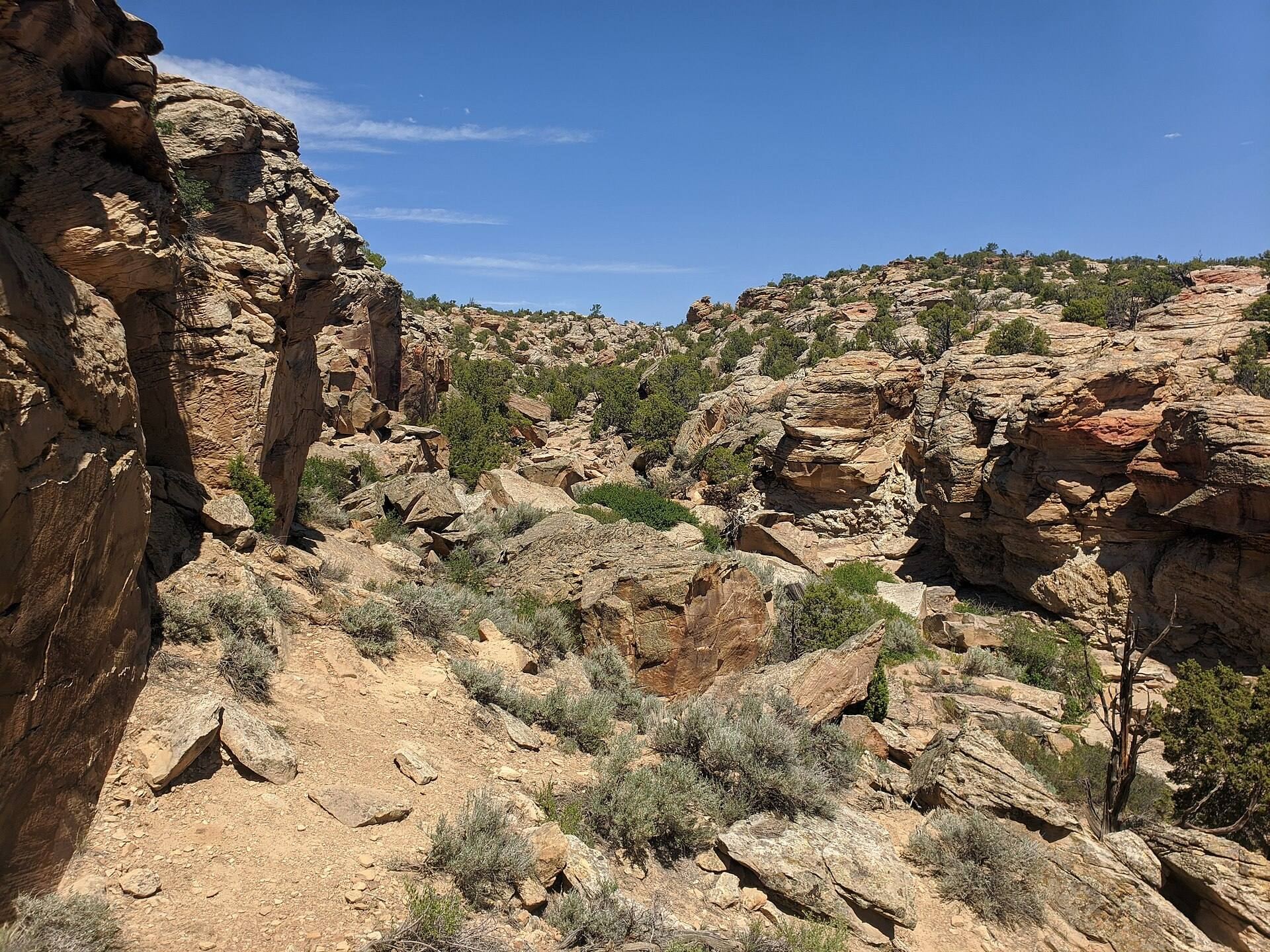
Petroglyph Canyon extends approximately 4 miles, or 6.4 kilometers, from northwest to southeast. It begins about 1 mile, or 1.6 kilometers, north of the principal rock-art area and continues roughly 2.5 miles, or 4.0 kilometers, into Big Horn County, Wyoming. Its most important portion lies in the southern half of Section 35, Township 9 South, Range 26 East, in southern Carbon County, Montana.
Canyon Setting and Rock Surfaces
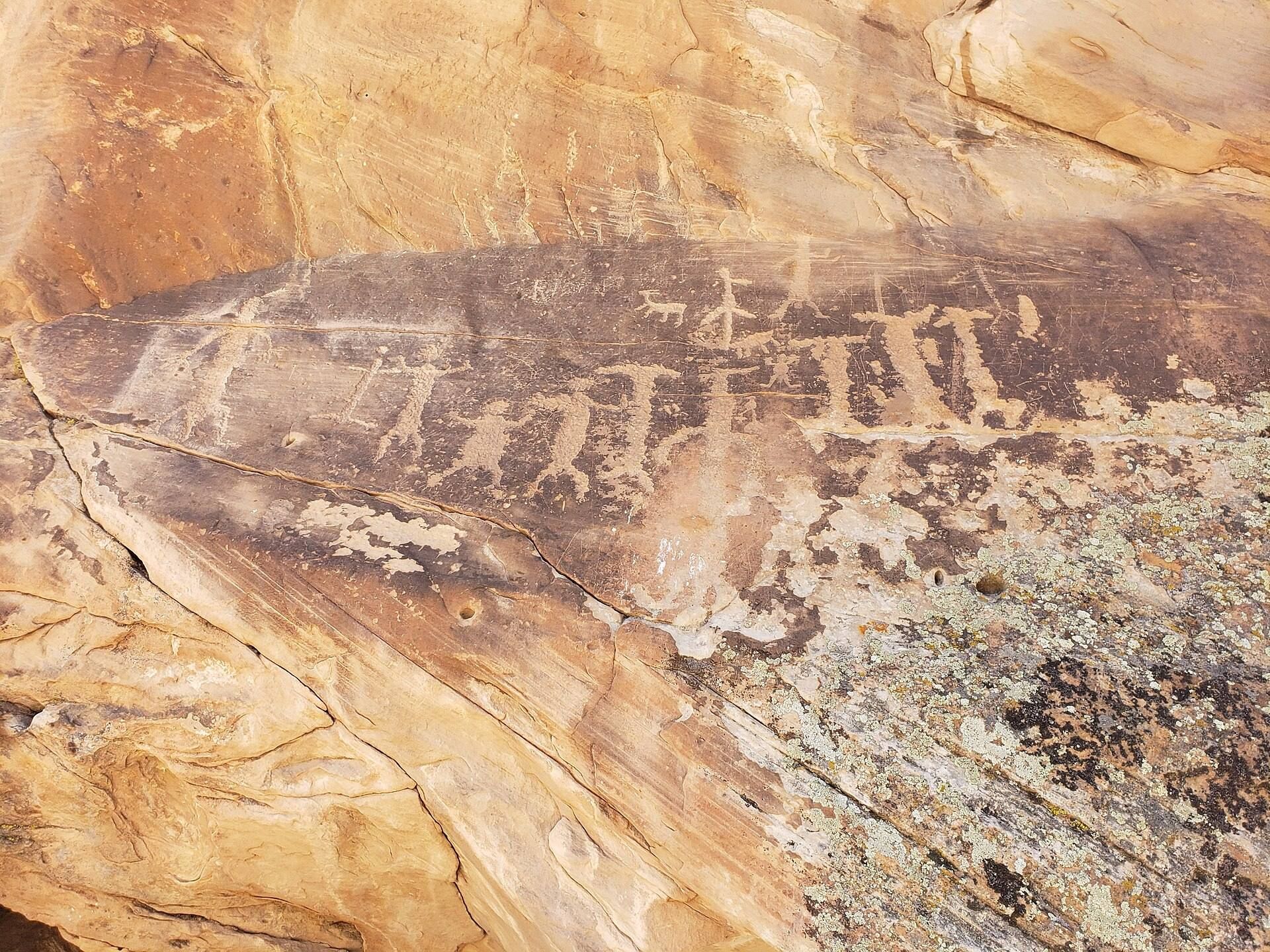
The canyon walls and boulders are primarily sandstone. Weathering has darkened their exposed surfaces to brown, while the stone beneath remains lighter tan. An approximately 800-foot-long, or 240-meter-long, area contains the main concentration of prehistoric carvings on both the canyon walls and large boulders.
Petroglyph Groups
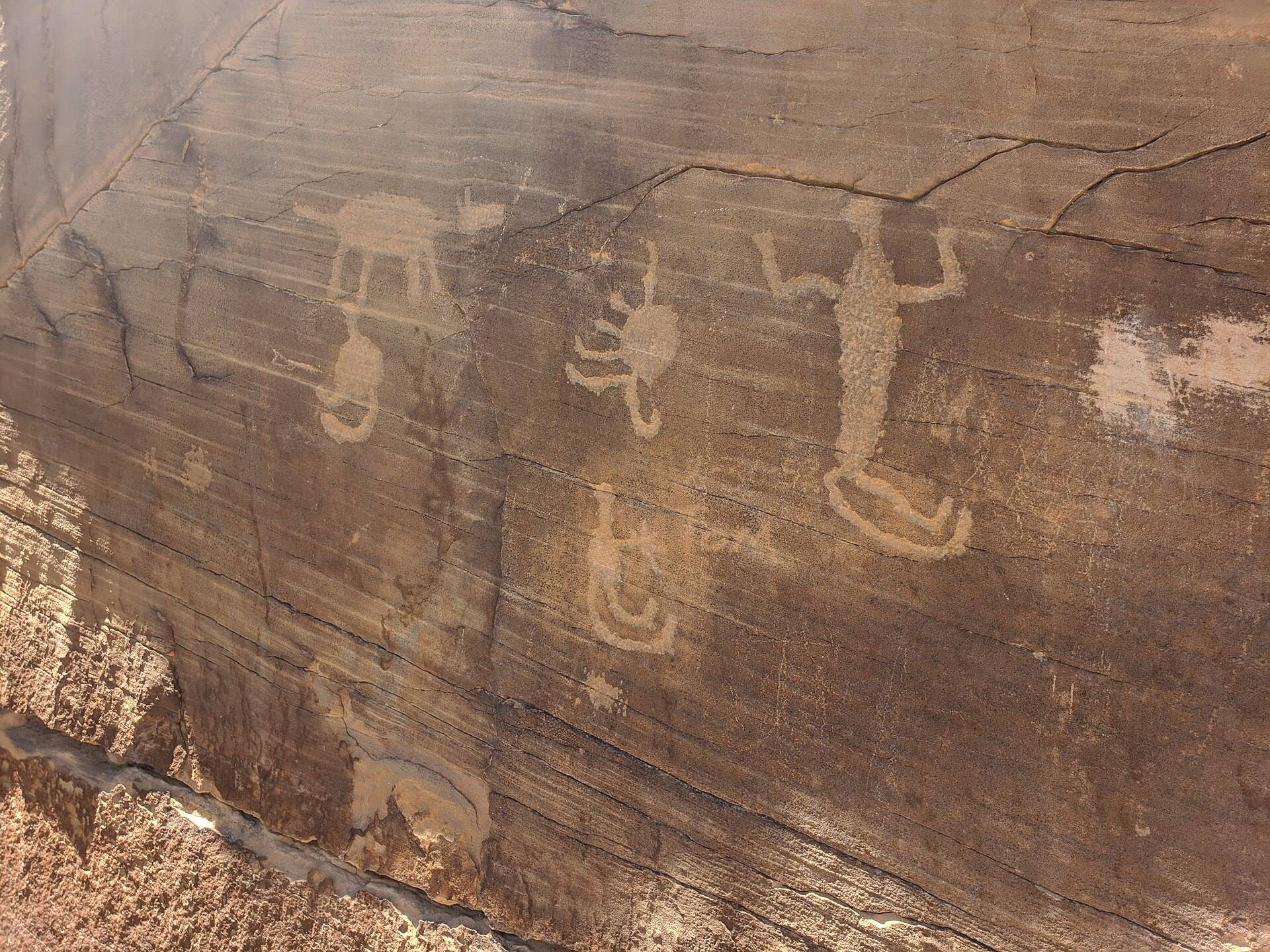
At least eighteen distinct groups of carvings are found within the principal area. Most were made by pecking, a method that creates many small pits by repeatedly striking the stone. One group consists of lines engraved directly into the rock. The principal designs show humans and large game animals, including bison and bighorn sheep. Some human figures can be identified as men or women, and many include sexual imagery such as phallic symbols and representations of external female genitalia.
Some older carvings have weathered until they share the dark color of the surrounding sandstone, while most show little erosion. A small number of much later vandal carvings, including personal names, were generally placed near the older designs rather than across them. The rock art is unusually varied for Montana, where pecked petroglyph sites are less common than in Wyoming or Utah. The canyon also retains less deterioration and a broader range of artwork than almost any other Montana rock-art site.
Archaeological Features
Hearths and small stone fragments occur with the rock art. The fragments were produced during the manufacture of stone tools, providing physical evidence of activities carried out in the canyon alongside the creation of the carvings.