Tomb of the Prophets Haggai, Zechariah and Malachi: An Ancient Burial Complex in Jerusalem
Site at a Glance
- Rating
- 4.5
- Popularity
- Low
- Country
- Israel
- Primary era
- Classical
- Eras represented
- Classical
- Civilizations
- Unclassified
- Site type
- Religious
- Remains
- Tomb
On this page11 sections
History
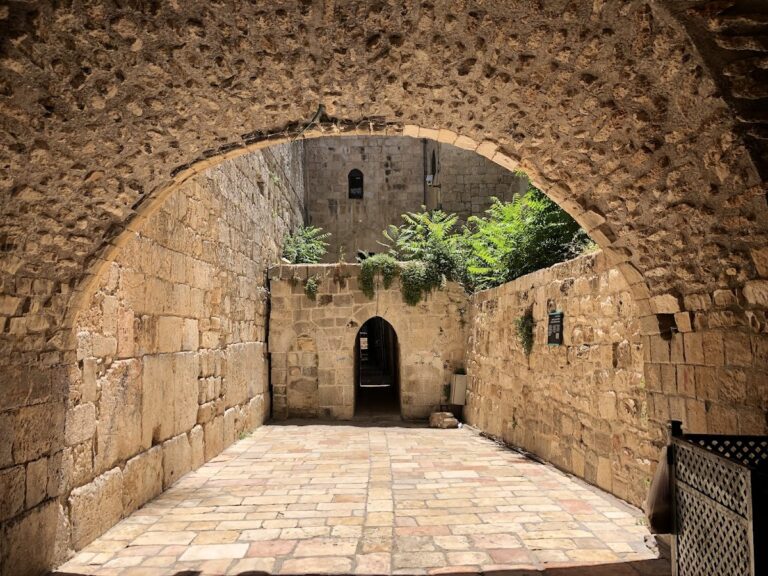
The Tomb of the Prophets Haggai, Zechariah and Malachi is an ancient burial complex on the upper western slope of the Mount of Olives in Jerusalem, Israel. It was created as a Jewish burial complex in the first century BCE, although a medieval tradition identifies it as the burial place of Haggai, Zechariah and Malachi, traditionally regarded as the last three prophets of the Hebrew Bible.
Jewish tradition and the early burial complex
The association between the cave and the three prophets developed over time. The earliest Jewish traditions connected it with Haggai alone, while Malachi and then Zechariah were added in later accounts. The prophets are traditionally believed to have lived in the sixth and fifth centuries BCE, but the three earliest burial chambers date to the first century BCE, when this type of Jewish tomb was in use. The traditional identification therefore belongs to religious tradition rather than verified archaeological attribution.
Jews venerated and visited the site from the Middle Ages onward. Christians later adopted the same identification, linking the cave with the prophets mentioned in the New Testament passage concerning the “tombs of the prophets.”
Christian reuse and investigation
The burial complex was reused during the fourth and fifth centuries CE for the burial of foreign Christian pilgrims. Greek inscriptions associated with these burials preserve evidence of this later Christian use. Hebrew and Greek inscriptions were found during an investigation carried out between 1870 and 1874 by the French archaeologist Charles Simon Clermont-Ganneau.
Ownership disputes and access
In 1882, the Russian Orthodox archimandrite Antonin Kapustin acquired the cave from an Arab farmer for the Russian Orthodox Church and planned to build a church there. Jewish worshippers protested, and the Ottoman authorities refused to approve the transaction in August 1884. The Russians acquired the cave and surrounding fields again in early 1890. In March of that year, an Ottoman sharia court, an Islamic court applying Islamic law, ruled that the transaction concerning the surrounding property was valid, but that the cave itself belonged to the Jews. The ruling also required the surrounding landowners to provide Jewish worshippers with a passage to the cave.
The Russian side was later allowed to build a fence around the cave on the condition that it remain continuously open. Permission to install doors at the entrance followed in 1892. The Jerusalem pasha initially supported the Jewish position and destroyed the doors, but an imperial order issued in July 1892 authorized their installation. Russian authorities agreed not to place Christian symbols in the cave and to keep it accessible to worshippers of all faiths. The cave remained open to visitors of different faiths, although several icons were installed inside.
Jewish access was restricted during parts of the twentieth century. In 1926, the cave was described as having fallen into foreign hands with its doors closed to Jews, and in 1943 visitors reportedly had to approach through the Russian monastery. After the Six-Day War, church administrators announced the reopening of the cave to Jewish visitors in November 1967. The property is associated with the Russian Orthodox Church and is currently held by a local family living on the site. The complex remains identified as a burial chamber, with access arranged through an on-site caretaker.
Remains
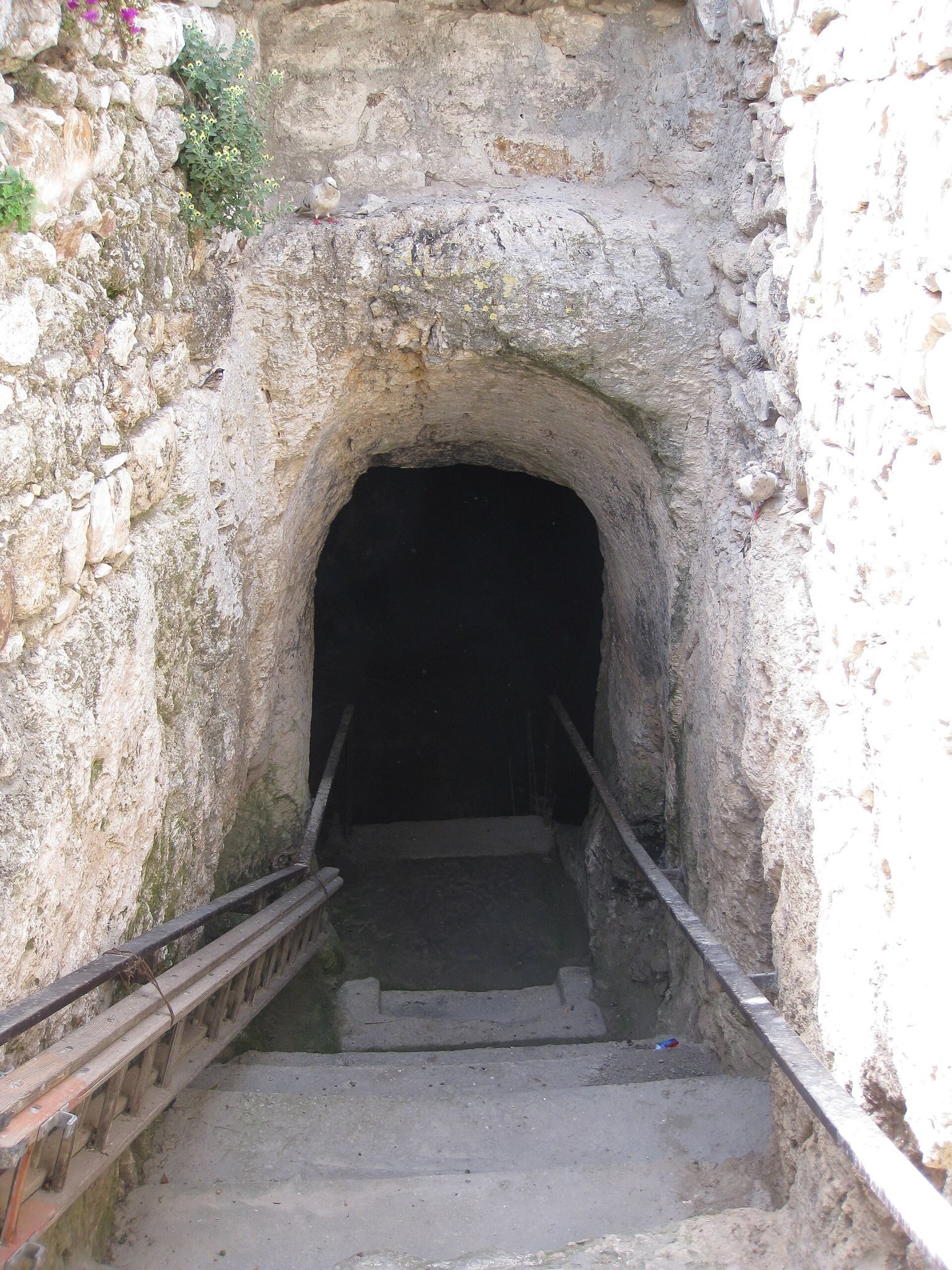
The Tomb of the Prophets is a rock-cut catacomb, an underground burial complex made up of connected passages, chambers, and burial niches. Two concentric passages organize the interior, with a western entrance reached by a descending stone staircase flanked by stone balustrades. The staircase leads into a large circular central vault, from which the tunnels and outer gallery extend through the rock.
Central vault and passages
Central vault
The central vault is approximately 24 feet, or 7.3 metres, in diameter. It has a high ceiling and a lighting opening. Its circular form provides the principal interior space from which the connected burial passages are reached.
Tunnels and galleries
Two parallel tunnels extend from the central vault. Each is approximately 5 feet, or 1.5 metres, wide and 10 feet, or 3 metres, high, and each runs for about 20 yards, or 18 metres. A third tunnel extends in another direction. Cross galleries connect the tunnels, while the outer gallery measures approximately 40 yards, or 37 metres, in length.
Burial niches and inscriptions
Burial niches
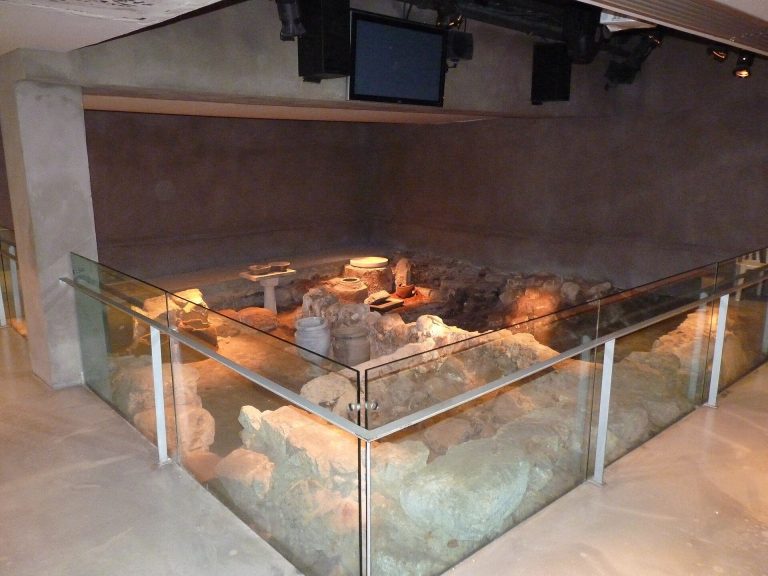
Twenty-six burial niches are cut into the wall of the outer circular passage. Two small rooms beside the outer passage contain further niches, bringing the stated total to 38. These spaces held coffins or sarcophagi and form the main surviving evidence of the complex’s burial function.
Greek and Hebrew inscriptions
The cave preserves Greek and Hebrew inscriptions. One Greek text is translated as, “Put your faith in God, Dometila: No human creature is immortal.” Another identifies a deceased person and includes the statement, “No human being is immortal.” Together with the Greek inscriptions associated with fourth- and fifth-century Christian burials, these texts preserve evidence of the complex’s later reuse by foreign Christian pilgrims.