Vettuvan Koil: An 8th-Century Pandyan Monolithic Shiva Temple
Site at a Glance
- Rating
- 4.7
- Popularity
- Low
- Country
- India
- Primary era
- Medieval
- Eras represented
- Medieval
- Civilizations
- Unclassified
- Site type
- Religious
- Remains
- Temple
On this page8 sections
History
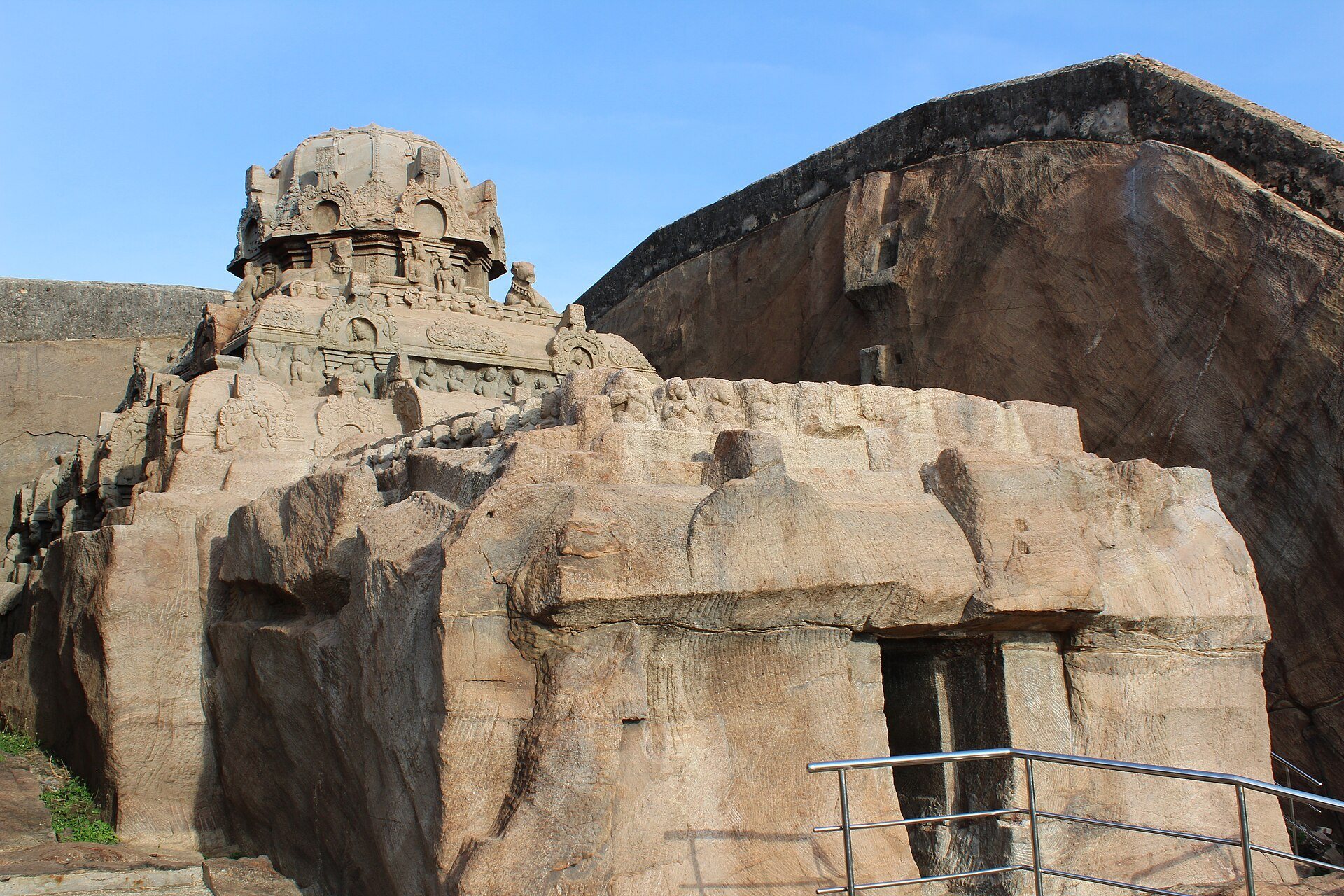
Vettuvan Koil is a Hindu temple dedicated to Shiva at Kalugumalai in Tamil Nadu, India. Early Pandyan rulers built it during the 8th century, possibly around AD 800, and its carvings belong to the artistic tradition of the early Pandyan kingdom in southern India. The temple is associated with the patronage of Parantaka Nedumchadaiyan and is regarded as the only known Pandyan-era temple carved three-dimensionally from the top of a hillock while remaining in its original rock.
Early Pandyan construction
The temple was created during the same general period as the Jain Beds elsewhere on Kalugumalai. The early Pandyans built numerous cave and stone temples, but Vettuvan Koil used a distinct method: workers carved downward from the surface of a granite outcrop to form a temple from one continuous mass of natural rock. The work stopped before the lower part of the structure was completed, leaving the monument as an unfinished example of 8th-century Pandyan temple building.
Legend of the unfinished temple
Local tradition explains the incomplete work through a contest between a father and son who were both sculptors. The father worked on Vettuvan Koil, while his son carved a nearby temple dedicated to Skanda, the warrior deity also known as Murugan and a son of Shiva and Uma. According to the legend, the father killed his son after the son predicted that Vettuvan Koil would never be finished. This story belongs to local tradition rather than the temple’s securely established historical sequence.
Interpretation and protection
The temple’s architecture has been compared with the Virupaksha Temple at Pattadakal, the Kailasanathar Temple at Kanchipuram, and the Kailasa Temple at Ellora. Some historians have interpreted these similarities as evidence of political connections among the Pallavas, Rashtrakutas, and Chalukyas, three major South Indian ruling dynasties of the early medieval period. That interpretation has been disputed. Vettuvan Koil is maintained and administered by the Department of Archaeology of the Government of Tamil Nadu as a protected monument.
Remains
Vettuvan Koil occupies a rectangular excavation approximately 7.5 metres deep on the eastern side of the Kalugumalai summit. The monument was cut into a single granite outcrop, and the surviving work consists mainly of the upper portion of a temple, with a superstructure above the inner shrine. Its lower part remains unfinished. The rock outcrop resembles a blooming lotus, while hills surround it on three sides. The temple faces east and overlooks that direction, although its approach and walking path lie on the western side, where they are shared with the route to the Jain Beds.
Excavated temple form
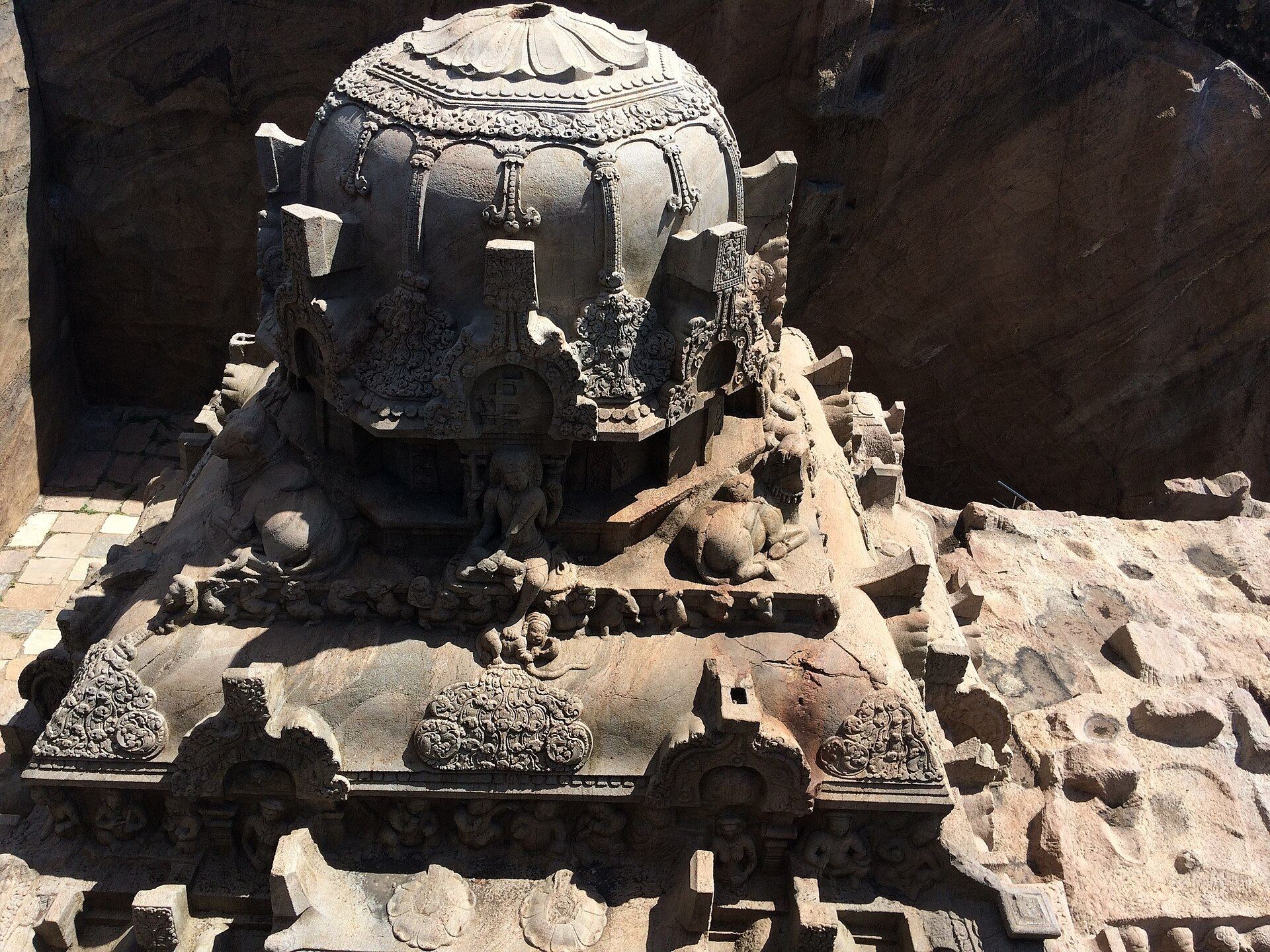
The temple is reached by descending to a lower level, about 10 feet below the surrounding surface at one approach. Its upper structure represents a small temple with an inner sanctum, the chamber containing the principal sacred image, and a vimana, the superstructure rising above it. The builders carved downward into the pre-existing rock rather than assembling the temple from separate blocks. A Ganesha image is now placed in the sanctum, while unfinished areas preserve the incomplete state of the work.
Carved deities and living forms
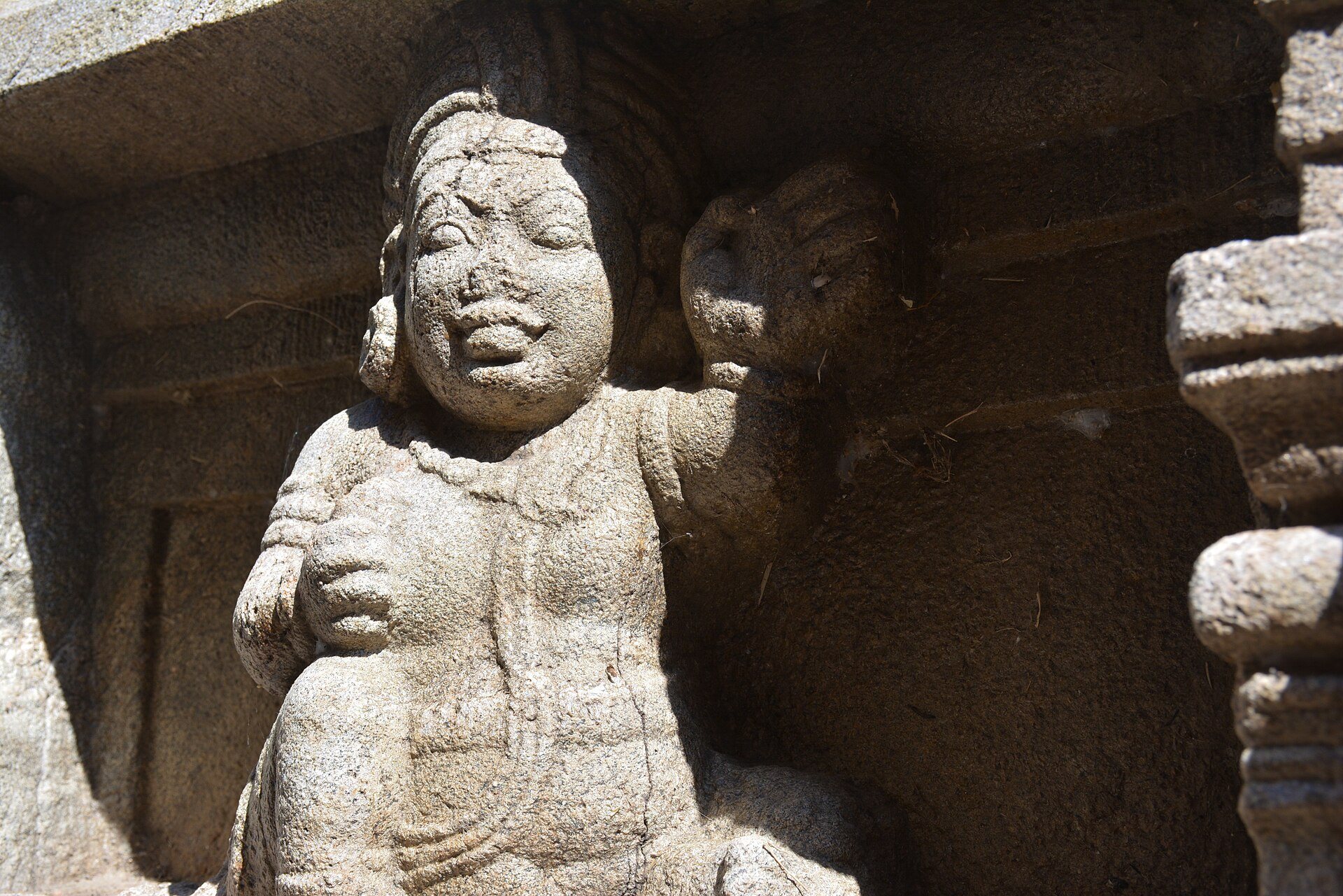
The vimana contains niches filled with figures associated with Shiva, including his attendant ganas, Nandi the sacred bull, dancers, lions, monkeys, and other animals. Dakshinamurthy, a form of Shiva regarded as a spiritual teacher, appears playing a mridanga, a double-headed South Indian drum, rather than the veena often associated with his representations elsewhere. Shiva is also shown with Uma, his consort, in a scene whose natural movement suggests conversation between ordinary people. Brahma, Vishnu, divine maidens, and supernatural bhuta ganas add to the sculptural program.
Style and unfinished carving
The sculptures are lively and naturalistic, with particular attention to human movement. Some figures remain incomplete, allowing the unfinished condition of the temple to be seen within its sculptural decoration. The carvings and their treatment of deities, attendants, animals, and dancers are characteristic of 8th-century Pandyan art. Together, the surviving upper structure and the figures cut into its granite surface show both the intended form of the temple and the work that remained unfinished.