Shuidonggou: An Early Paleolithic Archaeological Complex in China
Site at a Glance
- Rating
- 4.2
- Popularity
- Very Low
- Country
- China
- Primary era
- Stone Age
- External website
- Open
- Eras represented
- Stone Age
- Civilizations
- Unclassified
- Site type
- Domestic
On this page10 sections
History
Shuidonggou is an open-air Paleolithic archaeological complex near Lingwu in Ningxia, China, where early human groups lived during the Late Pleistocene, the Ice Age epoch preceding the Holocene. Occupation lasted approximately 43,000 to 12,000 years before the present, a convention that uses AD 1950 as its reference point. The site is one of the earliest Paleolithic sites discovered and excavated in China and has played an important role in the study of early human activity in East Asia.
Discovery and early excavations
In 1920, a missionary found a woolly-rhinoceros skull fossil and a quartzite flake bearing clear signs of human striking on a cliff east of Shuidonggou. French paleontologists Émile Licent and Pierre Teilhard de Chardin excavated the area for twelve days in 1923. They identified five Paleolithic localities and recovered many stone artifacts together with a small number of animal fossils. Alongside discoveries from the Salawusu site, these finds provided the first evidence that Paleolithic sites existed in China. Early researchers associated the remains with the Ordos, or Hetao, culture, an archaeological tradition identified with the Ordos region and the bend of the Yellow River.
Chronology and continuing investigation
The occupation is broadly placed within the Late Pleistocene and the initial Late Paleolithic, the later phase of the Paleolithic period, which is associated with early societies that relied primarily on chipped-stone technology. Archaeological dating has also placed activity between approximately 40,000 and 15,000 years ago, while later excavations extended the known duration of human presence. Levallois flaking, a prepared-core method for producing flakes of planned form, and volumetric blade production, which uses a shaped three-dimensional core to make elongated blades, occurred between approximately 43,000 and 25,000 years before the present.
Research continued through successive excavation campaigns. A joint Chinese-Soviet paleontological expedition worked at Site 1 in 1960, and Pei Wenzhong led a systematic re-examination there in 1963 that clarified the site’s stratigraphic relationships. A joint team from the Ningxia Museum and the regional geological survey excavated again from 4 September to 11 October 1980. Investigations in 2002 and 2003 identified almost twenty additional archaeological features.
The fifth formal excavation took place at Site 2 in 2003 to 2005 and again in 2007, with smaller excavations at Sites 7 and 8. More than six human activity layers were identified, substantially lengthening the known chronology. Sites 3, 4, and 5 received limited protective excavation in 2004, while emergency excavations at Site 12 took place in 2007 and 2010 because of planned reservoir construction. The sixth excavation, held from 10 June to 10 July 2014, brought together specialists from Chinese research institutions, doctoral students from Peking University, foreign scientists, and other Paleolithic researchers.
Protection and archaeological importance
Shuidonggou was designated a Major Nationally Protected Cultural Heritage Site in 1988. A site research institute and a Ningxia field station of the Institute of Vertebrate Paleontology and Paleoanthropology were established there in 2008 to support excavation and conservation. Sustained work by Chinese and foreign scholars has made the complex an important place for investigating early Paleolithic archaeology in East Asia.
Remains
Landscape and deposits
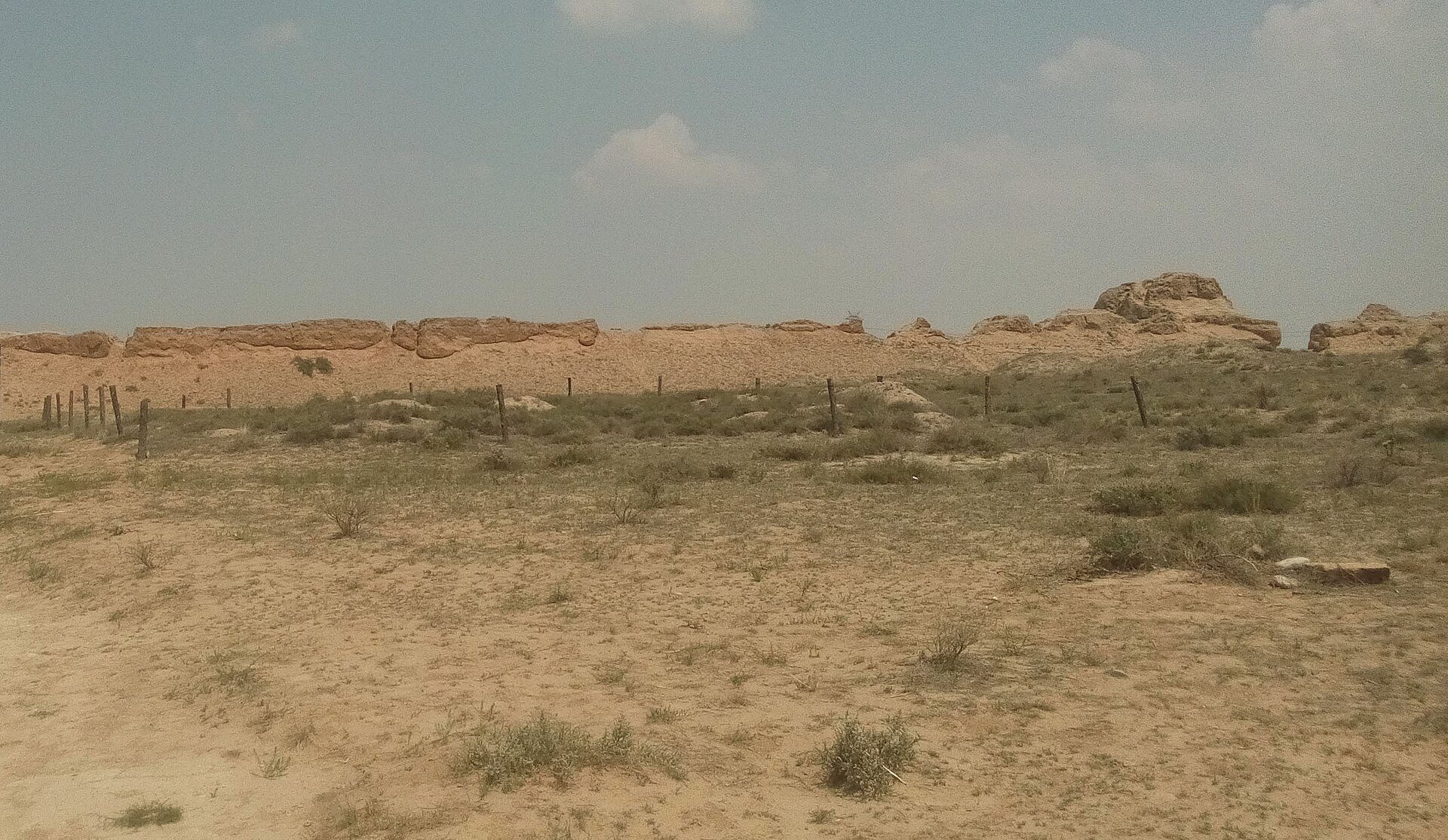
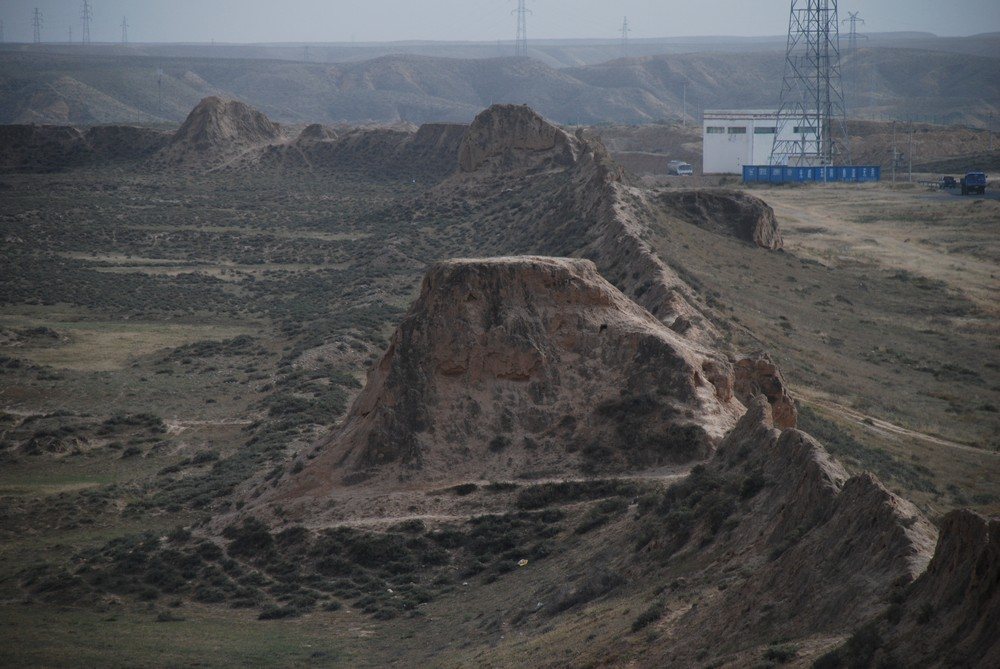
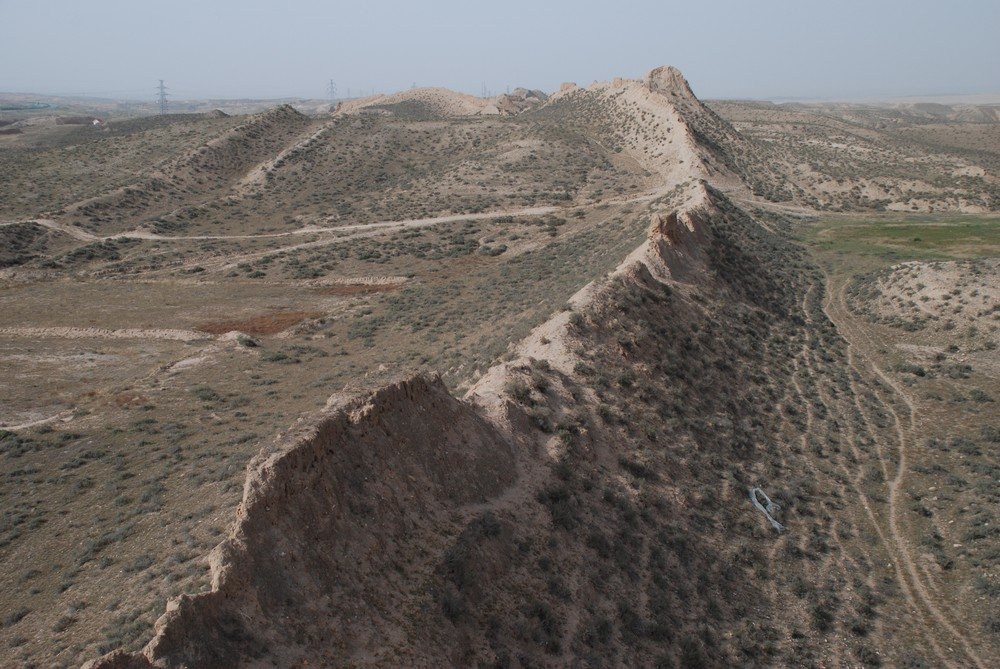
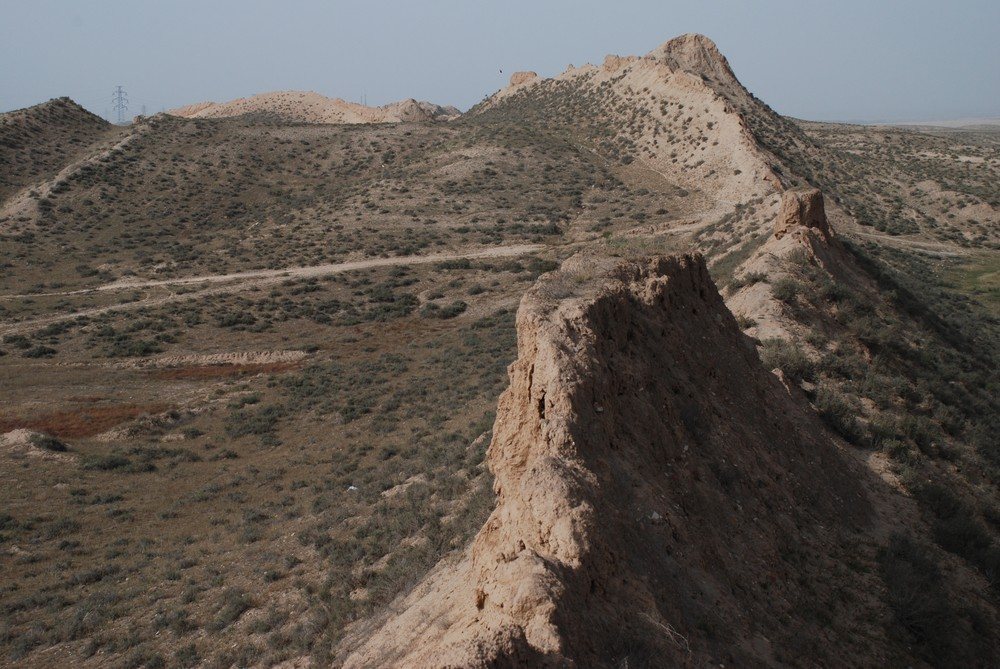
Shuidonggou consists of approximately twelve open-air localities near the Yellow River, at elevations of about 1,240 to 1,300 metres. The complex lies on the southwestern edge of the Ordos Plateau, close to a ruined section of the Great Wall, and extends across Ningxia and the adjacent part of Inner Mongolia. It occupies a small depression formed in Tertiary red clay containing three-toed-horse fossils. The depression is filled with 10 to 20 metres of Late Pleistocene and Holocene river and lake deposits, including gravel, sand, silt, mud, and wind-blown loess.
A stream runs from southeast to northwest through the loose deposits before reaching the Yellow River. A marginal river channel following the direction of the Ming-period Great Wall divides the complex into northern and southern parts. By 2010, twelve localities had been excavated along the Great Wall. Cultural material generally occurs in a greyish-yellow, loess-like silty layer above the basal gravel.
Stratified occupation at Site 2
Site 2 preserves a sequence of at least seventeen layers when the modern surface soil is included. The fourth layer contained the first Late Paleolithic cultural layer, while six more Late Paleolithic layers lay beneath layers six through sixteen. The numbering of the upper cultural layer varies where surface soil was counted differently. The 1980 excavation of the fourth layer recovered more than 5,500 stone artifacts, mainly large cores and flakes with smaller tools. The layers below it produced more than 1,100 further artifacts, including more than 200 tools.
Excavations at Site 2 from 2003 to 2005 recovered 7,815 stone artifacts, 74 ring-shaped ornaments, 746 animal bones and bone artifacts, and a small quantity of fragmentary animal fossils. Sites 2, 8, and 12 preserve relatively intact traces of human fire use. Many rocks were cracked by heat, and numerous heat-treated specimens were recovered, linking the deposits to repeated use of fire.
Tools and raw materials
The assemblages contain pointed implements, end scrapers, crescent-shaped side implements, notched tools, single- and double-edged side scrapers, burins, and drills. Scrapers and side scrapers are particularly numerous. The principal raw material was siliceous limestone collected from local river gravels, followed by quartzite and flint, with small amounts of agate. Layer four contained several disc-shaped chopping tools bearing clear water-worn traces. Layer 7 produced many blades and other flaked tools, as well as a polished stone axe and part of a stone grinding slab.
Site 1 included a trench approximately 6 metres square and 11 metres deep, excavated during the 1960 campaign. The exposed area from the first four excavation campaigns exceeded 100 square metres. Together, the trenches and stratified deposits preserve a long sequence of stone working and human activity within the depression.
Other localities and animal remains
Site 7 produced 5,209 stone artifacts, 80 animal bones and teeth, and one ornament resembling those from Site 2. Site 8 produced 801 specimens. The 2004 excavation at Site 3 recovered five surface-collected stone artifacts, 227 ostrich-eggshell fossils, 28 artifacts from a lower cultural layer, including three cores, and 27 artifacts from an upper cultural layer. Site 4 yielded 826 stone artifacts, while Site 5 produced 42 stone artifacts and two ostrich-eggshell fragments.
Animal remains include woolly rhinoceros, hyena, wild horse, wild ass or onager, antelope, bovids, and gazelle. Ostrich-eggshell remains and equid bones are especially prominent, while the fossils of woolly rhinoceros, hyena, bovids, and gazelle are less common and generally fragmented. A bone awl and an ostrich-eggshell ornament were also recovered.
Processed bones and changing subsistence
Site 12 contained large quantities of deliberately processed animal bones, especially rabbit and bird remains. These deposits have been interpreted as evidence of a broad-spectrum subsistence revolution, meaning a wider use of animal and other food resources instead of reliance on a narrower range of prey. The combination of processed bones, stone tools, hearth traces, and heat-affected rocks provides evidence for varied activities across the Shuidonggou complex.