Fort Mitchell Historic Site: A United States Military Outpost and Creek Agency
Site at a Glance
- Rating
- 4.8
- Popularity
- Very Low
- Country
- United States
- Primary era
- Modern
- External website
- Open
- Eras represented
- Modern
- Civilizations
- Unclassified
- Site type
- Military
- Remains
- Fort
On this page10 sections
History
Fort Mitchell Historic Site is a former United States military outpost in Fort Mitchell, Alabama, United States, built in 1813 during the Creek War and the War of 1812. Named for David Brydie Mitchell, then governor of Georgia, the fort represented the military expansion of the United States into Creek territory.
The Creek War and territorial cession
The Creek, also called the Muscogee, were an Indigenous confederacy whose communities occupied parts of the southeastern United States. The Red Sticks, a Creek faction that resisted accommodation with the United States and opposed American expansion, formed the majority of the Creek population during the conflict. After the United States defeated them, the Creek were compelled in 1814 to cede 21 million acres in Georgia and Alabama. The cession affected both the Lower and Upper Towns.
Trading post and Indian agency
From 1817 until about 1820, Fort Mitchell operated as an Indian Factory, a government trading post intended to regulate commerce between the United States and Indigenous nations. An assistant United States Indian agent staffed the operation after it was transferred from Fort Hawkins in Georgia. A post office also functioned at the fort from 1818 to 1820.
In 1821, John Crowell became the United States Indian agent to the Creek, replacing David Brydie Mitchell, who had been forced out after a scandal involving the illegal smuggling of enslaved Africans. Crowell’s brothers Thomas and Henry joined him in establishing the agency. By 1825, Thomas Crowell was operating a tavern near the fort.
Rebuilding, garrison, and removal
The United States Army rebuilt Fort Mitchell in 1825. A garrison of the Fourth Infantry, transferred from Cantonment Oglethorpe, a military encampment in Georgia, occupied the fort from 1829 until 1840. The garrison’s final years followed the Indian removals of the late 1830s, when most Creek people in Alabama were forcibly relocated to Indian Territory.
Fort Mitchell was garrisoned during the Second Creek War of 1836. The conflict arose as Alabama attempted to regulate Creek land allotments and freedom. Creek people who remained in Alabama had to give up tribal membership and were treated as citizens of Alabama and the United States. In its final historical phase, the fort was associated with federal efforts to meet treaty obligations to the Creek, including recurring payments or supplies known as annuities, recognition of Creek sovereignty, and other commitments.
Archaeology and preservation
Professional archaeological excavations began at the former fort in 1971, and the Alabama Archaeological Association published a report on the work in 1974. The site was listed in the National Register of Historic Places in 1972 and became a National Historic Landmark in 1990, a United States designation for places judged to possess exceptional national importance in history, architecture, archaeology, engineering, or culture. In 1987, the Department of Defense established Fort Mitchell National Cemetery on the site for United States veterans from the Southeast and Gulf Coast.
Remains
Fort and archaeological remains
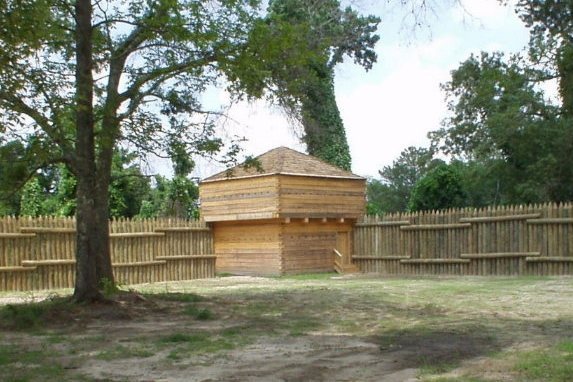
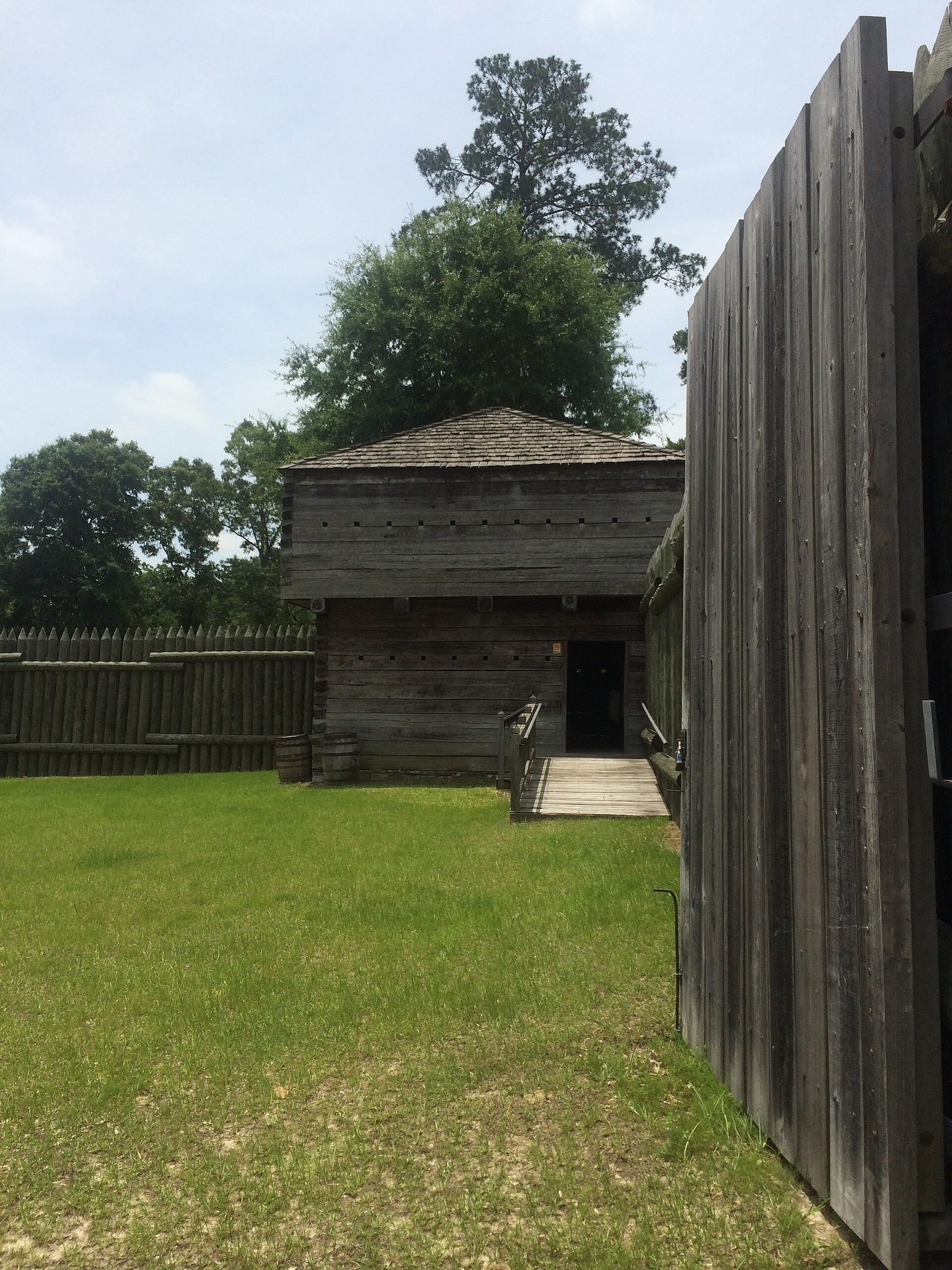
The site includes a reconstruction of the 1813 stockade fort and a blockhouse, a fortified building used for defense and observation through protected firing openings. Archaeological excavations identified remains of the original fort, hospital, outbuildings, offices, barracks, and storage rooms. The original fort had been reduced to ruins before the excavations began, while the reconstructed stockade and blockhouse present its principal defensive form.
Museum and historic buildings
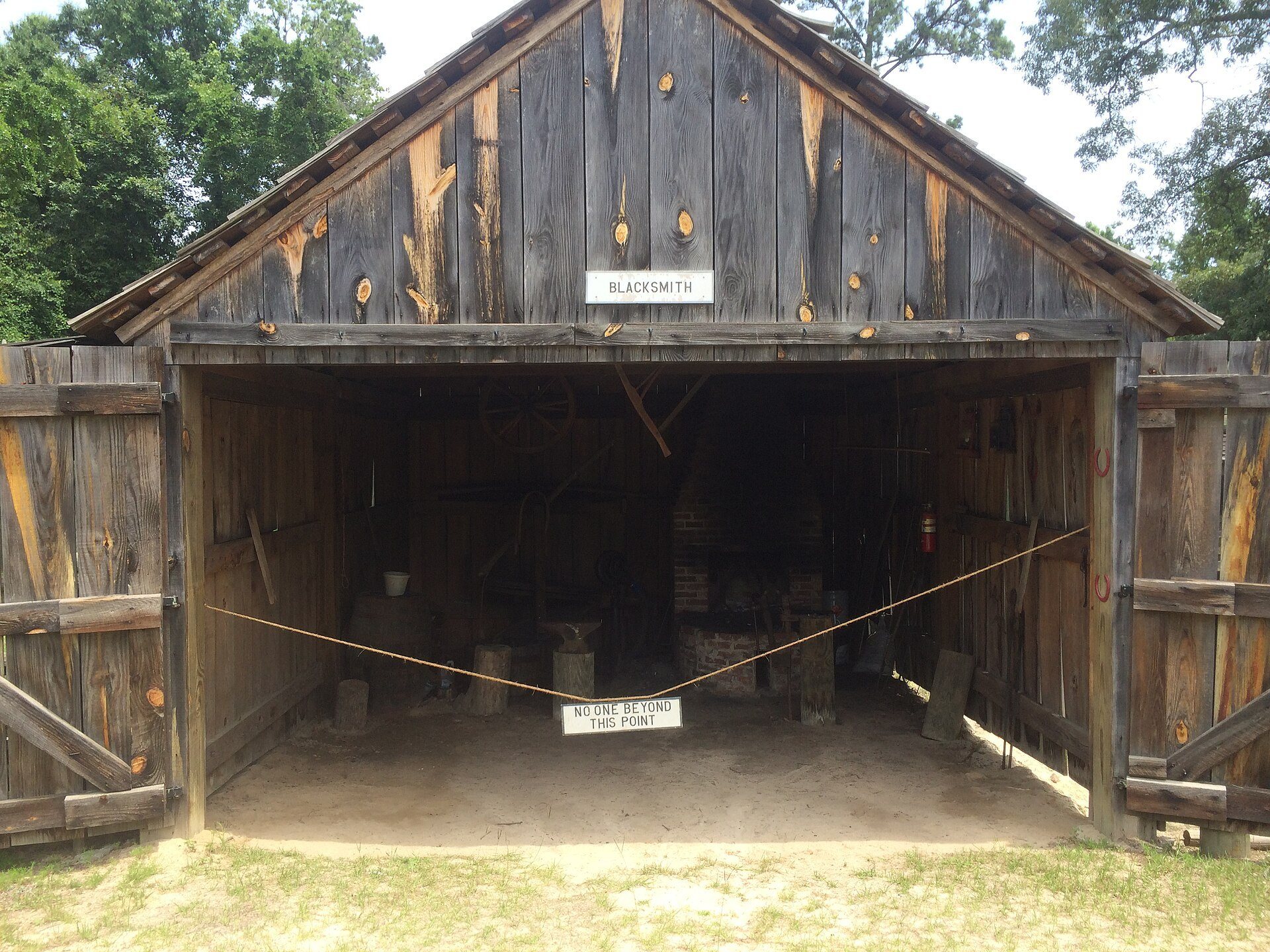
A museum presents exhibits on the history of Fort Mitchell, and the site also includes a visitor center, a restored nineteenth-century log home, and a collection of historic carriages. Together, these features preserve material connected with the fort’s military, administrative, domestic, and transportation history.
Burial grounds and cemetery
Historic burial grounds form part of the site, alongside Fort Mitchell National Cemetery, established in 1987. Archaeological work at the former fort also identified gravesites, adding burial evidence to the remains associated with the military and administrative settlement.
Creek heritage memorial
The Chattahoochee Indian Heritage Center stands adjacent to Fort Mitchell Historic Site. It includes a ceremonial flame memorial to the Creek nation and interpretive panels describing the Creek War of 1836 and the subsequent forced removal of Creek people along the Trail of Tears, the removal of Indigenous peoples to lands west of the Mississippi River.