Kamala Narayana Temple, Degaon: A Kadamba Trikutachal Temple
Site at a Glance
- Rating
- 4.7
- Popularity
- Low
- Country
- India
- Primary era
- Medieval
- Eras represented
- Medieval
- Civilizations
- Unclassified
- Site type
- Religious
- Remains
- Temple
On this page5 sections
History
Kamala Narayana Temple, Degaon, is a Hindu temple at Degaon in Karnataka, India, built by the Kadamba dynasty in 1174 during the 12th century. The Kadambas were a medieval ruling house associated with parts of southern and western India. The temple was constructed under the direction of Tippoja, chief architect to Kamala Devi, queen of the Kadamba king Sivachitta Permadi. Narayana, a form of the Hindu god Vishnu associated with preservation and cosmic order, is the temple’s principal deity.
Remains
Three Shrine Cells
The temple is organized as a Trikutachal, a temple built around three shrine cells or sanctums, and includes three shrines. The first shrine holds a statue of Narayana. The second contains Lakshmi Narayana, with Lakshmi, the goddess associated with prosperity and Vishnu’s consort, seated on Narayana’s lap. The third shrine contains a statue of Queen Kamala Devi, accompanied by attendants on both sides.
Carved Pillars and Decorative Stonework
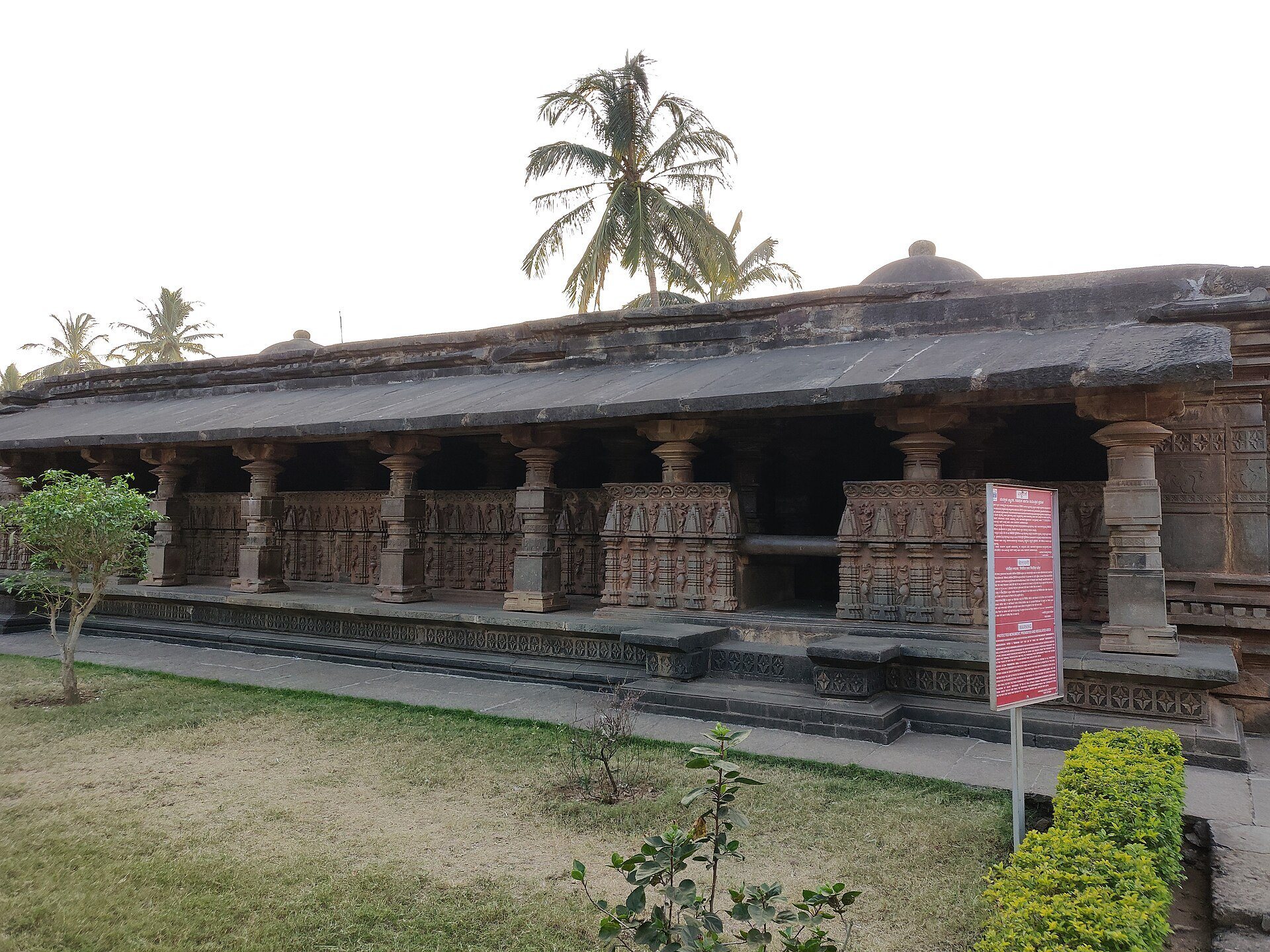
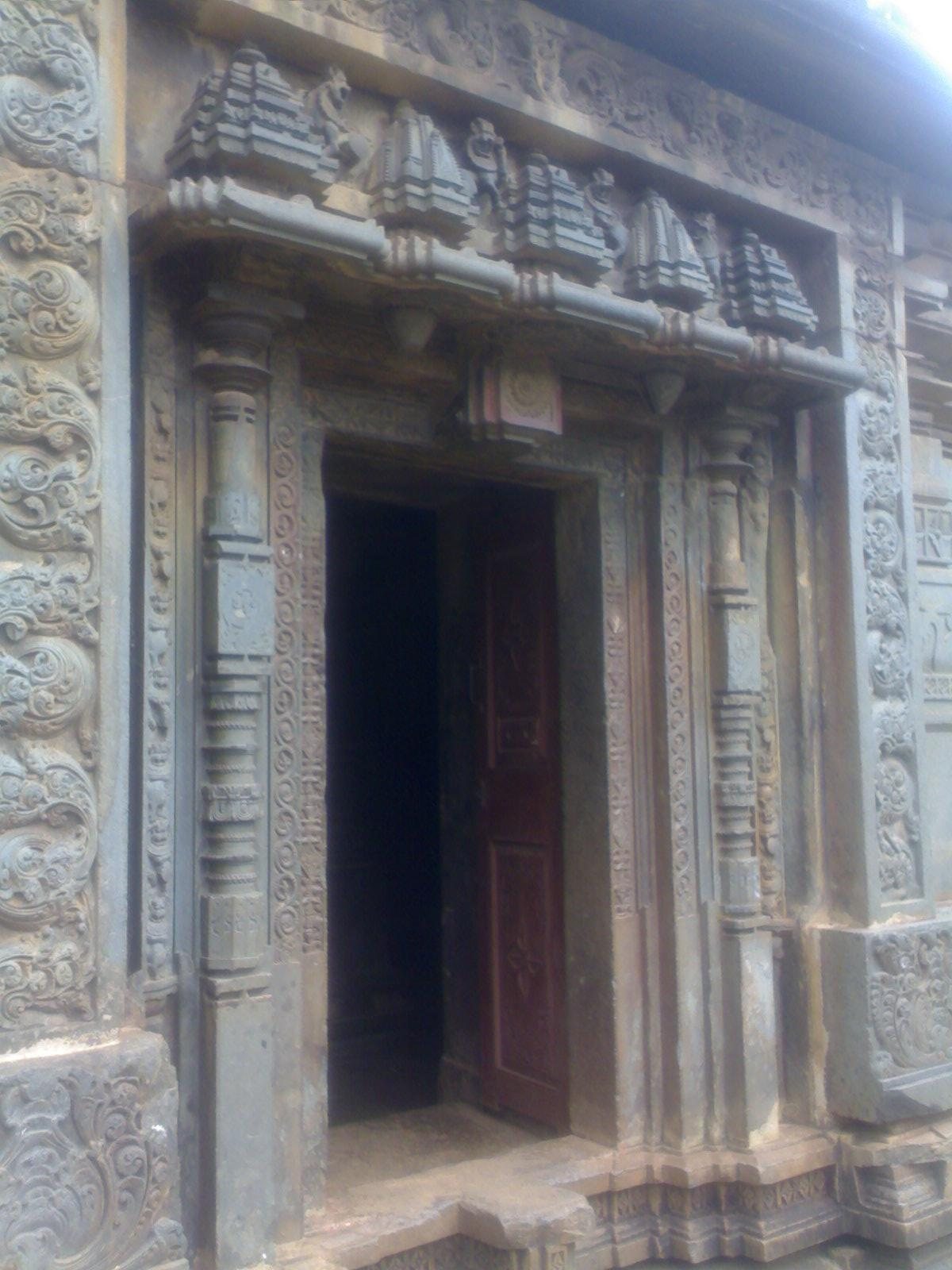
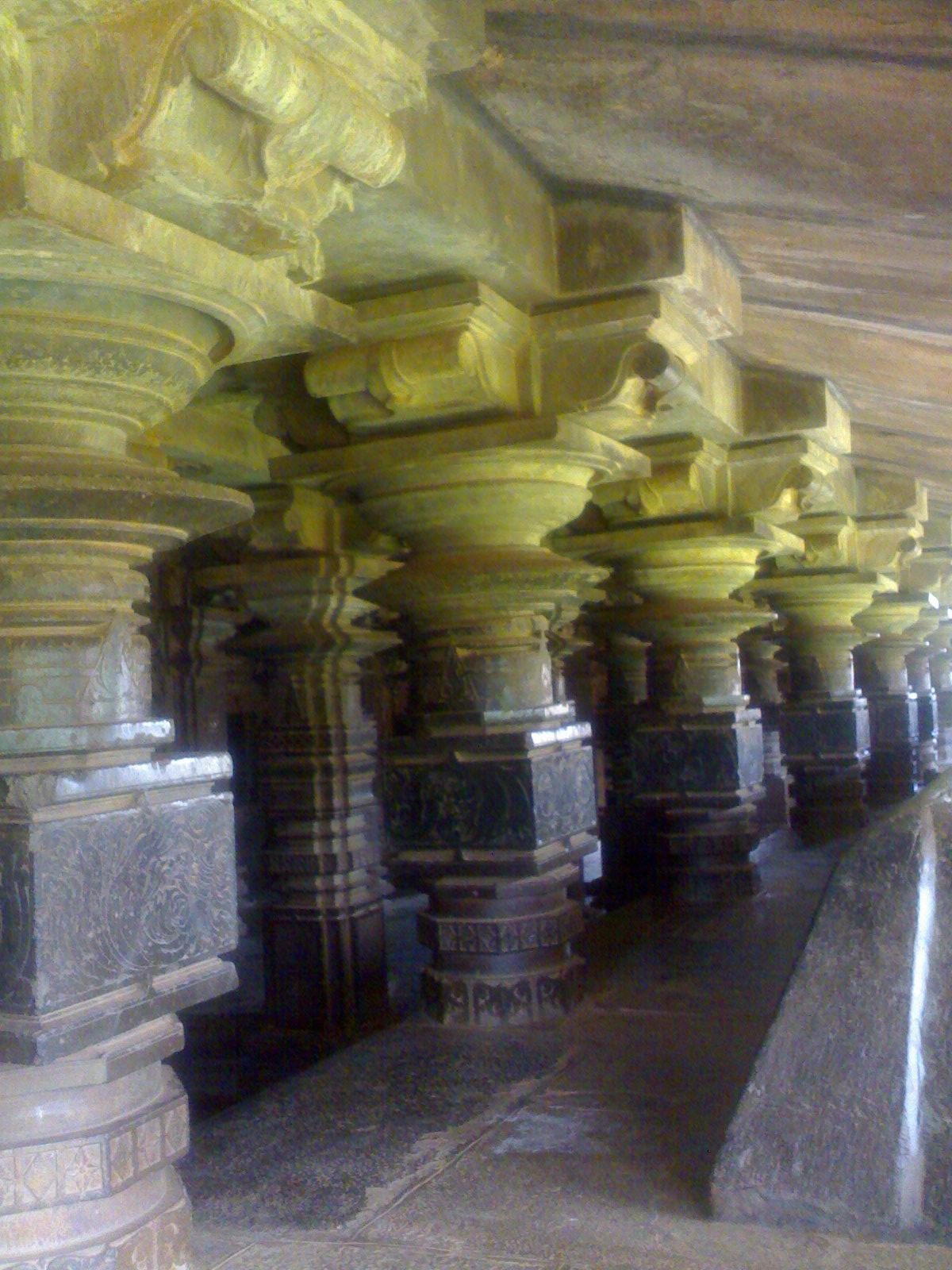
The roof is supported by a colonnade of richly carved stone pillars. Their decoration includes roaring lions, while pyramidal towers rise around the pillars and female figures in varied poses appear between them. Ornamental scrollwork runs above this arrangement. Lions and floral motifs also contribute to the sculptural decoration, and stone panels along the facade display emblems of the Kadamba dynasty together with other figures.
Lotus Ceiling
The interior roof features an elaborate, gigantic lotus carved in an inverted form. This sculpted ceiling is integrated into the richly decorated interior supported by the carved colonnade.