Xianxian Mosque: A Sunni Mosque and Islamic Cemetery in Guangzhou
Site at a Glance
- Rating
- 4.9
- Popularity
- Low
- Country
- China
- Primary era
- Medieval
- Eras represented
- Medieval, Early Modern, Modern
- Civilizations
- Chinese
- Site type
- Religious
- Remains
- Mosque
On this page13 sections
History
Xianxian Mosque is an active Sunni mosque in Yuexiu District, Guangzhou, China, associated with a cemetery traditionally linked to the early Muslim spread of Islam in China. The cemetery is generally dated to the Tang dynasty, which ruled much of China from 618 to 907, with 629 given as the traditional construction date. The mosque itself is described as having Ming-dynasty architectural characteristics, while the wider complex combines active worship with Islamic burial, commemoration, and pilgrimage.
Traditional foundation and pilgrimage
The cemetery is traditionally connected with Sa’d ibn Abi Waqqas, an early companion of Muhammad and a commander associated with the first Muslim conquests. Chinese Islamic tradition also regards him as an early transmitter of Islam to China. One foundation tradition holds that Muslims built his tomb in Guangzhou in 629 after his death there. Historian Chen Yuan instead argued that Sa’d was buried at the site in 652. Some Islamic scholars have questioned whether Sa’d historically existed as the person described in the tradition, interpreting him as a symbolic representation of Islam’s early arrival in China.
Muslims from China and abroad were buried in the cemetery, including missionaries who came to spread Islam and pilgrims who travelled to visit the tomb. Some Muslims regard the site as a minor Islamic holy place, and burial near Sa’d’s tomb was considered an honour. A Korean Muslim visitor died in Guangzhou after visiting the tomb in 1349 and was buried there. A Turkish visitor who came to the cemetery in 1751 was later buried east of the tomb, while a missionary from Mecca who arrived in China in 1889 to propagate the Shadhiliyya, a Sufi spiritual lineage within Islam, was buried at the front-left of the cemetery.
Commemoration and administration
The cemetery’s Forty-One Graves are associated with a tradition about 40 Muslims who accompanied Sa’d to China. A stele erected in 1802 relates that they were killed during Friday congregational prayer and buried together. Another version tells of bandits killing 39 worshipers and then the remaining worshiper, followed by the suicide of one bandit from remorse. The burials were moved to their present location in 1959 because of municipal construction.
The Three Loyal Muslims Tomb is a cenotaph commemorating three Hui commanders of the Ming period who resisted Qing forces. A memorial archway north of the cemetery honours Sun, the concubine-wife of a Muslim Guangzhou land-force commander. Repairs took place in 1815, 1845, 1934, 1955, and 1964. The Guangzhou Islamic Association, founded in November 1956, later administered the cemetery through its mosque management committee.
Damage, protection, and expansion
In 1965, Chinese Vice Premier Chen Yi inspected the cemetery and described it as an internationally important Islamic holy place requiring protection. During the Cultural Revolution, Red Guards damaged the religious complex, removed approximately half of the cemetery, and destroyed the stele of the Three Loyal Muslims Tomb. The Guangzhou Islamic Association ceased operating during this period and resumed activity in 1981, after which the cemetery underwent comprehensive repairs.
Guangdong Province designated the cemetery a provincial cultural relic in 1985. In 2010, a new prayer hall was built west of the cemetery for Muslim athletes attending the Asian Games, and it became Guangzhou’s largest Islamic place of worship. In 2013, the cemetery was included among China’s national-level protected cultural relics as a Tang-period ancient tomb complex.
Remains
The mosque occupies approximately 1,860 square metres, including about 1,077 square metres of constructed area. The associated cemetery covers approximately 2,200 square metres. Together they form a complex of worship spaces, service buildings, enclosed burial grounds, memorial structures, inscribed stones, and landscaped areas.
Religious buildings and grounds
The mosque
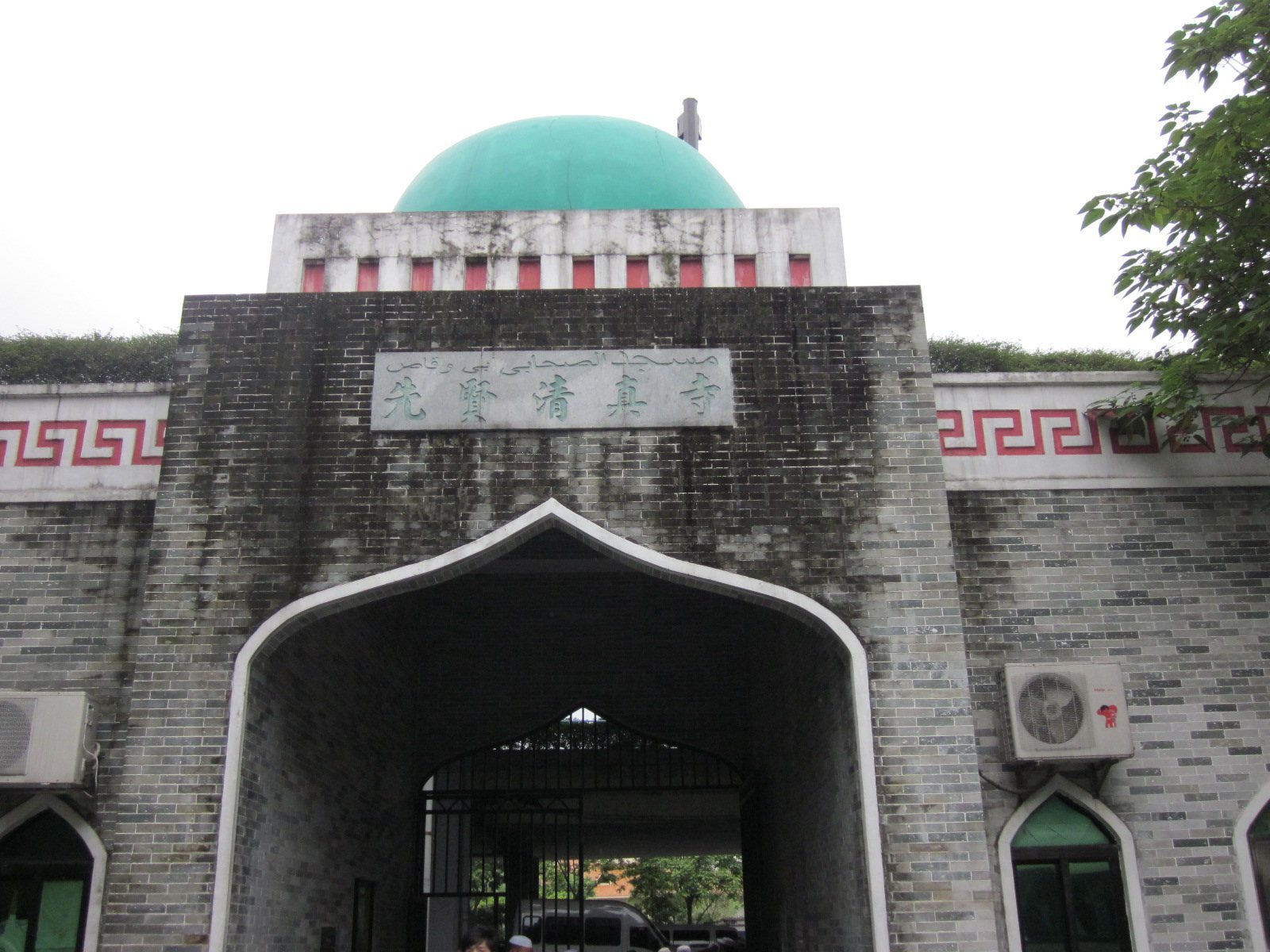
The mosque has Ming-dynasty architectural characteristics. Its facilities include a two-storey prayer hall, pavilions, wing rooms, rest spaces, and other service buildings. The prayer hall can accommodate about 1,000 worshipers, while the enlarged mosque complex can accommodate up to 3,000. Trees and flowers contribute to an interior layout arranged like a garden.
The cemetery enclosure
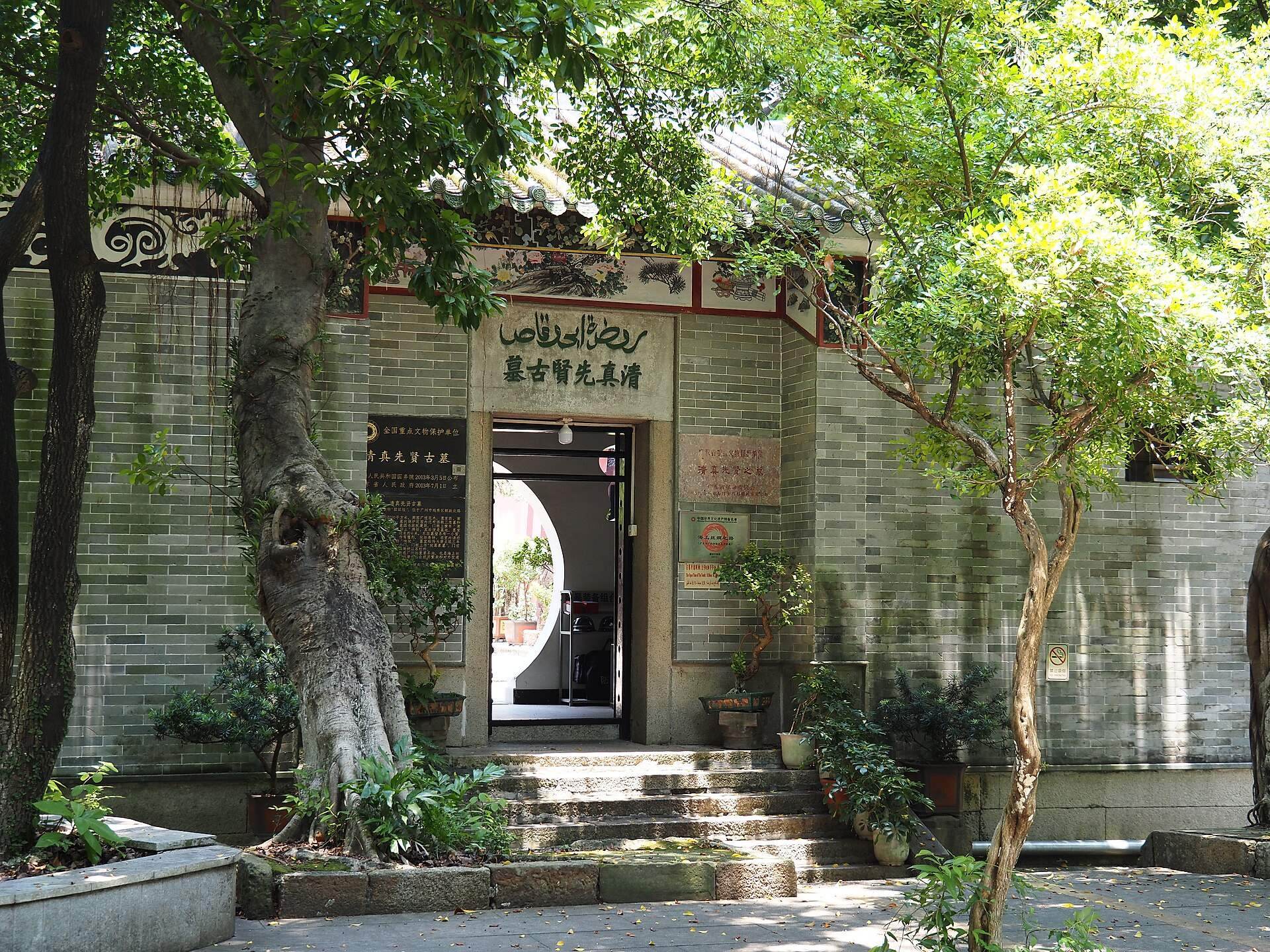
The cemetery is enclosed by blue-grey brick walls. Its entrance bears the words “Xianxian Ancient Muslim Cemetery,” while a stone memorial gateway at the southern entrance carries a couplet praising missionaries who crossed the seas to spread Islam. The grounds are divided into outer and inner sections. The outer section contains a hexagonal pavilion, a lotus pond, flower beds, a prayer hall, and a large reception hall. A gateway inscribed “Respect for High Virtue” leads into the inner section.
Sa’d’s tomb and associated burials
Sa’d’s tomb chamber
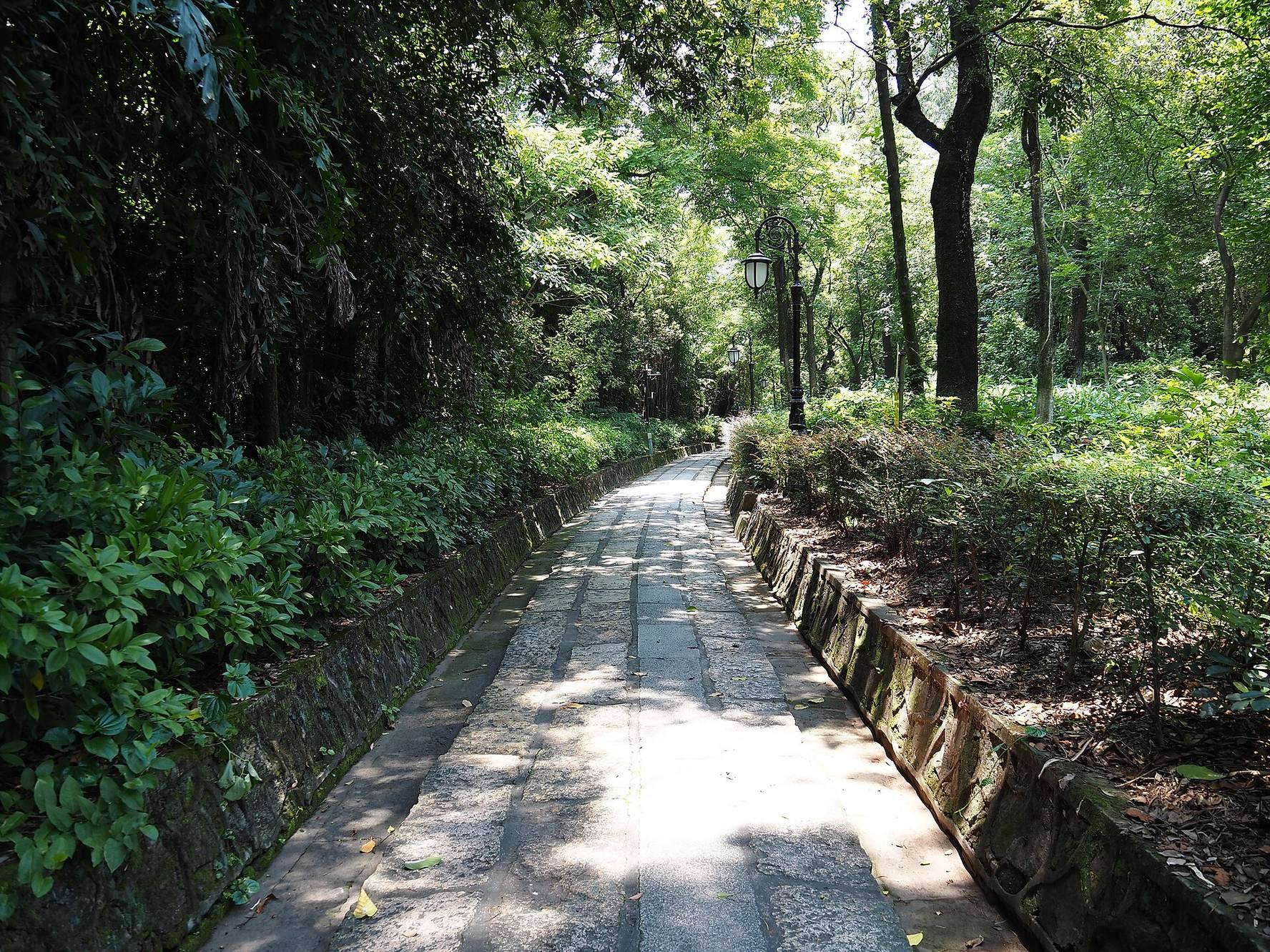
A stone-paved path runs through the inner cemetery toward Sa’d’s tomb chamber, with more than 40 graves lining the route. The chamber is approximately 6 metres wide and 6 metres deep. It has an Arabic-style round-arched design, with a square lower section and a domed upper section. Small windows open in its eastern and western walls, and a small entrance is placed on the south. A rectangular grave occupies the centre. The chamber produces an echo when people speak, giving it the additional name “Echo Tomb.”
The Twin Tombs and Forty-One Graves
The Twin Tombs are associated with two successors of Sa’d. The Forty-One Graves are linked with the 40 companions in the cemetery’s foundation tradition. The 1802 stele in front of these graves records the account of their burial and remains among the complex’s inscribed memorials.
The Three Loyal Muslims Tomb
The Three Loyal Muslims Tomb stands outside the main cemetery area. It is a cenotaph for three Ming-period Hui commanders who resisted Qing forces. Its stele was destroyed during the Cultural Revolution, while the memorial itself remains part of the complex’s commemorative landscape.
Inscriptions and memorial features
The complex preserves numerous stone stelae, inscribed couplets, plaques, and memorial gateways. These features record burial traditions, honour Muslim missionaries and historical figures, and connect the active mosque with the cemetery’s long history of commemoration.