El Meco: A Maya Maritime Trade Center in Quintana Roo
Site at a Glance
- Rating
- 4.5
- Popularity
- Medium
- Country
- Mexico
- Primary era
- Medieval
- External website
- Open
- Eras represented
- Medieval
- Civilizations
- Maya
- Site type
- City
On this page7 sections
History
El Meco is a Maya archaeological site and former maritime trade center in Cancún, Quintana Roo, Mexico. It developed as an important Caribbean port during the Postclassic period, particularly from about AD 1200 to 1500, and also became a religious center serving coastal communities and regional networks.
Early settlement
Evidence beneath Structure 2 points to occupation during the Early Classic period, approximately AD 250 to 600. The first community was probably a small fishing village, possibly connected to Cobá, a major Maya center in the Yucatán region. This settlement was abandoned around AD 600, leaving the site unused for several centuries.
El Meco was occupied again around AD 1000 or 1100, during the Postclassic period that followed the Classic era of major Maya urban development. The re-established community probably maintained close ties with Chichén Itzá and later with Mayapán, linking the coastal settlement to important political and commercial centers inland.
Postclassic port
From about AD 1200, coastal commerce expanded as several major inland cities of the Yucatán Peninsula declined. El Meco benefited from its position opposite Isla Mujeres, a Caribbean island off the coast of Quintana Roo. Its location supported navigation along the coast and within the nearby lagoon, and the settlement probably served as the principal port connecting the mainland with Isla Mujeres.
El Meco became one of the active ports in the Caribbean coastal trade network, alongside Xcaret, Xel-Há, Tancah or Tulum, and Muyil. Its commercial role was accompanied by growing political and religious importance. The settlement’s original Maya name is uncertain. It has been identified with Beel’maan, meaning “trade channel,” while the name El Meco probably derives from the owner of a former coconut plantation established on the site.
Abandonment and investigation
After the Spanish arrived in the sixteenth century, the Maya abandoned El Meco. The site has been associated with Belma, a settlement mentioned by Francisco de Montejo during the early Spanish exploration of the Yucatán Peninsula, although the identification of Belma with El Meco remains uncertain.
Excavations revealed fourteen structures, including a principal temple in the religious sector. The archaeological zone is administered by Mexico’s National Institute of Anthropology and History, the federal institution responsible for archaeological research, conservation, and management.
Remains
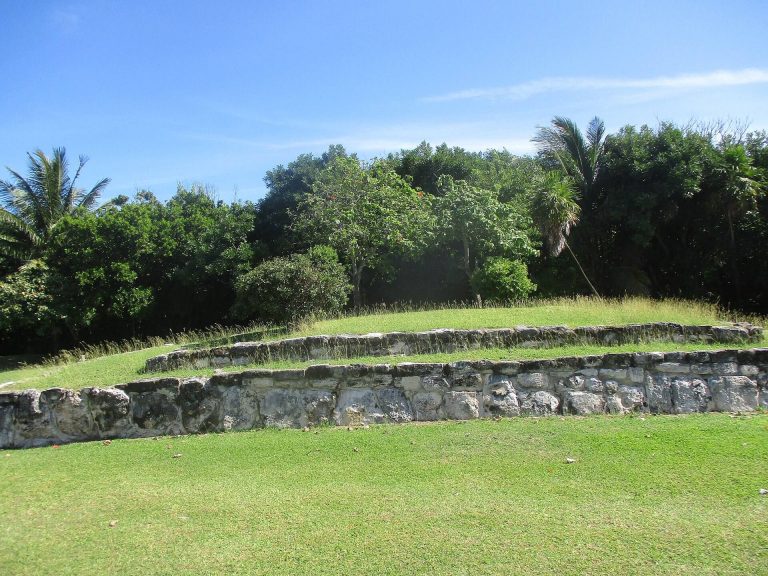
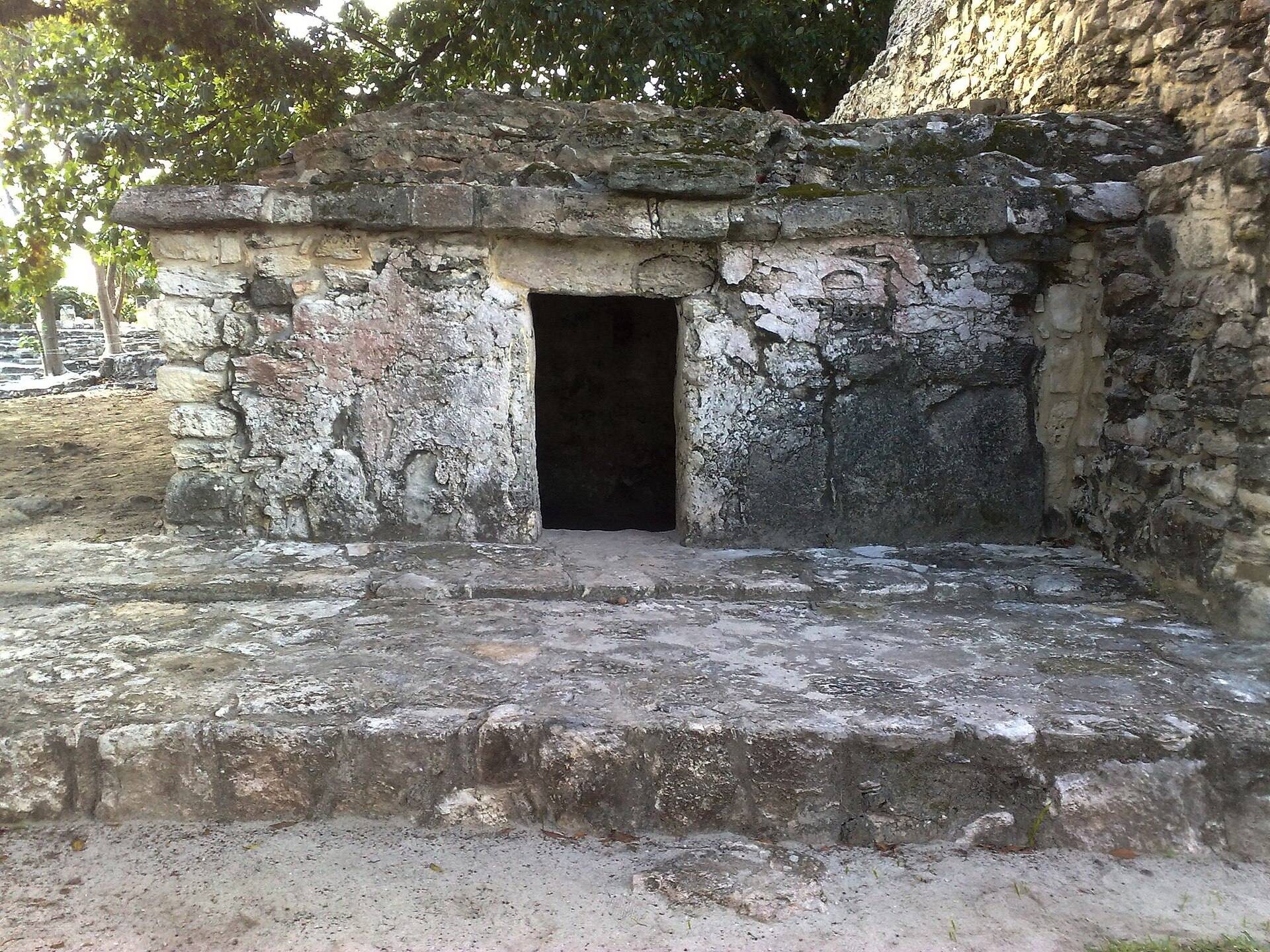
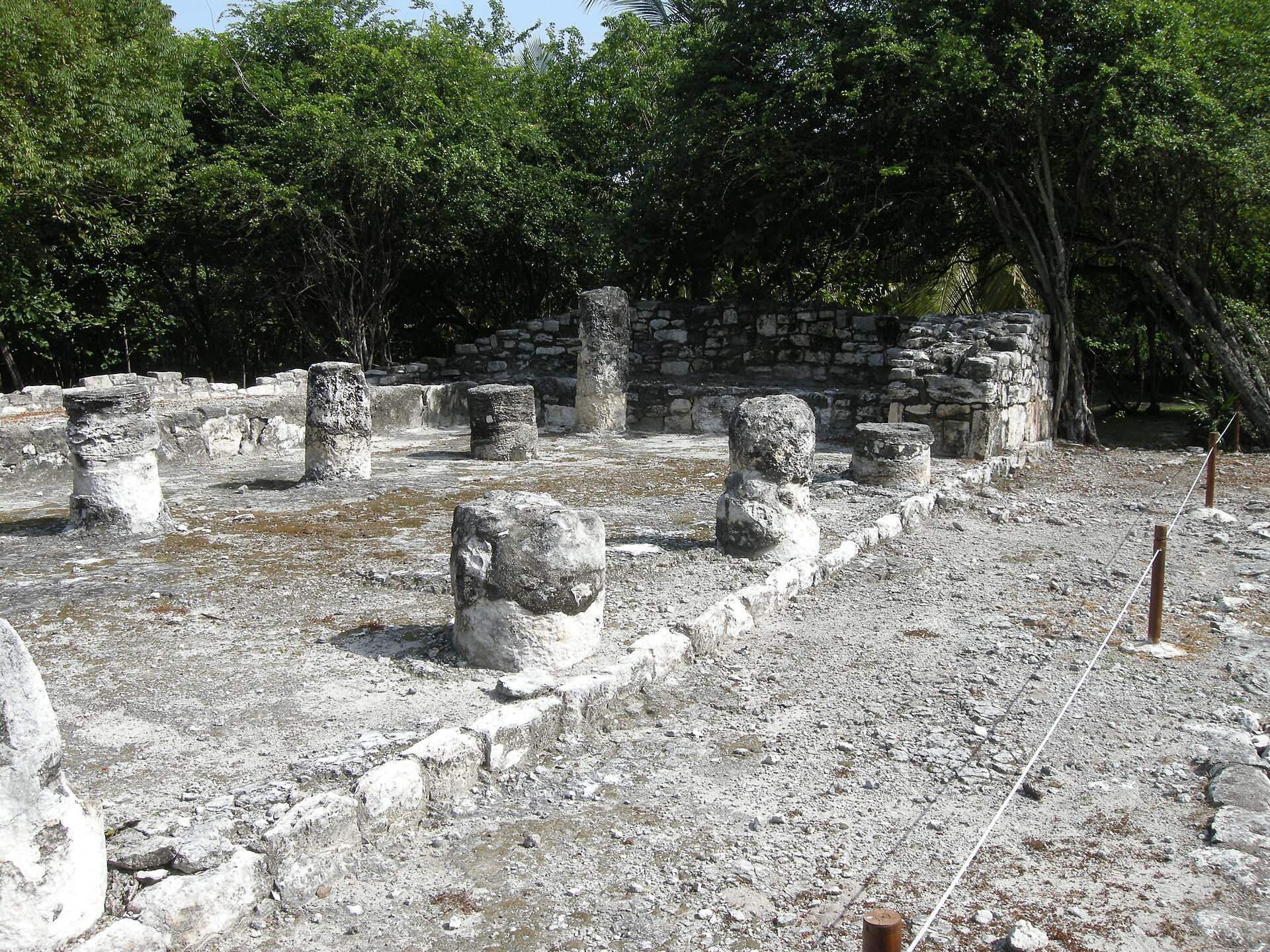
El Meco occupies the mainland opposite Isla Mujeres on the Caribbean coast. Ceremonial buildings, altars, and shrines are arranged around plazas, including a main plaza. The Puerto Juárez-Punta Sam road divides the archaeological area, while remains of a harbor installation lie on the opposite side. That harbor area has not been systematically excavated. Most exposed buildings remain in good condition.
El Castillo
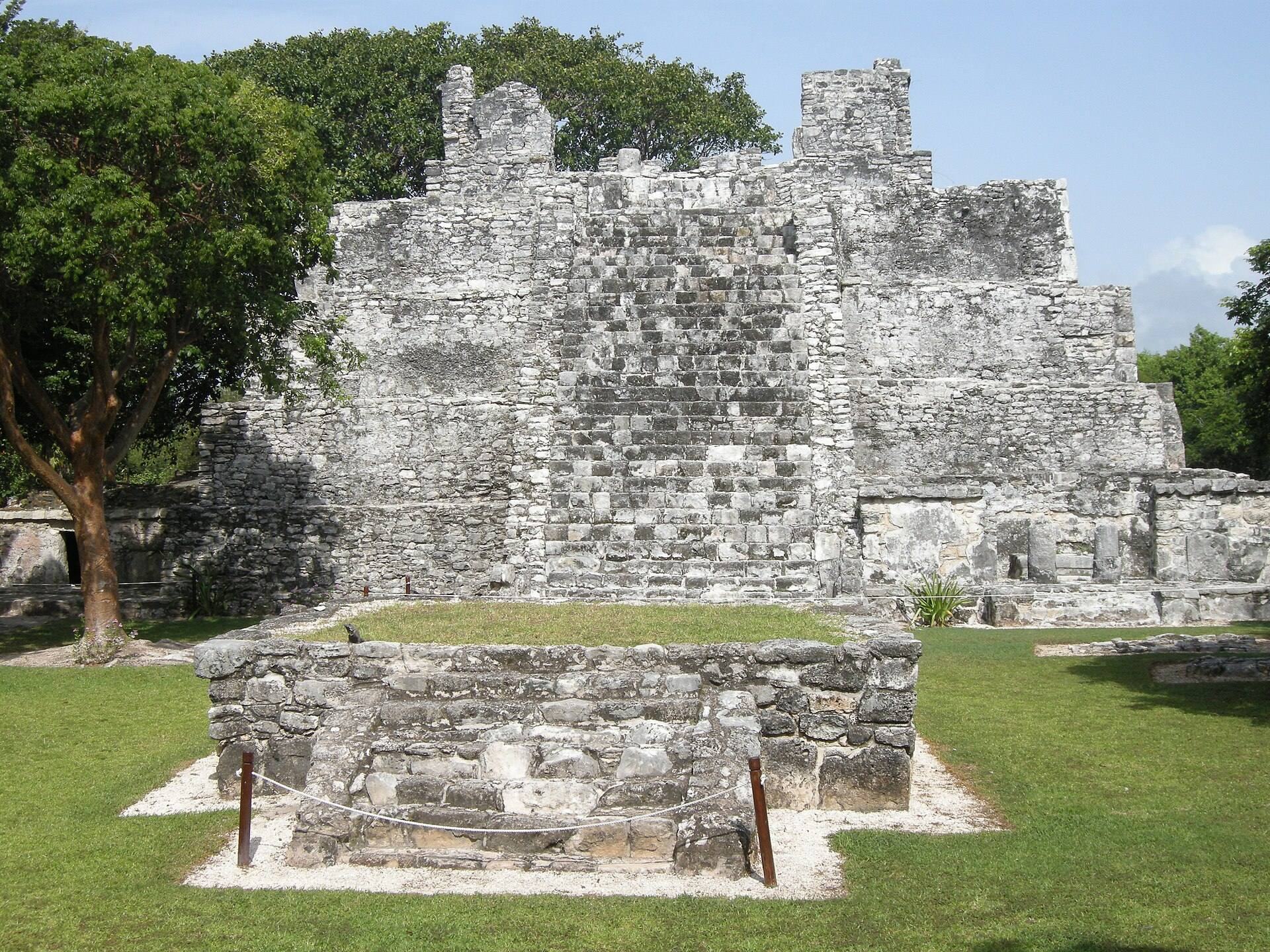
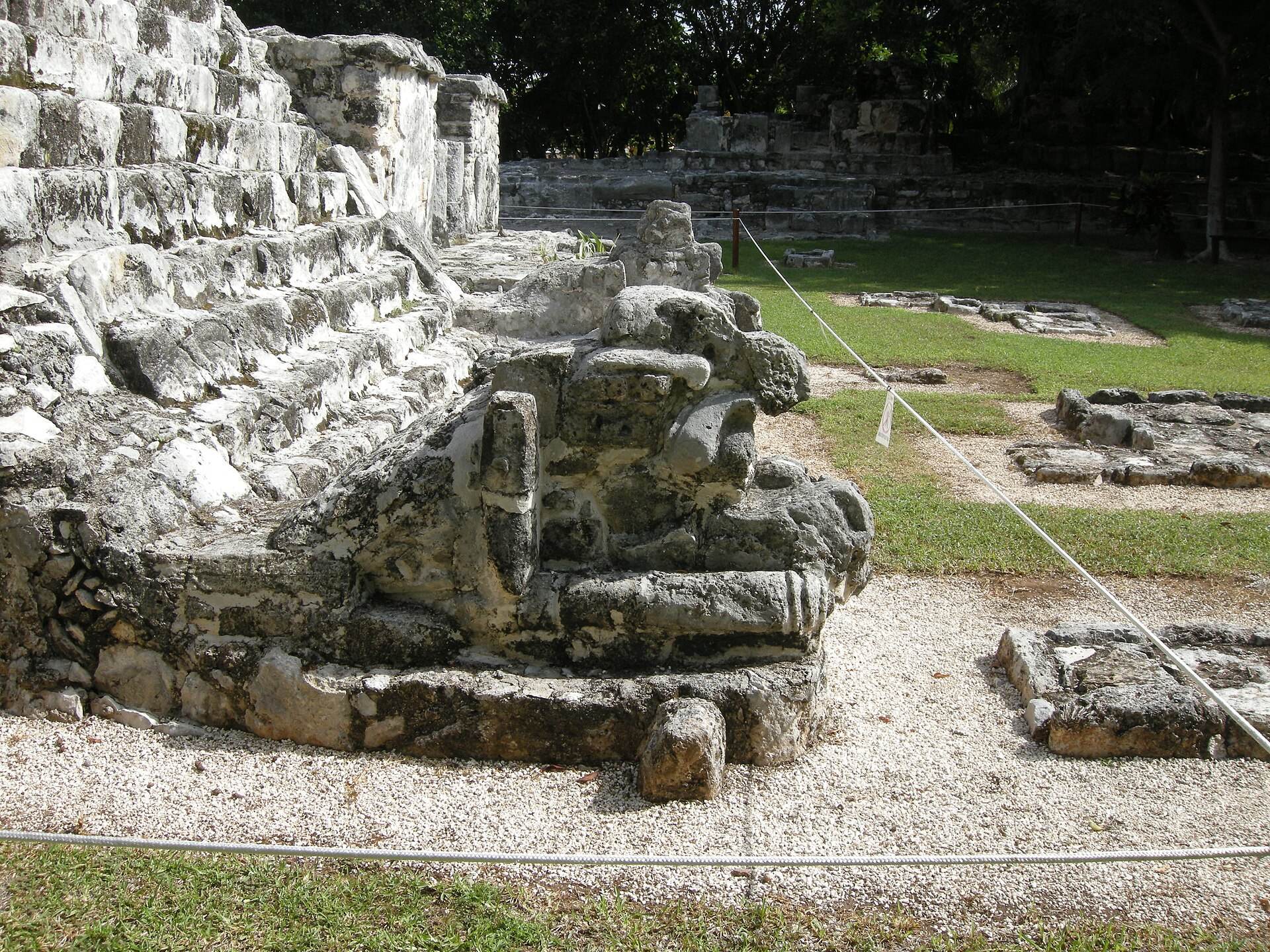
El Castillo, also called Structure 1, is the principal building at El Meco. The five-level pyramid rises approximately 12.5 meters and carries a temple at its summit. It is the tallest Maya building on the East Coast of Quintana Roo. Its stairways end in serpent-head sculptures resembling those at the Temple of Kukulcán at Chichén Itzá.
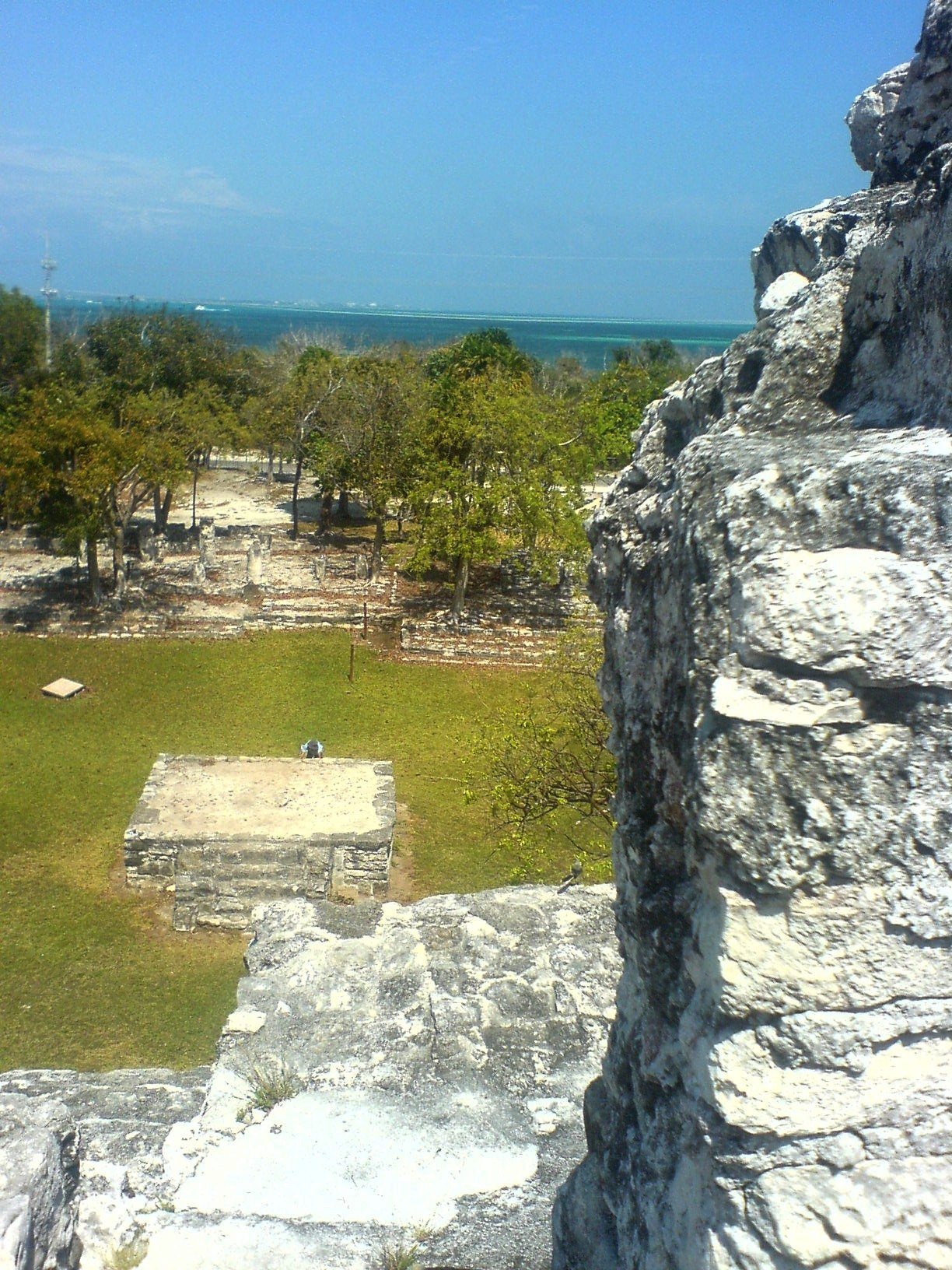
The pyramid is oriented toward the Caribbean, with the front of its summit temple facing the sea. This alignment is unique among Maya pyramidal buildings of its type and was intended to permit observation of the sunset.
Structure 2 and archaeological evidence
Excavations beneath Structure 2 uncovered a deposit of discarded historical materials. Its ceramic fragments date to approximately AD 400 to 600 and to the period beginning around AD 1000, providing evidence for both the site’s early occupation and its later reoccupation.