Deopahar: A Ruined Shiva Temple and Archaeological Site in Assam
Site at a Glance
- Rating
- 4.5
- Popularity
- Low
- Country
- India
- Primary era
- Medieval
- Eras represented
- Medieval
- Civilizations
- Unclassified
- Site type
- Religious
- Remains
- Temple
On this page7 sections
History
Deopahar, also known as Deoparvat, is an archaeological site at Numaligarh in Assam, India. Centered on the ruins of a Shiva temple generally dated to the tenth or eleventh century, the hill preserves an interaction between Brahmanical traditions, meaning the religious and artistic traditions associated with Brahmanical Hinduism, and local Assamese art. The exact date of construction remains uncertain, while the temple’s architectural style reflects later Gupta influence, a continuation of forms associated with the Gupta period of northern Indian art and architecture.
Names and earlier traditions
The name Deopahar is understood as “Hills of the Gods.” Local Karbi traditions connect the hill with gods and goddesses and also associate it with the name Haithali Parbat. Inscriptions of the Kamarupi kings on an ancient copper plate linked the area with a place called Joyscandavar in Happaka. The Kamarupi kings ruled the kingdom of Kamarupa, which encompassed much of ancient Assam. Joyscandavar is believed to have developed from the name Jorasandh, a name associated with Numaligarh.
The temple is regarded as a shrine dedicated to Shiva. Local tradition holds that its original Shiva linga, an aniconic representation of Shiva and a principal object of worship in Shaivite temples, was transferred during the nineteenth century to the nearby Baba Than temple at Numaligarh. The Satsari Buranji also records a maidam, a burial monument associated particularly with Assam’s royal and aristocratic traditions, belonging to a Sutiya king known as Khunta Raja near Deopahar.
Rediscovery and protection
An English tea planter, Thomas Guardthei, was the first to draw attention to the complexity of Deopahar’s ruined temple, its architecture, and its sculpture. Excavations on the summit later revealed the ancient temple remains and additional sculptures. The temple appears either to have been left incomplete or to have suffered damage, possibly during the Assam earthquake of 1897. Its surviving fabric is now in ruins.
Deopahar is protected as an archaeological park with a site museum administered by the Directorate of Archaeology, Government of Assam. Scattered remains around the hill are included among Assam’s state-protected monuments. The site forms part of the 133.45-hectare Deopani Reserve Forest, which is an elephant corridor. The forest is also associated with a heritage-status false hemp tree, Tetrameles nudiflora, visited seasonally by migratory wild giant bees from the Himalayan foothills, which build large hives in the tree.
Remains
Temple structure and setting
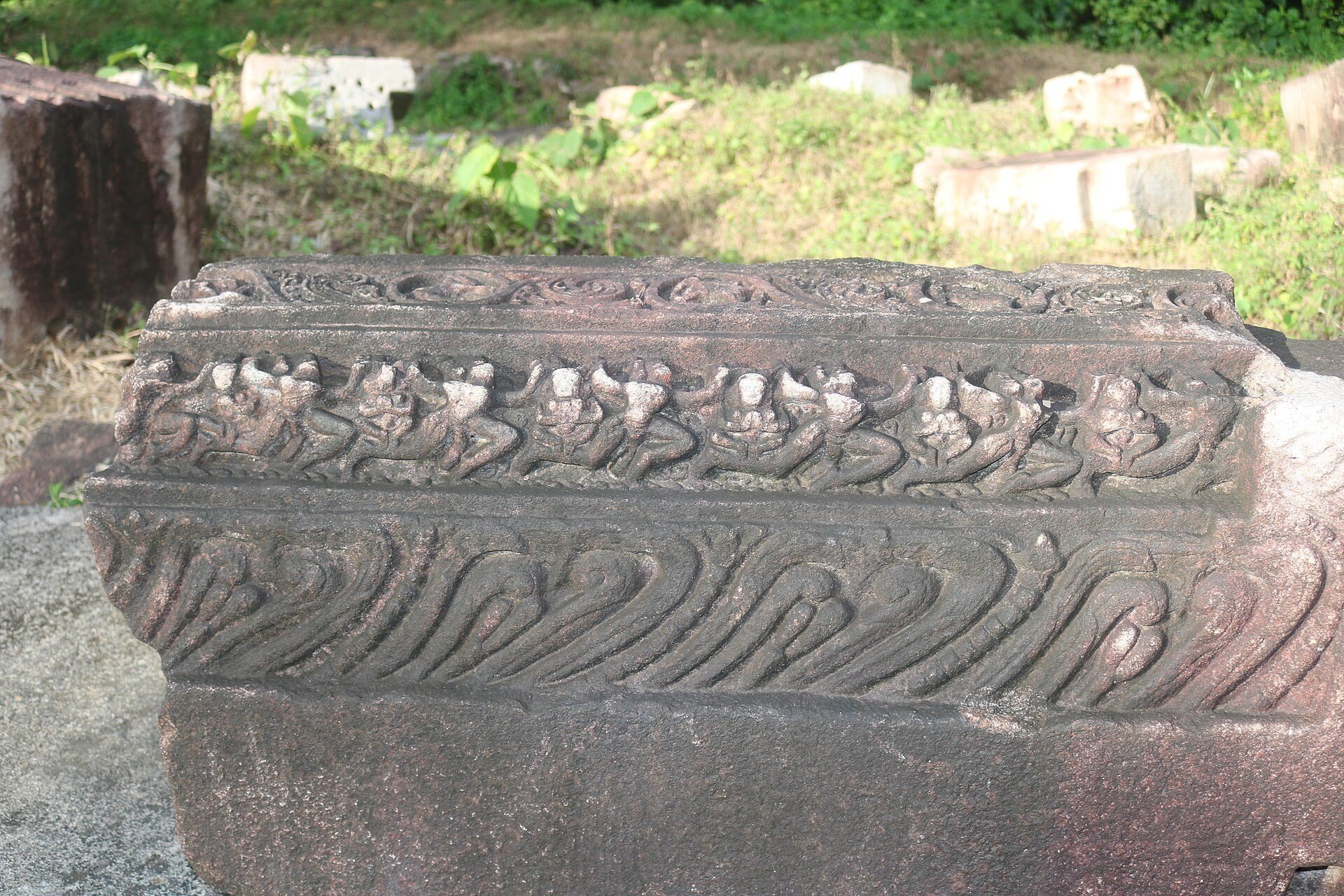
The surviving temple stands on a monolithic stone floor, meaning a floor made from one continuous piece of stone. Its remaining fabric consists of carved stone blocks described as granite and as having been shaped from Precambrian rock, formed more than about 539 million years ago. Iron fittings are visible at the base, where they helped stabilize the stone pieces. The temple’s design strongly reflects later Gupta forms and decorative conventions.
Floor and architectural decoration
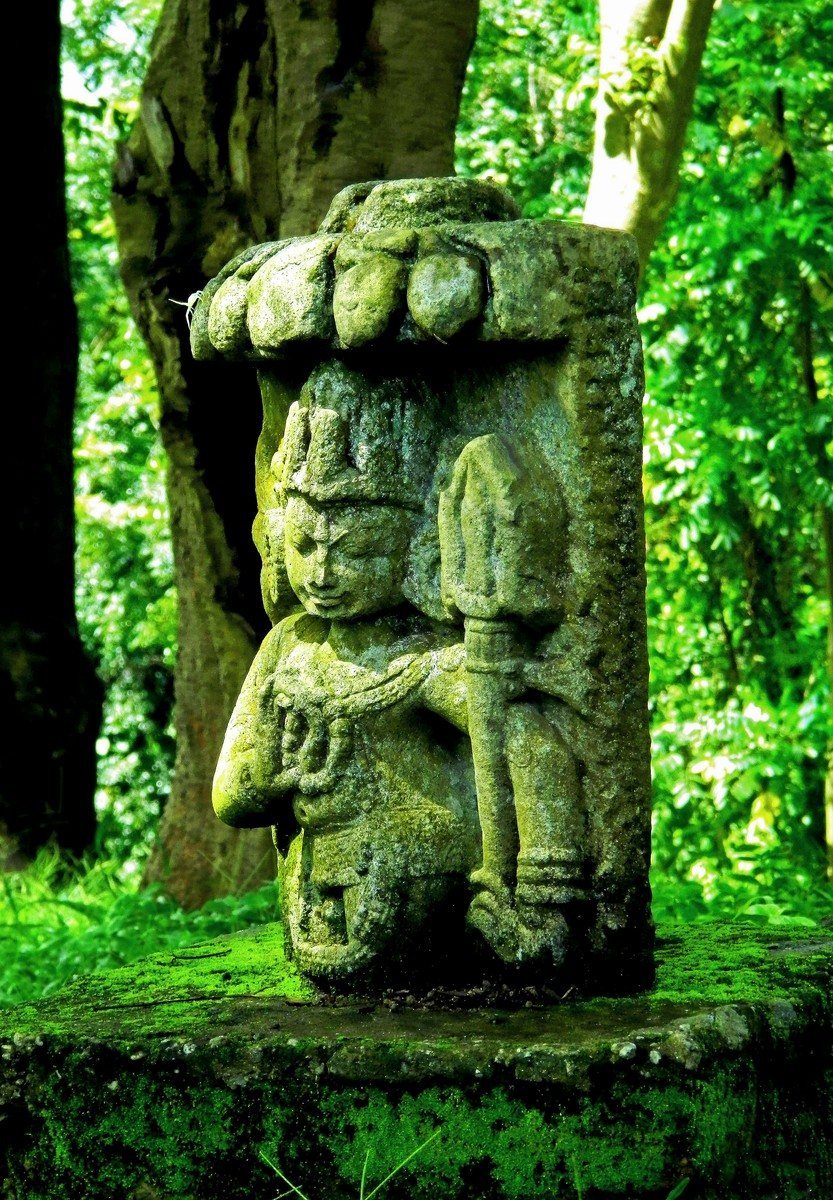
Large door jambs carry drooping-petal motifs, foliage, and creepers that surround animals and other figures. Female door guardians wear coronets and large perforated patrakundalas, a leaf-shaped or perforated earring motif used in sculpture. A large ceiling slab is carved with a lotus and a relief of a Vidyadhara, a celestial figure in South Asian religious art, holding a scarf and necklace in both hands.
Sculptural program
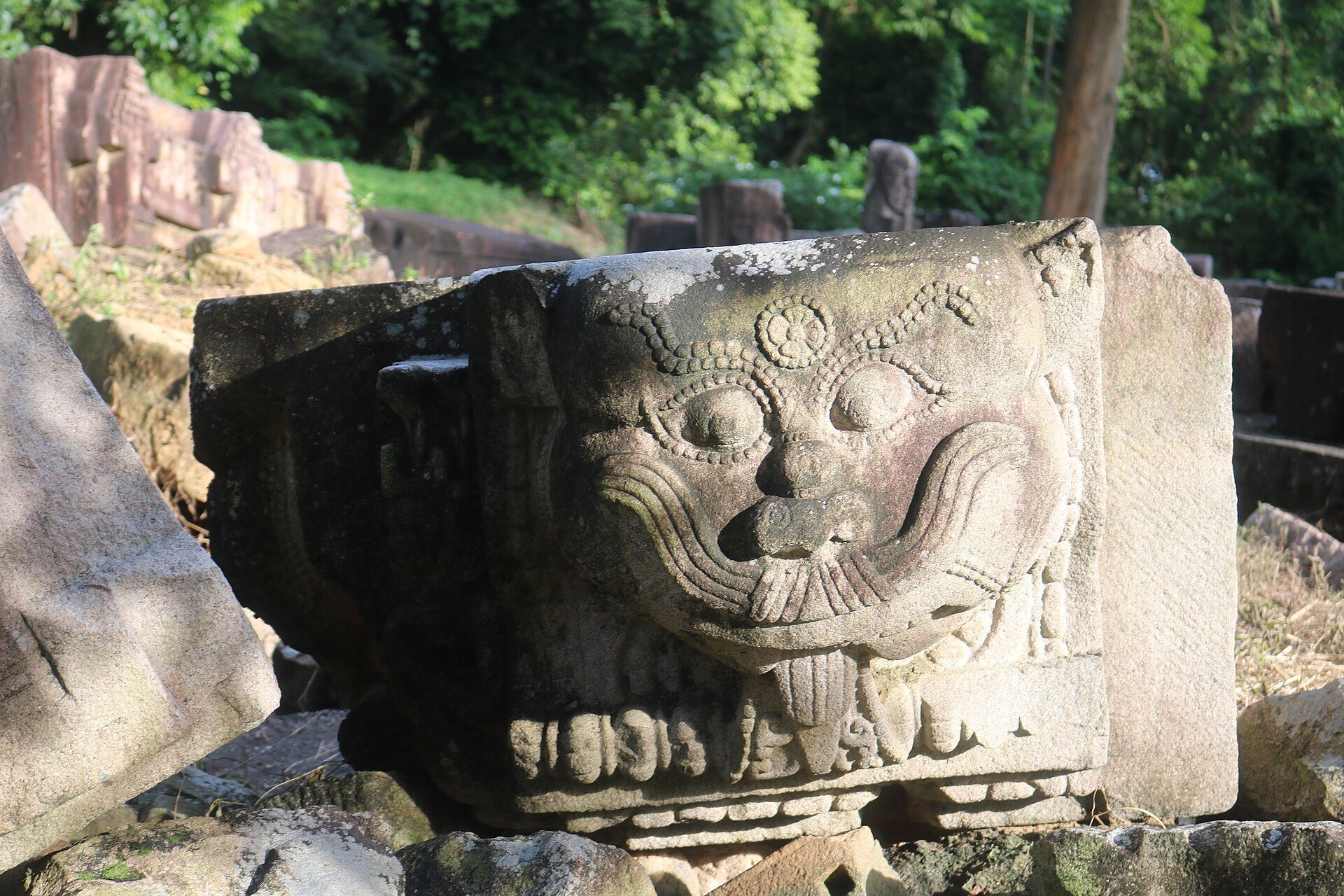
The carved imagery brings together religious figures, protective motifs, narrative scenes, and performers. Subjects include Kirtimukha, a stylized protective face commonly carved on South Asian temples, Kalamakara figures, Shiva, Sridhar Rudra, Lakshmi-Narayana, Hara-Gauri, Raslila, serpent deities, figures associated with pranayama meditation, Padma Sakra, Rama, Ravana, and Sugriva. Panels depict episodes from the Ramayana, Mahabharata, and Bhagavata Purana.
Other surviving sculptures represent flying apsaras, female celestial dancers or spirits in Hindu and Buddhist traditions, along with Vishnu in varied poses, door guardians, Ganesha, Yama, Surya in different gestures, Shani, deities dancing on elephants, and male and female dancers. A three-headed flying figure identified as Apeshwari, or as an apsara, is regarded as one of the site’s most beautiful sculptures and has been associated with the development of local Assamese artistic expression. Sculptural pieces from Deopahar are displayed at the Numaligarh Shiva Temple and the Assam State Museum in Guwahati.