Pátio do Colégio: The Jesuit Complex at São Paulo’s Foundation Site
Site at a Glance
- Rating
- 4.5
- Popularity
- Medium
- Country
- Brazil
- Primary era
- Early Modern
- External website
- Open
- Eras represented
- Early Modern
- Civilizations
- Portuguese
- Site type
- Religious
- Remains
- Church
On this page16 sections
History
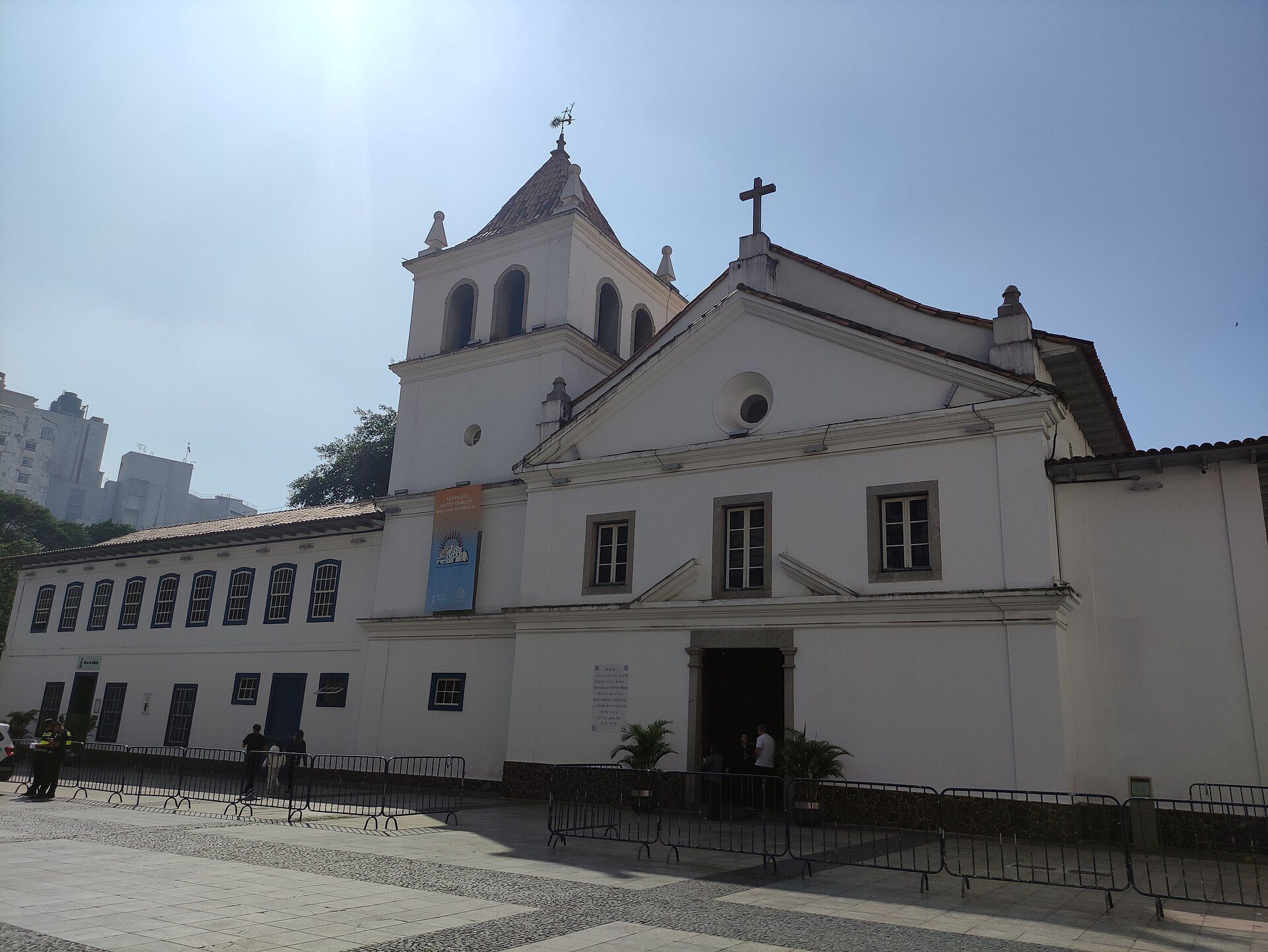
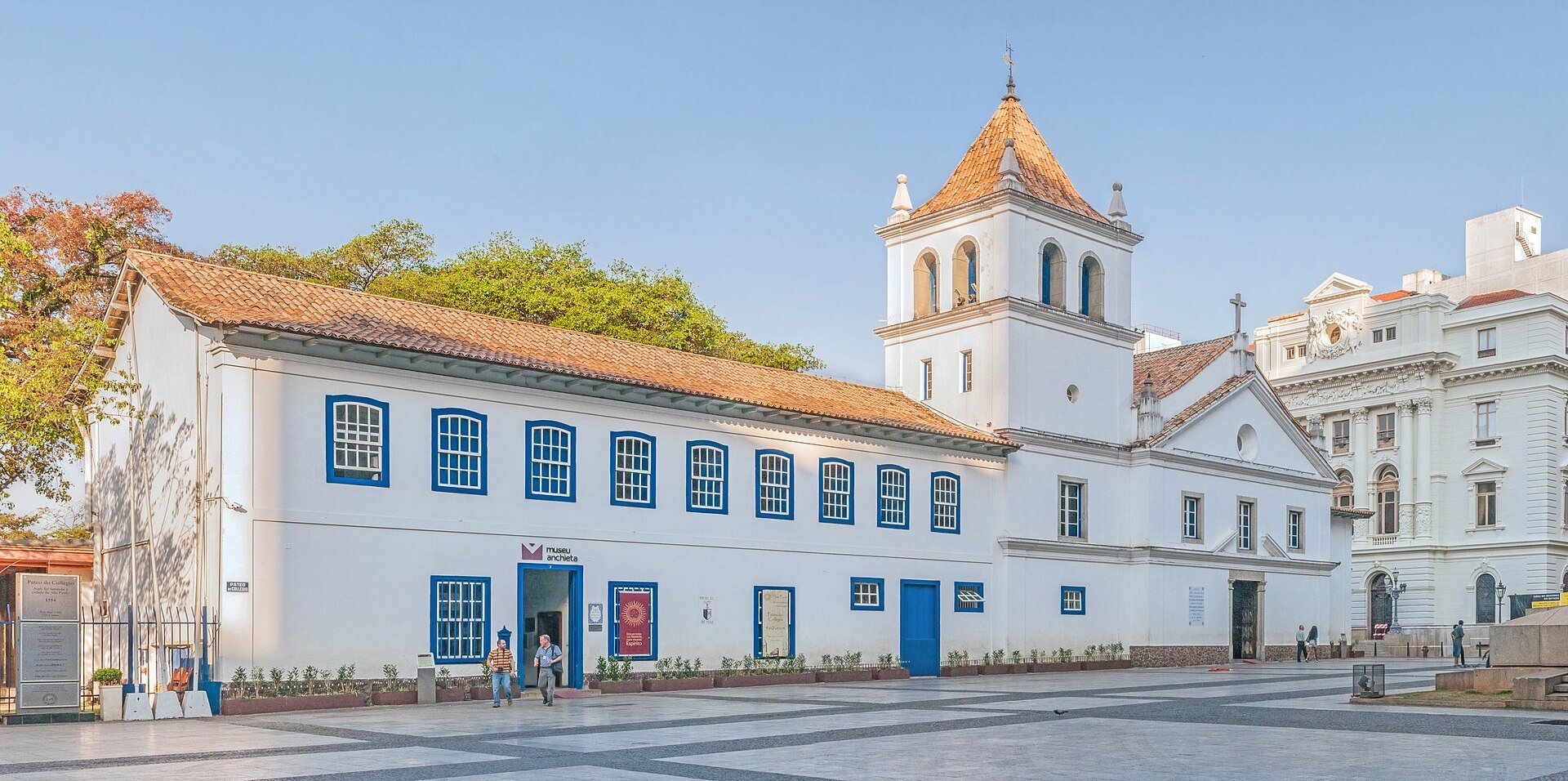
Pátio do Colégio is a Jesuit religious and cultural complex in São Paulo, Brazil, marking the place where Jesuit missionaries founded the settlement in 1554. Led by Manuel da Nóbrega and the novice José de Anchieta, the missionaries established a mission, school, and seminary on the Piratininga plateau between the Tamanduateí and Anhangabaú rivers. The first settlement, São Paulo dos Campos de Piratininga, gave its name to the modern city.
Foundation and early mission
Thirteen missionaries formed the first Jesuit community at Piratininga. Their work brought European Catholic missionary activity into contact with Indigenous peoples, including the Guainás and Tupiniquins, in a region connected to the coast by a difficult route through the forest. The inaugural Mass took place on 25 January 1554, the feast day associated with the conversion of Saint Paul.
The mission developed amid conflict over the enslavement and forced labor of Indigenous people. Bandeirantes, colonial expedition leaders whose expeditions often involved the capture and enslavement of Indigenous people, contributed to the Jesuits’ expulsion from the settlement in 1640. Fernão Dias Paes Leme authorized their return in 1653.
Jesuit expansion and expulsion
After the return of the Jesuits, the school and church were extensively rebuilt. The institution became a major center of the colony’s spiritual and educational life, teaching philosophy, theology, and the arts. Its later seventeenth-century complex also included a library and served the expanding settlement.
In 1759, the Marquis of Pombal, the Portuguese statesman who ordered the suppression of the Society of Jesus in Portugal and its colonies, secured the Jesuits’ expulsion again. The state appropriated the complex, which served as the residence of the Archdiocese from 1759 to 1765.
Government and civic use
From 1765 to 1912, the former Jesuit complex was the Palace of the Governors and the official residence of São Paulo’s captain-generals and governors. It also housed the São Paulo legislature from 1835 to 1879, the Palace of Dispatches from 1912 to 1932, and the Secretariat of Education from 1932 until 1953.
Following the state takeover, the area became known as Largo do Palácio and formed part of São Paulo’s civic and cultural center. The inaugural session of the São Paulo Academy of Letters, then called the “Academy of the Happy,” took place there in 1770. An opera house, a foundry, fairs, the residences of Solar da Marquesa, and commerce on Ladeira do Palácio also shaped the surrounding urban life.
Demolition and reconstruction
Alterations during the nineteenth century changed the colonial complex substantially. In 1881, provincial president Florêncio de Abreu ordered a radical remodeling of the palace, including its principal façade, and the perpendicular wing that had housed São Paulo’s first General Post Office was demolished. The palace was partly demolished and modified in 1896, then completely demolished in 1953. Bombardment during the Revolution of 1924 caused further damage.
The area was returned to the Jesuit order around São Paulo’s 400th-anniversary celebrations. Reconstruction between 1954 and 1979 sought to recover the appearance associated with the seventeenth-century complex, using surviving remains and historical imagery. The present institution includes religious, cultural, educational, and museum functions. The Anchieta Museum opened in 1979, and the Church of Blessed José de Anchieta was established under that name in 1980. A 2018 intervention by the M.I.A. Collective addressed social relations and public attention at the site.
The Jesuits’ establishment of the Congregation of Our Lady of the Rosary at Vila de Piratininga in 1583 is associated with the Blessing of the Roses, a religious ceremony that remains part of the site’s traditions. José de Anchieta introduced roses to Brazil between 1560 and 1570, and Masses continue to be celebrated in the church.
Remains
The present complex combines reconstructed church, tower, and school façades with surviving fragments of the earlier buildings. Its architectural language evokes the seventeenth-century colonial complex, particularly its restrained Mannerist character. Excavation and restoration exposed portions of the crypt, tower, and rammed-earth walls, while the current buildings incorporate fragments of a wall dated to 1585.
Early church and school
First mission buildings
The first church and school were formed by a simple hut of about 90 square metres, covered with palm leaves or straw. José de Anchieta described its dimensions as ten by fourteen Portuguese passo craveiro units. The structure is also associated with Tibiriçá, an Indigenous leader linked to the early settlement and to the construction of its first church and school.
Rammed-earth school and church
In 1556, under the direction of Father Afonso Brás, the hut was enlarged into a school and adjoining church made with rammed earth. This technique compacted damp earth inside temporary wooden formwork to create walls. The school contained eight cells for the brothers’ accommodation.
Seventeenth-century complex
A later church and school complex was built in rammed earth and stone during the second half of the seventeenth century. The school was reconstructed between 1680 and 1694, when a library was added, bringing the complex’s total area to approximately 1,150 square metres.
Church and crypt
Church of Blessed José de Anchieta
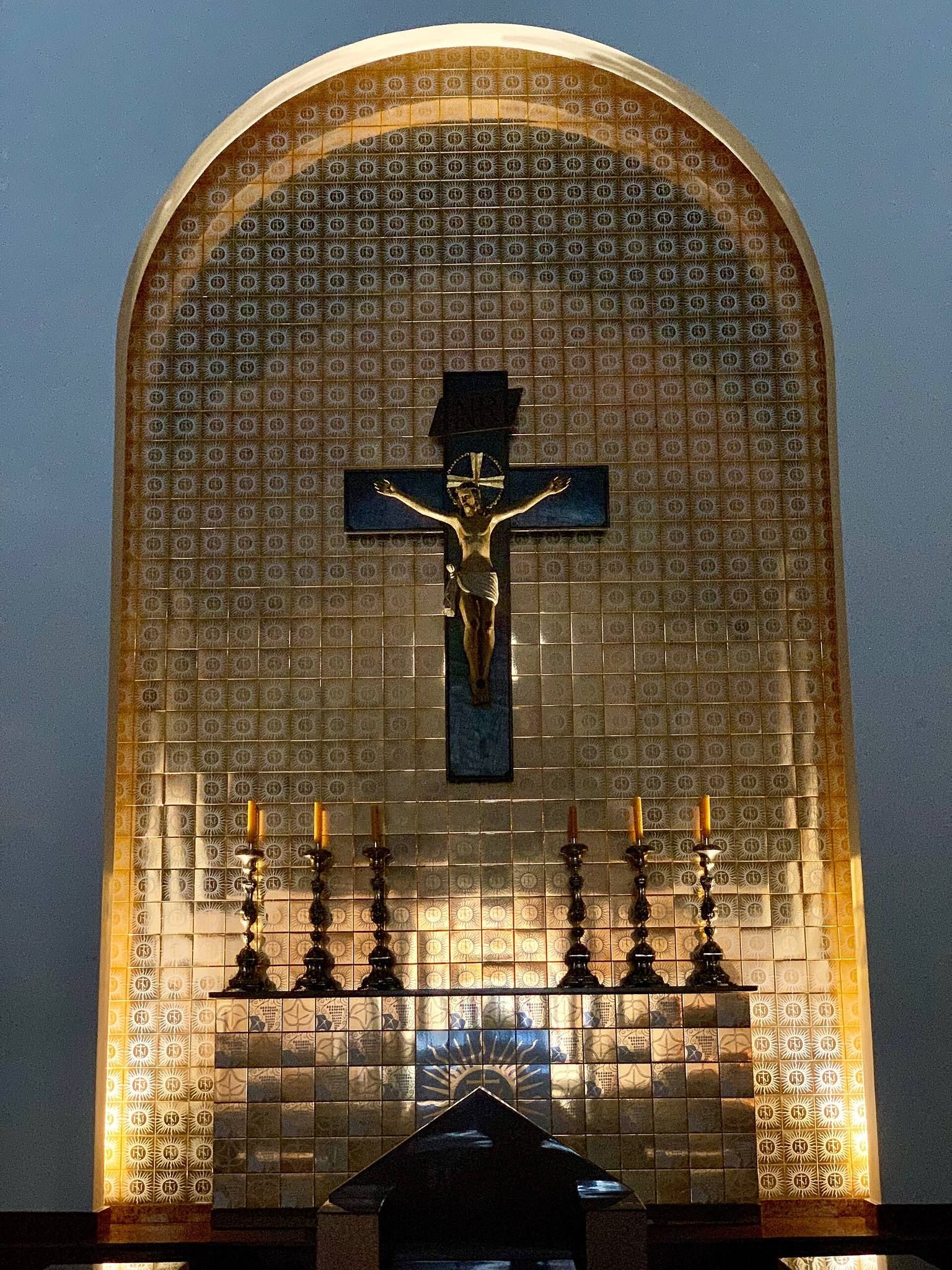
The original Church of Bom Jesus, also known as the Church of the College, was built in rammed earth in 1556 and reconstructed in 1680. It closed in 1891 and was demolished in 1896, although its tower survived in substantially altered form. The church and tower were reconstructed between 1954 and 1979, and the church received the name Church of Blessed José de Anchieta in 1980. The church preserves relics associated with Anchieta, including his femur and cape.
Tibiriçá Crypt
A crypt was added to the church in 1757 and remains part of the complex. Its surviving remains were revealed during excavation and restoration, alongside portions of the tower and a rammed-earth wall.
Museum and cultural facilities
Anchieta Museum
The Anchieta Museum contains more than 600 objects, including colonial paintings, altarpieces, sculptures, documents, and images connected with Jesuit activity in Brazil. Its collection includes seventeenth-century portraits of José de Anchieta and the Jesuit priest and writer António Vieira. A scale model presents the Pátio do Colégio area at the time of São Paulo’s foundation, while panels, maps, explanatory texts, and historical visual material trace the site and city through later centuries.
Library and public rooms
The Padre António Vieira Library specializes in the history of Brazil and the Society of Jesus. It has approximately 6,000 catalogued titles and a further 7,000 undergoing cataloguing. The complex also contains the Manoel da Nóbrega Auditorium, the Tenerife Gallery, and Canary Islands Square, as well as the Jesuit Sacred Art Museum and the Anchieta Cultural Workshops project in Embu das Artes.