Sheik Karimol Makhdum Mosque: A Historic Islamic Mosque in the Philippines
Site at a Glance
- Rating
- 4.8
- Popularity
- Low
- Country
- Philippines
- Primary era
- Modern
- Eras represented
- Early Modern, Modern
- Civilizations
- Unclassified
- Site type
- Religious
- Remains
- Mosque
On this page6 sections
History
Sheik Karimol Makhdum Mosque is a Sunni Muslim mosque in Barangay Tubig Indangan, Simunul, Tawi-Tawi, Philippines. It is associated with the Sufi tradition, an Islamic tradition emphasizing spiritual discipline and devotion, and remains in religious use. Local tradition places its establishment in 1380 by Sheikh Karimul Makhdum, a Syrian Arab trader and Sunni religious scholar. This tradition has led to the mosque being identified as the oldest mosque in the Philippines and Southeast Asia, although the 1380 foundation date remains local lore rather than a confirmed construction date.
Early tradition and surviving evidence
The mosque’s traditional history connects it with Sheikh Karimul Makhdum and the early spread of Islam in the southern Philippines. The form traditionally associated with the original building was a Moro pagoda style, a local Islamic architectural tradition shaped by the Muslim ethnolinguistic communities of the southern Philippines. The original structure’s precise form and date remain uncertain.
Most of the preceding mosque was burned in 1941 during the Japanese occupation of the Philippines in World War II. The present mosque was built in the 1960s. Studies by the National Museum of the Philippines established that four wooden pillars preserved within the building date to the seventeenth century. Their connection with the traditional 1380 mosque is uncertain because they may instead have belonged to a later wooden mosque built after the earlier structure had fallen into ruin.
Recognition and continued use
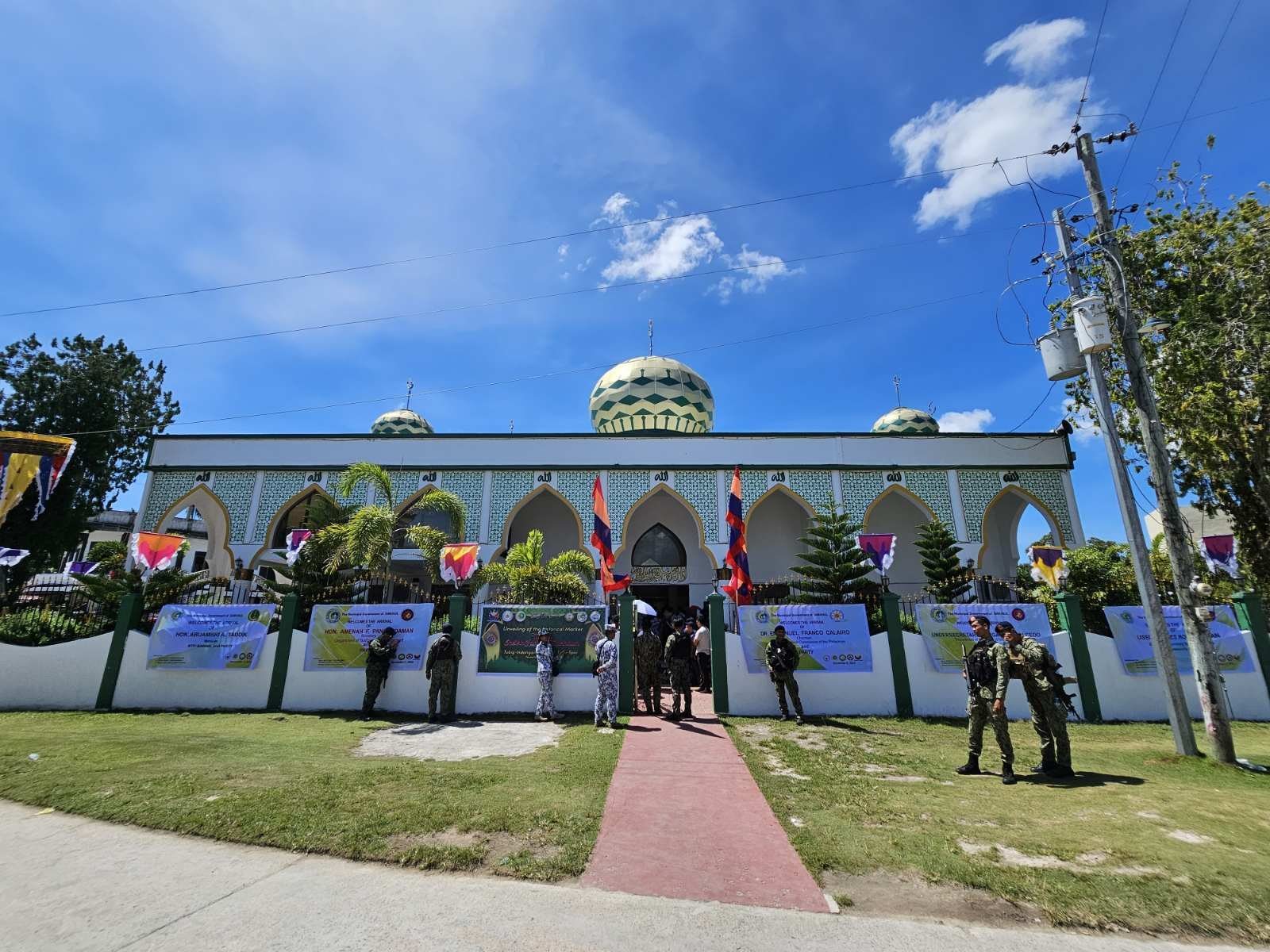
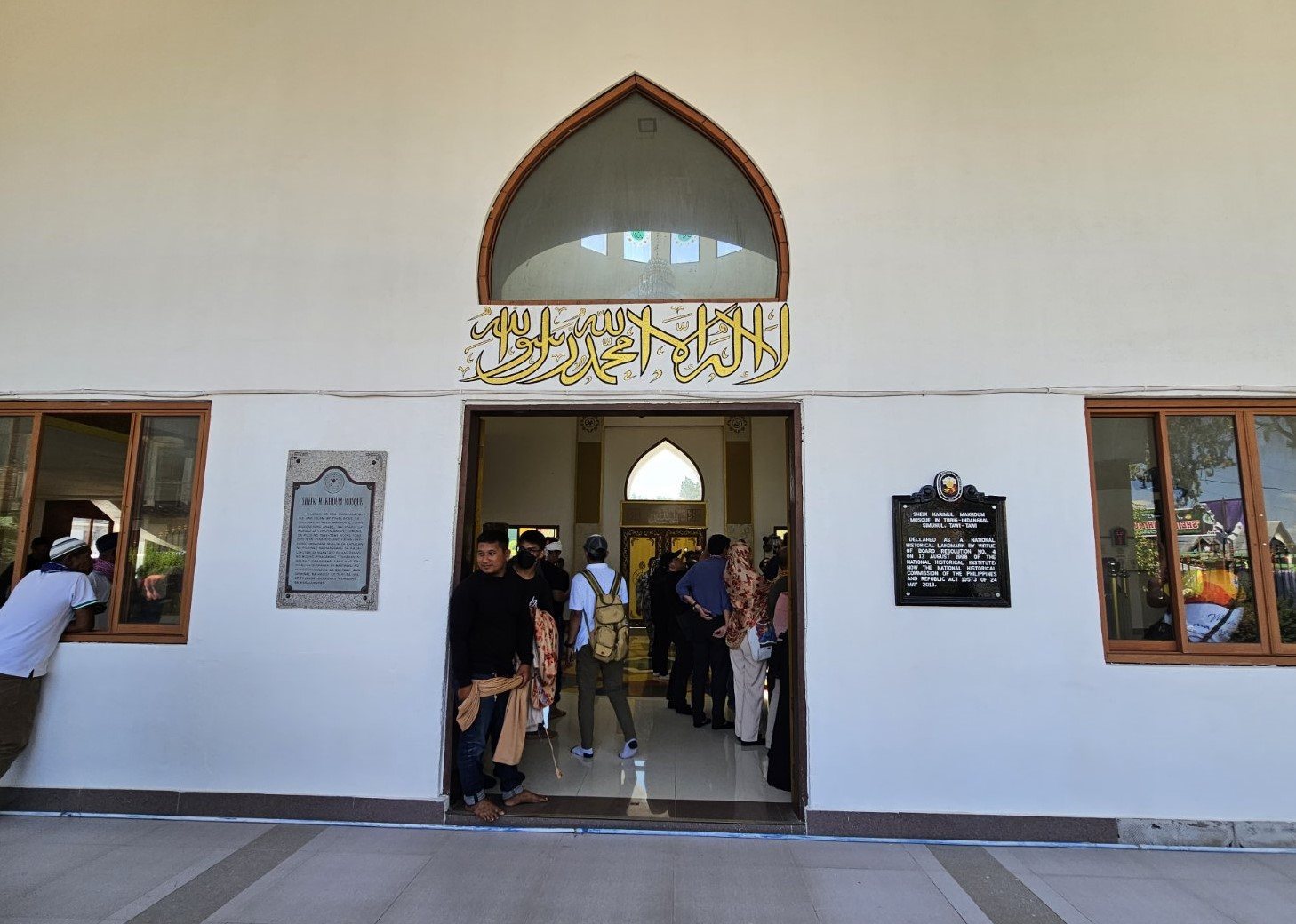
The four pillars are regarded as sacred and are considered the oldest known Islamic artifacts in the Philippines. The mosque was declared a National Historical Landmark by the National Historical Commission of the Philippines and a National Cultural Treasure by the National Museum. Its formal landmark designation dates to August 13, 1998. On November 7, 2023, the National Historical Commission unveiled a historical marker at the mosque.
Scholars, local leaders, and residents have supported initiatives to rebuild the mosque in the traditional Moro pagoda style. These efforts reflect continuing interest in preserving the site’s religious role and its connection with local Islamic history.
Remains
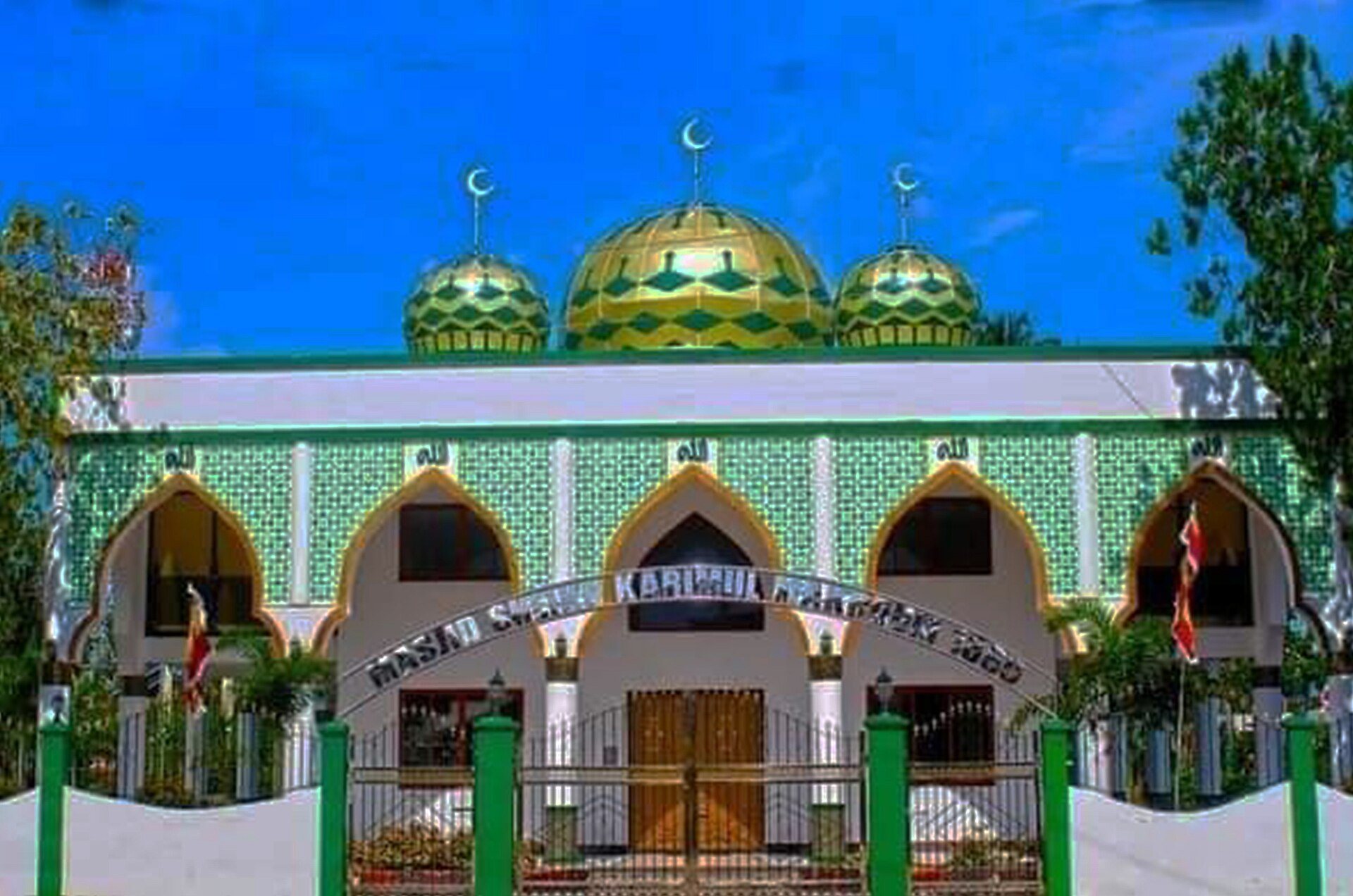
The surviving site combines a concrete mosque built in the 1960s with four much older wooden pillars preserved inside it. The present building follows an Arabic onion-dome style, while the earlier mosque is traditionally associated with a vertically organized Moro pagoda form. The relationship between the current structure and the earlier wooden buildings remains partly unresolved.
The present mosque
The existing mosque is a concrete building dating from the 1960s. Its onion dome has a bulbous, tapering profile associated with several Islamic architectural traditions. This design differs from the traditional Moro pagoda style linked with the original mosque. The building continues to serve as a mosque in Barangay Tubig Indangan.
The wooden pillars
Four wooden pillars dating to the seventeenth century are preserved within the present mosque. They are at least 400 years old and are regarded as sacred. Their exact architectural setting is uncertain: they may have formed part of the traditional mosque attributed to 1380, or they may have come from a later wooden mosque constructed after the earlier building had fallen into ruin.