Port Hudson State Historic Site: Civil War Siege Fortifications in Louisiana
Site at a Glance
- Rating
- 4.7
- Popularity
- Low
- Country
- United States
- Primary era
- Modern
- External website
- Open
- Eras represented
- Modern
- Civilizations
- Unclassified
- Site type
- Military
- Remains
- Fort
On this page9 sections
History
Port Hudson State Historic Site preserves Civil War fortifications and battlefield ground north of Port Hudson in Louisiana, United States. The site forms part of the Siege of Port Hudson, fought from May 22 to July 9, 1863, during the Union campaign to control the Mississippi River. Often described as the longest siege in American history, the operation ended after Confederate General Franklin Gardner surrendered upon learning that Union forces had captured Vicksburg, Mississippi.
The Siege of Port Hudson
Union forces commanded by Major General Nathaniel Prentice Banks surrounded the Confederate position. On May 27, Banks ordered the 1st and 3rd Louisiana Native Guards to attack Confederate defenses south of Foster Creek. These units consisted entirely of African American soldiers and were among the first Union formations to include African American field commanders.
The attacking troops advanced to within about 50 feet of the Confederate batteries three times, but each attempt was repulsed. Banks’s broader plan failed in part because its separate attacks were carried out piecemeal, without adequate coordination. The forces engaged at this position numbered slightly more than 1,000 men and suffered 37 killed, 155 wounded, and 116 missing. They remained in the field until an order to withdraw arrived at 4:00 p.m.
Preservation and Interpretation
The site is recognized for its association with the siege and for the role of African American soldiers under African American field leadership. It was listed on the National Register of Historic Places and designated a National Historic Landmark on May 30, 1974. The National Historic Landmark designation is a United States recognition for places judged to possess exceptional national historical significance.
A 256-acre addition enlarged the historic property, which is maintained by Louisiana state park authorities. The grounds, museum, and battlefield interpretation present the preserved portion of the siege works, while the broader Union and Confederate lines extended around the community and included artillery positions overlooking the nearby Mississippi River.
Remains
Battlefield Setting and Fortifications
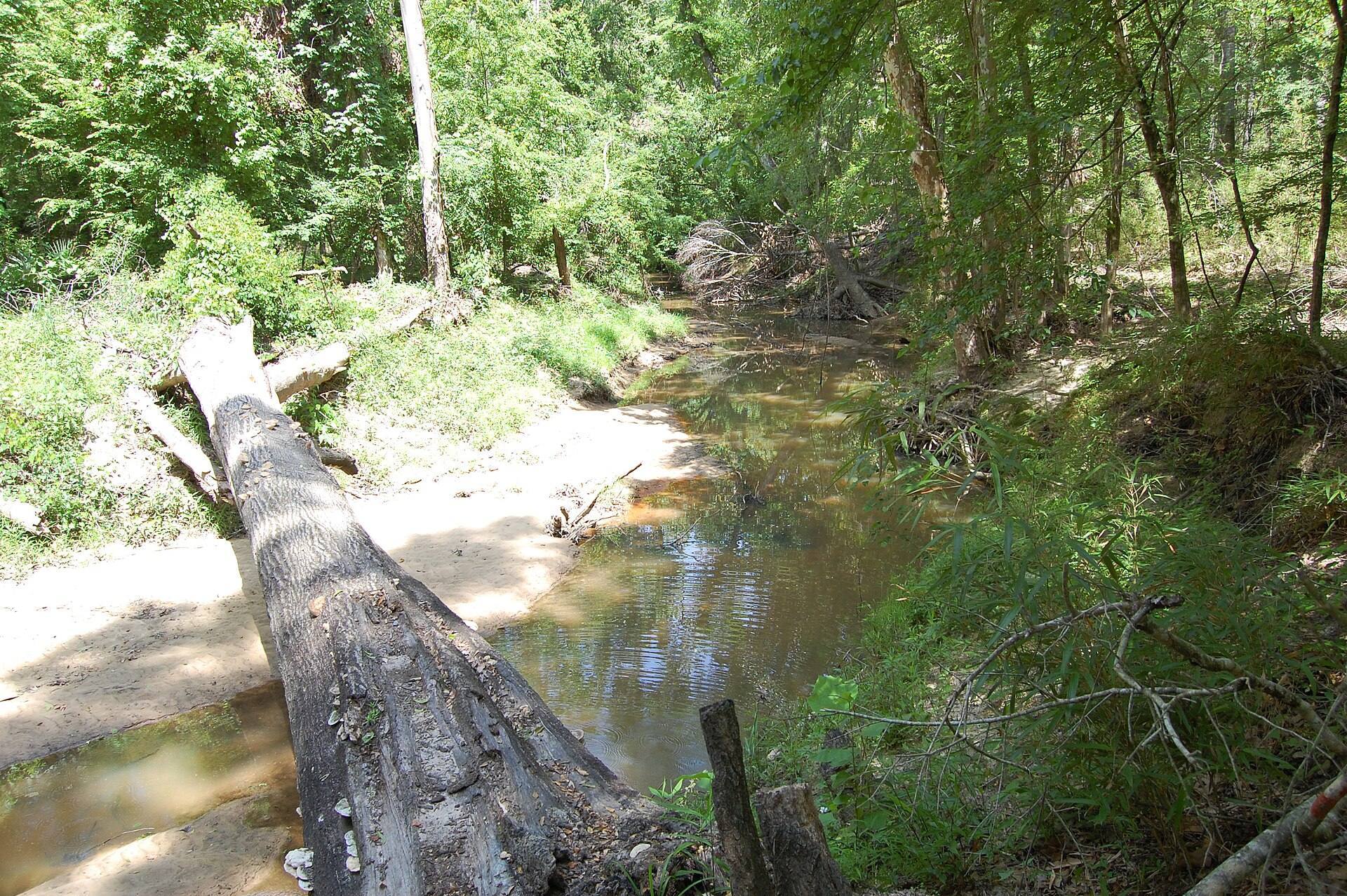
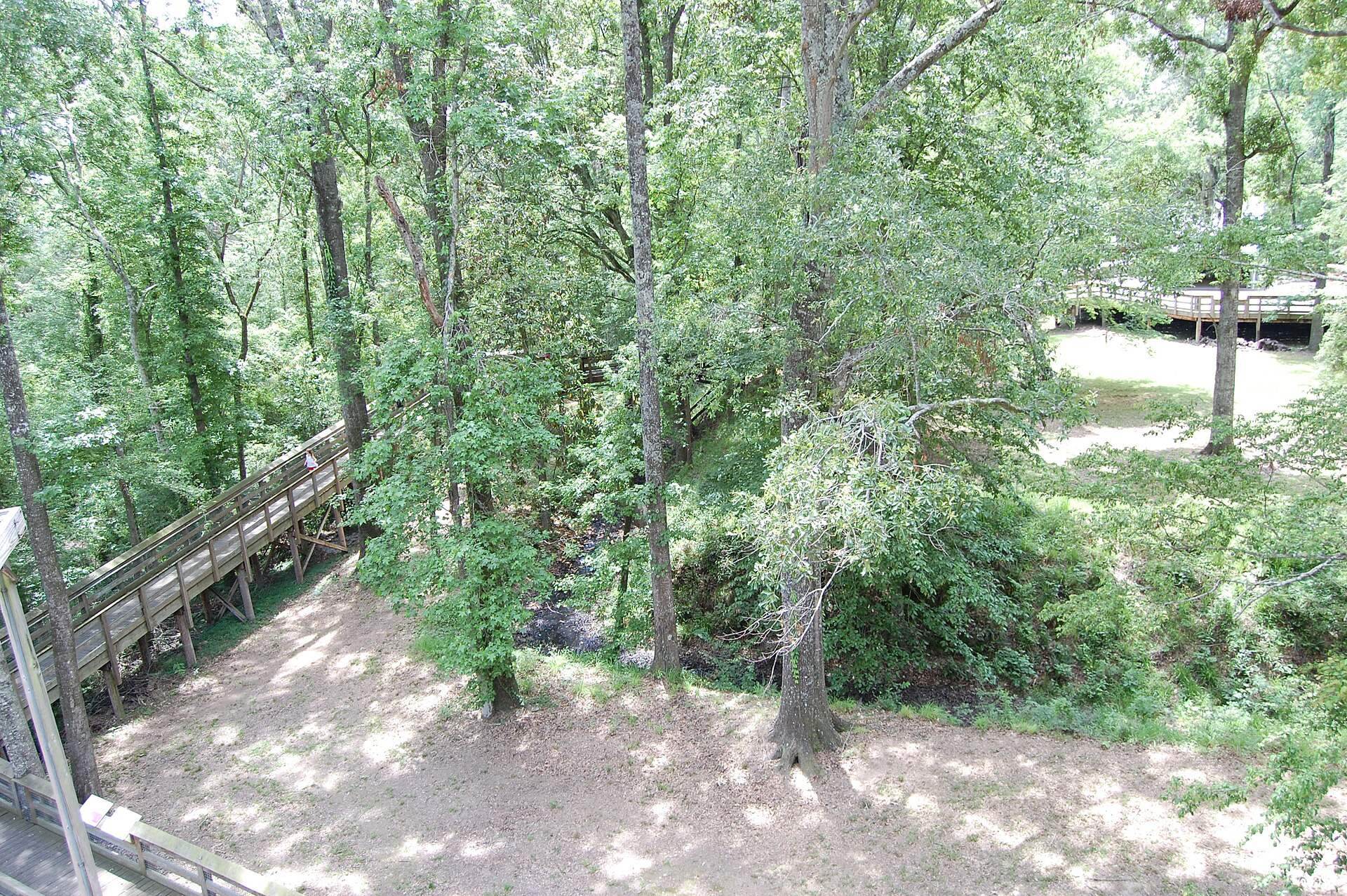
The preserved area lies west of United States Route 61 and extends toward Thompson Creek. Sandy Creek bounds it to the north, while Foster Creek partly borders it to the south. The battlefield occupies a terrace about 65 to 80 feet above the surrounding creeks. Its steep, twisting ground provided a natural defensive position for Union forces, while similar terrain southwest of Foster Creek held Confederate defenses.
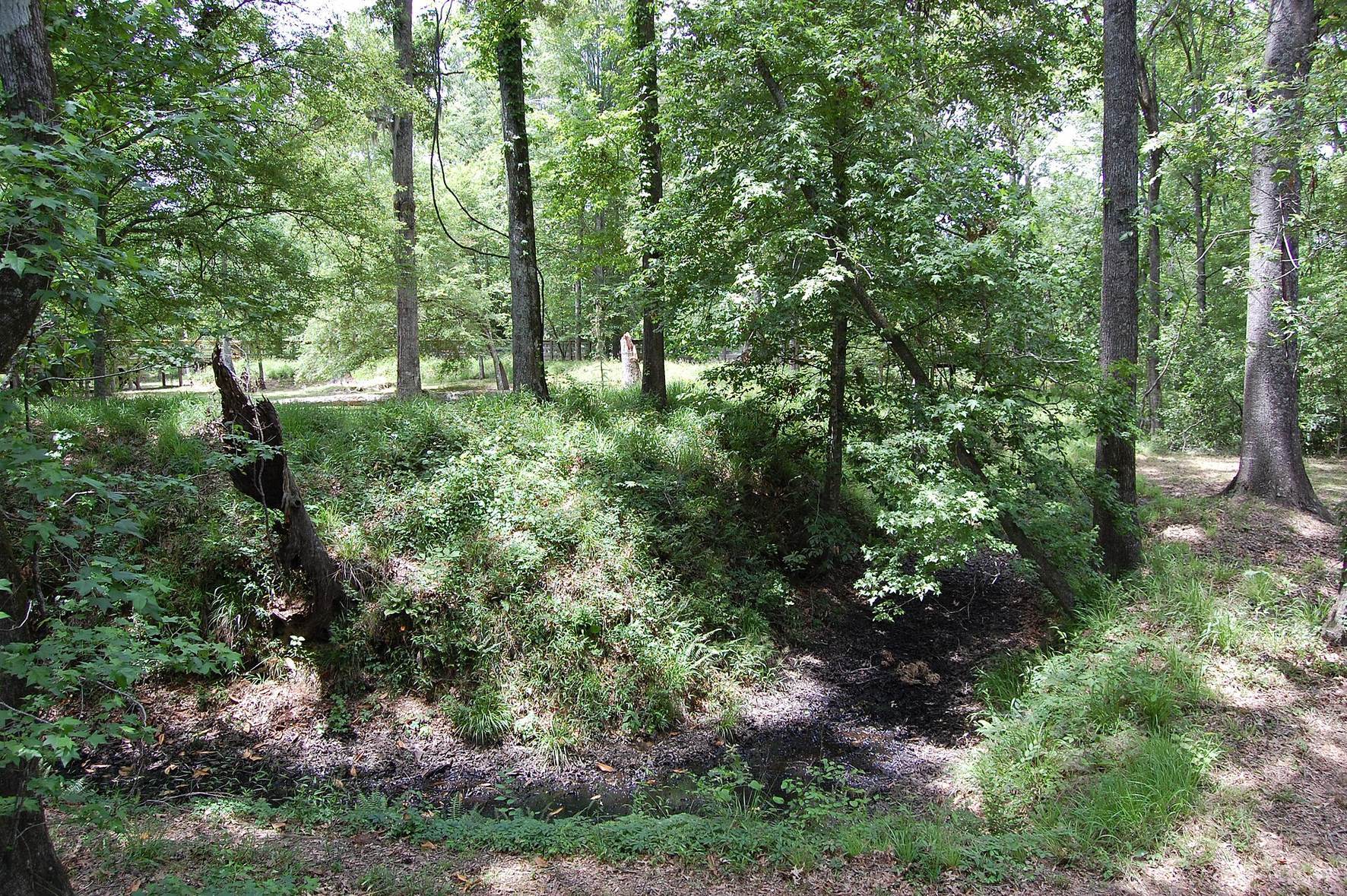
Surviving features include portions of the fortifications and battle area, redoubts, artillery displays, and interpretive plaques. A redoubt is a fortified defensive work, usually enclosed or partly enclosed by earthworks. These remains represent only part of the complete siege system, whose Union and Confederate positions extended beyond the preserved property.
Archaeological Features and Memorials
Union Siege Battery 8
Union Siege Battery 8 occupies the northeastern portion of the Union siege lines. A Louisiana State University archaeology-student survey examined its boundaries and searched for a possible sap, a trench dug forward from a defensive line toward an opposing position. The project also sought to create a digital topographic map for comparison with historical maps.
Military Burials and Reburial Obelisk
Archaeological work begun in 1987 examined whether soldiers were buried in the historic Port Hudson cemetery. Confederate and Union uniform buttons identified the graves as military burials. One burial, found with a uniform bearing Union eagle buttons, probably belonged to a Union soldier who had crossed the Confederate line and was shot at close range with buckshot in the abdomen.
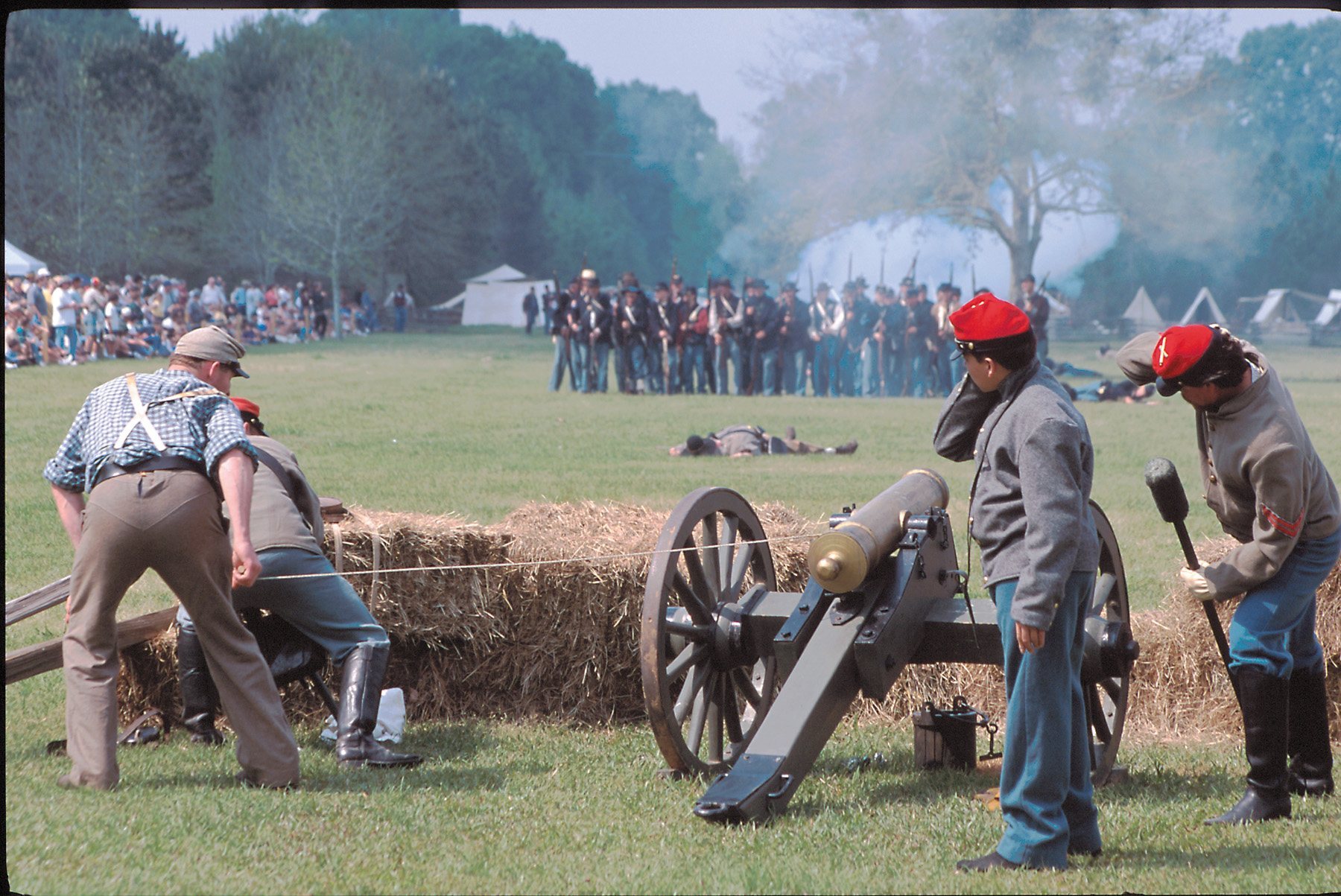
In 1997, remains of siege casualties from both sides were reburied beneath a single obelisk after a dedication ceremony involving Civil War reenactors and a military honor guard. The obelisk stands over a coffin containing sparse remains, and its plaque identifies the burial as “Two Soldiers One Federal One Confederate.” Port Hudson National Cemetery, where many other siege dead were buried, lies about 6 miles south of the historic site in East Baton Rouge Parish.
Museum and Battlefield Interpretation
A museum interprets the siege alongside the preserved battlefield and fortifications. Artillery displays and interpretive plaques connect the surviving defensive works with the fighting that took place around Foster Creek and the wider Port Hudson position.