Acholla: An Ancient Punic and Roman Coastal City
Site at a Glance
- Rating
- 4.4
- Popularity
- Very Low
- Country
- Tunisia
- Primary era
- Classical
- Eras represented
- Classical
- Civilizations
- Carthaginian, Phoenician, Roman
- Site type
- City
On this page18 sections
History
Punic foundation and identity
Acholla was a coastal Punic and Roman city at Boutria in Tunisia, founded around the fourth century BCE by colonists from Malta, reportedly with Carthaginian support. In antiquity it stood near the northern end of the Lesser Syrtis, the Gulf of Gabes, about 20 Greek miles south of Thapsus. Its inhabitants retained Phoenician language, customs, and traditions during the Punic period, when the Punic world formed the western Mediterranean civilization centered on Carthage.
Punic evidence includes coins modeled on Carthaginian issues and bearing the head of Baal Hammon, a major deity associated with fertility and the agricultural cycle. A beach sanctuary was probably dedicated to the same god, and its stelae carry the sign of Tanit, a principal Carthaginian goddess. Acholla also possessed a tophet, a Punic sacred precinct associated with funerary or votive practices.
Alliance with Rome
Acholla supported Rome during the Third Punic War, fought from 149 to 146 BCE. After Carthage was destroyed, the city became independent and received the status of a free city. Its harbor supported maritime commerce, helping Acholla prosper for roughly the next two centuries through trade, abundant coinage, and the construction of richly decorated monuments.
In 46 BCE, during Julius Caesar’s African campaign against Juba I of Numidia, Acholla submitted to Caesar. The city was held for him by Messius and was unsuccessfully besieged by the Pompeian commander Considius. Acholla’s alignment with Caesar benefited the city, although it faced rivalry from the neighboring cities of Thaenae and Leptis Minor.
Roman civic development
During the reign of the Severan emperors, a dynasty that ruled mainly in the late second and early third centuries CE, Acholla was designated a municipium Aelium Augustum Achullitanum. A municipium was a Roman community with recognized civic status and some local self-government. Acholla apparently did not advance further in the Roman civic hierarchy, probably because of regional rivalries involving Thaenae and Leptis.
Christianity and abandonment
By the beginning of the fourth century, much of Acholla had converted to Christianity. Two bishops are recorded, Restitutus in 484 and Quinus in 641. The city became the seat of an ancient Christian diocese, whose name continues in the Roman Catholic Church as a titular bishopric, a designation preserving the name of a former diocese without an active local diocese.
Acholla appears to have been completely abandoned before the arrival of the Arabs, since medieval geographers do not mention it. The first excavations began in 1937 under M. Bédé and exposed the tophet. An inscription found at the site in 1947 established the ancient name through the phrase Populus Achollitanus. Major excavations continued from 1947 to 1955, with Gilbert Charles-Picard among the principal archaeologists. A bilingual Phoenician-Latin inscription gives the name as Achulla, while the Tabula Peutingeriana records the form Anolla.
Remains
Site layout and sacred remains
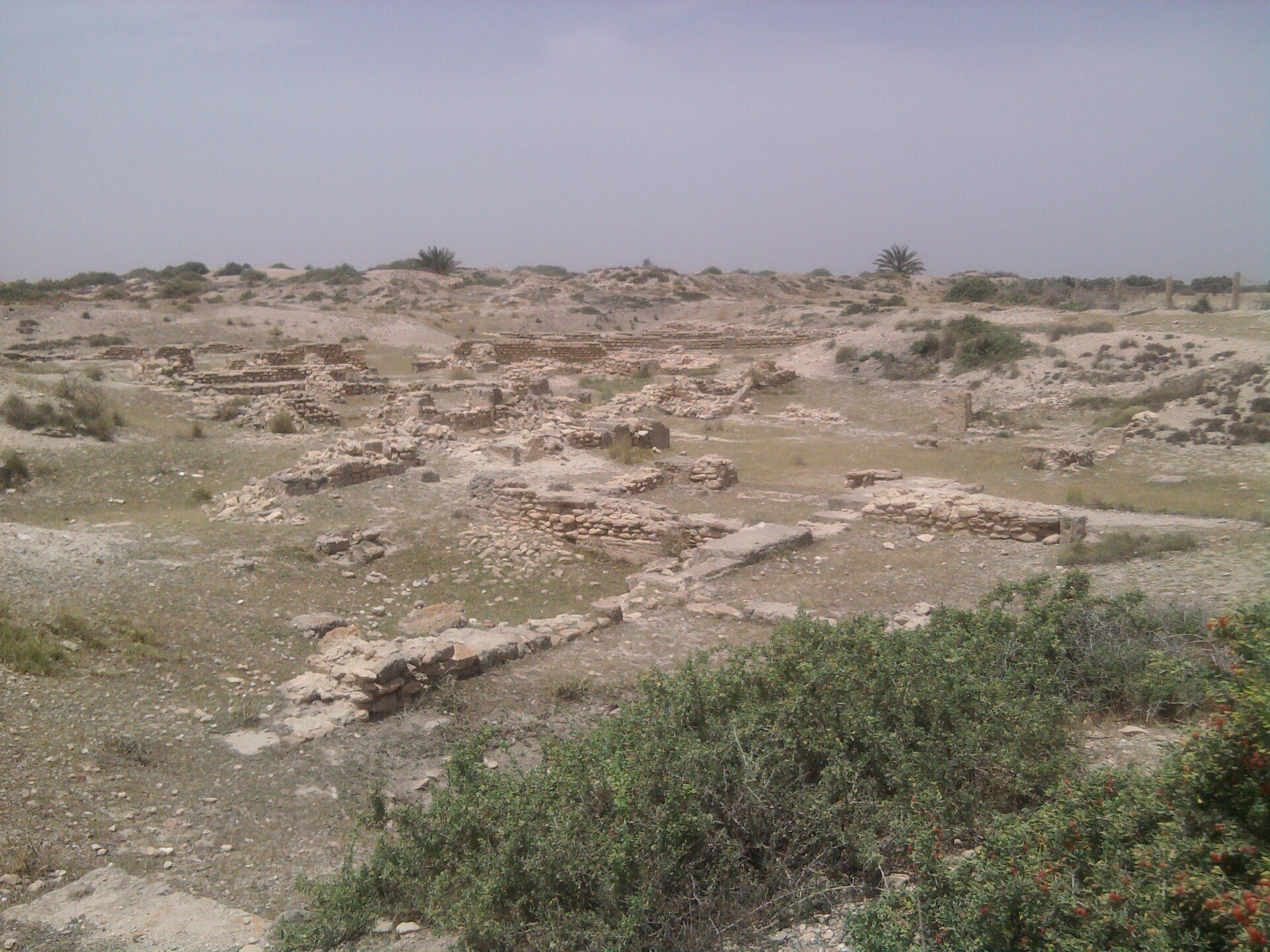
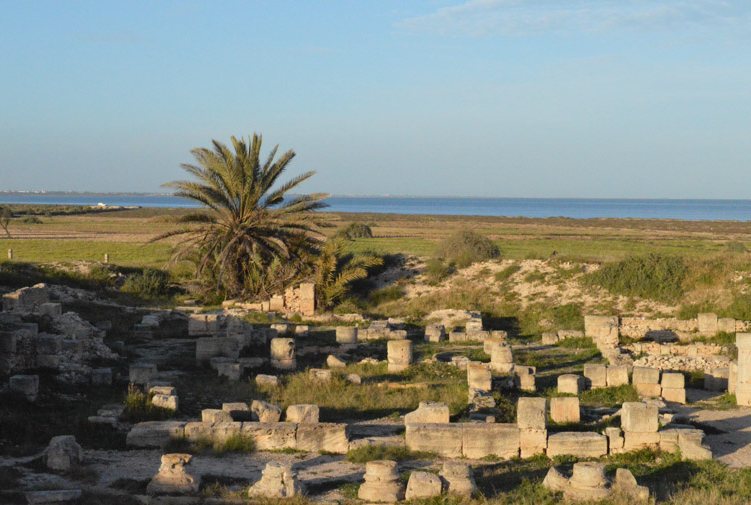
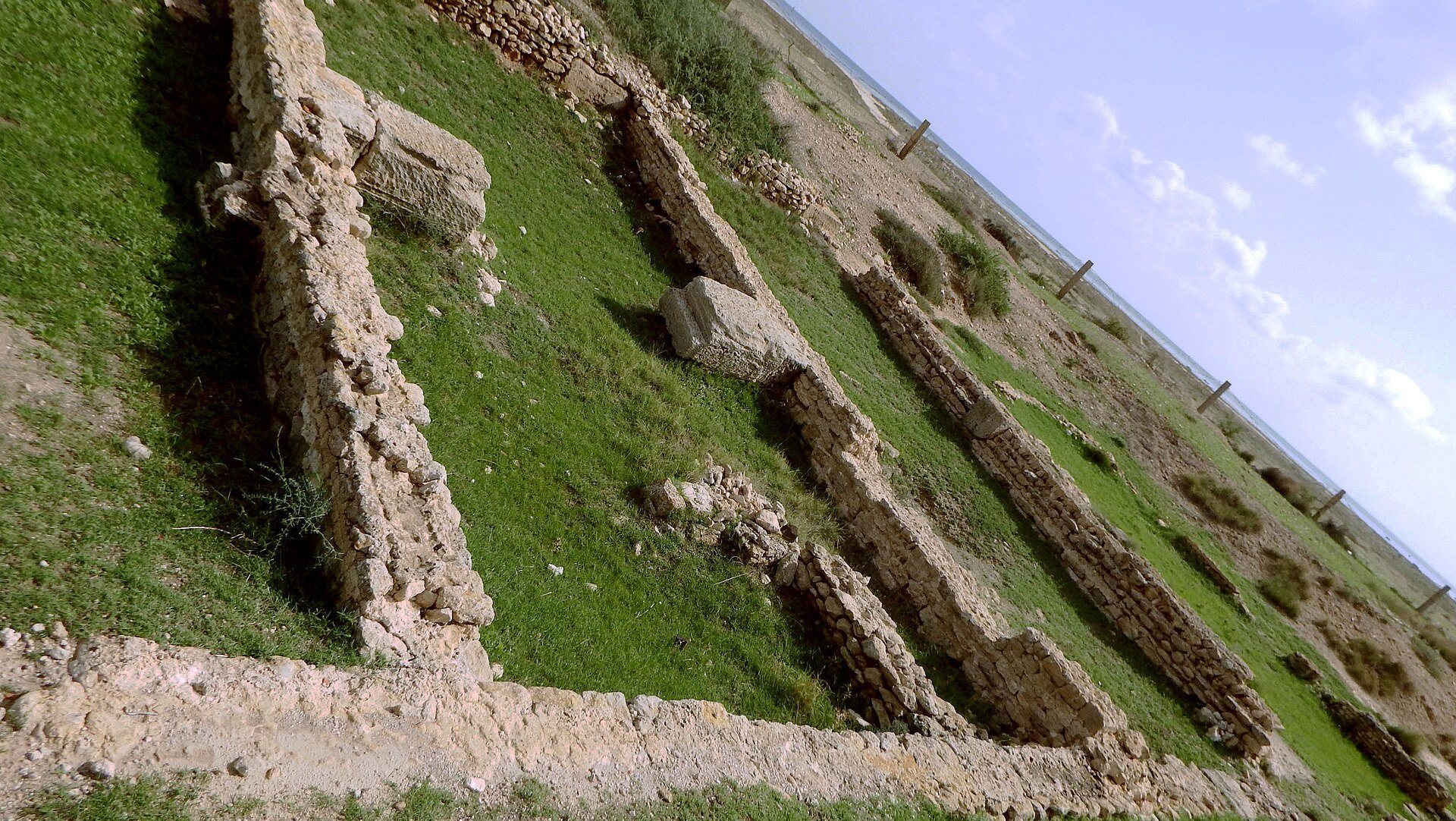
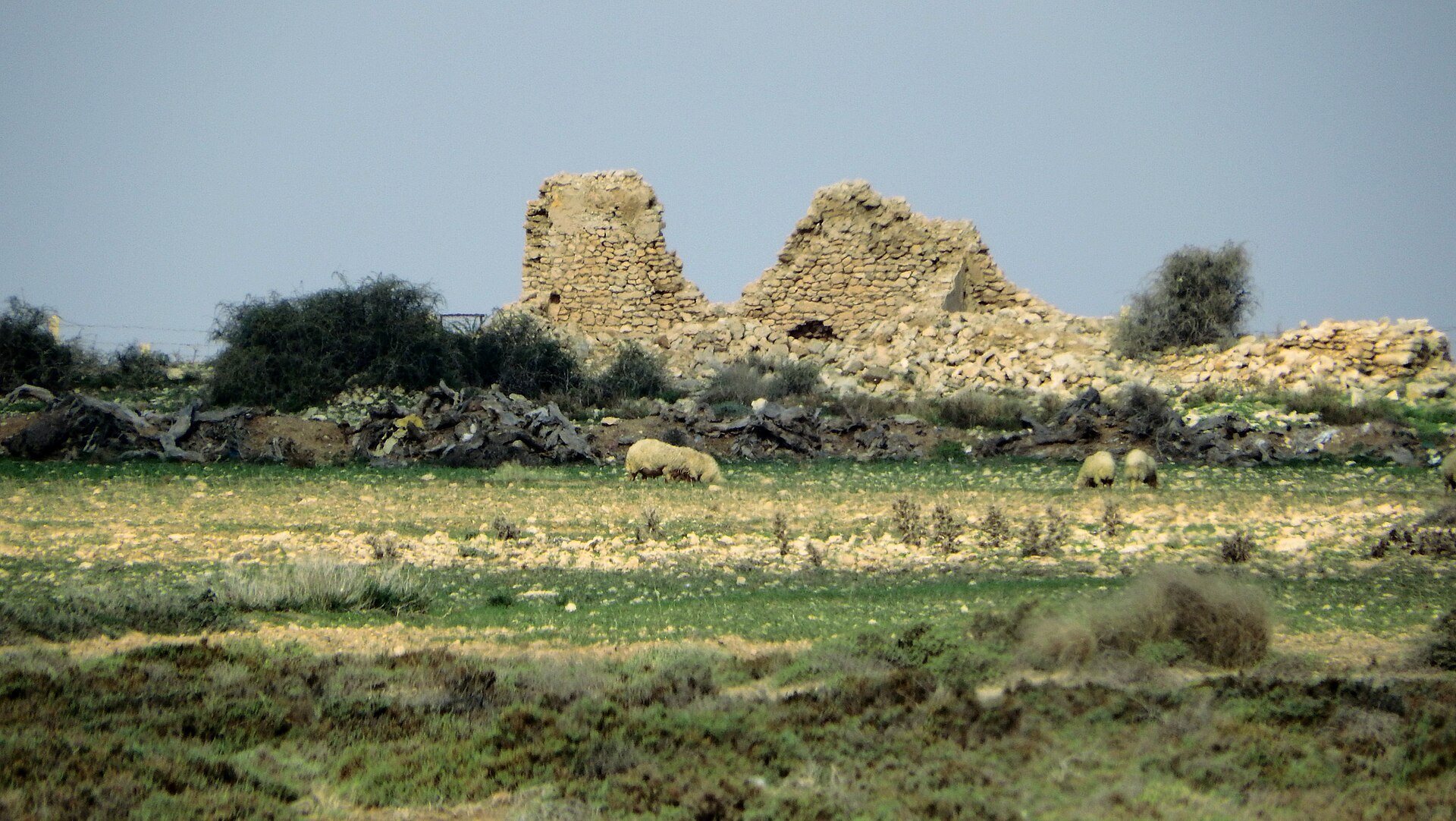
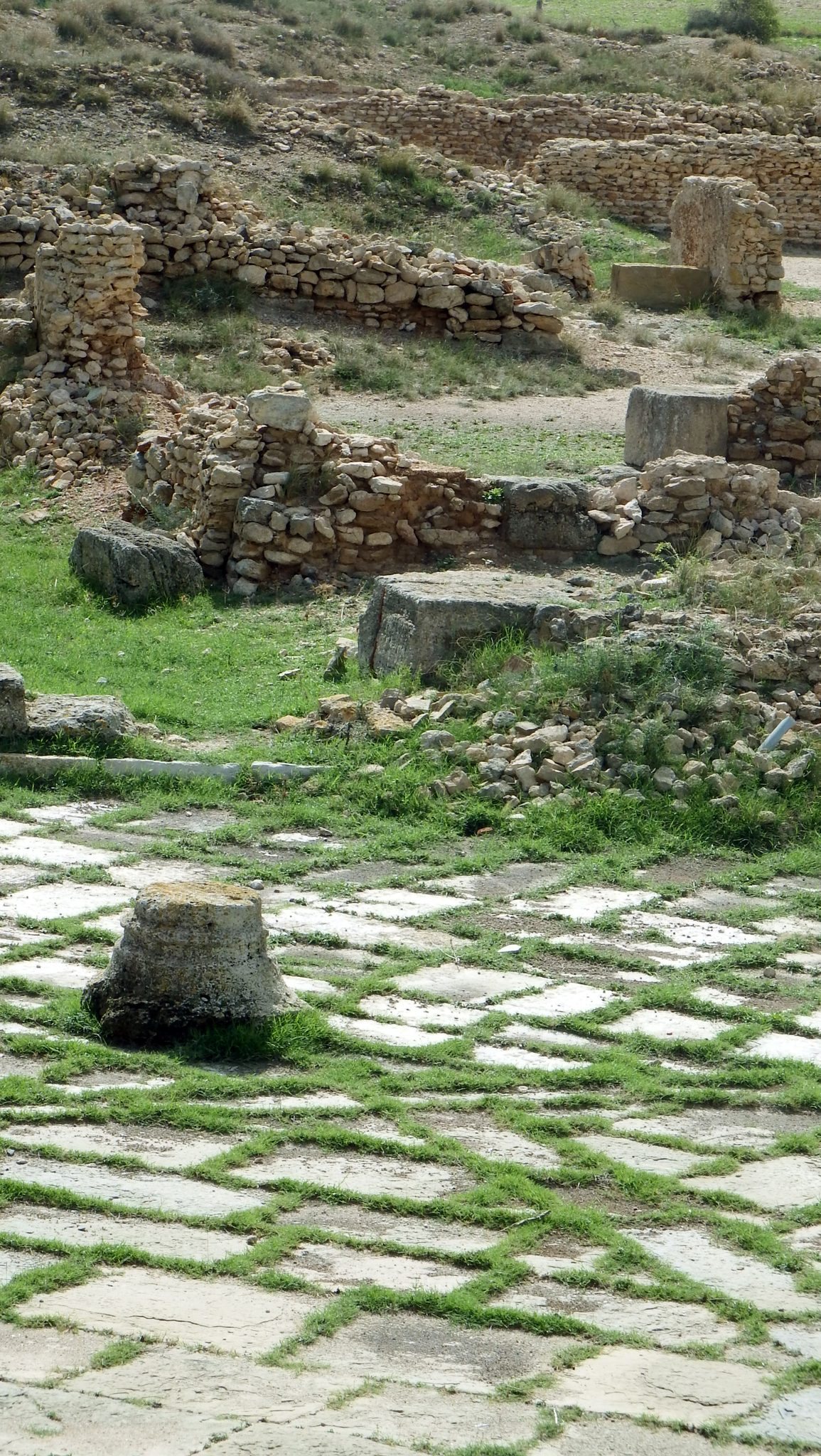
The archaeological remains extend across approximately 100 hectares and are principally those of the Roman city, together with Punic remains. The excavated areas include public buildings, houses, bath complexes, Christian baptisteries, and earlier sacred spaces. The physical remains preserve the long transition from Punic settlement to Roman city and later Christian community.
Tophet and beach sanctuary
The excavated tophet represents a Punic sacred precinct containing stelae connected with funerary or votive practices. A separate sanctuary on the beach was probably dedicated to Baal Hammon. Its stelae bear the distinctive sign of Tanit, linking the sanctuary with the religious traditions of the Carthaginian world.
Christian baptisteries
Two baptisteries have been identified at Acholla. These buildings or rooms were used for Christian baptism and belong to the period when the city had become an important Christian community.
Public buildings and baths
Amphitheater
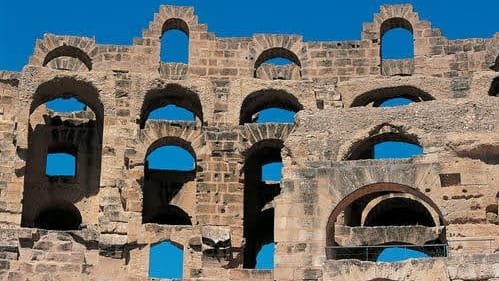
A badly deteriorated amphitheater survives among the ruins. Its soft sandstone blocks have been heavily eroded by wind. The nineteenth-century traveler Victor Guérin estimated its major axis at 50 paces and its minor axis at 32 paces.
Theater
The outline of a theater remains visible within the archaeological site, adding another public building to the Roman urban remains.
Bath complexes
Two bath establishments were excavated. The complex traditionally called the Baths of Trajan was built between 120 and 130 CE, but its attribution to Trajan is incorrect. It dates instead to the reign of Hadrian, Roman emperor from 117 to 138 CE. One of its large halls was a frigidarium, the cold-water section of a Roman bath complex.
Villas and mosaics
Residential buildings
Three villas have been identified. They include the house of the wealthy Achollitan and Roman senator M. Asinius Rufinus Sabinianus, whose senatorial career dates to 180–185 CE, the House of the Triumph of Neptune, and the Villa of the Ocean Head.
Mythological mosaic decoration
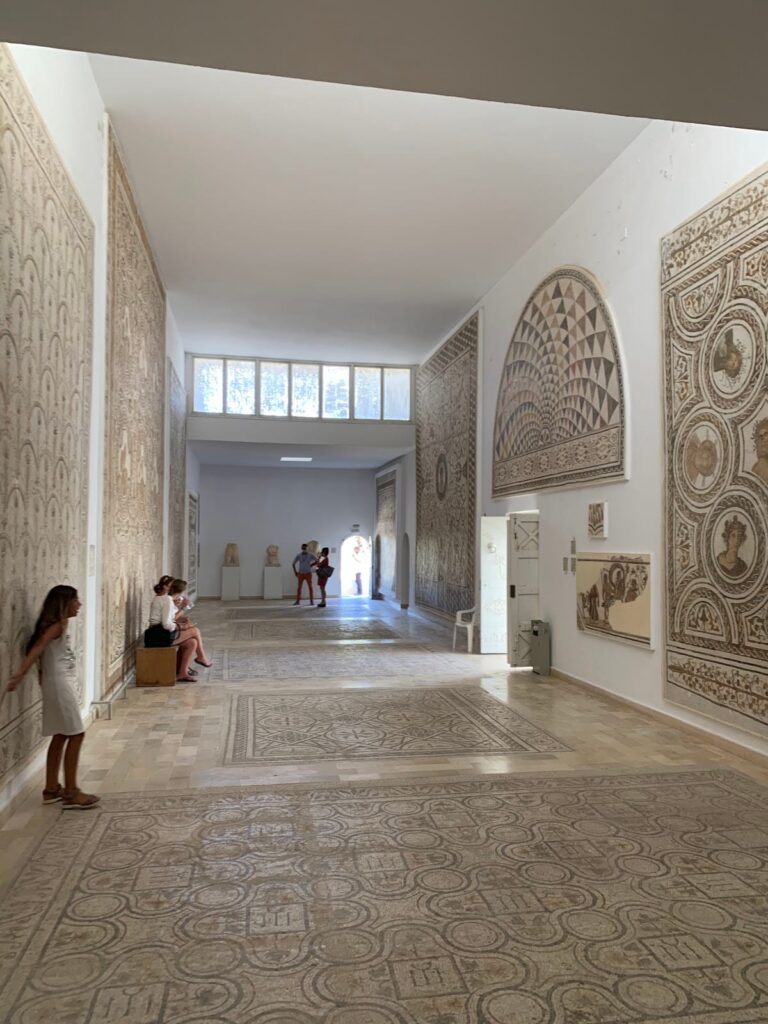
Acholla has yielded a substantial group of second-century mosaics, considered among the oldest mosaics discovered in Tunisia. Most of the excavated examples are deposited in a room devoted to Acholla at the Bardo National Museum. One of the most elaborate is the Labors of Hercules, a T-shaped dining-room mosaic from the villa of Senator Asinius. A grid formed by Heracles knots creates medallions containing human, animal, and monstrous figures. Hercules appears at the center with a lion skin, club, and bow, surrounded by ten medallions showing creatures he defeated.
Bath mosaics
A vaulted decoration removed from one wing of the large frigidarium at the baths traditionally called the Baths of Trajan depicts the Triumph of Dionysus, busts of the seasons, and a marine procession. Dionysus was the Greek god associated with wine, ecstasy, and festivity. A central panel from the same hall is divided into compartments by bands, with grotesques, a battle between centaurs and wild animals, and a Dionysiac scene showing a satyr and a nymph. The imagery presents Dionysus as mastering wild forces and associates him with the joy of life.
House of the Red Columns mosaic
A mosaic from the House of the Red Columns uses garlanded guilloche patterns and laurel wreaths to frame six circular medallions. Two contain cruciform floral motifs, while four contain busts of the seasons.