Newspaper Rock State Historic Monument: A Major Rock-Art Panel in Utah
Site at a Glance
- Rating
- 4.7
- Popularity
- Medium
- Country
- United States
- Primary era
- Medieval
- External website
- Open
- Eras represented
- Classical, Medieval
- Civilizations
- Ancestral Puebloan
- Site type
- Civic
- Remains
- Rock Art
On this page5 sections
History
Prehistoric and Historic Carvings
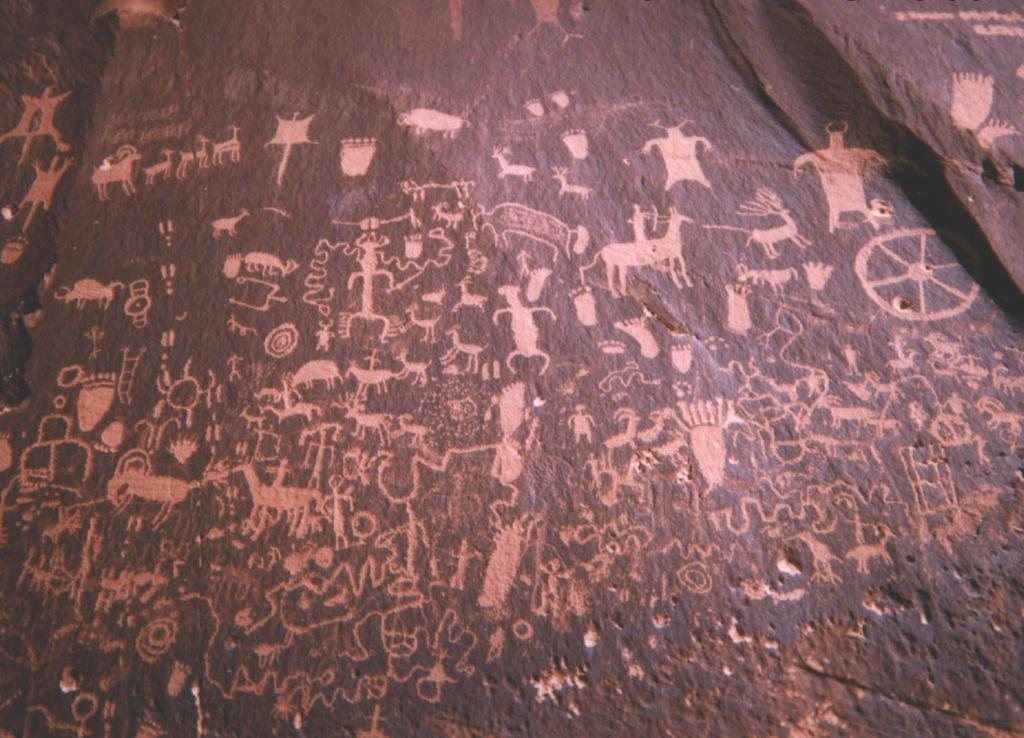
Newspaper Rock State Historic Monument is a rock-art site in San Juan County, southeastern Utah, United States, preserving a major concentration of petroglyphs on a sandstone cliff in the Indian Creek Canyon area. People associated with the Archaic, Basketmaker, Fremont, and Ancestral Puebloan traditions carved images there from approximately the beginning of the current era until about 1300. These traditions represent successive or partly overlapping cultures of the prehistoric American Southwest, with the Fremont tradition particularly associated with the Great Basin and Colorado Plateau and the Ancestral Puebloan tradition with the Four Corners region.
Ute, Navajo, and Anglo people added further carvings during historic times. The exact dates of individual images are difficult to establish, but their relative ages can be assessed through repatination, the gradual re-formation and darkening of the mineral coating on exposed rock. The unusually dense concentration of carvings remains uncertain in origin. One proposed explanation is that travelers used the panel to communicate.
In Navajo, the rock is called Tse’ Hone’, meaning “rock that tells a story.” Many figures appear to show polydactyly, a congenital condition involving an extra finger or toe. Comparable Puebloan archaeological evidence has supported the possibility that these images reflect a real physical condition, although that interpretation remains uncertain.
Preservation and Recognition
Newspaper Rock was designated a Utah State Historical Monument in 1961. In 1976, it was added to the National Register of Historic Places, the official United States list of historically significant districts, sites, buildings, structures, and objects, under the name Indian Creek State Park.
Remains
Rock Panel and Petroglyphs
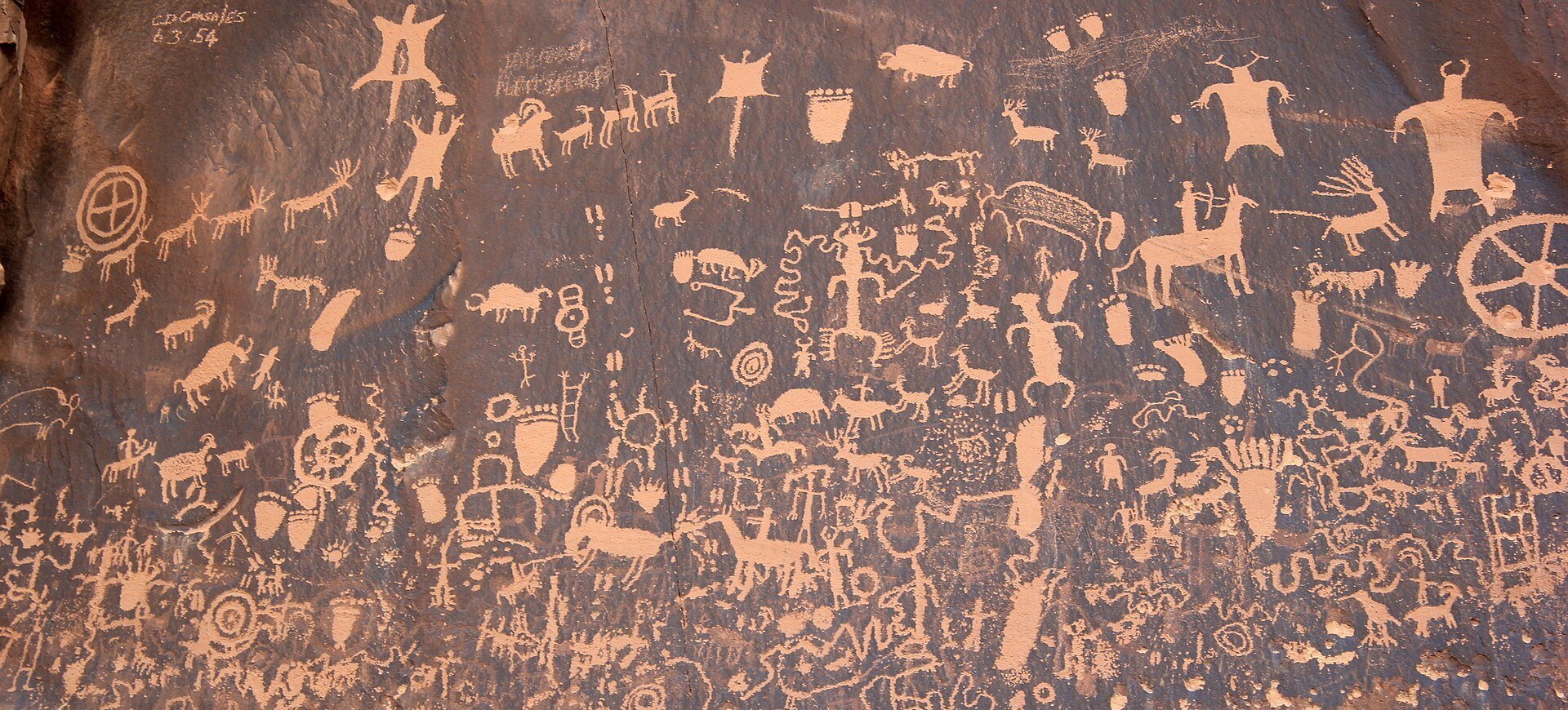
The principal surviving feature is a roughly 200-square-foot (19-square-meter) panel on the vertical Wingate sandstone cliffs enclosing the upper end of Indian Creek Canyon. The panel lies at an elevation of approximately 6,080 feet (1,850 meters). Wingate sandstone is a regionally widespread formation that commonly forms prominent cliffs across the Colorado Plateau.
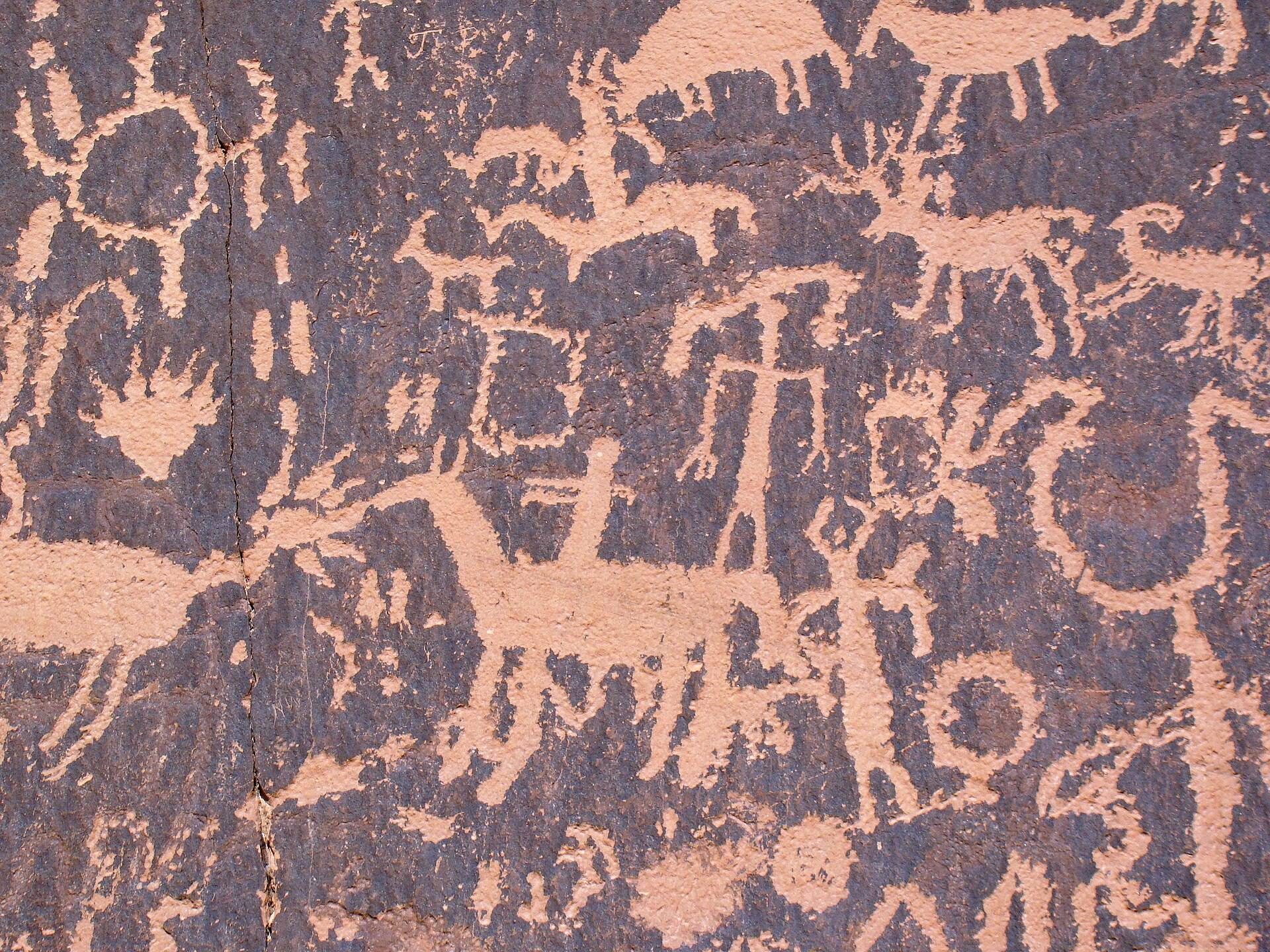
More than 650 petroglyph designs cover the flat, rocky cliff face. The imagery includes human figures, animals, object-like forms, and abstract symbols. Deer, buffalo, and pronghorn appear among the animals, while some scenes show riders on horses. Other images have been interpreted as representations of past events. Together, the figures and patterns reflect carving activity carried out at different relative times.
The images were made by chipping through the rock’s dark desert-varnish coating with sharpened tools, exposing the lighter sandstone below. Desert varnish forms slowly on exposed desert rock and receives its blackish color from iron and manganese oxides associated with rainfall and bacteria. As new varnish develops over carved surfaces, older figures gradually darken again. Differences in this repatination help distinguish the relative ages of the petroglyphs, though they do not provide exact dates.