Agung Temple: A Hindu Temple Site in South Kalimantan
Site at a Glance
- Rating
- 4.4
- Popularity
- Medium
- Country
- Indonesia
- Primary era
- Medieval
- Eras represented
- Medieval
- Civilizations
- Unclassified
- Site type
- Religious
- Remains
- Temple
On this page7 sections
History
Agung Temple is a roofed Hindu temple site in Sungai Malang, Amuntai, South Kalimantan, Indonesia, traditionally associated with the fourteenth-century Negara Dipa Kingdom. The kingdom existed during the period of Majapahit, a major Javanese kingdom whose political influence overlapped the era assigned to the temple. Local tradition credits Empu Jatmika, a founding figure of Negara Dipa, with its construction.
Negara Dipa and the early Banjar tradition
Tradition places the establishment of the Hindu Negara Dipa Kingdom in 1438, at the meeting point of the Tabalong, Balangan, and Negara river basins. Negara Dipa is regarded in the regional historical tradition as the political predecessor of Negara Daha and later of the Banjar Sultanate. The early Banjar polity is associated with Maharaja Suryanata and Puteri Junjung Buih, while its administration is linked to Patih Lambung Mangkurat, a senior government official. Negara Dipa later developed into Amuntai.
The temple is traditionally connected with this early political history, although the local attribution of its construction to Empu Jatmika belongs to the region’s historical and legendary traditions. The site is estimated to be approximately 740 years old, while archaeological objects found there have been dated to around 200 BC, indicating that activity at the locality may have preceded the temple by many centuries.
Excavation and continuing traditions
Archaeological excavation in 1967 at a locality known as Gunung Candi, or Candi Hill, uncovered the temple base and other remains. The excavated temple was identified as Agung Temple, and local tradition continued to associate it with Empu Jatmika. The excavation helped connect the physical remains at the site with traditions concerning the Negara Dipa Kingdom.
Local tradition also associates Telaga Darah with the deaths of Sukmaraga and Patmaraga, who were said to have been killed there by their uncle, Lambung Mangkurat, during the kingdom period. The Hikayat Banjar, a traditional chronicle of the region’s origins and ruling lineages, places the killings at Luhuk Badangsanak, a distant river location from the palace. These accounts preserve different traditions about the same episode.
Remains
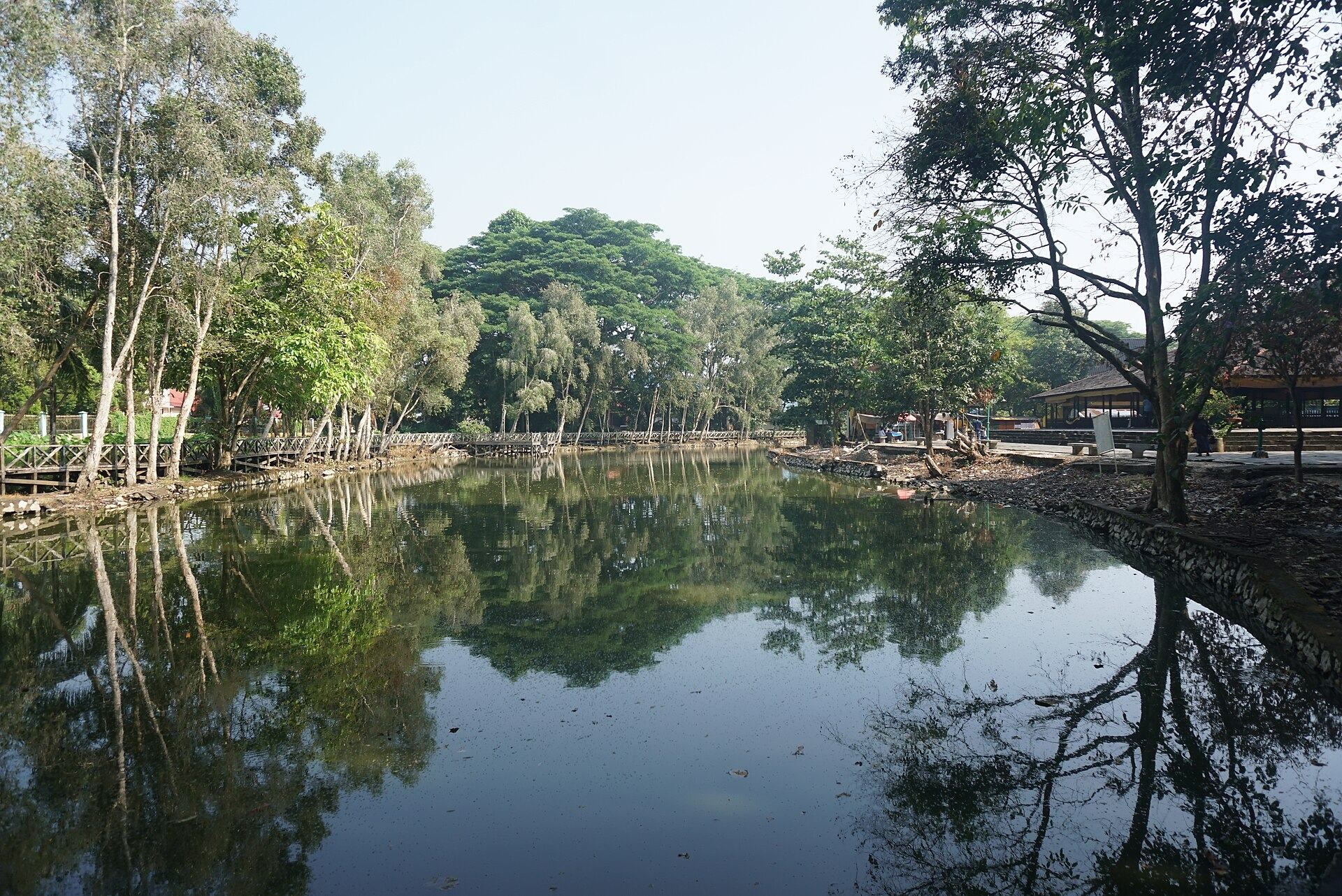
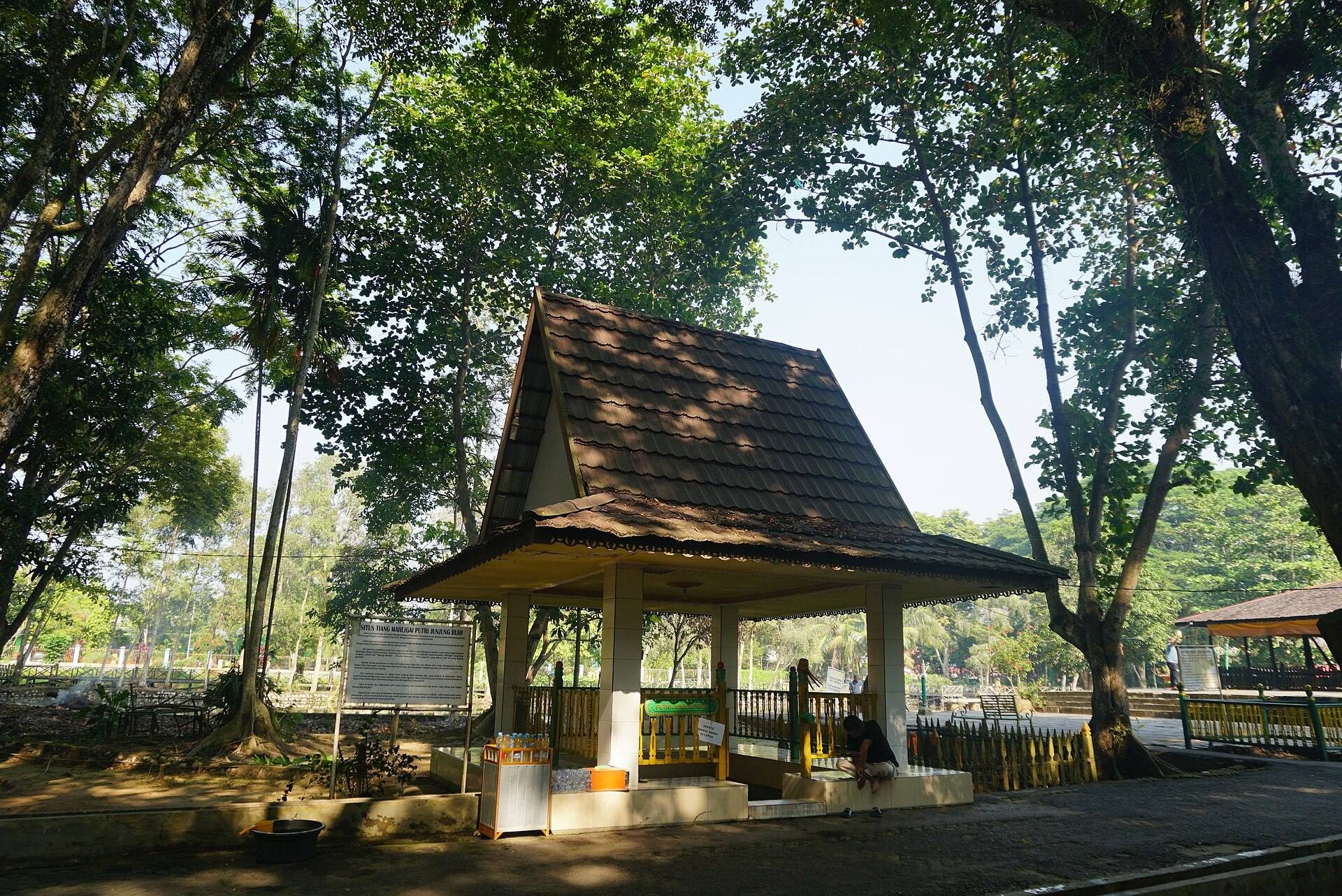
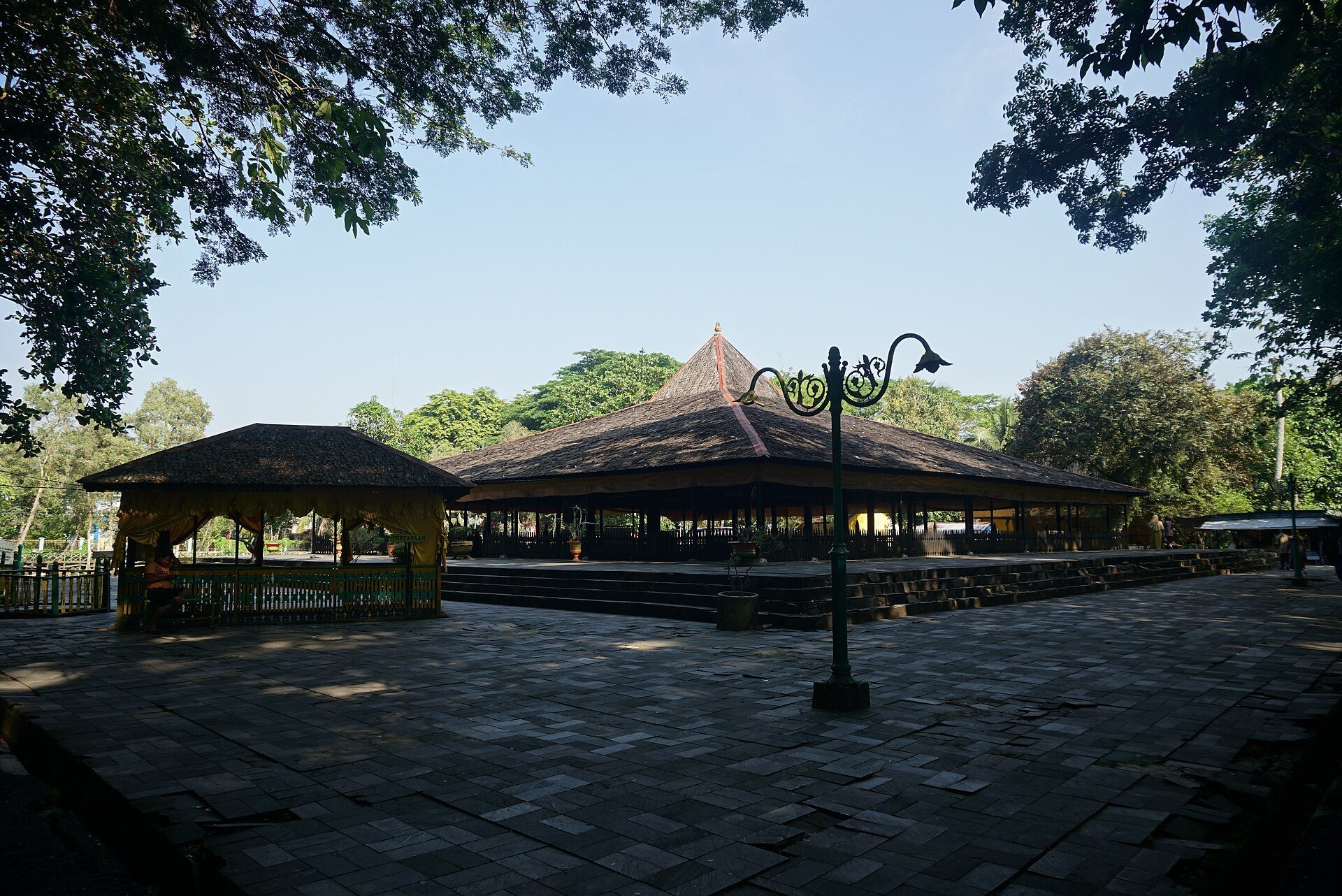
Agung Temple is a small, roofed Hindu structure within a complex that includes an entrance gate, a museum, and the area traditionally identified as Telaga Darah. The temple building measures approximately 40 by 50 metres. Stone and wood dominate the surviving remains and associated materials, including large brick-like stones, ulin-wood posts, and fragments of roof tiles.
Temple structure and materials
The temple stones resemble red brick but are heavier and stronger than ordinary red brick. Large examples remain at the site, with dimensions described as comparable to materials at the Sultan Suriansyah Cemetery complex and Kayen Temple in Central Java. Ulin, a highly durable hardwood native to Borneo, forms the posts found around the temple, while roof-tile fragments provide evidence of the building’s covered construction. The entrance gate remains part of the complex.
Museum collection
A museum stands at the front of the temple complex in a traditional Banjar house, an architectural form associated with the Banjar people. Its collections include suspected temple materials, pottery bearing Chinese characters, and various other pottery types. The museum also preserves documentation concerning the discovery of the temple and objects connected with the kingdom period.
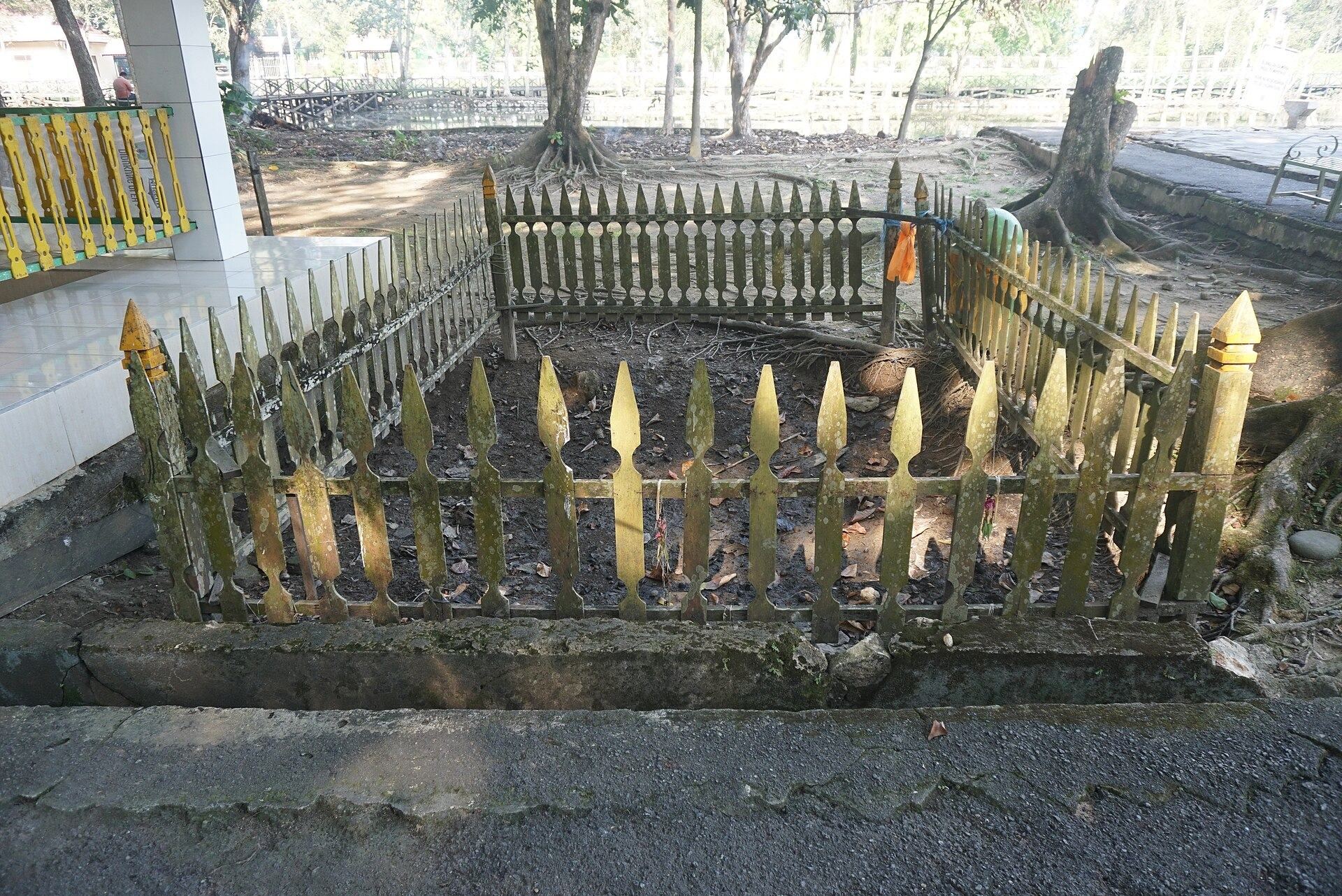
Telaga Darah
Telaga Darah is physically configured as an area resembling a well. Its traditional association with the deaths of Sukmaraga and Patmaraga gives the feature a place in local accounts of the Negara Dipa period, while the differing location given by the Hikayat Banjar reflects the variation within those traditions.