Næsbyhoved Slot: A Royal Manor and Fortified Residence in Denmark
Site at a Glance
- Rating
- 4.3
- Popularity
- Very Low
- Country
- Denmark
- Primary era
- Medieval
- External website
- Open
- Eras represented
- Medieval
- Civilizations
- Danish
- Site type
- Military
- Remains
- Castle
On this page8 sections
History
Næsbyhoved Slot is a former royal manor and fortified residence in Denmark, located north of Odense. First mentioned in 1337, it was probably older. Comparable fortifications on Funen suggest origins as early as the thirteenth century, while another possibility is that a local nobleman established it during the unsettled 1330s. The castle later became an important center of royal administration and residence.
From Holstein fief to royal stronghold
Næsbyhoved was first recorded as a fief castle of the Holsteiners after they received Funen in pawn in 1317. Valdemar Atterdag, the fourteenth-century Danish king who reasserted royal control over Danish territories, including Funen, recovered the castle in 1348. It then remained Danish property and was substantially enlarged during the 1370s.
The castle became the administrative center of Næsbyhoved Fief, which covered almost one-quarter of Funen. Its position expressed royal authority in the region, and members of the royal family used it during journeys through the kingdom.
Queen Christine and the late medieval court
Queen Christine, consort of King Hans of Denmark, received Næsbyhoved Fief as her life jointure, property or income assigned for a queen’s lifetime. From 1504 until her death in 1521, she lived alternately at the castle and in Odense. Her residence brought a royal court and substantial income to the city. Household accounts survive from this period and include everyday details, such as expenditure on “brøø” rather than ordinary bread.
Destruction and changing fortunes
Citizens of Odense destroyed and burned Næsbyhoved during the Count’s Feud in 1534, a Danish civil war fought from 1534 to 1536 over the Danish crown and the future of the Reformation. The castle was never rebuilt. After the Reformation, the fief administrator moved to the former Saint John’s Monastery in Odense, later Odense Castle, which had become royal property. Næsbyhoved consequently lost its administrative importance.
In later centuries, the castle mound became a source of building stone, and the last stones were removed in 1775. From the beginning of the nineteenth century, the castle area and the Fuglsanghuset refreshment establishment attracted residents of Odense for recreation. The complete draining of Næsbyhoved Lake in 1863 turned the area into pasture and reduced its popularity. It later regained some importance as a smaller excursion destination after a shooting society returned and the Ny Fuglsang refreshment establishment opened, now known as Restaurant Næsbyhoved Skov.
Romantic memory and preservation
Romantic interest renewed attention to the old castle site. The Danish author H.C. Andersen, the historian Lauritz Schebye Vedel Simonsen, and the writer and historian Christian Molbech visited the mound and were fascinated by it. Andersen reacted with dismay to its cultivated appearance, contrasting the former dances of knights and ladies with a field of buckwheat.
The historical value of the castle mound was gradually recognized, and it is now legally protected. The site continues to accommodate the Odense United Shooting Society, which first practiced target shooting in the moat in 1849.
Remains
Lake setting and defensive works
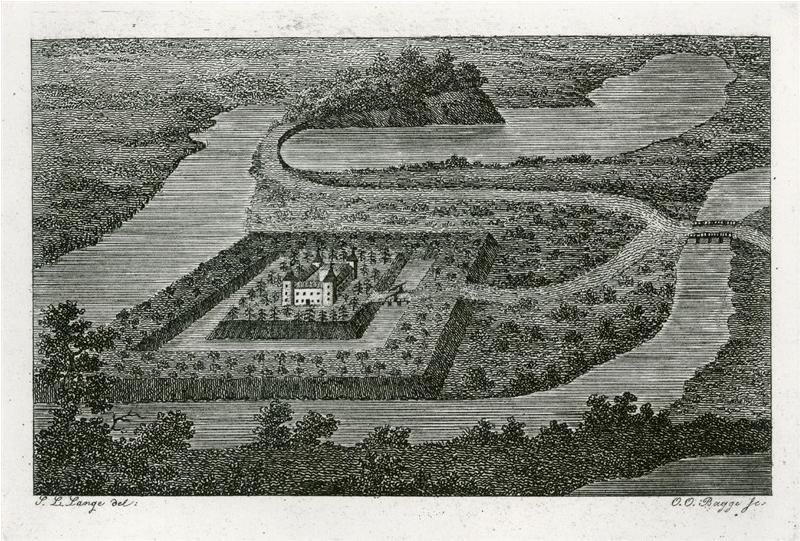
Næsbyhoved Slot stood on a promontory in Næsbyhoved Lake, approximately one kilometre north of central Odense. During the Middle Ages, the lake was navigable, although shallow, and it was the second-largest lake on Funen after Lake Arreskov. Water and surrounding marshes protected the castle on several sides. Valdemar Atterdag is associated with dredging and damming the lake to preserve both the water body and its defensive value.
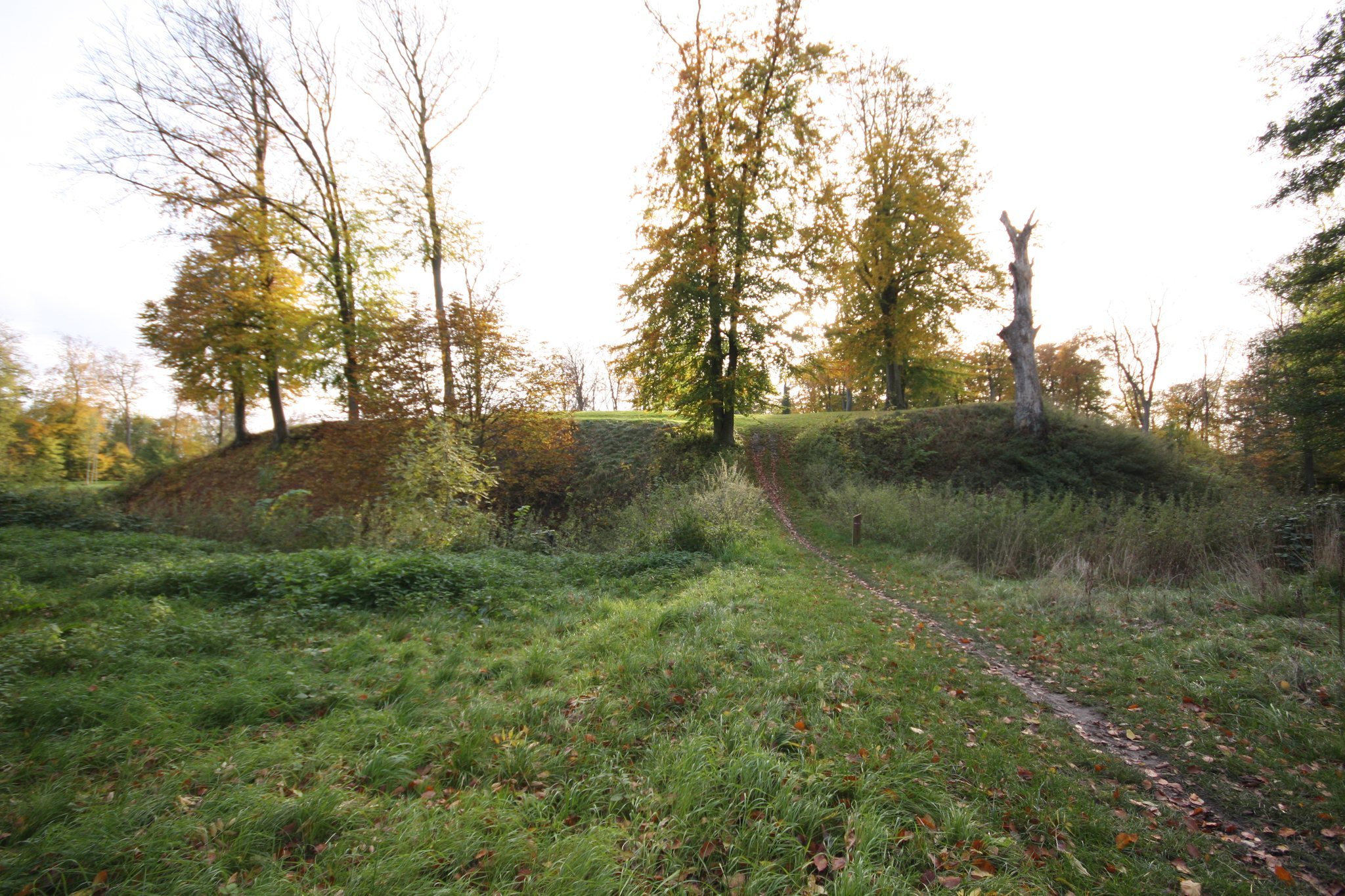
Deep moats and earth ramparts surrounded a nearly square castle mound measuring about 55 by 55 metres. The mound rose approximately 20 metres above sea level. A bridge from the northeast provided a crossing over the moat and access to the fortified site.
Castle mound and surviving evidence
Little is known about the castle’s appearance from excavations and historical investigations. The mound probably carried a substantial stone building enclosed by a curtain wall, a defensive wall surrounding the castle or fortified court. Finds of brick with relief decoration indicate that at least part of the castle included architectural ornament.