Matara Fort: A Portuguese and Dutch Coastal Fortress in Sri Lanka
Site at a Glance
- Rating
- 4.3
- Popularity
- Low
- Country
- Sri Lanka
- Primary era
- Early Modern
- Eras represented
- Early Modern, Modern
- Civilizations
- British, Dutch
- Site type
- Military
- Remains
- Fort
On this page8 sections
History
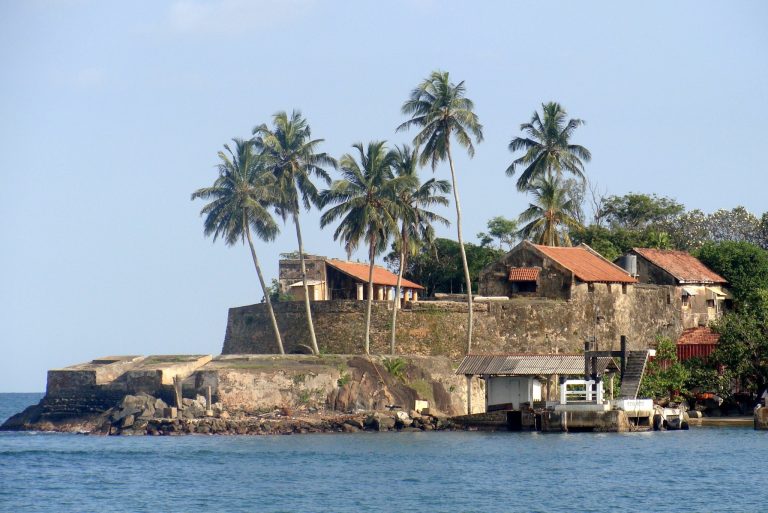
Matara Fort is a coastal fortification in Sri Lanka, first built by Portuguese forces in 1595 during the sixteenth-century colonial period. It stands on a strategic promontory between the Nilwala Ganga estuary and the ocean, where the sheltered deep-water estuary supported trade and administration. Don Juan Dharmapala, ruler of the Kingdom of Kotte, assisted the Portuguese construction.
Portuguese and Dutch rule
The Dutch captured Matara from the Portuguese in 1640 and substantially rebuilt its defences during the following decade. The Dutch East India Company, commonly known as the VOC, was a chartered trading and colonial company that administered territories, maintained forts, and organized commerce across the Indian Ocean. At Matara, it used the fort to protect administrative buildings and control regional trade.
The fortified settlement was then known as Mature. It contained administrative buildings, residences, a church, and an enclosure for elephants. Cinnamon brought from the interior was exported to Europe, while elephants captured in the hinterland were sent to India and Bengal. During Dutch rule, the fort also held the district secretary’s residence, stores for cinnamon, areca nuts, and gunpowder, and an elephant kraal. The Dutch Reformatory Church was built in 1706.
The Matara Rebellion and reconstruction
In 1761, during the Matara Rebellion, forces from the Kandyan kingdom, the independent Sinhalese kingdom based in Sri Lanka’s central highlands, established artillery batteries across the Nilwala River and bombarded the town and fort. The garrison disabled its own cannon, destroyed its ammunition and provisions, and evacuated by sea. The settlement was subsequently largely destroyed.
The Dutch later recaptured Matara and began rebuilding. Eight cannon were found on the walls, including one made in England. The Reformatory Church was reconstructed during the 1760s, with a date from the late 1760s etched above its entrance.
British administration and preservation
The Dutch transferred the fort to the British on 24 February 1796. During the British period, the fort area gained a courts complex containing the Magistrate’s Court and High Court, as well as a rest house and the Matara Police Station. A mission school established in 1817 later became President’s College. Many mansions of Sri Lankan aristocratic families were converted into offices, guesthouses, and temples, while others fell into ruin.
The British removed the southern sea-facing bastion partly or substantially to create a coastal road and access route to the town. A 12-metre clock tower was built on the remaining rampart in 1883. The rampart was declared a protected monument under section 33 of Sri Lanka’s Antiquities Ordinance No. 9 of 1940. The main gate and walls were restored in 1985 and 1986 by the Dutch firm Ballast Nedam. The fort now serves as the administrative centre of Matara District, containing the District Secretariat, Divisional Secretariat, courts, and other state offices.
Remains
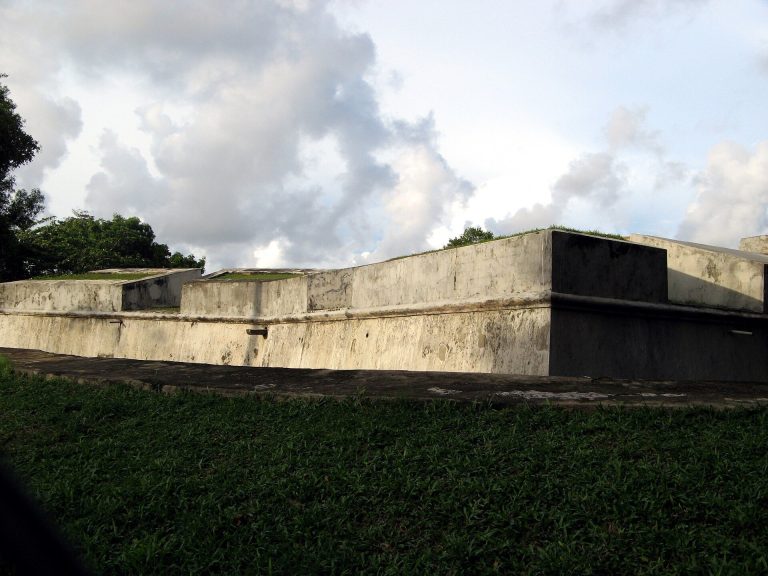
Matara Fort is organized around a large stone rampart on the promontory separating the Nilwala Ganga from the ocean. The rampart is approximately 240 metres long, 13 metres thick, and 5 metres high. Local limestone, granite, and coral were used for the walls and gateway, which are generally in good condition. The original defences included a ditch, two half-bastions at the ends, and a larger central projection near the gate. A bridge crossed the ditch to the gateway on the northern side of the central projection.
Rampart and detached defences
The original plan aimed to create a five-bastion, star-shaped fort, but lack of funds prevented its completion. The site therefore remained principally a walled enclosure. In 1763, the Star Fort of Matara was built across the river as a redoubt, a small detached fortification intended to strengthen a larger fort or control an approach. Its position helped control the river corridor and improve the settlement’s defence.
Church and memorials
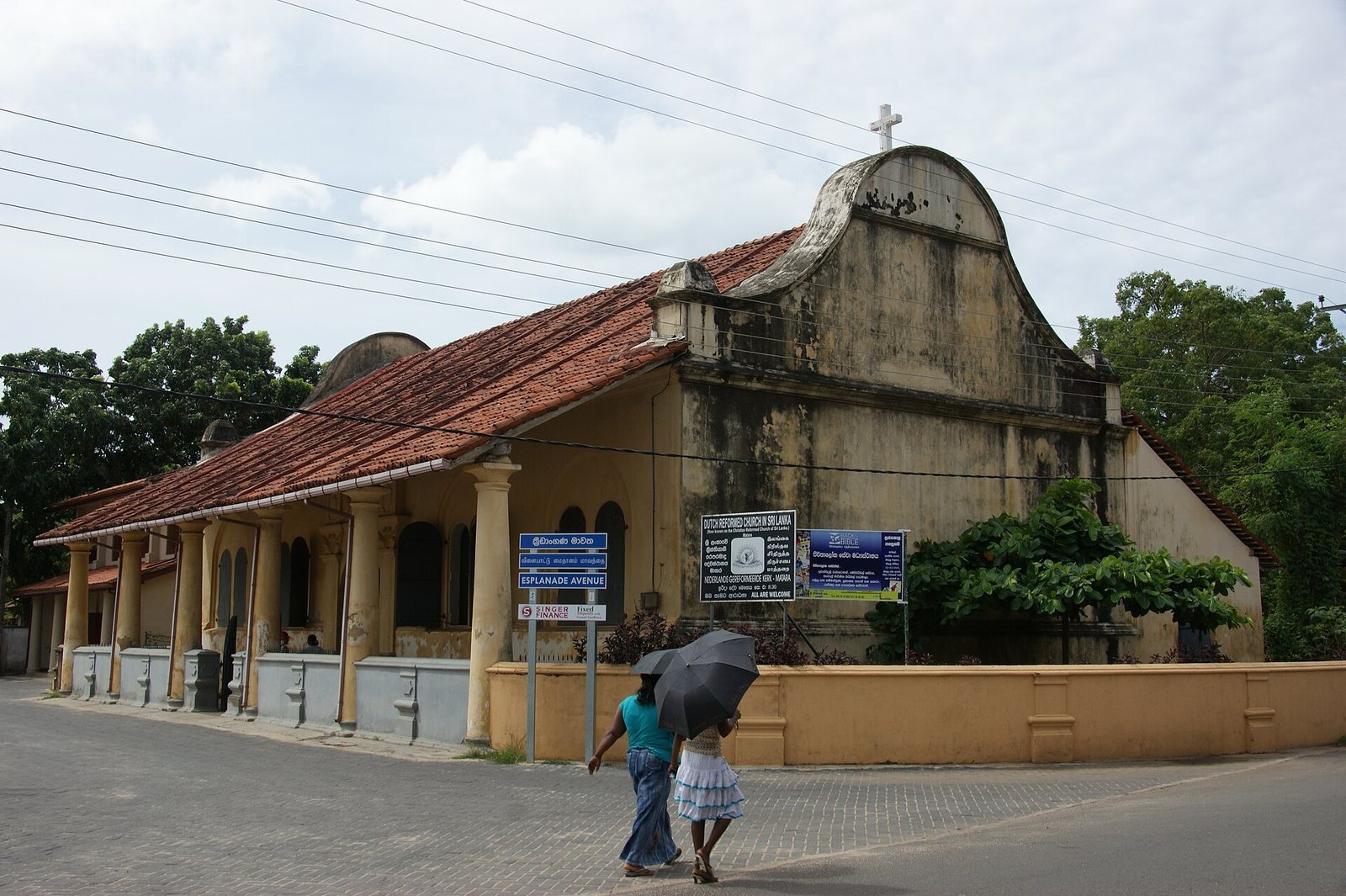
The Dutch Reformatory Church near the entrance is the oldest surviving building within the fort. Built in 1706 and reconstructed after the Matara Rebellion, it has heavy wooden doors and window panels. Gravestones set into its floor date from 1686 and commemorate members and beneficiaries of the Dutch-period community. Another stone, dated 1737, commemorates Frans Willem Falck, a dessave, or senior administrative and territorial official in the Dutch colonial administration of Ceylon, and father of the later governor Iman Willem Falck. Parts of the church walls are crumbling.
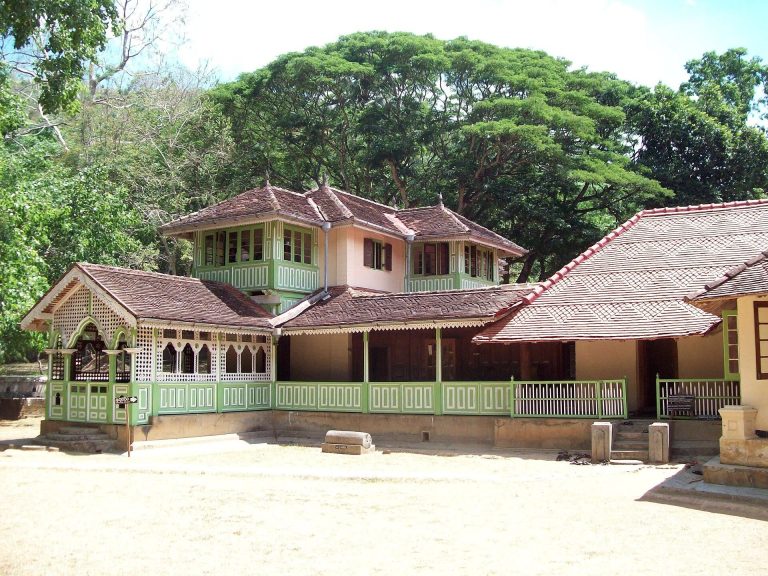
Town buildings and later structures
The fortified town was arranged along three long, parallel streets lined with houses and administrative buildings. The church stood among these buildings, while an elephant kraal lay behind the houses. The kraal included four stables capable of holding up to 80 elephants and a tank where the animals were washed. Surviving Dutch-period buildings include former administrative structures, the church, and other town buildings. Former aristocratic mansions have been adapted as offices, guesthouses, and temples, while some are ruined. The 12-metre clock tower stands on the surviving rampart, and the present administrative complex includes the District Secretariat, Divisional Secretariat, courts, and other state offices.